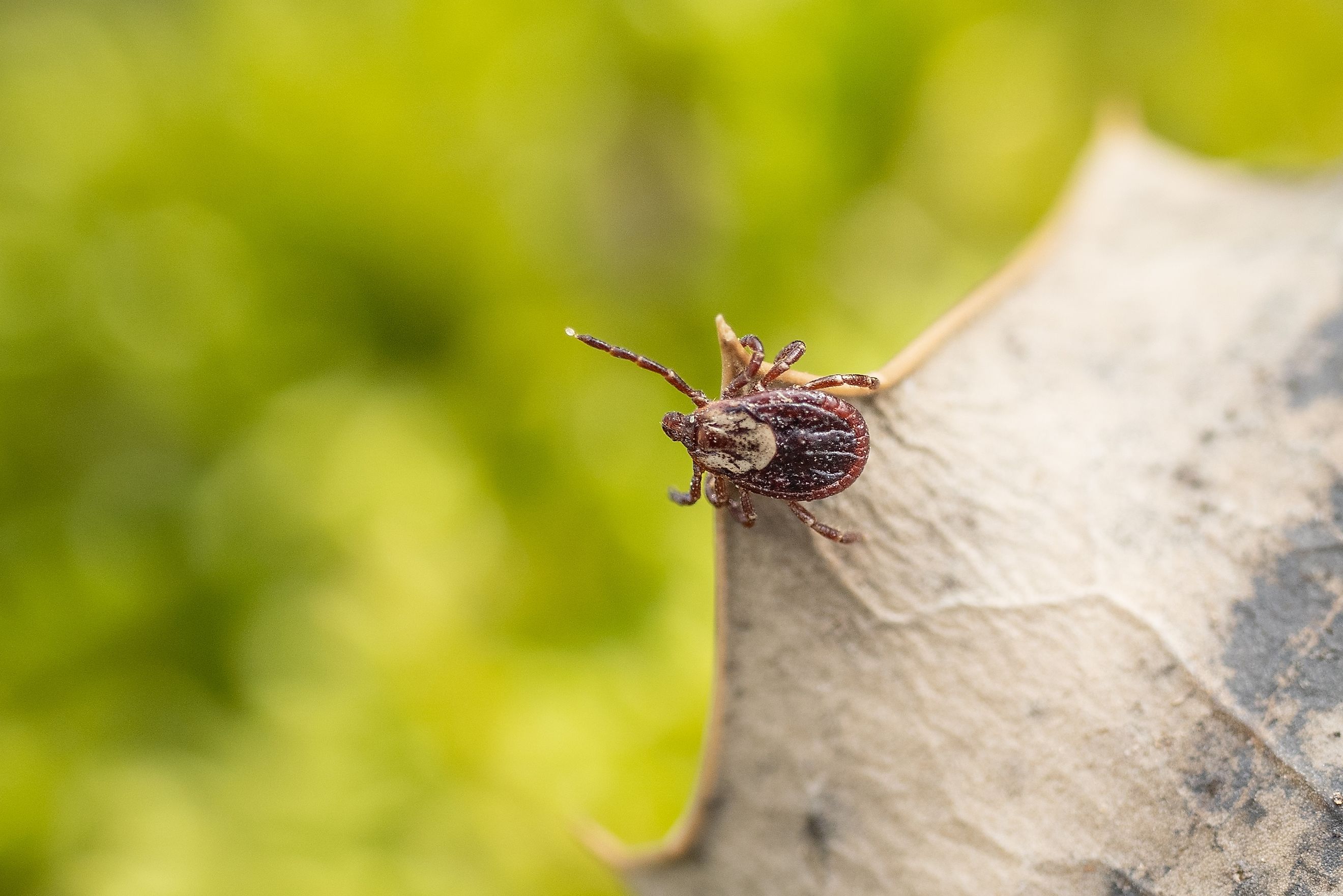
Where Ticks Go In The Winter
The idea that a hard freeze wipes out ticks is the most common and most dangerous misconception about them. Across the northern United States, the blacklegged tick, the American dog tick, the lone star tick, and the winter tick all pass through the cold season alive, using a mix of dormancy, shelter, and body chemistry suited to sub-freezing weather. Some spend the winter a few inches (several centimeters) down in the leaf litter with their development paused and their metabolism idling. Others ride out the entire season locked onto one large mammal, feeding while snow piles up around them. Where a tick waits out winter, and how it keeps from freezing solid, decides how many ticks appear the following spring and how much disease they carry.
The Myth of the Winter Die-Off

When daylight shortens and temperatures fall, most ticks enter a dormant state rather than dying. Many species slip into diapause, a programmed pause in development triggered mainly by shortening day length, while others enter a looser standby called quiescence that tracks the weather directly. In both cases the animal stops developing, drops its metabolic rate, and lives off stored energy instead of hunting for a blood meal that the cold has made unavailable. This is the same strategy that countless insects and mites use to cross the winter. A dormant tick is not a dead tick. It is a resting one, settled into a sheltered spot and waiting for the first stretch of mild weather to start moving again. Which life stage does the waiting depends on the species and on timing, so a single winter woodlot can hold dormant larvae, nymphs, and adults all at once.
Leaf Litter, the First Refuge

For the three-host ticks that spend winter off the host, the forest floor is the main refuge. A layer of fallen leaves and the soil beneath it buffer the sharp swings of winter air and hold in moisture, two things a tick needs to survive until spring. A multi-year field study in Connecticut and Maine by Megan Linske and colleagues found that nymphal blacklegged ticks survived the winter far better where leaf litter was left in place than where it was stripped away. Humidity turns out to matter as much as temperature, because ticks lose water through their bodies and dry out quickly when the air around them is too arid. The damp, insulated ground under a season of fallen leaves solves both problems at once. The other common three-host ticks shelter the same way. The American dog tick and the lone star tick both retreat into leaf litter and the top inch (2.5 centimeters) of soil once the cold settles in, and any of the three species can overwinter as a larva, a nymph, or an adult depending on how far it got through its life cycle before the freeze. The lone star tick is the least cold-hardy of the group, which is why a severe winter tends to thin its numbers more sharply than it does the blacklegged tick.
Snow as a Second Blanket

A cover of snowpack insulates the ground so well that the leaf litter underneath can hover near 32 degrees Fahrenheit (0 degrees Celsius) even while the open air plunges far lower. Studies of overwintering blacklegged ticks show that snow and leaf litter together produce the highest winter survival, since the combined cover keeps the animals from ever reaching lethal cold. Snow cuts the other way too. A thick snowpack physically traps ticks below it and stops them from climbing vegetation to look for a host. Research on blacklegged ticks at the northern edge of their range found that heavier accumulated snow was linked to fewer questing ticks, even as it helped more of them survive the season underneath.
The Antifreeze Inside a Tick

Ticks cannot survive if their tissues freeze. To avoid this, they use supercooling to keep their body fluids liquid at temperatures much lower than the usual freezing point. However, if an ice crystal forms, it can be fatal for them. Laboratory work on hard ticks shows that they prepare for this by adjusting their internal chemistry as winter approaches. The blacklegged tick carries an added trick, an antifreeze glycoprotein that researchers named IAFGP, which helps it endure cold and which the tick produces more of when temperatures drop. Oddly, ticks infected with the bacterium that causes human anaplasmosis make even more of the protein and survive the cold better, so the pathogen effectively helps its carrier through the winter. None of this makes a tick frost-proof. Unprotected ticks still die after sustained exposure to the low teens and single digits Fahrenheit (roughly minus 11 to minus 16 degrees Celsius), which is exactly why the leaf litter and snow matter so much.
The Winter Tick That Rides the Cold Out on a Moose

One North American tick spends winter in a completely different place, on the body of a living animal. The winter tick, Dermacentor albipictus, is a one-host species. Its larvae climb vegetation in September and October, latch onto a passing moose, elk, or deer, and then stay on that single animal for the rest of the cold season, molting into nymphs and then adults without ever dropping off. Work by Michael Drew and William Samuel tracked the schedule closely, with nymphs dominating the host population in early winter and adults taking over from midwinter into spring. The engorged females finally drop into the leaf litter in late March or April to lay several thousand eggs. A single moose can carry more than 100,000 of these ticks, and the constant grooming that so heavy a load provokes rubs away enough hair that biologists call the worst-affected animals ghost moose.
Soft Ticks and the Shelter of a Nest

Soft ticks, the family Argasidae, handle winter by never leaving a protected space in the first place. They live in the burrows, dens, caves, and bird roosts of the hosts they feed on, and they rarely wander far from where they hatched. Those enclosed spaces stay warmer and more humid than open ground through the coldest months, so winter barely interrupts them. Soft ticks also feed in quick repeated meals rather than one long attachment, and many can survive for years, which lets them wait out any stretch of harsh weather in place.
Why a Warm Winter Day Still Calls for a Tick Check

When a winter day climbs above freezing, and especially once it passes about 40 degrees Fahrenheit (4 degrees Celsius), adult blacklegged ticks crawl back up grass and brush to quest for a host. A midwinter thaw with bare, unfrozen ground is prime questing weather, which is why the danger rises during warm spells rather than disappearing for the season. Anyone hiking, hunting, or walking a dog on a mild winter day can still pick up a tick, so a tick check after time outdoors makes sense in January as much as in July.
A Shorter Winter Moves the Line North
Because cold and the length of the freeze set the northern limit for most ticks, milder and shorter winters let more of them survive and carry their range farther north. The blacklegged tick has pushed steadily into the northern United States and Canada over recent decades, and the surge of ghost moose die-offs in New England has been tied to shorter, warmer winters that let more winter tick larvae survive to find a host. A tick's winter, then, is not an ending but a pause, spent a few inches (several centimeters) under the leaves, beneath a layer of snow, inside a burrow, or clamped onto a moose. Understanding which refuge each species chooses explains both how ticks return every spring and why their active season is slowly stretching into the cold months at both ends.