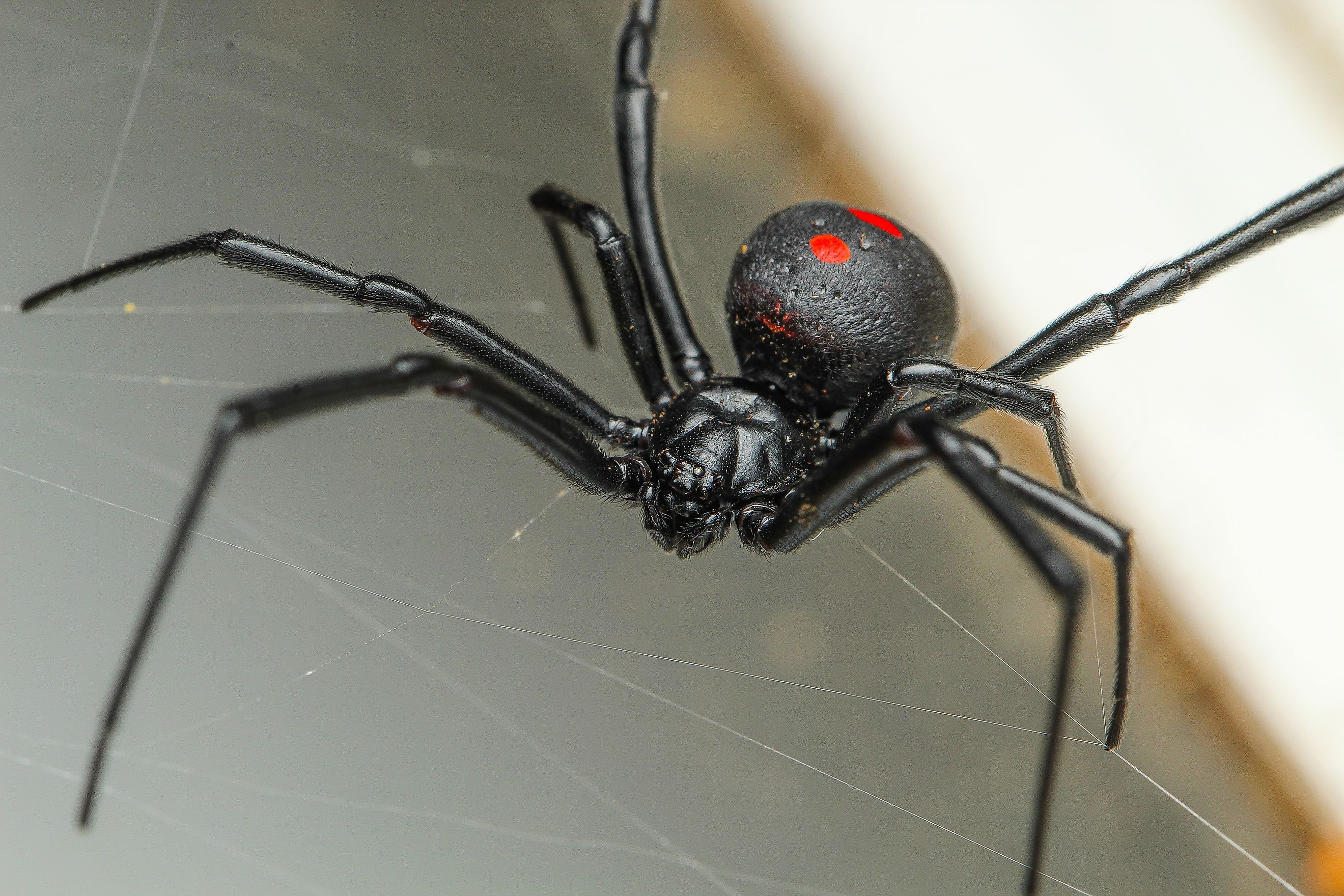
The US States With The Most Venomous Spiders
Nearly every spider in the United States carries venom, yet only two groups of them pose any real danger to people, the widow spiders of the genus Latrodectus and the recluse spiders of the genus Loxosceles. The country holds roughly 3,700 spider species, and barely more than a dozen of them register as medically significant. Deciding which states harbor the most of these dangerous spiders turns almost entirely on the recluses, a desert-loving group that has split into many closely related species across the arid Southwest. Texas, California, Arizona, and New Mexico each shelter a cluster of recluse species found almost nowhere else, which pushes them well ahead of the rest of the country. The brown recluse belt of the central states, often assumed to be the most spider-plagued region, actually teems with a single species rather than many.
Two Genera, Two Kinds of Venom

Of the thousands of spiders in the country, only the widows and the recluses produce venom strong enough to warrant medical attention. Five widow species live in the United States, the southern black widow (Latrodectus mactans), the western black widow (Latrodectus hesperus), the northern black widow (Latrodectus variolus), the red widow (Latrodectus bishopi) of the Florida scrub, and the introduced brown widow (Latrodectus geometricus). Recluses are far more diverse, counting eleven native species and two more that have been introduced and established. The two groups harm the body in opposite ways. Widow venom carries alpha-latrotoxin, a neurotoxin that forces nerve endings to dump their chemical messengers and sets off the cramping, rigidity, and sweating of a syndrome called latrodectism. Recluse venom instead carries sphingomyelinase D, an enzyme that attacks cell membranes and can open the slow-healing skin wound known as loxoscelism. A recluse measures only about a quarter to half an inch (roughly 6 to 13 millimeters) in the body, carries six eyes rather than the usual eight, and is far shyer than its reputation suggests. Because the widows spread thinly and broadly while the recluses stack up in the Southwest, a state's standing depends mostly on how many recluse species it holds.
Texas Holds the Most

Texas carries more medically significant spiders than any other state, thanks to its location where several recluse ranges overlap. About five recluse species live within its borders. The Texas recluse (Loxosceles devia) ranges across the southern half of the state, the Big Bend recluse (Loxosceles blanda) holds the far west, and the Apache recluse (Loxosceles apachea) reaches in across the western desert. The brown recluse (Loxosceles reclusa), the species behind most verified recluse bites in the country, covers central and eastern Texas, while the introduced Mediterranean recluse (Loxosceles rufescens) turns up inside buildings here and there. On top of the recluses, Texas hosts three widows, the western black widow across the drier country, the southern black widow in the east, and the brown widow along the Gulf Coast, where it keeps spreading inland. The state claims well over a thousand spider species in all, but this particular combination of recluses and widows is what no other state matches.
California and Its Desert Recluses

California ranks a close second even though it has no brown recluse at all, a point arachnologists repeat often because so many residents are convinced they have been bitten by one. Fewer than twenty verified brown recluse specimens have ever been collected in the state across decades of searching. What California does hold is four native recluse species in its southern deserts, led by the desert recluse (Loxosceles deserta) of the Sonoran and Mojave country. The Baja recluse (Loxosceles palma), Martha's recluse (Loxosceles martha), and Russell's recluse (Loxosceles russelli) round out the native list, and the Arizona recluse (Loxosceles arizonica) pushes into the state's southeastern corner. A South American species, the Chilean recluse (Loxosceles laeta), whose bite tends to be more damaging than that of its North American relatives, has set up small indoor populations around Los Angeles. The western black widow lives statewide, and the brown widow has become common across Southern California since the early 2000s.
Arizona's Recluse Stronghold

Arizona nearly matches California for recluse variety and adds two species that live almost nowhere else on Earth. Five native recluses occur in the state, the Arizona recluse (Loxosceles arizonica), the desert recluse (Loxosceles deserta), and the Apache recluse (Loxosceles apachea), joined by two near-endemics, the Grand Canyon recluse (Loxosceles kaiba) of the canyon country and the Tucson recluse (Loxosceles sabina) of the hills around Tucson. As in California, the true brown recluse does not live in Arizona, a fact that regularly surprises people who blame the spider for skin wounds. The western black widow is the most dangerous widespread spider in the state, and the brown widow has worked its way through Phoenix and Tucson over the past two decades. Dry, rocky uplands and the sheltered interiors of packrat dens give these recluses the undisturbed ground they favor, which keeps most of them well away from the places people live.
New Mexico at the Crossroads

New Mexico sits where the eastern and western recluse ranges meet, which leaves it with about four species inside one state. The Apache recluse holds the south, the desert recluse covers much of the north and center, the Arizona recluse reaches in from the west, and the Big Bend recluse touches the southeastern corner from neighboring Texas. The western black widow is common throughout, the southern black widow appears across the southeast, and the brown widow has started showing up in the larger towns. No single recluse dominates the state the way the brown recluse dominates the central plains, and that even spread of several short-range species is exactly why New Mexico's venomous spider roster runs longer than that of the famous recluse states to its east.
Why the Brown Recluse Belt Ranks Lower

The states most tied to dangerous spiders in the public imagination, Missouri, Arkansas, Tennessee, Kansas, and Oklahoma, actually hold fewer venomous species than the desert Southwest. The brown recluse blankets this belt, present across the lower Midwest and reaching south into Arkansas and the northern edge of Georgia, and a single house can shelter an astonishing number of them. One documented home in Kansas held more than two thousand brown recluses over the course of a study, and not one person living there was ever bitten. Abundance, though, is not the same as diversity. Across most of this region the brown recluse is the only recluse present, joined by the southern black widow and, in the northern reaches, the northern black widow. Two or three medically significant species is a shorter list than the half-dozen or more that pile up in Texas or Arizona, which is why the label of most venomous spiders belongs to the arid states rather than the recluse heartland.
Where the Species Pile Up
The pattern behind these rankings comes down to the recluse genus itself. Loxosceles radiated across the deserts of the Southwest, where isolated mountain ranges and sun-baked basins let many short-range species evolve side by side, so the states that cover that broken terrain inherit the most of them. Widows lay down a steadier background almost everywhere, but they rarely shift the order, because their handful of species spreads across nearly the entire country without clustering anywhere. The states with the most venomous spiders, then, are not the states where a bite is most likely, since recluse bites stay rare even where the animals are common, but the states where the desert has produced the greatest number of distinct dangerous species. Texas stands at the head of that list, with California, Arizona, and New Mexico close behind, and the well-known recluse belt of the central states trailing on variety even while it leads on sheer numbers of individual spiders.