Why Deer Yard Up In Winter
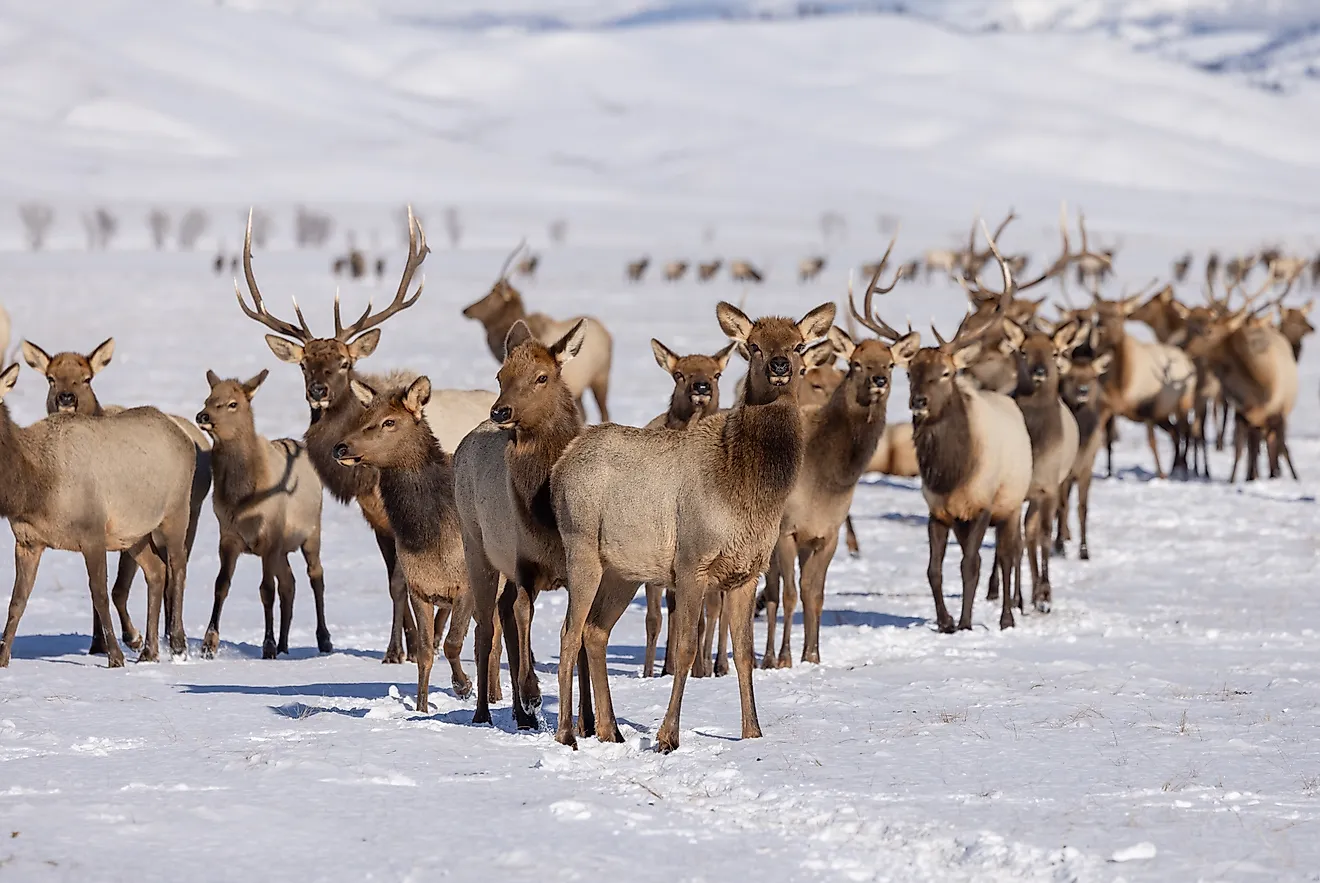
A deer yard is a stand of dense conifer where deer crowd together through the winter and tramp the snow into a network of packed trails. The trails are the point. "Yarding" describes the behavior of forming them: dozens of animals walking the same routes over and over until the snow underfoot is beaten hard enough to carry a deer's weight, while a step off the edge drops it to the belly. Biologists in Maine put it well when they say adult deer know their trail network the way you know the streets of your neighborhood.
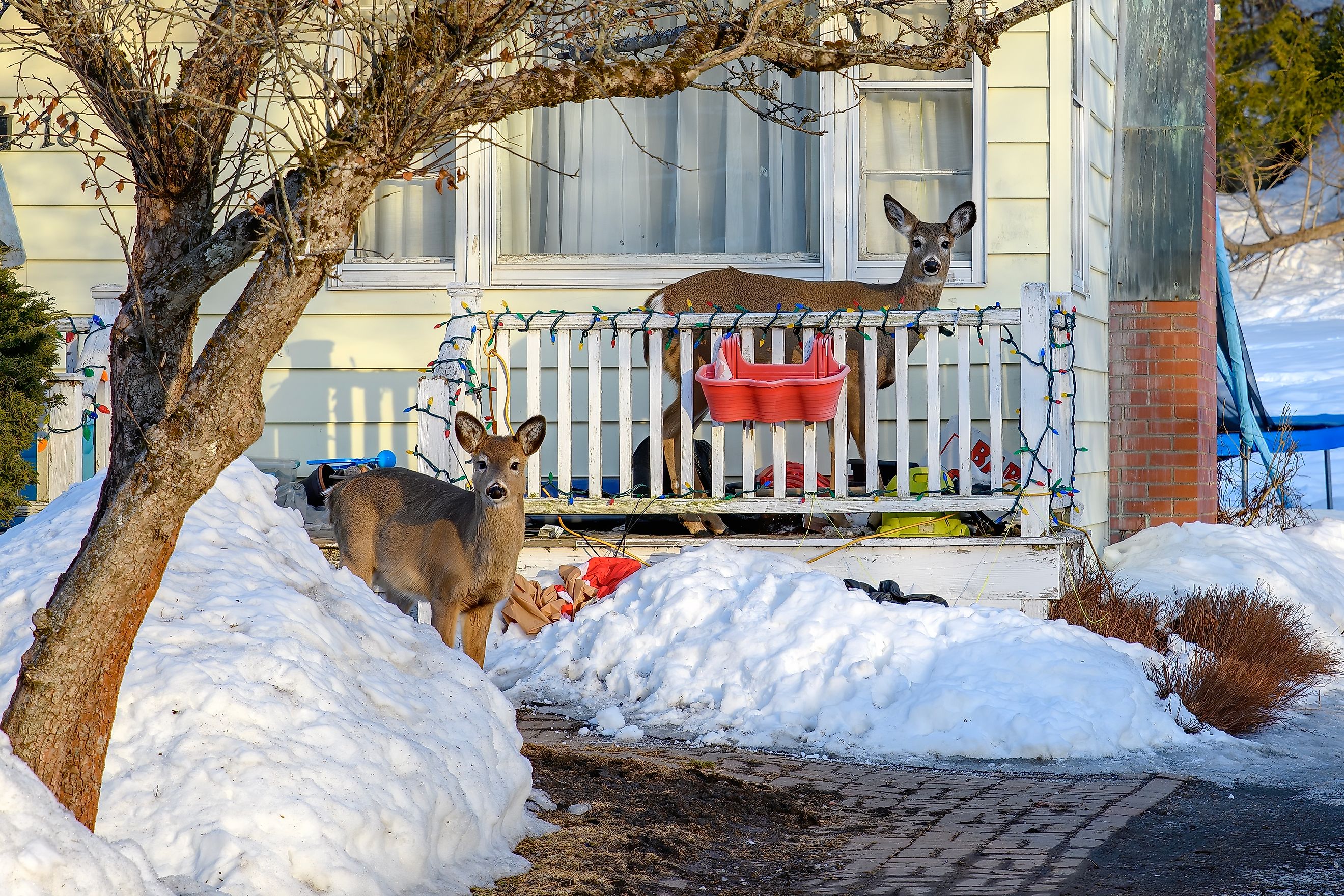
It has nothing to do with the three standing on your lawn eating the yews. That is a separate problem, and no amount of conifer cover will fix it.
When snow reaches about 15 inches, white-tailed deer abandon their summer ranges and travel as far as 12 miles to reach those stands. Summer densities of 4 to 25 deer per square mile become 100 to 125 in a yard. The reason is not warmth, which is what most people assume. A Minnesota study tracking collared does for twelve winters found deer use conifer as snow shelter rather than thermal cover.
The Trails Are The Whole Mechanism

Breaking trail through deep powder is expensive, and no single deer could maintain a usable network alone.
Congregating is what makes it affordable. Each animal in a yard contributes to the trail system, so the cost of keeping routes open to cover, to browse, and away from predators is shared across the whole group. Walking a packed trail instead of wading through loose snow is, in the words of Maine's wildlife department, the difference between life and death.

The contrast is easy to see on the ground. Snow along an established deer trail packs hard enough to walk without snowshoes. One step off it and a person sinks to the waist. Surveyors in Maine report finding tracks where a deer left the beaten path and wallowed forward, sinking close to 20 inches with every stride.
Fifteen Inches Starts The Migration

The trigger is snow depth rather than temperature or calendar date.
White-tailed deer vacate summer ranges when snow depth reaches 15 inches, usually in late November or December, and travel up to 12 miles to reach traditional winter ranges. In Maine, yarding migrations typically occur in late December or January.
The return is triggered the same way. When snow cover melts to less than a foot, deer begin migrating back to summer range in March or April.
They Pack In At Five Times The Density

The concentration in a yard is the most striking thing about the behavior.
Densities in winter yards may approach or exceed 100 to 125 deer per square mile. The same population spread across summer range runs at 4 to 25 per square mile.

A yard is not a loose gathering. It is a compressed population occupying a fraction of the ground it used six months earlier, and that compression is what makes the shared trail network possible in the first place.
Conifers Hold The Snow Up

What a yard provides overhead is a roof, and the effect is measurable.
Cedar, hemlock, fir and spruce intercept snow in their crowns before it reaches the ground. Some of it then melts and runs off as liquid, and some passes straight back to the atmosphere as vapor without ever becoming water, a process called sublimation. Such habitat is said to hold around 40 percent less snow than hardwood forest.
Less snow underfoot means less energy burned moving through it. In a season where every deer is running an energy deficit, that difference decides survival.
It Is Shelter, Not Warmth

The distinction was tested directly and the answer was clear.
A long-term study of GPS-collared female white-tailed deer across four north-central Minnesota sites, running from 1993 to 2005, found that use of dense conifer cover increased most with increasing snow depth rather than with falling temperature.
The researchers concluded that snow depth has a greater impact on deer survival than ambient temperature, and that dense conifer matters as snow shelter rather than thermal cover.
Dense Means Seventy Percent Closure
The research puts a number on what counts as a usable yard.
Dense conifer cover is defined as 70 percent canopy closure or more, with moderately dense running 40 to 70 percent. Deer use of the densest cover increased most abruptly on the sites where it was most available.
Guidance elsewhere puts the threshold for an effective yard at roughly 50 percent coniferous crown closure. Below that the canopy stops intercepting enough snow to matter. Stand size matters too: a patch of cover too small for deer to lay out a full trail network leaves them exposed even if the canopy overhead is thick enough.
They Choose Cover Over Food

This is the finding that explains why deer sometimes starve inside a yard.
Ontario research on deer yard use states it plainly: deer seek conifer cover such as hemlock stands even when food is scarce, and given the choice deer will seek cover over food.
The ability to move around in a winter with deep snow is the most important factor. A deer that cannot move cannot reach food anywhere, so the cover comes first. Browse within the yard often sits buried under snow or already stripped bare to the height a deer can reach, which is why a yard can hold a starving herd standing in shelter.
The Trails Cut Both Ways

The same packed runways that save a deer energy also serve anything hunting it.
A coyote or a loose dog has broad padded feet with toes that splay on soft snow, so it can leave a trail and keep moving. A deer has sharp hooves carrying far more weight per square inch, and punches straight through. Off the trail, the advantage flips to the predator.
That is why stand size appears in the management guidance alongside canopy closure. A yard with a trail network too simple or too small gives deer nowhere to run that a coyote cannot follow faster.
Valley Bottoms Work Best
Yard locations are consistent enough to be mapped and managed.
Valley bottoms with conifer cover make the best yards, sheltering deer from wind as well as snow. Swamp conifer areas, particularly northern white cedar, are classic wintering ground.
Stands of red or white spruce, balsam fir, white pine and eastern hemlock all serve. Hemlock and northern white cedar are rated the best snow interceptors of the lot, and softwood cover is described as the most important component of winter range.
The Same Yards Every Year
Yards are traditional rather than opportunistic, which has consequences.
Deer return to the same wintering areas annually, which is why these are described as traditional winter ranges and why individual yards are known and named by wildlife agencies. Ontario's Loring yard was a managed program by the late 1970s, with crews cutting and packing trails to help deer move.
Losing a yard to logging or development does not simply move the deer. The knowledge of where to go is learned and passed on, and a replacement stand takes decades to grow.
Agencies Have Stopped Saying Yard
The term itself has fallen out of official use, for a reason worth knowing.
Michigan's wildlife department now avoids "deer yard" altogether, on the grounds that the definition has been argued over for decades, and uses "deer wintering complex" instead. New Hampshire guidance draws the same distinction, noting that a wintering area means the whole ground deer occupy in winter, not only the dense softwood core at the middle of it.
The behavior is the same either way. The vocabulary changed because the boundaries of a yard turn out to be harder to draw on a map than deer make them look on the ground.
Bucks Are More Vulnerable

Who survives a hard winter in a yard is partly decided before the snow arrives.
Bucks lose substantial weight through the fall rut, while does reach maximum weight around the first of January. That means bucks draw on fat reserves for nearly twice as long before spring.
Deer on the best ranges can enter winter carrying 25 percent body fat. The ones that went into the rut are not among them.
The Short Answer
A deer yard is a dense conifer stand where deer gather and beat the snow into a shared network of packed trails. They move into one when snow reaches about 15 inches, walking up to 12 miles to reach traditional stands and packing in at 100 to 125 per square mile against 4 to 25 in summer. Cedar, hemlock, fir and spruce hold roughly 40 percent of the snow in their crowns, some of it subliming straight back to vapor.
Twelve winters of Minnesota tracking data show they do it for snow shelter rather than warmth, and Ontario research found that given a choice between cover and food, deer take the cover. Being able to move matters more than having something to eat, and the trails are how they move.