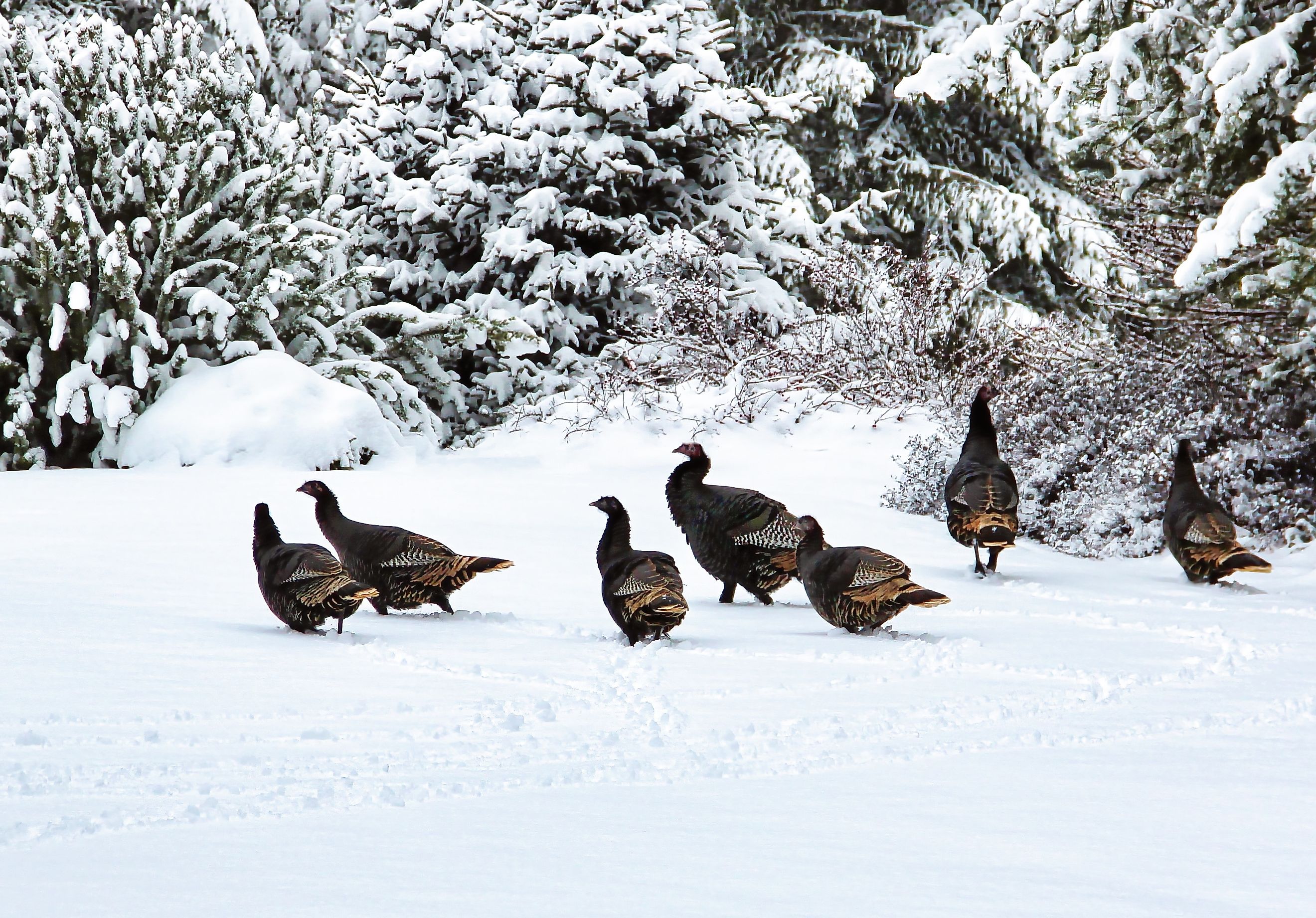
How Wild Turkeys Survive Deep Snow
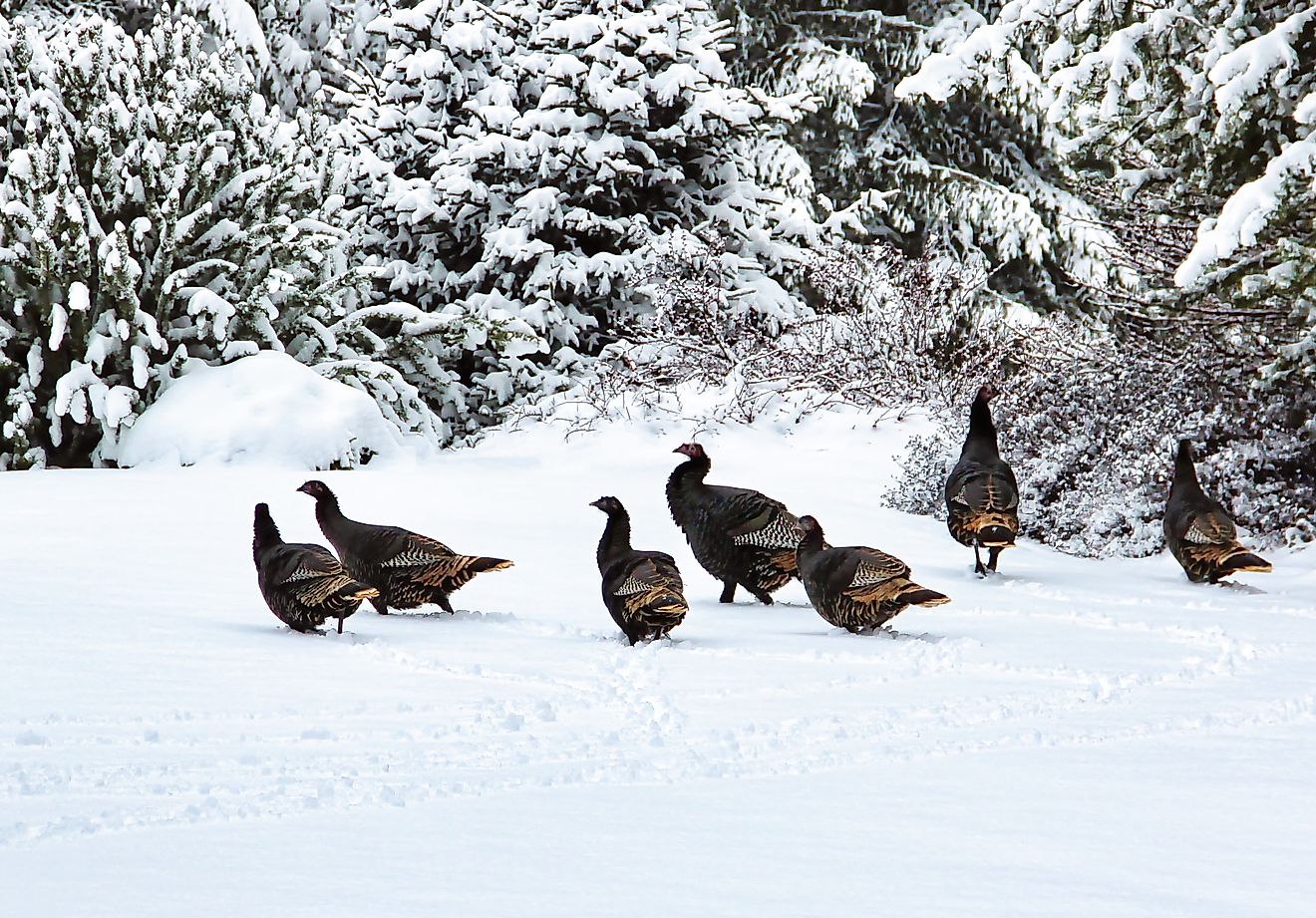
Turkeys handle cold far better than people assume. In one study, birds exposed to minus 22 degrees Celsius showed no physiological changes at all, because their plumage traps air well enough to thermoregulate through it. Snow is the thing that kills them, and the threshold is specific: radio-telemetry tracking of 181 wild turkeys over four years found winter survival dropped sharply once snow exceeded 12 inches for more than ten days.
They Can Go Two Weeks Without Food

The headline survival figure is remarkable for a ground-feeding bird.
Wild turkeys have been documented surviving 14 days without eating in winter conditions, a finding dating to research by Hayden and Nelson in 1963. During short periods of deep snow they simply do not leave the roost.
In extreme cases birds remain on their roosts without food for days or even weeks, running down stored body fat until conditions change.
Six Inches Of Powder Is The Digging Limit

What a turkey can reach through determines whether it eats at all.
They can scratch through a maximum of about six inches of fluffy snow, and roughly a foot of packed snow. Sharp claws do the work, the same way they forage in leaf litter the rest of the year.
Beyond that the food is simply unreachable. A crust of ice on top makes it worse rather than better for digging.
Crust Helps Them Walk

The same crust that blocks digging solves a different problem.
Crusted snow provides stable footing and allows wild turkeys to walk over the top of it to reach food sources. Soft powder does the opposite.
Deep soft snow means a heavy bird wading rather than walking, burning energy reserves it cannot replace. That is the condition most associated with starvation losses.
Twelve Inches For Ten Days
The research puts a usably precise number on when trouble starts.
Snow exceeding 12 inches and persisting more than ten days makes it difficult for turkeys to walk and access ground food, and winter survival rates decline dramatically. That finding came from tracking 181 birds across four years.
Minnesota guidance flags problems once depths exceed ten inches. The exact figure varies by study, but all of them land in the same range.
They Borrow Other Animals' Work

Turkeys are opportunists about where they feed in a hard winter.
They use areas cleared of snow by deer, other wildlife and livestock. Fields blown clear of snow become important feeding areas when other food is scarce.
Spring seeps, streambanks and south-facing slopes often stay clear for parts of the winter, giving turkeys somewhere to scratch when everywhere else is buried.
Acorns Are The Staple
What they are digging for is mostly one thing.
Acorns are described as the staple of the winter diet, which is why habitat near mature oak woodland is considered a key management tool for turkey survival.
Corn, small grains and alfalfa matter too. Waste grain in stubble fields and manure spread on fields next to turkey wintering areas can measurably increase survival.
They Move Into Softwoods

Where a flock relocates in a powdery winter follows a pattern.
When the ground gets covered with powder, flocks congregate in stands of hemlock, pine and other softwoods. The reason is practical rather than thermal.
Softwood stands hold snow in the canopy, so there is less on the ground for the turkeys to contend with. It is the same mechanism that makes a conifer stand a deer yard.
Powder Traps Them In Place
The worst outcome is not starvation in open country but confinement.
Turkeys wintering in forested areas become dependent on localized food sources and are restricted to those small areas during periods of deep powder snow, even after the food there has been depleted.
The birds cannot travel far enough to find new supplies. They stay where they are and exhaust what is available.
The Energy Budget Is Measurable
Researchers have calculated what a turkey burns and how long it can last.
A bioenergetics study of eastern wild turkeys put daily winter energy expenditure at around 1,691 kilojoules per bird per day. Without food intake, juvenile females were predicted to succumb within eight days.
That is a different figure from the 14-day survival record, and the gap matters. Age, sex and condition going into winter decide which number applies.
Southern Flocks Barely Notice

The entire problem is regional.
Survival rates in severe northern winters can drop to 55 to 60 percent. In milder southern climates, movement is not constrained by snow depth and survival often approaches 100 percent.
Turkeys do not migrate, so a flock is stuck with whatever winter its range delivers. An individual bird ranges over 500 to 2,000 acres of habitat.
The Short Answer
Wild turkeys survive deep snow mostly by not moving. Their plumage handles cold down to minus 22 Celsius without measurable strain, they can go roughly 14 days without eating, and during short deep-snow spells they stay on the roost and burn fat.
What defeats them is duration. Twelve inches of snow for more than ten days cuts survival sharply, powder is worse than crust because they can walk on crust, and they can only scratch through about six inches of fresh snow to reach the acorns underneath.