How Far East Mountain Lions Have Returned
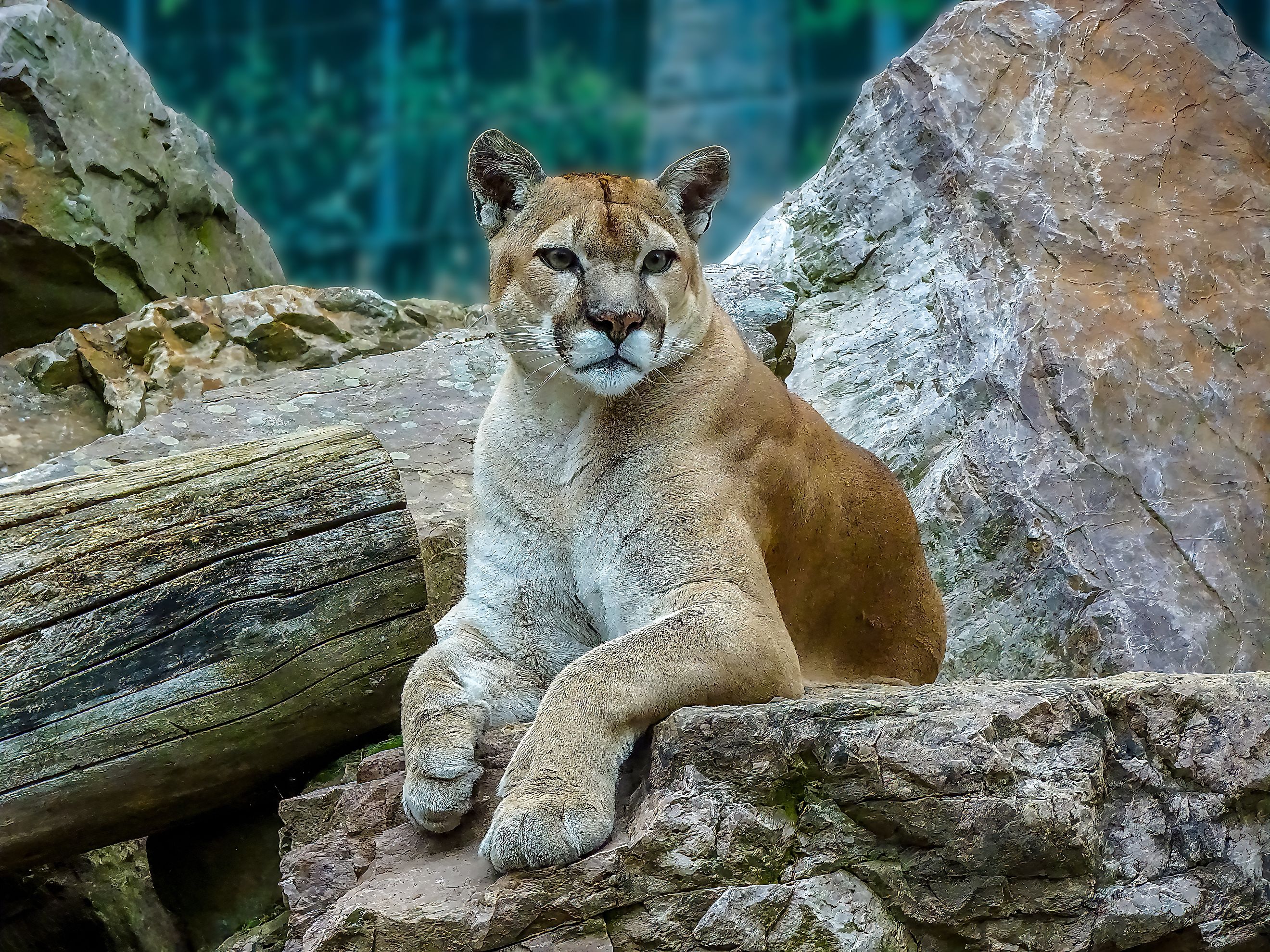
In June 2011, a 140 pound (64 kilogram) male mountain lion was struck and killed by an SUV on the Wilbur Cross Parkway in Milford, Connecticut. DNA from its hair and droppings traced the animal to the Black Hills of South Dakota, roughly 1,500 miles (2,400 kilometers) away in a straight line and likely closer to 2,000 miles (3,200 kilometers) along the route it actually walked. It was the first confirmed wild mountain lion in Connecticut in more than a century. The cat answered one version of the question of how far east the species has returned, because a single dispersing male can now reach the Atlantic. A second version, the one that asks where breeding animals actually live, has a very different answer.
A Range That Once Covered The Whole Country

Before European settlement, the mountain lion (Puma concolor), also called the cougar, puma, panther, and catamount, ranged across nearly all of the lower 48 states and was the most widely distributed land mammal in the Americas. Bounty programs, forest clearing, and the collapse of deer herds erased the cat from the eastern and midwestern United States by about 1900. By the middle of the 20th century, breeding populations survived only in the mountainous West and in a single relict group in South Florida. The eastern forests kept their deer but lost their largest predator for roughly a hundred years.
The Western Strongholds and The Black Hills

The modern return began when western states dropped their bounties in the 1960s and 1970s and started managing cougars as a game species. Populations recovered and filled the available territory, and young males, which leave their mothers and strike out alone, had to search farther for unclaimed ground. The Black Hills of South Dakota became the key launch point. That isolated range holds an estimated 200 to 300 cougars and sits at the eastern edge of continuous cougar country, which makes it the nearest source of animals pushing into the Great Plains and beyond. Nebraska now has a resident population in the Pine Ridge area of its northwest corner, and cougars have reoccupied the North Dakota Badlands. These are the eastern anchors of the breeding range today.
The Midwest Confirmations

The clearest evidence that cougars were moving east came from a 2012 study in the Journal of Wildlife Management led by Michelle LaRue and Clayton Nielsen. The researchers counted 178 confirmed cougars across the Midwest between 1990 and 2008, verified through carcasses, DNA taken from scat and hair, tracks, photographs, and attacks on livestock. Confirmations climbed from two in 1990 to 34 in 2008, a steady rise rather than a one year spike. Most of the animals were young males following what the authors described as a stepping stone pattern, moving out of a dense population, settling into the nearest patch of habitat, checking it for mates and prey, and then pressing on. Confirmed cougars turned up as far afield as Missouri, Arkansas, Illinois, Michigan, and the Canadian provinces of Ontario and Manitoba.
The Farthest Wanderers

The Milford cat remains the record holder. A 2016 paper in the Journal of Mammalogy reconstructed its path using genetic samples collected in Minnesota, Wisconsin, and New York, along with citizen trail camera images, and confirmed a straight line distance of more than 1,500 miles (2,400 kilometers), the longest dispersal ever documented for the species. Other males have reached New York, and single animals have been verified well east of any breeding range. These long distance travelers prove that the physical journey east is possible. What they cannot do is start a population, because a lone male has no mate. Nearly two thirds of the cougars confirmed outside established range have been male, and females rarely move more than a few miles (several kilometers) from where they were born.
The Michigan Cubs

That female barrier is exactly why a discovery in the Upper Peninsula of Michigan drew national attention. In March 2025, the Michigan Department of Natural Resources verified photographs of two spotted cougar kittens, roughly seven to nine weeks old, taken by a resident in Ontonagon County near the Wisconsin border. Every cougar previously confirmed in Michigan by DNA had been an adult male. The kittens were the first evidence of cougar reproduction in the state in more than a hundred years and possibly the first confirmed breeding east of the Mississippi River outside Florida in modern times. The animals then vanished from view for months, which raised doubts about their survival, until a trail camera caught the two juveniles walking behind an adult female in December 2025. Michigan logged 31 confirmed cougar sightings in 2025, its highest count since 2008.
Florida, The Eastern Holdout

One eastern population never disappeared at all. The Florida panther, a cougar subspecies, held on in the swamps and forests of South Florida after the cat vanished across the rest of the East. It nearly went under anyway. Inbreeding dropped the population to around 50 animals in the 1990s, and biologists introduced Texas cougars to restore its genetic health. Today the Florida Fish and Wildlife Conservation Commission estimates 120 to 230 adults and subadults, concentrated in the southwestern corner of the state. This is the only breeding group of pumas east of the Mississippi. In recent years, females with kittens have been documented north of the Caloosahatchee River for the first time since the 1970s, a sign of slow northward expansion. Vehicle strikes remain the leading cause of death and killed 29 panthers in 2024.
Why the Breeding Edge Has Stalled

Despite the wandering males and the Michigan litter, forecasts of the cougar's future are cautious. A 2024 study in Biological Conservation by Thomas Glass, Mark Elbroch, and colleagues at the wild cat organization Panthera simulated cougar range expansion through the year 2100 using real movement, survival, and reproduction data. The model predicted that cougars would reclaim only about 2.1 percent of their currently unoccupied North American range by the end of the century, most of it in boreal Canada. It forecast essentially no natural recolonization of the eastern United States, with only Oklahoma and Minnesota given even a modest chance of hosting new breeding animals. The two largest obstacles were roads, which dispersing cats must cross in great numbers to reach eastern habitat, and hunting along the current range edge. The authors concluded that the peak of natural eastward expansion may already have passed.
Extinct On Paper, Present In Facts

The legal status of the eastern cat captures this gap between wandering and settling. In 2018, the U.S. Fish and Wildlife Service declared the eastern cougar extinct and removed it from the endangered species list, noting that the last confirmed animal dated to 1938. The agency found that the cougars occasionally seen in the East were western dispersers or escaped captives, often of South American origin, rather than survivors of the historic eastern subspecies. Habitat studies, including a 2022 analysis in Landscape Ecology, show that the eastern forests still hold enough cover and white tailed deer to support resident cougars. The missing ingredient is not the land. It is breeding females reaching that land and living long enough to raise young on it.
How Far East, Measured Two Ways
Whether mountain lions have returned depends on what counts as a return. Individual animals have already reached the Atlantic seaboard, with verified records in Connecticut and New York. Measured by established breeding populations, the eastern frontier sits far short of that, roughly at the eastern Great Plains, with resident cats in the Black Hills, the Nebraska Pine Ridge, and the North Dakota Badlands, a tentative new foothold in Michigan's Upper Peninsula, and the separate relict panthers of South Florida. The distance between those two lines, one touching the ocean and the other stalled near the hundredth meridian, is the real measure of the cougar's return. Current science suggests that gap will narrow slowly, if it narrows at all.