What Copperheads Do Inside The Den All Winter
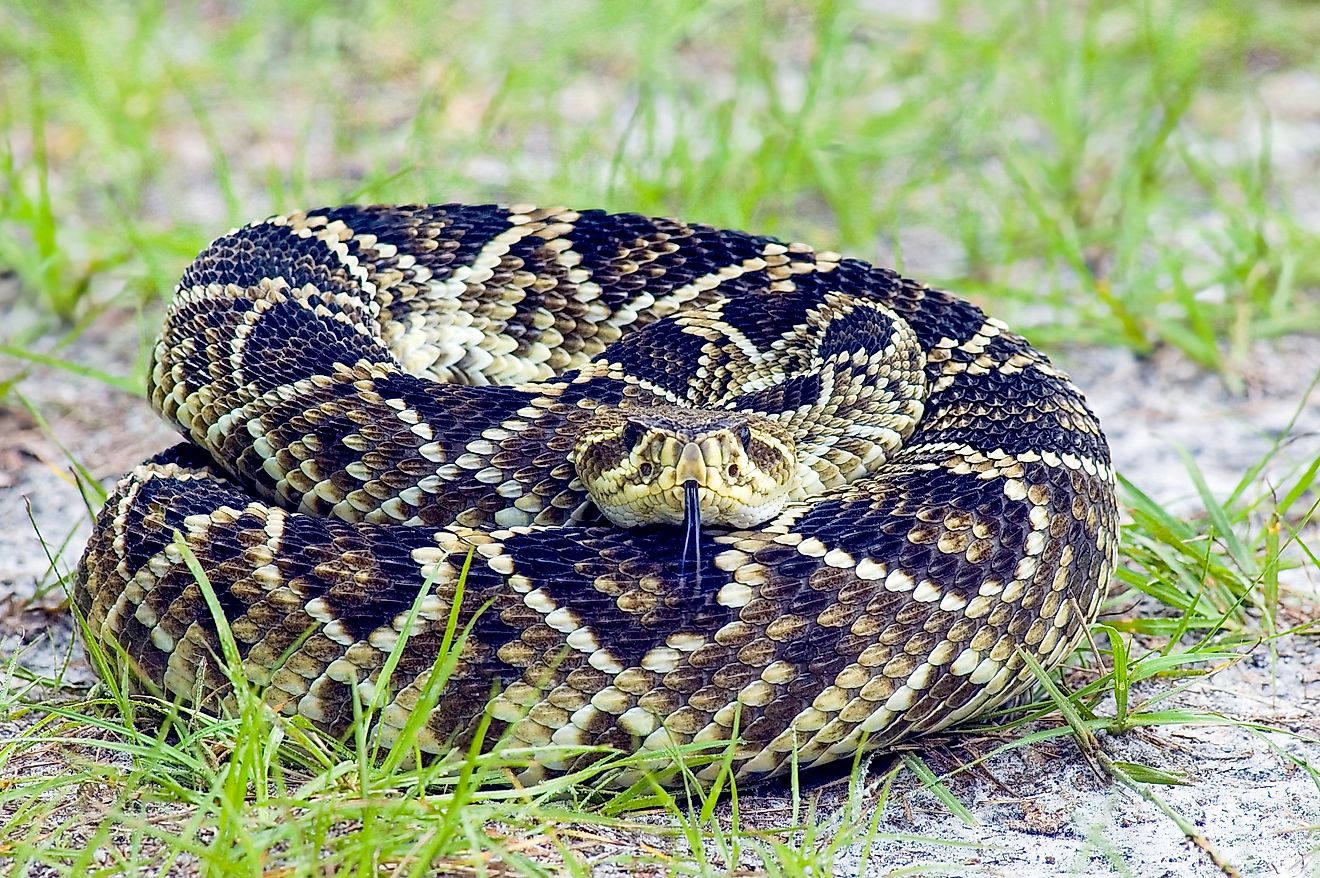
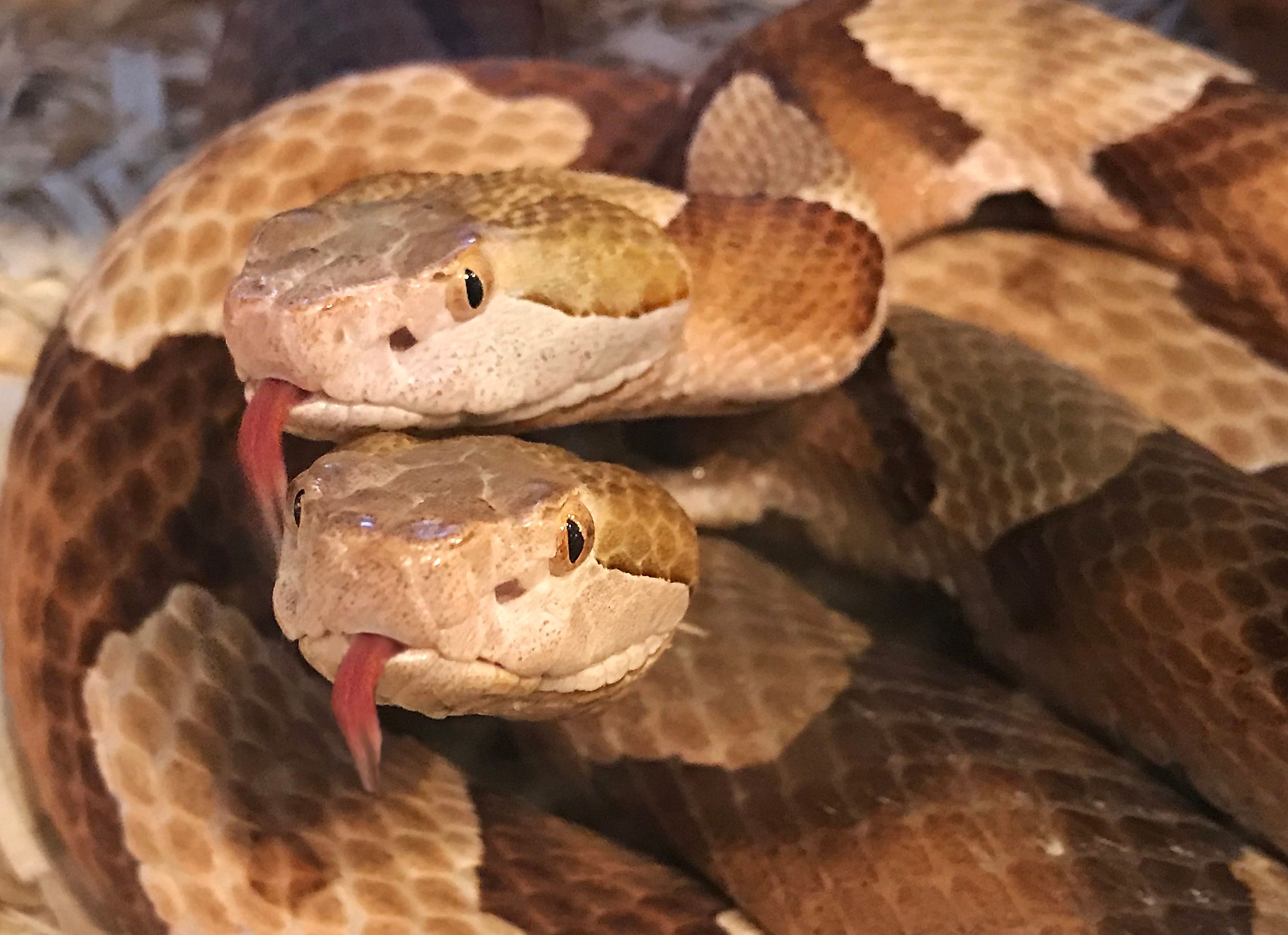
Copperheads do not sleep through winter. They do not eat, they barely move, and their body temperature drops to match the soil around them, but the lights stay on. On a mild February afternoon a copperhead will come to the mouth of its den, lie in the sun for an hour, and go back in.
What happens underground for the other five months is more social, more precisely engineered, and more faithful to a single address than most people would guess of a venomous snake.
Brumation Is Not Hibernation

Mammals hibernate by burning stored fat and holding an internal temperature well above their surroundings. Reptiles cannot do that. A copperhead in a den has a body temperature equal to the soil it is lying in, and studies tracking them through winter have found exactly that at depth.
What they do instead is brumate, which is better described as a stall than a sleep. Metabolism drops to a fraction of normal, digestion stops entirely because there is no heat to run it on, and the animal becomes largely immobile without ever being unconscious.
The critical requirement is simple and unforgiving: the den has to stay above freezing and below the frost line. Research on copperheads has found individuals surviving body temperatures slightly below freezing, but that is survival at the edge rather than a strategy, and a den that freezes solid kills everything in it.
They Share The Den, And Not Only With Each Other

This is the part that surprises people. Copperheads hunt alone and are solitary for most of the year, but communal hibernacula are common, and the company often includes other species entirely.
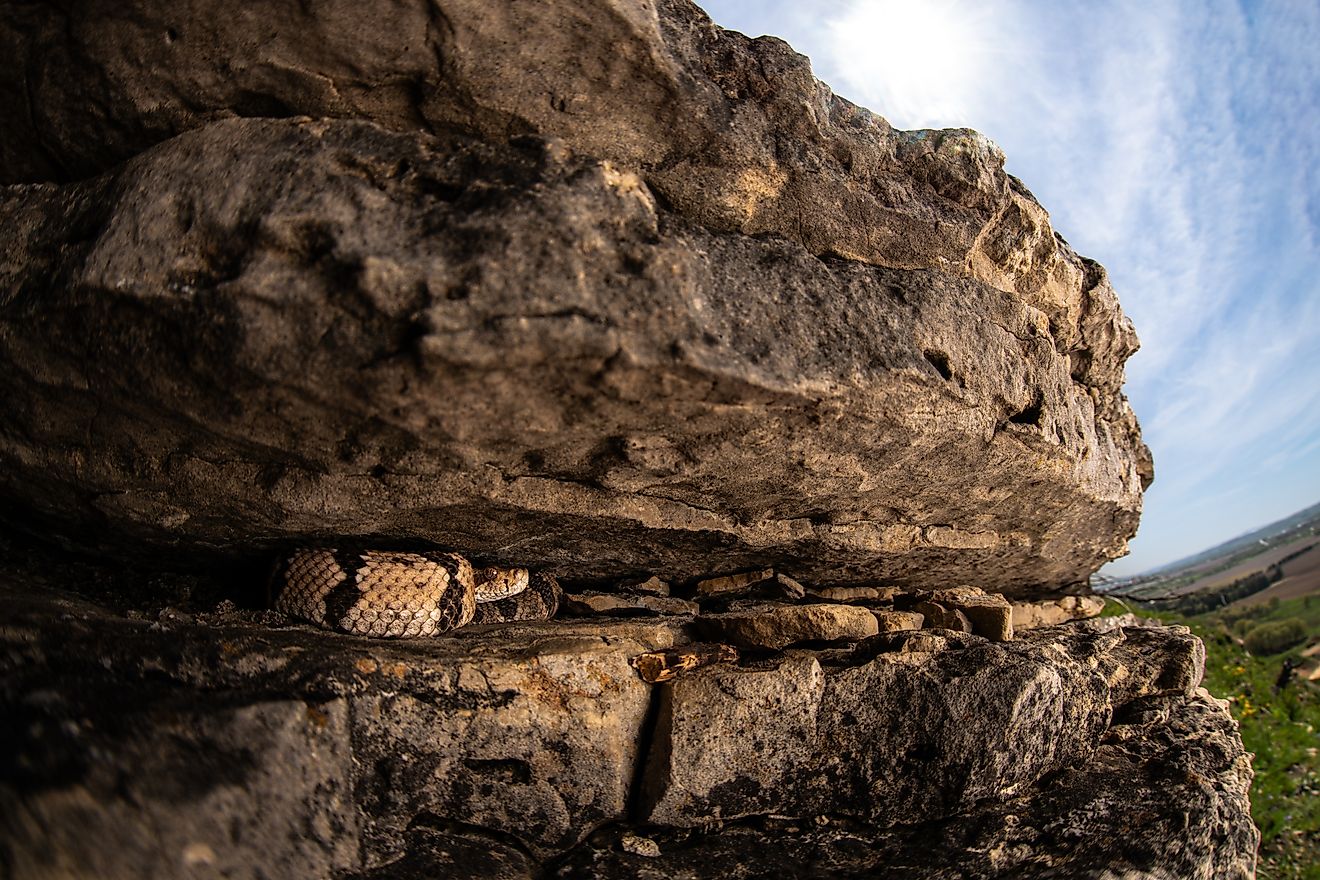
Timber rattlesnakes are the regular den-mates, along with eastern rat snakes and eastern racers. Three species with different diets and different temperaments spend the winter stacked in the same crevice, then go their separate ways in April, which is why the two pit vipers share so much ground.

There is a persistent folk belief that copperheads and black rat snakes interbreed, and this is where it came from. They den together. That is the entire basis for the myth, and there is a considerable gap between sharing a hole in winter and producing hybrid offspring.
The reason for the crowding is not affection. Suitable hibernacula are a scarce resource, and a crevice that reliably holds above freezing is worth sharing. Dens holding over a hundred snakes have been documented.
It Is Not Always Communal

The communal picture holds better in some parts of the range than others, and it is worth being precise about it. Jeffrey Beane of the North Carolina Museum of Natural Sciences has noted that montane populations commonly overwinter alongside timber rattlesnakes and rat snakes, while Piedmont and Coastal Plain copperheads are more likely to den individually.
Geology explains most of that. Mountain country offers rock: fissured outcrops, talus, and deep crevices that funnel well below the frost line and concentrate every snake in the area into a handful of viable sites. Flatter country offers no such bottleneck.

Where rock is unavailable they improvise. A Virginia radio-telemetry study found copperheads overwintering in tree stumps within upland deciduous forest, using the rotted root channels as a route below the frost line. Mammal burrows, old stone walls, building foundations and highway rock cuts all get used the same way.
The Same Address, Year After Year

Copperheads show fidelity to their hibernacula, returning to the same site in successive years. Henry Fitch documented this in his long-running Kansas work decades ago, and radio-tracking has confirmed it repeatedly since, from the Ozarks eastward.
That means the autumn journey is a migration rather than a wander. Snakes leave summer feeding territory in late September or October and travel back to a specific hole they have used before, in some cases covering substantial ground to get there.

The conservation implication is the uncomfortable part. If a population funnels into one rock outcrop every winter and somebody blasts it, backfills it, or builds on it, the loss is not a few snakes. It is the overwintering capacity of everything in that catchment, and the site knowledge that took generations to establish.
Warm Days Still Get Used

Brumation is not continuous. Copperheads overwinter roughly November to April, and across that stretch they emerge on warm days to bask at or near the den mouth, raising body temperature for a few hours before retreating.
The timing is predictable because it is driven by sun rather than season. Mid-morning to mid-afternoon on a clear, mild day is the window, and south-facing rock holds heat best, which is why dens on south-facing slopes get used preferentially.

This is the practical upshot for anyone who works outdoors. A sunny 60-degree day in January in the southern part of the range can put copperheads on the surface near rock walls, foundations, and steps. The snakes are not supposed to be out, but nobody told them that.
The Spring Exit Is Slow

Emergence is not a single morning. Copperheads leaving the den in spring tend to stay close to it for several weeks, basking in the immediate vicinity before dispersing to summer range.
That produces the densest aggregations of the year right at the den entrance, and it is why spring is when people stumble into several snakes at once rather than one. Research on timber rattlesnakes sharing these sites shows emergence timing tracks accumulated temperature rather than the calendar, so a warm March pulls everything forward.

Mating follows quickly. Copperheads breed in spring and again in autumn, and males become notably combative in both seasons, which is a sharp change from an animal that spent the winter motionless beside its rivals.
The Females Are Carrying Something

Here is the most elegant part of the whole arrangement. A female that mates in autumn does not become pregnant in autumn. She stores the sperm through the entire winter and fertilises her eggs after she emerges in spring.
Storage duration depends on where in her body it is held. Sperm kept in the cloaca survives a relatively short time; sperm moved to the upper oviducts or to specialised seminal receptacles lasts far longer, which is what makes overwintering viable.

Because a female may mate with several males across both seasons, a single litter can have multiple fathers, and multiple paternity has been documented in the species. She gives birth to live young in late summer, typically somewhere between two and a dozen, and often does so near the hibernaculum itself, which spares the newborns a long first journey before their own first winter.
So the answer to what copperheads do in the den all winter is: almost nothing, extremely deliberately, in company, at an address they already knew, while the females hold onto next year's litter until the ground warms up enough to start it.