How Far North Javelinas Have Spread
The javelina is a desert animal with a tropical pedigree, and for most of recorded history its United States range sat in the hot, low country of southern Arizona, New Mexico, and Texas. That boundary has been moving. Over the past several decades, wildlife biologists have logged collared peccaries at higher latitudes and higher elevations than any earlier records show, pushing the northern edge of the species toward the 35th parallel. The story of how far north javelinas have spread is partly a story of a recent colonizer reclaiming lost ground and partly a story of a warming climate opening cold country that was once closed to a thin-coated animal.
A Peccary, Not a Pig

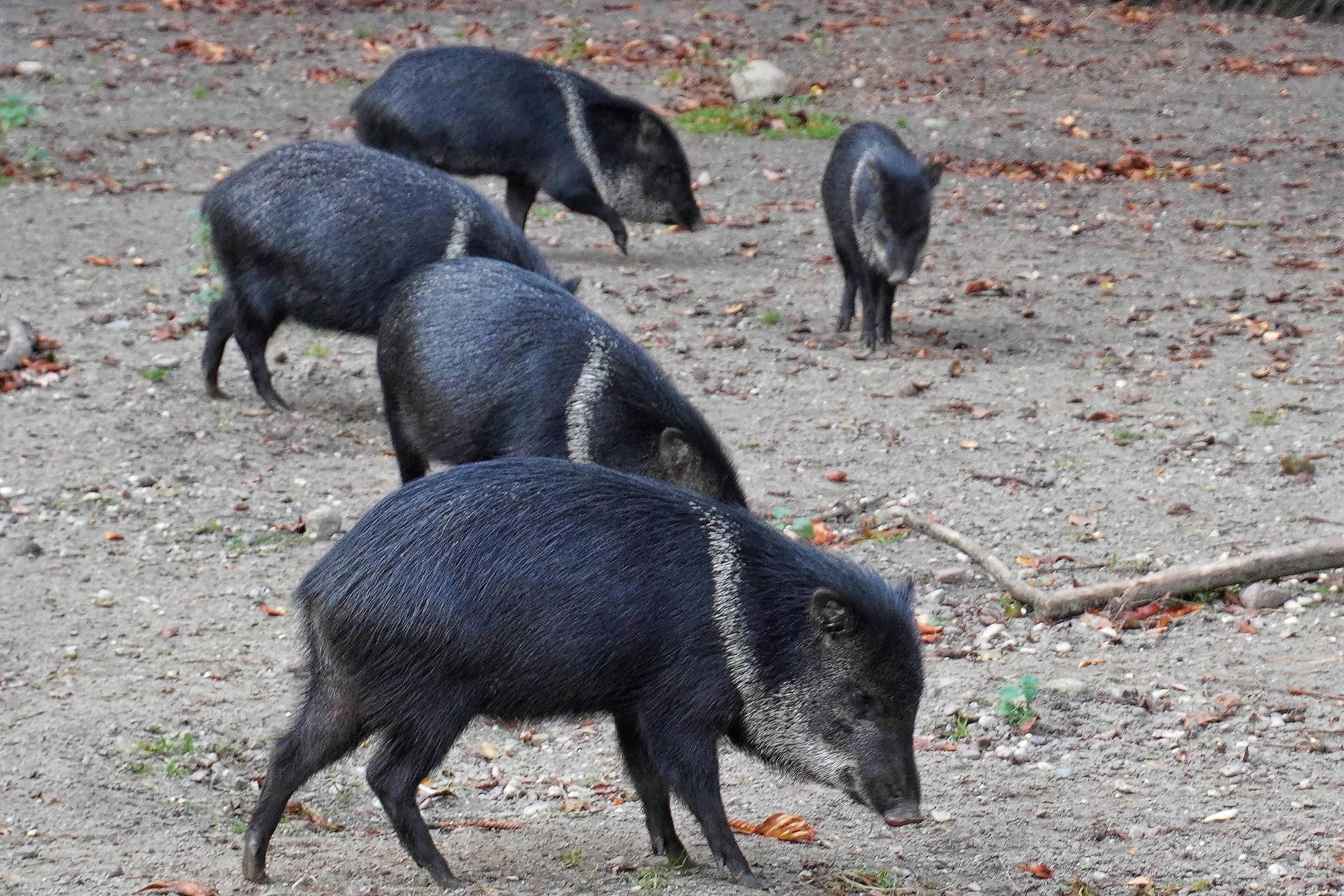
Despite the resemblance, the javelina is not a wild hog. It belongs to the peccary family, Tayassuidae, and carries the scientific name Pecari tajacu, sometimes written as Dicotyles tajacu in recent genetic treatments. An adult stands roughly 19 to 24 inches (48 to 61 cm) at the shoulder and weighs about 40 to 60 pounds (18 to 27 kg), with a grizzled gray-black coat and a pale band of hair across the shoulders that gives the collared peccary its name. The distinction matters for any question about range. Javelinas have no insulating underfur, so sustained cold is a genuine physiological barrier rather than a minor inconvenience. How far north the animal can go is set less by food or cover than by how hard the winters bite, which makes the species an unusually clean indicator of changing temperatures.
A Recent Arrival in the United States

Javelinas are often treated as quintessential desert natives, yet in the United States they are relative newcomers. Careful reviews of Arizona archaeological sites dating roughly between 300 B.C. and 1700 A.D. turn up no javelina bones, no depictions in rock art, and no mention in local lore. The first written records come from 18th-century Jesuit missionaries who described Indigenous people using the animal for food in and around present-day Arizona in the mid-1700s. The pattern points to a species that spread north out of Mexico along the Pacific side into Arizona and New Mexico, and up the eastern flank into Texas, within the last few centuries. By this reading, the first Europeans in the Southwest were documenting an animal that had only just arrived ahead of them.
The Historical High-Water Mark and a Steep Decline

By the nineteenth century the collared peccary had reached well up into Texas. Historical accounts place the animal as far north as the Red River along the present Texas and Oklahoma line and as far east as the Brazos River valley, with the classic range maps of North American mammals marking Montague County as the northern Texas limit. That high-water mark did not hold. Commercial hide hunting in the late 1800s and early 1900s, driven by demand for leather gloves and jackets and for bristles used in brushes, cut deeply into the population. One survey recorded javelinas in 65 Texas counties in 1905 but in only 46 counties fewer than two decades later. Texas granted the animal game-animal status in 1939, ending the commercial slaughter, by which point the range had receded to the South Texas brush country, the western Edwards Plateau, and the Trans-Pecos. Much of the northern frontier the species shows today is a recovery of ground lost to hide hunters a century ago rather than entirely new territory.
The Modern Push Into Northern Arizona and New Mexico

The clearest evidence of renewed northward movement comes from the past few decades. In northwestern New Mexico, biologists reported a cluster of new records in 2004 that documented the animal far beyond its previously published limits. On the Zuni Reservation, javelinas were observed at elevations reaching about 7,660 feet (2,335 m) in pinyon-juniper and ponderosa pine, cold high country well outside the hot desert most people associate with the species. One of those records sat roughly 230 miles (370 km) north of the nearest earlier published record in Hidalgo County, and the authors suggested the New Mexico sites might mark the northernmost extent of the species anywhere in the Southwest at the time.
For most of the twentieth century the Arizona range lay below the Mogollon Rim, the long escarpment that separates the low desert from the high plateau. Sightings around Flagstaff, which sits above 6,900 feet (2,100 m), began appearing in the late 1990s, and the animal now turns up in the red-rock country near Sedona and in Flagstaff neighborhoods, sometimes trudging through snow. Farther east, Petrified Forest National Park recorded its first confirmed javelina in 2018 and had logged seven sightings by 2024, the first documented occurrences of the species in that part of northern Arizona. These high-plateau records, built on ponderosa pine rather than saguaro, show an animal moving into country that would have been lethal to it in a colder era.
Across the Red River Into Oklahoma

The eastern side of the frontier has pushed past the old Red River boundary. In Texas, a previously unknown population was documented in Bastrop County near Austin in 2010, east of the animal's recognized western Texas and South Texas strongholds. North of the river, researchers described two collared peccary skulls collected near Waurika in Jefferson County, Oklahoma, only a few miles from the Red River, confirming the species in Oklahoma's southernmost counties. The Oklahoma animals most likely represent peccaries straying north out of a north-central Texas population, and the habitat along the Red River floodplain resembles the brushy country where Texas peccaries thrive. Whether this marks a stable range extension or a frontier of wanderers is still unsettled, but it places confirmed javelinas across a state line that marked their northern limit a century ago.
What Is Driving the Spread

Three forces appear to be working together. The first is climate. Because the javelina cannot tolerate hard, sustained cold, milder winters have the direct effect of unlocking country that used to kill the animals outright. Field biologists in northern Arizona describe a general northern march of warm-adapted species that tracks the region's warming trend, and the New Mexico researchers noted that peccaries may move north during years of drought or mild winters in search of food and new habitat. The second force is the long recovery from hide hunting, helped by the animal's protection as a managed game species across all three states. The third is human land use. Agriculture, suburban development, and the food and water that come with them have handed a highly adaptable generalist new corridors and new resources to exploit as it moves. None of these forces acts alone, and the northward trend is best read as the combined result of a warming climate, released hunting pressure, and a landscape reshaped by people.
Where the Frontier Stops

The same trait that defines the northern limit also predicts its future. A thin-coated animal with no underfur can only follow the retreat of hard winters, so the ceiling on javelina expansion is thermal rather than geographic. As long as winters in the high plateau country continue to soften, the species has room to keep climbing in both latitude and elevation, and researchers working in the Four Corners region expect the sightings there to continue. Cold snaps will still turn back the leading edge in hard years, and plateau winters remain far more severe than anything in the Sonoran Desert core of the range. For now the confirmed frontier runs roughly along the 34th and 35th parallels, through the San Juan Basin of New Mexico, the country around Flagstaff and Petrified Forest in Arizona, and across the Red River into southern Oklahoma.
The Moving Northern Edge
Taken together, the records describe an animal whose northern boundary is not a fixed line but a moving front. This tropical peccary reached the United States only a few centuries ago, was beaten back by the hide trade, and is now reclaiming and exceeding its former ground. In the process it has become one of the clearer mammalian signals of a warming Southwest. How far north it has spread is best answered not with a single place but with a direction. The leading edge now sits in the pine forests of the Colorado Plateau, far north of the South Texas brush country where it began, and the evidence suggests it has not finished moving.