Why Some Birds Stay North All Winter
When the first hard frost settles over northern forests, much of the bird world is already gone. Roughly two-thirds of North American bird species leave the cold behind and head south each autumn. Yet step outside on a sub-zero January morning and you will still hear the thin calls of chickadees, the scold of a blue jay, and the drum of a woodpecker on frozen bark. These birds made the opposite choice. They stayed. Understanding why means looking at the economics of winter, the chemistry of a bird's body, and the surprising intelligence packed into a skull smaller than a walnut.
The Bargain Behind Staying Put

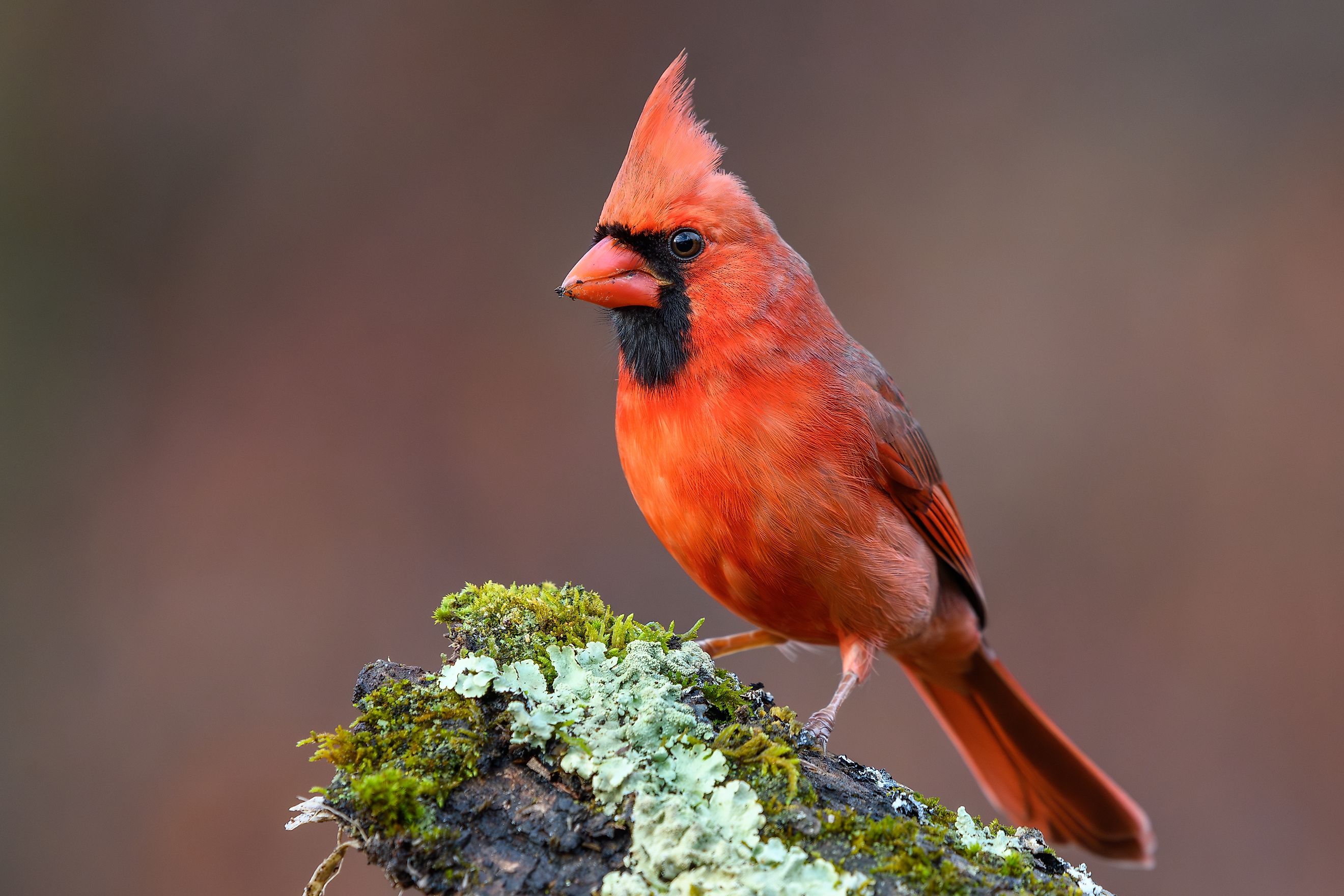
Flying hundreds or thousands of miles burns enormous fuel reserves, exposes travelers to storms and predators, and carries a genuine risk of death along the route. The dangers of the journey can outweigh the benefits of escaping winter, and for a bird that can find enough food and hold enough heat in place, skipping that journey is often the safer bet. Residency is not a failure to migrate. It is an alternative strategy with its own costs and rewards, and the species that stay have evolved the equipment to make it pay. In a typical northern woodland that roster includes the Northern Cardinal, Blue Jay, Black-capped Chickadee, several woodpeckers, the Dark-eyed Junco, and the Tufted Titmouse.
That adaptation is essential because northern winters put pressure on the animals in two ways. Food becomes harder to find, while freezing temperatures make it difficult to retain body heat. A bird is endothermic, which means it burns energy constantly to stay warm, and keeping a constant body temperature takes a great deal of energy, so small birds live right on the edge of having enough. A Black-capped Chickadee runs a core temperature near a feverish 108 degrees Fahrenheit (42 degrees Celsius). Holding that warmth through a long winter night, with no food coming in, is brutally costly. A chickadee can burn through close to ten percent of its body weight overnight simply staying warm. Survival becomes a nightly accounting problem. Stay only if you can balance the books.
Food Draws the Line

Diet is one of the strongest factors determining which birds stay through the winter. Insects become difficult to reach beneath snow and tree bark, leaving birds that depend almost entirely on them with little choice but to migrate. The birds that stay are the ones that can pivot to resources winter does not erase. Seed-eaters crack the dried heads of grasses and crowd backyard feeders. Berry-eaters strip hawthorns, sumac, and juniper. Woodpeckers chisel dormant insects and larvae out of dead wood, a pantry that stays stocked all season. Larger hunters follow the food to open water, the way bald eagles crowd rivers and lakes that stay unfrozen. A flexible winter diet is the price of admission for year-round residency, and the species without one are the ones that fill the southbound skies in September.
Food storage is another reason some birds manage to stay through winter. Storing food in autumn and retrieving it in the lean months is thought to be an adaptation for surviving harsh winter conditions, and many food-caching species are also non-migratory. A chickadee or nuthatch does not need a single rich food source to last the winter. It needs thousands of small ones, hidden in advance, and the means to find them again.
The Birds That Hide Their Own Pantry

Through late summer and fall, a chickadee tucks seeds and insect prey into bark crevices, clusters of lichen, and curled dead leaves, building a scattered network of caches across its territory. The catch is retrieval. A cache is worthless if the bird cannot relocate it weeks later under snow. This is where winter residency becomes a problem of memory rather than muscle. The task is unforgiving, and even committed hoarders can fail it, the way squirrels lose track of many of the nuts they bury.
Food-caching chickadees rely on hippocampus-dependent spatial memory to recover their stores, and the demand is steep enough to have reshaped the brain itself. Across the wide range of the Black-capped Chickadee, birds from harsher winter climates carry a larger hippocampus with more neurons than their relatives in milder places. The pattern holds at astonishingly fine scales. Mountain chickadees from the highest, snowiest elevations of the Sierra Nevada show better spatial memory and larger hippocampi, with nearly twice the number of hippocampal neurons, compared with birds living only about six miles (ten kilometers) away at lower elevation.
This is more than a coincidence. Long-term fieldwork on wild mountain chickadees has shown that juveniles with better spatial learning and memory are significantly more likely to survive their first winter, direct evidence that cold winters select for sharper minds. For these birds, staying north is as much a cognitive adaptation as a physical one.
Warmth Without a Journey

A resident bird cannot outfly the cold, so it must out-engineer it. The first line of defense is the feather coat. By fluffing its plumage, a bird traps more air against the skin, creating pockets of insulation much like a down jacket. Beneath the feathers, fat laid down in autumn serves as both fuel and insulation, and shivering generates heat on demand through the day.
Their exposed legs and feet are particularly vulnerable to the cold, but they have evolved a remarkably effective way to protect them. Birds use countercurrent heat exchange, in which arteries carrying warm blood toward the feet run alongside veins returning cold blood to the body. Heat passes directly across from the outgoing to the incoming stream, so warmth is recycled back into the core before it can be lost to ice or water. Scientists measured that mallards lose only about five percent of their body heat through their feet at freezing temperatures. In the classic study of the mechanism, researchers found that below freezing the birds actually increase blood flow to the feet just enough to keep the tissue from freezing, a controlled balance that spends the minimum heat necessary. On the harshest days a bird adds a behavioral trick, pulling one foot up into its belly feathers and standing on the other to cut its exposed surface in half.
Lowering the Thermostat at Night

The hardest part of winter comes after dark, when birds must endure long, foodless cold nights. To survive them, some small residents do something that sounds self-destructive. They let their bodies cool. Chickadees and their relatives use facultative hypothermia, actively lowering body temperature at night to shrink the gap between themselves and the cold air, which slows the rate at which heat bleeds away. On very cold nights a chickadee can slip into a controlled state in which its body temperature falls by roughly twenty degrees Fahrenheit (eleven degrees Celsius) before it rewarms itself by shivering at dawn.
The payoff is enormous. A modeling study found that for a small northern bird, the use of nocturnal hypothermia could raise winter survival by about fifty-eight percent over a hundred-day winter. The strategy is not limited to the darkness either. Researchers documented actively foraging Black-capped Chickadees letting their body temperature drop as low as 96 degrees Fahrenheit (35.5 degrees Celsius) during the day in eastern Canada. Studies of chickadees wintering in interior Alaska at 64 degrees north show how tight the margins are. There, a bird weighing barely half an ounce (twelve grams) must deposit in roughly six hours of winter daylight all the fat it will burn through an eighteen-hour nocturnal fast. Staying north is survivable, but only just, and only with every trick deployed at once.
When Only Some of a Flock Leaves

Not every member of a species follows the same winter pattern. Some leave almost to the last bird, the way snow geese empty out of the north and pack into a few wintering grounds. In many birds, though, a single population splits, with some individuals departing and others holding their ground. This pattern, called partial migration, is thought to be the most common form of migration and a likely evolutionary stepping stone toward full migration. It raises the sharper question of why one bird leaves while its neighbor stays.
The answer usually comes down to the individual's circumstances rather than its species. Whether a bird migrates or remains resident can depend on its condition, its internal state, and the harshness of its environment, with some individuals essentially making the best of a bad situation. Dominant, well-fed, experienced birds can often afford to tough out winter, while weaker or younger ones are pushed south. One familiar example is the American Robin, where younger birds may migrate while older, more experienced ones stay put when resources allow. Staying also carries a competitive prize. A resident that survives is already on territory when spring arrives, ahead of any rival still making its way back north.
A Line That Is Moving North

As winters get warmer, the cold that once pushed birds south is fading, and this boundary is moving farther north. A landmark analysis of 254 wintering species found their ranges shifting north between 1975 and 2004, with northern range boundaries advancing on the order of more than half a mile (over a kilometer) per year. Government monitoring tells the same story at the level of whole communities. Among 305 widespread North American bird species, the mid-winter center of abundance moved northward by more than forty miles (sixty-four kilometers) between 1966 and 2013.
Birds are among the most mobile animals alive, yet it took many species roughly thirty-five years to move far enough north for winter temperatures to match where they used to live, lagging well behind the pace of warming. Some are keeping up conspicuously. The Black Vulture, once a bird of the American South, now winters as far north as Massachusetts. The decision to stay north, in other words, is being quietly rewritten by a changing climate, and the maps of winter residency drawn today will not be the maps of a generation from now.
The Edge of Survival
Birds that remain in the north through winter are not simply more resilient versions of those that migrate. They survive by relying on a different set of skills and adaptations, including flexible diets, food caches, specialized feathers, heat conservation, and the ability to lower their body temperature when conditions become severe. Despite this versatile arsenal, survival is never guaranteed and is rather an impressive feat, as many birds must balance every calorie against the energy needed to make it through winter.