The Most Common Birds in the World
There are roughly 50 billion wild birds on Earth, about six for every human being, and yet a small handful of species account for a startling share of them. Add in domesticated birds and one animal towers over all the rest: the chicken, which by itself outnumbers every wild bird species combined. Getting to precise figures is genuinely hard, and every number below is exactly that, an estimate, but the broad picture is clear. A few wildly successful species dominate the skies while most birds are comparatively scarce. These are the most common birds in the world, ranked by their estimated populations, and every one of them is listed as Least Concern by the IUCN, which is part of the reason they are so numerous in the first place.
1. Domestic Chicken
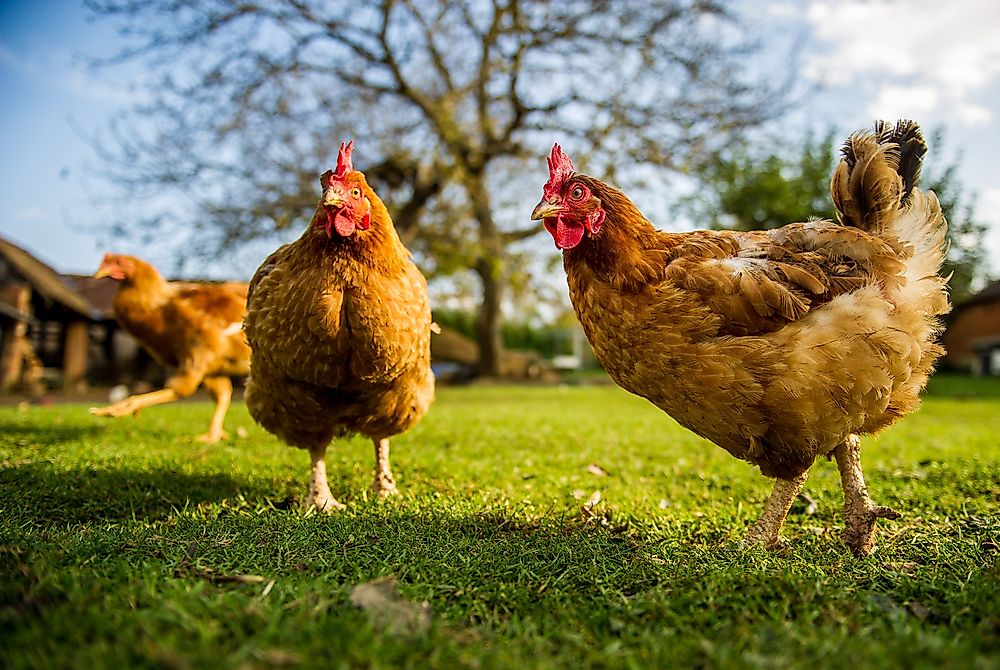
No other bird comes remotely close. The domestic chicken, Gallus gallus domesticus, numbers somewhere around 25 billion alive at any given moment, and tens of billions more are raised each year. To put that in perspective, chickens outnumber humans on the planet by roughly three to one, and they outnumber even the most abundant wild bird by more than tenfold. Every one descends from the red junglefowl of Southeast Asia, domesticated thousands of years ago, and the bird's population explosion tracks the rise of industrial farming in the 20th century. The chicken is now so central to human diets worldwide that some scientists have seriously proposed its bones as a defining marker of the Anthropocene, the geological age of human impact on the planet.
2. House Sparrow

Among birds that live in the wild, the house sparrow, Passer domesticus, is often crowned the most abundant of all, with a global population estimated at about 1.6 billion. A landmark 2021 study that set out to count every bird species on Earth placed it at the very top of the wild rankings. Small, brown, and unfussy, the house sparrow is native to Europe, North Africa, and much of Asia, but it has followed people almost everywhere else, carried deliberately to the Americas, Australia, and southern Africa, which makes it the most widely distributed wild bird on the planet. It thrives in cities and farmyards and largely avoids deep forest and open desert, having essentially hitched its fortunes to ours. Tellingly, where people thin out, so do the sparrows, and their numbers have dropped sharply in several European cities in recent decades.
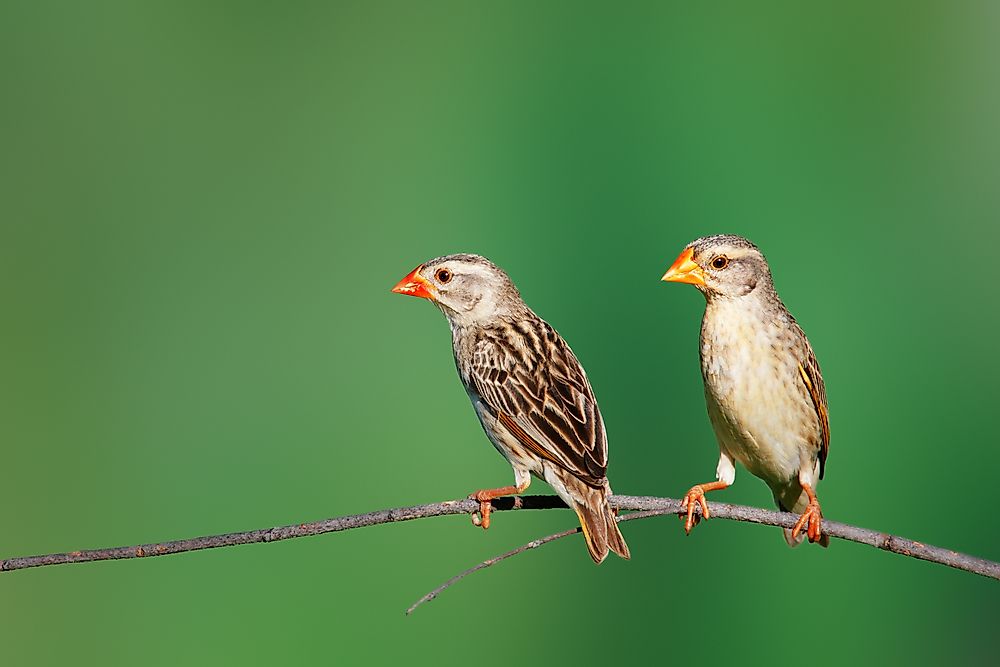
3. Red-Billed Quelea

For decades the title of most abundant wild bird belonged to the red-billed quelea, Quelea quelea, and by many counts it still might, with an estimated 1.5 billion birds. A sparrow-sized member of the weaver family, it lives across Sub-Saharan Africa in flocks so vast they can darken the sky and strip a field bare in hours, which has earned it the grim nickname of Africa's feathered locust. A single roost can hold millions of birds. Because it devastates grain crops, the quelea is treated as a serious agricultural pest, and control campaigns have at times destroyed birds by the millions without making much of a dent in the total, a testament to just how many there are.
4. European Starling

The European starling, Sturnus vulgaris, numbers around 1.3 billion and comes with one of the best origin stories in ornithology. In 1890, a group in New York City set out to introduce every bird mentioned in the works of Shakespeare to North America and released about a hundred starlings in Central Park. From that tiny founding flock, the species exploded to some 200 million birds across the continent, a spectacular and ecologically costly invasion, since starlings muscle native cavity-nesters out of their nest holes. Glossy black with an iridescent sheen and a scatter of pale spots, they are best known for their murmurations, the vast, shape-shifting clouds of thousands of birds that wheel through the evening sky in near-perfect coordination.
5. Barn Swallow

The barn swallow, Hirundo rustica, rounds out the small club of birds with populations above a billion, at roughly 1.1 billion. It is one of the most widespread songbirds on Earth, breeding across the entire Northern Hemisphere and migrating enormous distances to winter in the Southern Hemisphere, with some populations crossing the length of Africa or the Americas twice a year. Sleek, with a deep-forked tail and a rusty throat, the barn swallow long ago abandoned caves and cliffs for the eaves, barns, and bridges that people build, catching insects on the wing in fast, acrobatic flight. Its arrival in spring has been read as a sign of the turning seasons across many cultures for thousands of years.
6. Mourning Dove
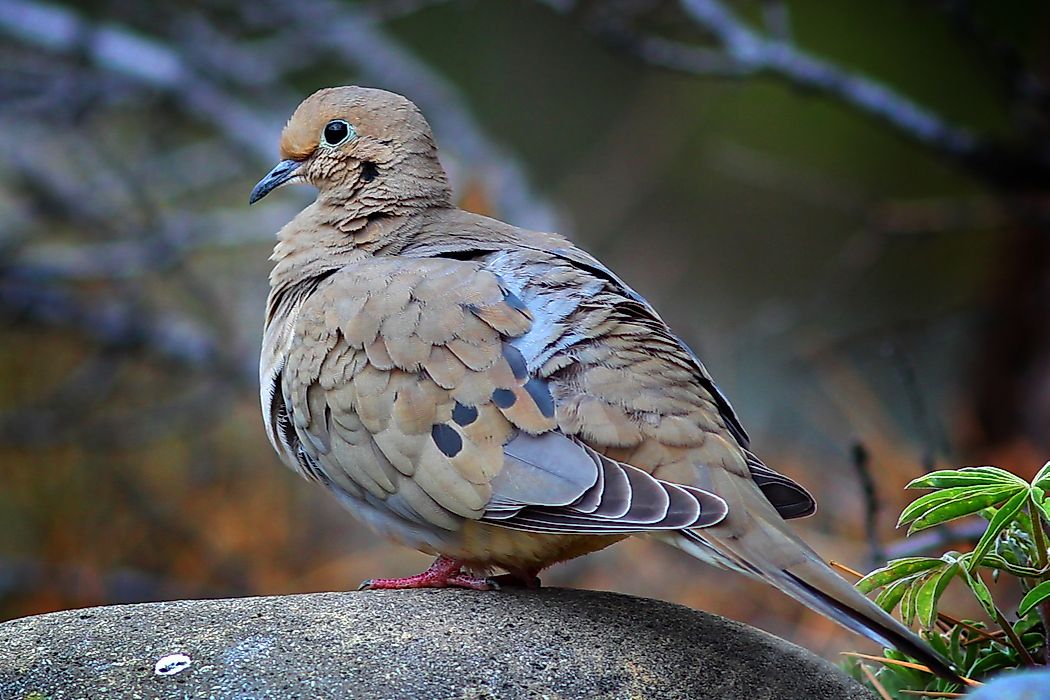
Below the billion mark the numbers get patchier, and the birds that appear next tend to be the ones we count best, largely in North America. The mourning dove, Zenaida macroura, is a prime example, with an estimated 475 million birds and a strong claim to being one of the most abundant on the continent. Named for its soft, sorrowful cooing, this slim gray dove with black wing-spots is found right across North and Central America and is also, by a wide margin, the most hunted game bird in the United States, with tens of millions taken every year and the population barely registering the loss. It is a prolific breeder, raising several broods a season, and the whistling of its wings on takeoff is a familiar backyard sound.
7. American Robin

North America's single most abundant landbird is the American robin, Turdus migratorius, with roughly 370 million individuals. Despite the shared name, it is not closely related to the smaller European robin; early colonists simply named it for its familiar red-orange breast. It is in fact a true thrush, and the sight of one tugging an earthworm from a spring lawn is one of the continent's most recognizable wildlife moments. Robins are strikingly adaptable, thriving in forests, farmland, and suburbs alike, and in the colder months they gather in enormous night roosts that can number in the tens of thousands.
Why Counting Birds Is So Hard
Every figure on this list is an estimate, and a rough one. Scientists reach these numbers by combining huge troves of citizen-science sightings, from apps such as eBird, with statistical models that scale local counts up to global totals, and different assumptions can produce very different answers. The landmark 2021 effort to count all the world's birds turned up only a handful of species in the billions and estimated that around one in eight bird species has fewer than 5,000 individuals left. History offers a sharp warning against treating abundance as permanent. The passenger pigeon was very likely the most numerous bird in North America, with flocks estimated in the billions that took days to pass overhead, yet relentless hunting drove it all the way to extinction, and the last of its kind died in 1914.
The Most Common Birds at a Glance
| Rank | Bird | Scientific name | Estimated population | Region / basis |
|---|---|---|---|---|
| 1 | Domestic chicken | Gallus gallus domesticus | ~25 billion | Worldwide (domesticated) |
| 2 | House sparrow | Passer domesticus | ~1.6 billion | Worldwide |
| 3 | Red-billed quelea | Quelea quelea | ~1.5 billion | Sub-Saharan Africa |
| 4 | European starling | Sturnus vulgaris | ~1.3 billion | Worldwide |
| 5 | Barn swallow | Hirundo rustica | ~1.1 billion | Worldwide |
| 6 | Dark-eyed junco | Junco hyemalis | ~630 million | North America |
| 7 | Mourning dove | Zenaida macroura | ~470 million | North America |
| 8 | American robin | Turdus migratorius | ~370 million | North America |
| 9 | Blue-gray gnatcatcher | Polioptila caerulea | ~230 million | North America |
| 10 | Chipping sparrow | Spizella passerina | ~230 million | North America |
| 11 | Red-winged blackbird | Agelaius phoeniceus | ~170 million | North America |
| 12 | Common pheasant | Phasianus colchicus | ~75-150 million | Worldwide (widely introduced) |
| 13 | Yellow-rumped warbler | Setophaga coronata | ~130 million | North America |
| 14 | Song sparrow | Melospiza melodia | ~130 million | North America |
| 15 | Common swift | Apus apus | ~80-140 million | Europe, Asia, Africa |
| 16 | Rock pigeon (feral) | Columba livia | ~120 million | Worldwide (introduced) |
| 17 | Cedar waxwing | Bombycilla cedrorum | ~90 million | North America |
| 18 | Common wood pigeon | Columba palumbus | ~50-75 million | Europe |
| 19 | American goldfinch | Spinus tristis | ~40 million | North America |
| 20 | American crow | Corvus brachyrhynchos | ~30 million | North America |
These figures are estimates drawn from several sources, including the 2021 global bird-count study, the IUCN, and Partners in Flight, and they should be read as approximate. Reliable worldwide counts exist for only a handful of species, so below the top five the numbers lean heavily on North American data, where bird surveys are most complete, and different assessments can disagree by wide margins. Partners in Flight, for example, ranks the American robin as North America's most abundant landbird, while other recent estimates place the dark-eyed junco higher.
A Few Species Rule the Skies
The clear lesson of the numbers is that abundance in the bird world is wildly unequal. A tiny set of adaptable, human-friendly species, the chicken above all, accounts for a huge share of every bird alive, while thousands of other species hang on in the hundreds or low thousands. The birds at the top of this list share one trait above all: they have learned to live alongside people, in our fields, cities, and farmyards. That has proven the surest path to a population in the billions, and, as the passenger pigeon showed, occasionally the surest path to ruin as well.