How Baby Rattlesnakes Find A Den Their First Winter
Consider the problem from the snake's side. You are a rattlesnake born in late August, eight inches long, a few weeks into existence, and you have personally seen perhaps 50 yards of the world. In roughly eight weeks, the first hard frost will kill you unless you are coiled in a chamber below the frost line, and the only such chamber in your part of the valley is a specific crack in a specific ledge that may be hundreds of yards away, used by your family for centuries, and entirely unknown to you. Every autumn, newborn rattlesnakes across America solve this problem on the first try, and the way they do it, part maternal planning, part chemical trail-following, part inherited real estate, is one of the quietly astonishing feats in North American wildlife.
Born In August With A Deadline

Rattlesnakes skip the egg stage that leaves other reptiles' young parked in a nest: they bear live young, typically a litter of four to a dozen, in late summer or early fall, each newborn arriving fully formed, fully venomous, and equipped with a single silent button where the rattle will grow, one new segment per shed. The famous claim that babies are deadlier than adults because they cannot control their venom is a campfire upgrade of the truth; newborns are dangerous and should be left strictly alone, but adults carry far more venom and deliver bigger bites. The baby's real distinction is not its bite. It is its schedule, because an August birthday in rattlesnake country means winter is already in the mail.
The timing is not carelessness; it is the back half of a plan that started months earlier, and the first installment of that plan is standing guard right at the birth site.
Two Weeks With Mother

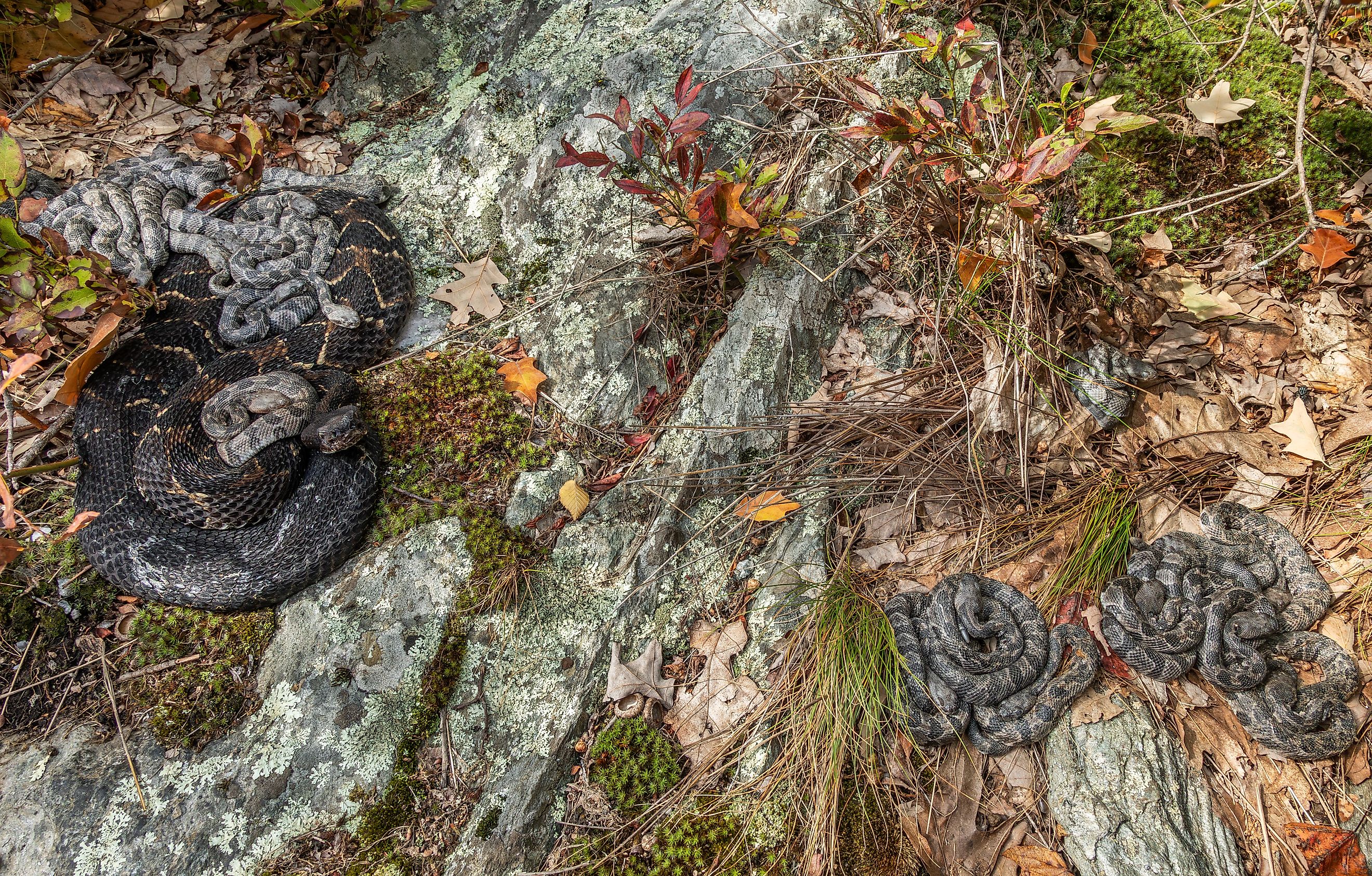
For a long time, science filed rattlesnakes under reptilian indifference, but field research has overturned that: rattlesnake mothers stay with their newborns, typically for a week or two, until the litter completes its first shed, the milestone that hardens the babies' skin and switches on their full chemical senses. During those days the female stands guard at the birth refuge, herding wanderers back and facing down threats, and in several species, timber rattlesnakes most famously, pregnant females gather at shared rookeries and give birth in loose company, newborns from multiple litters basking in a communal nursery of coils.
The attendance period ends at the first shed, and the family does not exactly scatter so much as synchronize: the shed leaves every baby carrying the scent toolkit it needs, autumn presses, and the whole operation begins drifting toward the same destination, which, by maternal design, was never far away to begin with.
The Birthplace Is The Map

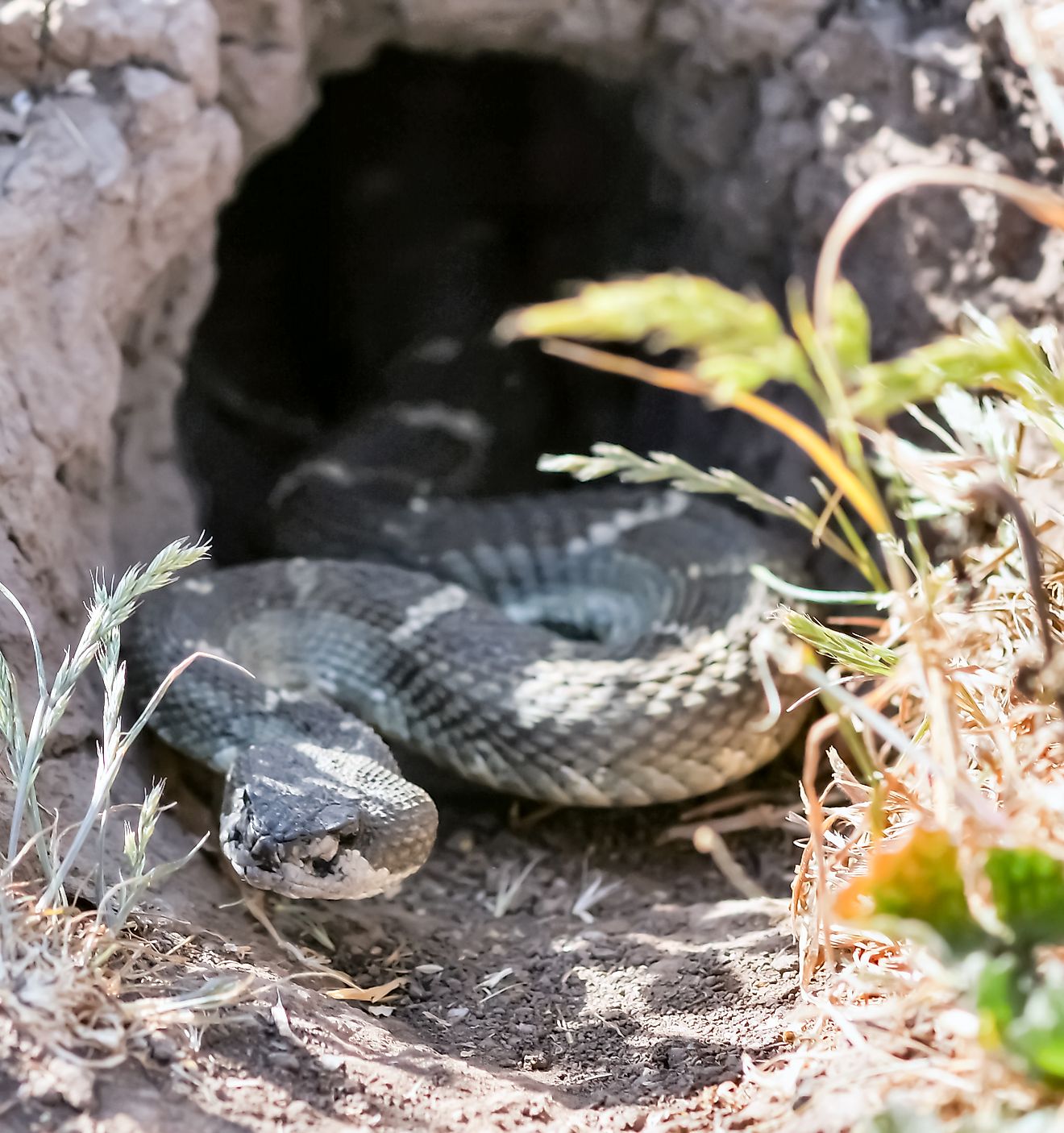
Here is the quiet first half of the solution: the mother pre-solves most of the navigation problem before the babies exist. A gravid rattlesnake spends her pregnancy basking at warm, sheltered rookery sites, and those sites cluster near the den, often on the same sun-facing slope, sometimes mere steps from the winter entrance. By giving birth close to the family vault, she converts her newborns' impossible cross-country journey into a short commute, a few dozen to a few hundred yards instead of the mile-plus an adult might range in summer.
The strategy costs her plenty, since a pregnant female barely feeds and spends her season tethered to the nursery slope, but it buys her litter the thing no instinct could otherwise supply: proximity. In rattlesnake real estate, the first rule of raising children is the same as everywhere else. Location.
Stereo Smell And A Chemical Highway

Proximity still is not directions, and the second half of the solution is the forked tongue. Every flick collects scent particles and delivers them to the Jacobson's organ in the roof of the mouth, and because the tongue is forked, each tine samples a slightly different spot, giving the snake directional, stereo smell, the ability to tell not just that a trail exists but which way along it the traffic ran. Adult rattlesnakes lay exactly such a trail every fall, their skin lipids painting a chemical highway from the summer range back to the den as the whole population funnels home.
Newborns simply merge into that traffic. Experiments and field tracking have shown neonate rattlesnakes following the scent trails of adults of their own species, often their own mother's, tongue-flicking their way along routes they have never traveled toward a destination they have never seen. The den, when they reach it, is already perfumed with generations of family, and the baby files in among adults many times its size for a first winter spent in the safest room in the county.
The Ones That Do Not Make It

The system is elegant, not gentle. First-year mortality in rattlesnakes is brutal, with a large share of every litter lost to hawks, kingsnakes, roadrunners, roads, and early freezes, and a baby that loses the trail, gets born too late in a cold year, or gets displaced improvises with whatever cover exists, a rodent burrow, a rock pile, a stump hole, refuges that sometimes carry a small snake through and often do not. The den is not a nicety; it is the filter between a litter and a future, which is why most of the rattlesnakes basking at a den each spring are survivors of the sharpest exam their species gives.
The same biology writes a hard conservation lesson: rattlesnakes moved far from their home range, whether relocated "nuisance" adults or displaced young, frequently die in their first winter because they are navigating by a map that no longer matches the ground. Protecting a rattlesnake population means protecting its den and the scent-linked landscape around it, because the species cannot simply be issued a new address.
One Winter From Local Knowledge
Follow the whole arc and the first autumn turns out to be a one-time initiation: born beside the vault, escorted through the vulnerable first days, guided in by the family's own chemistry, the baby that reaches the den has, in a single trip, acquired the coordinates it will use for the rest of its life. From the second year on it is a commuter like its mother, ranging out each summer and homing back each fall to the crack in the ledge it first entered at eight weeks old. In rattlesnake country, nobody teaches the route twice. One trip down the chemical highway, one winter among the elders, and the newest resident knows exactly what every rattlesnake knows: where home is, and that it has always been there.