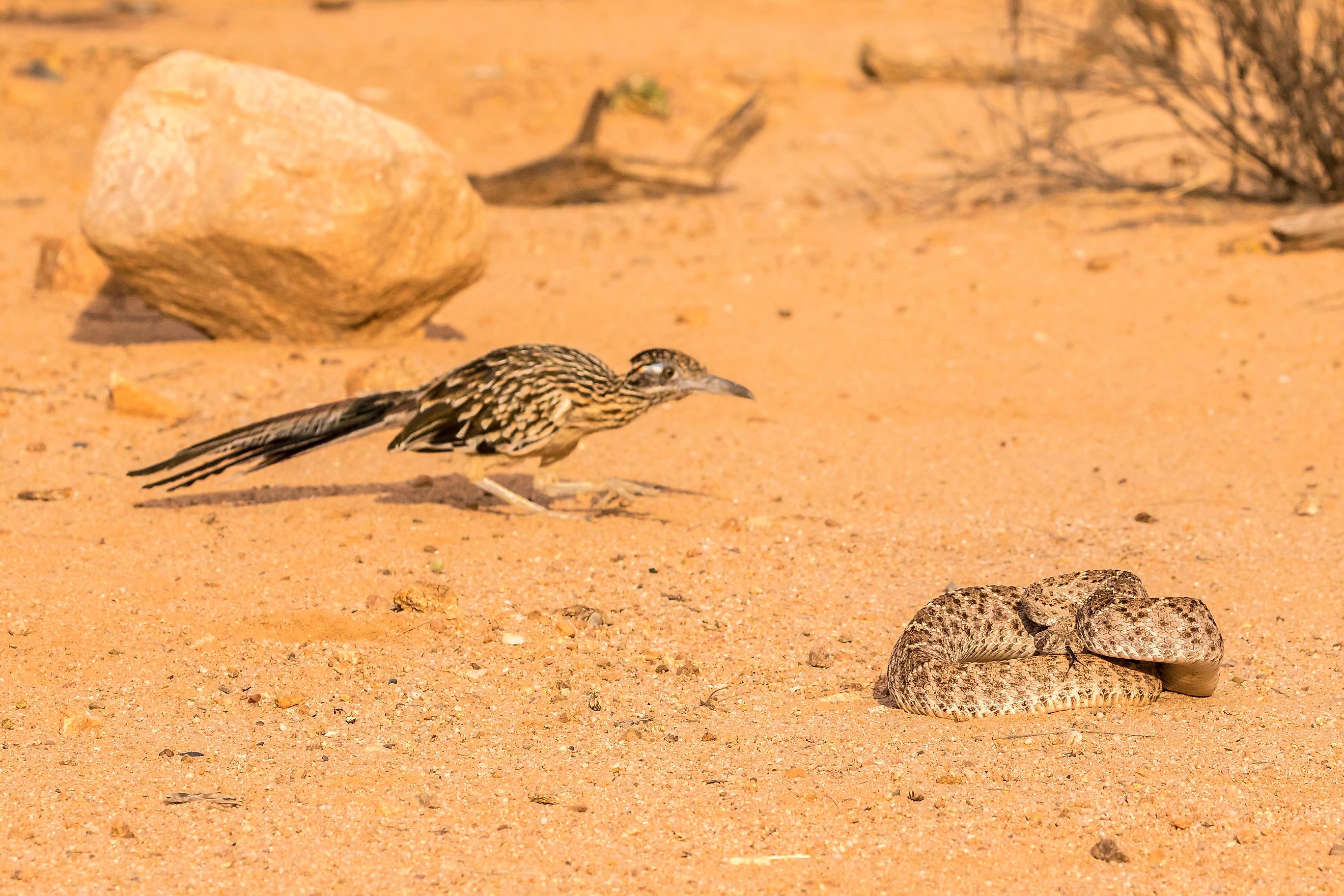
Why Roadrunners Hunt Rattlesnakes
The cartoons got the casting exactly backward. The real roadrunner is not the desert's lovable fugitive; it is one of its most ruthless professional killers, a bird that sprints down lizards, snatches hummingbirds out of the air, swallows scorpions whole, and, most famously, picks fights with rattlesnakes on purpose and usually wins. A two-foot bird weighing less than a can of soup walks up to a coiled pit viper armed with hypodermic fangs, provokes it, dodges the fastest strike in North American wildlife, and turns the snake into lunch. The question is not whether this happens, because it happens across the Southwest every week. The question is why a bird would choose this line of work, and the answer is a tidy lesson in desert economics, venom chemistry, and pure athletic arrogance.
A Cuckoo That Chose Violence

The greater roadrunner (Geococcyx californianus) is, improbably, a cuckoo, a member of a family better known for freeloading in other birds' nests, that evolved into a ground-running predator of the American Southwest. It can fly, briefly and badly, and treats the ability as an emergency exit rather than a lifestyle, preferring to do everything at a dead run of up to roughly 20 miles per hour, which makes it about the fastest thing on two legs that can still technically get airborne. The long tail is a rudder, the shaggy crest is a mood ring, and the whole machine is built for one job: converting desert animals into roadrunner.
And it is not picky about which animals. Roadrunners eat lizards, mice, tarantulas, scorpions, centipedes, small birds, eggs, and snakes of most descriptions, a menu that reads like the desert's hazard signage, because in country this sparse, a predator that only ate safe things would starve politely. The rattlesnake is simply the top of that logic, the biggest, most defended package on the shelf.
The Economics Of Eating Dangerous Things

Why gamble with a pit viper? Because the desert pays poorly and a snake pays big. Prey out here comes in small, scattered installments, a lizard here, a grasshopper there, while a single snake is a dense, slow-to-spoil block of protein and fat that can cover a day's budget in one transaction, plus most of the bird's water needs, since roadrunners extract nearly all their moisture from prey and rarely drink at all. For a high-metabolism hunter feeding itself and a nest, the rattlesnake is the jackpot sitting in plain sight, guarded by exactly one trick.
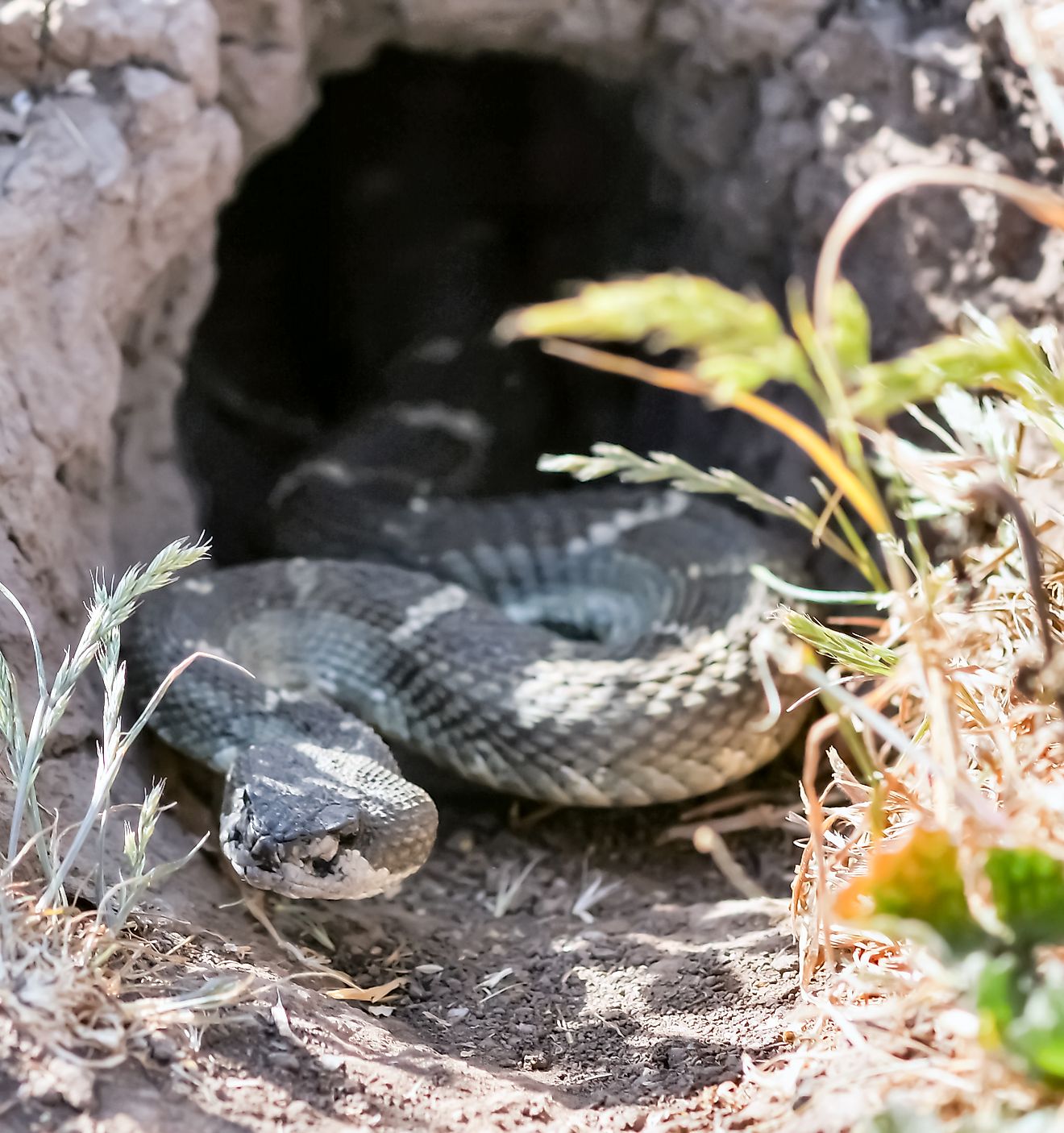
And the trick has a loophole the bird exploits ruthlessly: rattlesnake venom is an injection weapon, not a poison. Roadrunners carry no special immunity, but venom swallowed is just protein digested, dangerous only if it enters the bloodstream through a bite, so a roadrunner that avoids the fangs can eat the whole snake, venom glands and all, at zero chemical cost. The entire contest therefore reduces to one question, can the snake land its strike, and the roadrunner has spent a few million years arranging for the answer to be no.
The Matador Method

The fight itself is a bullfight at ankle height. The roadrunner circles just beyond strike range, wings drooped and flaring, tail fanning, deliberately baiting the snake into striking at feathers instead of flesh; a rattlesnake's strike is blinding but short, reaching perhaps a third to half its body length, and it costs the snake a beat of recovery every time it misses. The bird's reflexes cash that beat: dodge, reset, provoke, dodge again, until a strike falls short and the roadrunner's head shoots in to clamp the snake just behind the skull.
What follows is not delicate. The bird whips the snake against the ground or a convenient rock, over and over, the percussion doing what talons cannot, and pairs make it a team sport, with one bird playing matador while its mate takes the flank, a division of labor documented often enough to count as standard roadrunner doctrine. The strike that makes the rattlesnake untouchable to nearly everything else is, to this one bird, just a timing puzzle with a meal at the end.
The Snake That Will Not Fit
Then comes the species' signature dining problem: a swallowed-whole snake is frequently longer than the bird's entire digestive tract. The roadrunner's solution is the most practical thing in the desert, swallow what fits and walk around with the rest hanging out of the beak, letting the stomach dissolve the front of the snake while gravity queues up the remainder, inches advancing inward over the course of hours. A roadrunner trotting across a trail with a snake's tail swinging from its bill like a misplaced necktie is not in trouble; it is mid-meal, running errands during dinner.
It is also, in its way, the perfect emblem of the species: no other desert hunter treats a venomous snake as a packed lunch to be finished on the move. The snake spent its life as the neighborhood's resident menace. It ends as carry-out.
Mostly The Babies

Honesty requires one deflation: roadrunners are not routinely dispatching six-foot diamondbacks. The economics favor manageable snakes, and the bird's rattlesnake take runs heavily to juveniles and smaller adults, which makes the roadrunner one of the serious predators bearing down on young rattlesnakes in their perilous first seasons, the newborns dispersing from dens each fall at exactly snack size. A big adult rattler in its prime has little to fear from a lone roadrunner, and both parties generally know it.
That size filter is why the two species' long war stays balanced: the bird prunes the snake population's youth, the surviving snakes grow into untouchability, and the desert keeps both of its celebrities employed. The rattlesnake's real enemies list, kingsnakes, hawks, roadrunners, is essentially a list of things that get to it before it gets big.
Desert Hardware

The snake-fighting sits on a chassis of stranger adaptations. Roadrunners let their body temperature sag on cold desert nights to save energy, then recharge at dawn by turning their backs to the sun and parting their feathers to expose a patch of dark, heat-absorbing skin, a built-in solar panel. They shed excess salt through a nasal gland so they can live on the fluids of their prey, and their zygodactyl feet, two toes forward, two back, print X-shaped tracks that reveal no direction of travel, a feature Pueblo cultures prized as protective symbolism, the bird whose footprints confuse evil spirits.
As for the cartoon rivalry, the desert runs it in reverse: a real coyote can top 40 miles per hour to the roadrunner's 20 and catches the bird when it gets the chance, no mail-order equipment required. New Mexico made the roadrunner its state bird anyway, which feels right. You do not have to be the fastest thing in the desert when you are the one eating the rattlesnakes.
The Bird The Snakes Watch For
So the answer is layered but clean: roadrunners hunt rattlesnakes because the desert makes big protein rare, because venom is only a weapon if it lands, and because the bird's speed, reflexes, and matador choreography turn the snake's one defense into a losing bet, with the youngest snakes paying most of the bill. The cartoons sold America a bird that only ever ran away. The real one stands its ground against the most feared animal in the Southwest, beats it on reflexes, and finishes dinner at a jog. Beep beep, in the original, apparently means something closer to a warning.