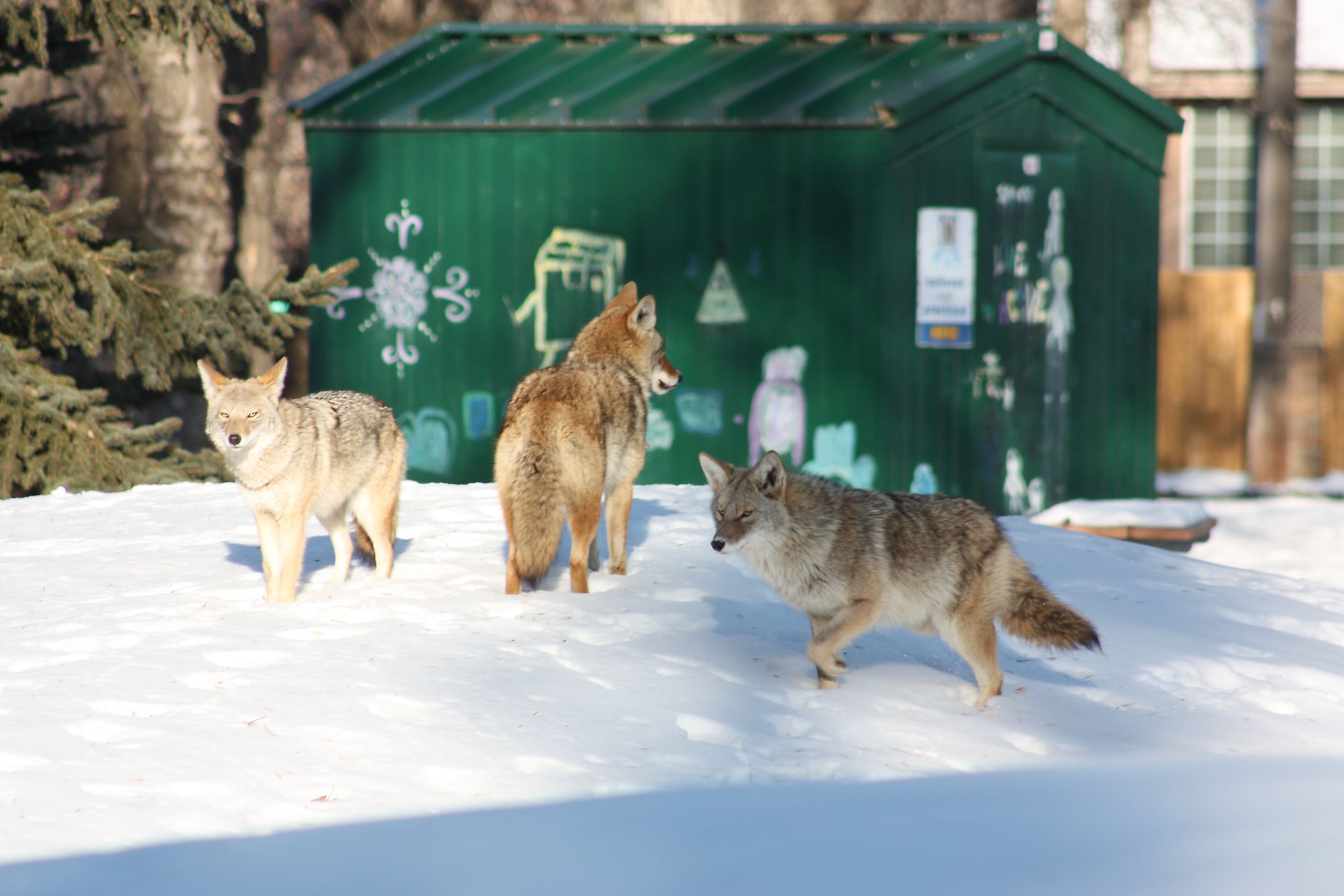
Why Coyotes Get Bolder In Winter
Every winter the reports roll in on schedule: a coyote trotting down the street at noon, a coyote standing in the yard staring at the dog, a coyote that did not run when it absolutely should have. The pattern is real, and it is not your imagination or a population explosion. Winter stacks four separate forces on top of each other, a breeding season that starts in January, a food supply locked under snow, a landscape stripped of the cover that normally hides them, and an annual wave of inexperienced young coyotes striking out on their own, and together they produce the boldest, most visible coyotes of the year. Here is what is actually going on behind those midwinter sightings, and what to do about the staring contest.
It Is Dating Season

The single biggest driver of winter boldness is romance. Coyote breeding season runs from roughly January into March, and it transforms the species' behavior: pairs patrol and advertise their territories, unattached males roam widely looking for mates, and the whole population spends more time on its feet, in daylight, caring noticeably less about being seen. A coyote in February is an animal with an agenda, and the agenda is not you.
The season has one genuinely practical consequence for pet owners: dogs. To a territorial coyote pair, a loose dog is not a pet, it is a rival canid trespassing at the worst possible time of year, and midwinter into early spring is the annual peak for coyote-dog conflict. The fix is unglamorous and effective, keep dogs leashed and close from January through March, especially at dawn and dusk, and skip the off-leash romps near brushy edges until the hormones subside.
The Hungry Months

Winter also rewrites the menu. The mice and voles that make up a coyote's bread and butter spend the season under the snowpack, which is why winter produces the species' signature move: the headfirst pounce, ears triangulating a rodent through inches of snow before the coyote launches into a perfect face-first dive. It works, but it pays smaller and slower than summer hunting, so coyotes compensate by hunting longer hours, including broad daylight, covering more ground, and taking every freebie winter offers, from road-killed deer to the carcass a harder predator left behind.

Hunger is also what pulls them toward houses, and the chain is usually human-built: bird feeders spill seed, seed concentrates rodents, rodents concentrate coyotes, and suddenly the yard is a hunting ground with a swing set in it. Pet food on porches, unsecured compost, and fallen fruit all run the same advertisement. A bolder winter coyote near homes is very often just a hungrier one following the food chain people laid out, which means the boldness can be dialed back at the source.
You Can Simply See Them Now

Part of the winter boldness surge is an optical event. The same coyotes that slipped through summer's tall grass and leafy edges unseen now cross bare fields and snow-covered lawns in silhouette, visible for a quarter mile, and every crossing becomes a sighting. The animals did not all move in; the curtains came down. Their winter wardrobe compounds the effect, since a coyote in full cold-weather coat looks dramatically bigger and wolfier than the 25-to-40-pound animal underneath, which is how neighborhood apps fill up each January with wolf reports from places that have not had wolves in a century.
The soundtrack misleads the same way. Winter is peak howling season as pairs bond and declare territory, and coyote group calls carry a famous auditory illusion, with two animals trading yips and howls sounding like a chorus of six or eight. Biologists call the effect part of the species' charm; homeowners at 2 am tend to use other words. Either way, the math is usually smaller than it sounds.
The Teenagers Are Leaving Home

The fourth force is demographic. Coyote pups born in spring disperse from their parents' territory in fall and early winter, striking out to find unclaimed ground of their own, and these juveniles are the species' most error-prone travelers: inexperienced, pushed into the marginal spaces older coyotes already own, and liable to turn up in parking garages, schoolyards, and downtown lobbies. A conspicuous winter coyote behaving oddly in a strange place is disproportionately likely to be a teenager having a confusing week.
Decades of urban coyote research, most famously the long-running collar studies in Chicago, have mapped exactly this pattern, with young dispersers threading through cities along rail lines, rivers, and greenways, and most settling into quiet, nocturnal, rodent-hunting lives their human neighbors never notice. The winter wanderers are the visible edge of a mostly invisible process, and the vast majority graduate into exactly the discreet adults the system selects for.
Snow Makes Your Street The Easy Route

Winter even changes coyote traffic patterns in people's favorite places. Deep snow is expensive to move through for a lightly built canid, so winter coyotes economize by traveling where the walking is cheap: plowed roads, packed trails, snowmobile tracks, and frozen rivers and lakes, which happen to be the same corridors people use. The coyote trotting down the middle of your street at dawn is not casing the neighborhood; it is using the only plowed route through its territory, the same way you are.
The energy logic also explains winter's loose, temporary gatherings. Coyotes are not pack hunters on the wolf model, but winter carcasses and family groups traveling before dispersal can put three or four coyotes in view at once, which reads as "pack" to an alarmed observer and is usually a family running errands together on the cheap routes.
What To Do About It
The playbook is short and proven. Feed nothing, on purpose or by accident, which means secured trash, no outdoor pet food, and cleaned-up bird feeder spill. Leash dogs through the January-to-March season and supervise small pets, particularly at dawn and dusk. And if a coyote stands its ground, haze it, stand tall, shout, wave, step toward it, throw something near it, and never run, because a coyote that keeps losing staring contests relearns the shyness winter eroded. Actual coyote attacks on people remain genuinely rare, far rarer than dog bites, and nearly every problem animal traces back to feeding.
The deeper reassurance is seasonal: the boldness has an expiration date. By mid-spring the pairs are denned and secretive, the snow cover and the sightlines are gone, the dispersers have settled, and the neighborhood coyote resumes the invisibility that is its actual career. Winter does not create bold coyotes so much as it briefly makes ordinary coyotes easy to see, hungry enough to risk it, and romantic enough not to care.
The Season Of Being Seen
So the midwinter coyote on your street is four stories at once: a suitor on patrol, a hunter working longer hours for smaller pay, a silhouette finally stripped of its cover, and possibly a teenager a week into independence, all walking the plowed shortcut because the snow is deep everywhere else. None of it is new and almost none of it is about you. Keep the food locked up, the dog leashed until April, and the staring contests won, and the boldest coyote of the year will do what its species has always done best, which is disappear.