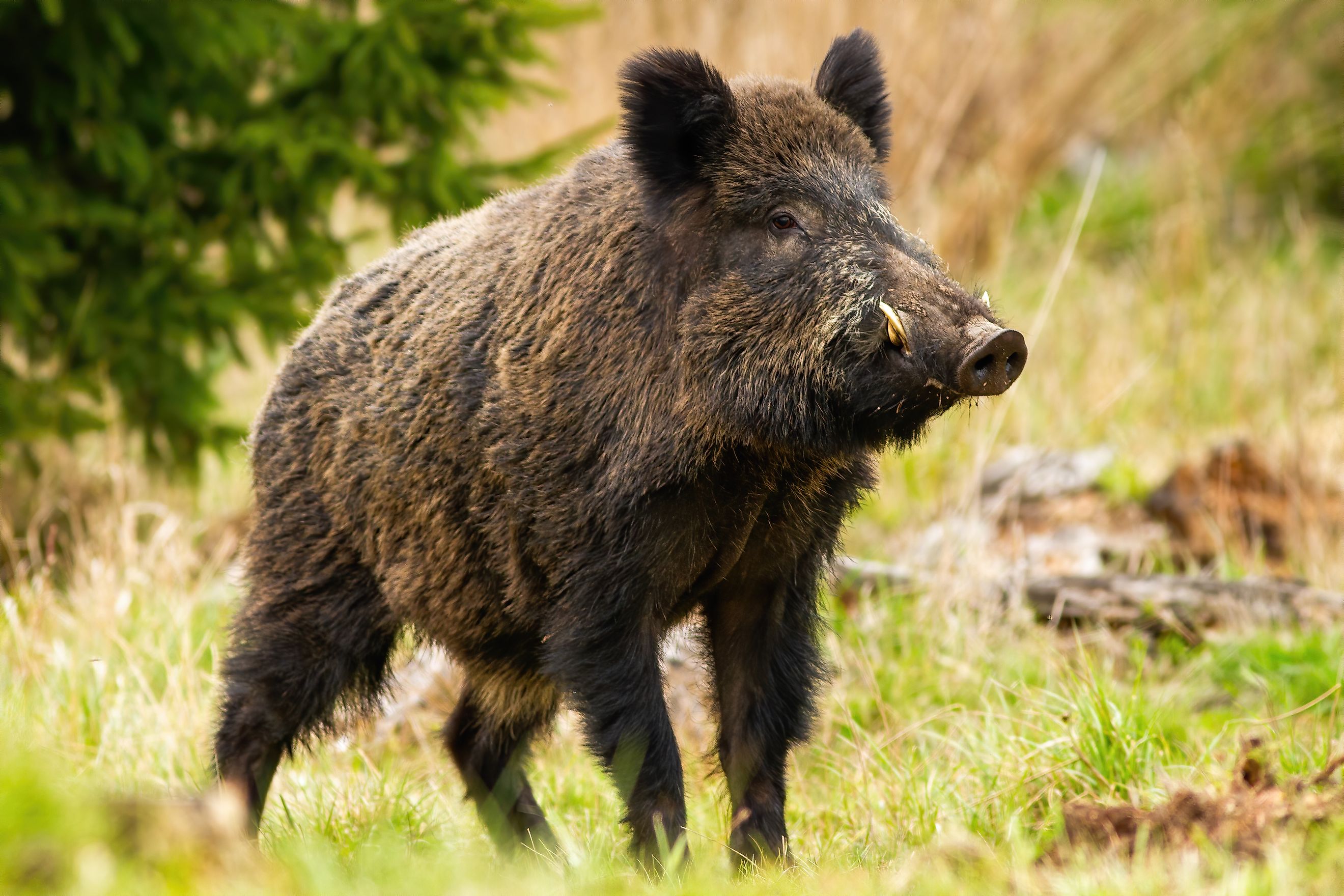
Why Wild Hogs Are So Hard To Get Rid Of
Few invasive animals have frustrated land managers as thoroughly as the wild hog. Found in at least 38 states, their population is estimated at 5 to 6 million animals, and despite decades of trapping, shooting, fencing, and federal funding, that number keeps climbing. Roughly $1.5 billion a year in combined damage and control costs is attributed to them, with more than $800 million hitting agriculture directly. The USDA has gone so far as to call the phenomenon a "feral swine bomb." Understanding why these animals are so difficult to remove requires looking at their biology, their intelligence, and the human behavior that keeps spreading them.
A Four-Century Head Start

Wild hogs are not native to the Americas. In 1539, the Spanish conquistador Hernando de Soto brought as many as 300 domestic hogs into what is now the southeastern United States, in what historians generally regard as the first appearance of pigs on the North American continent. By the time de Soto died on the banks of the Mississippi in 1542, his herd had grown to 700, and along his 3,000-mile journey many of the animals had escaped or passed into the hands of local tribes. Columbus had already released pigs on Caribbean islands in 1493, and later Spanish expeditions repeated the pattern across the Gulf Coast.
The genetic picture grew more complicated centuries later. The first documented introduction of pure Eurasian wild boar came in 1890, when the millionaire Austin Corbin imported 13 boar from Germany to a private New Hampshire reserve, launching a wave of wealthy sportsmen stocking their estates with the animals. Where escaped domestic swine met escaped wild boar, the two interbred freely. As the standard reference work Wild Pigs in the United States, by John J. Mayer and I. Lehr Brisbin, documents, today's wild hogs are a genetic mix of feral domestic stock, Eurasian wild boar, and hybrids of the two, all the same species, Sus scrofa. That hybrid vigor, combined with four centuries of adaptation to American landscapes, means managers are not fighting a recent arrival but a thoroughly entrenched one.
Built To Multiply

The single biggest reason wild hogs resist eradication is their rapid reproduction. Suidae has the highest reproductive rate of any ungulate family, and feral hogs have pushed that trait to an extreme. Female hogs can reach sexual maturity as young as 3 to 4 months of age, though most wild sows reach puberty by about one year old. Juvenile swine can become sexually mature by around eight months, and newborn litters average four to six piglets and can range between one and twelve.
Crucially, they breed year-round. Reproduction can occur during any month, with both sexes capable of breeding year-round, and feral sows are capable of producing more than one litter per year, especially when food is plentiful. The result is a population that rebounds almost as fast as it can be culled. Research indicates that in the absence of control efforts, a local population can triple in a single year.
What makes this even more difficult is that high reproduction is paired with high mortality, so culling does not depress their breeding the way it might for a slower-breeding species. Estimates of 80% or higher mortality within the first year of life have been reported, yet populations keep expanding. A study of an Alabama population subjected to lethal control found that reproductive parameters did not exhibit density dependence when pigs were in good condition, meaning that thinning the herd does not reliably trigger the slowdown in breeding that managers might hope for. Remove hogs, and the survivors often keep reproducing at full tilt.
Smarter Than The Average Pest

Beyond their sheer numbers, wild hogs are clever and wary in ways that defeat conventional wildlife management. Their behavior is unique among hoofed big game in the United States, and strategies developed for deer and other ungulates typically do not work on them. Researchers describe them as intelligent, secretive, and adaptable, with an acute sense of smell and hearing that makes them unusually hard to study, let alone remove.
They also live in tight family groups. The basic social unit is the sow and her litter, and sounders are organized around two or three related breeding females and their offspring, sometimes spanning three generations. This social structure is the reason piecemeal removal backfires. Across North America, recreational hunting alone has proven to be an ineffective long-term control strategy. Opportunistic hunting can disperse sounders, increase wariness, and in some cases create incentives to maintain populations for sport. Hogs that survive a trapping attempt become "trap-shy," learning to avoid the devices that caught their relatives. For that reason, specialists now favor whole-sounder trapping, using large corral traps and remote triggers to capture an entire family group at once, because partial removal often leads to rapid reproduction and rebound.
The Human Factor

Hogs would be a serious problem on their own merits, but people keep making it worse. A single illegal release can undo years of local control, which is why curbing human-assisted movement is one of the most important and most difficult parts of eradication. The illegal transport and release of pigs for hunting can move them hundreds of miles in a single day, seeding new populations far from any existing range. This is why wild hogs have appeared in northern states where they could not have walked on their own. The animals' value to some hunters creates a perverse incentive. As long as there is demand to hunt them, there is motivation to establish and sustain populations, directly at odds with the goal of removing them.
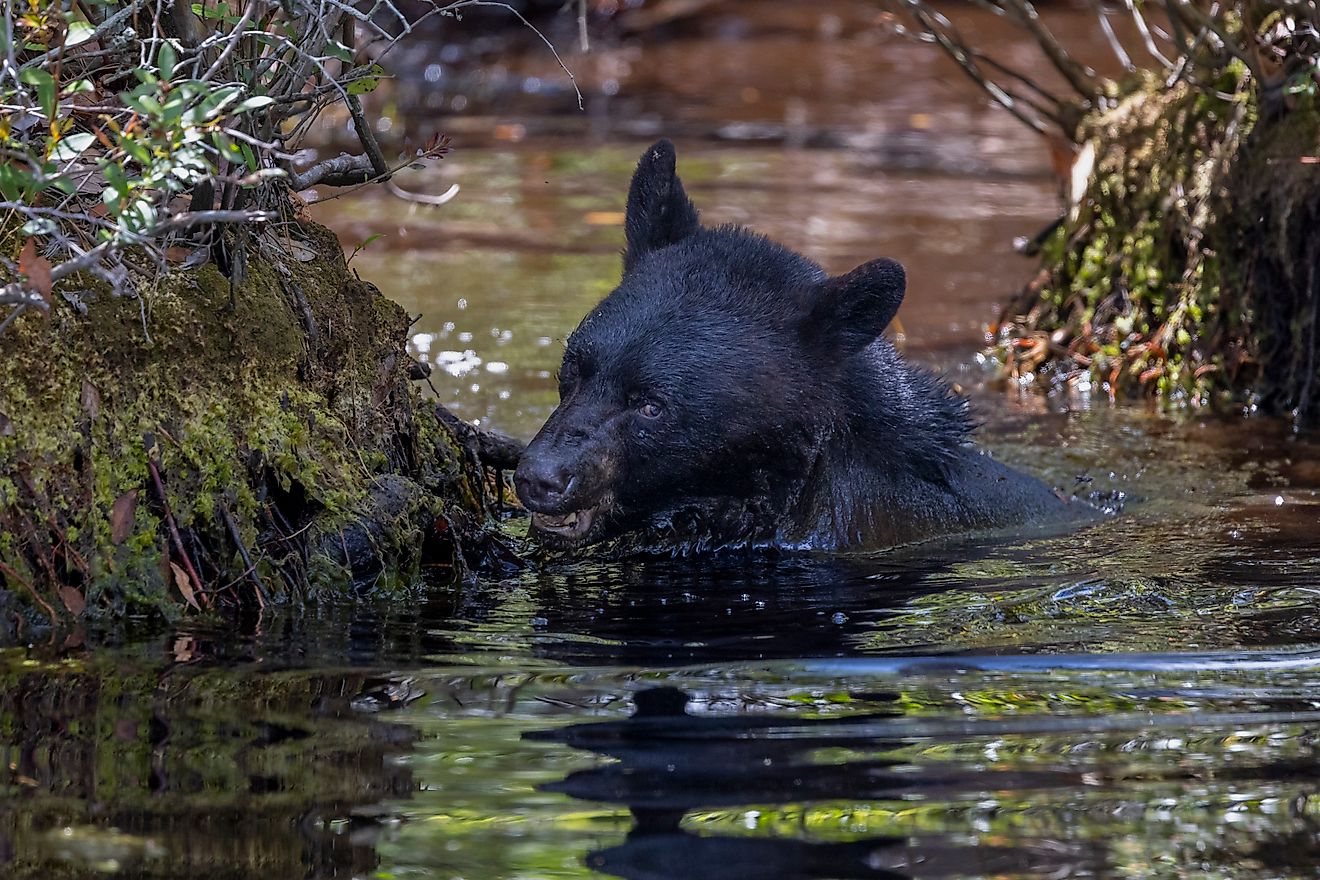
Their sheer adaptability compounds the challenge, and their appetite is a good example. Swine eat about 3% to 5% of their body weight a day, roughly a ton of food per pig per year, and when food runs short they’ll travel as far as 15 miles to find more. An omnivorous diet, a tolerance for climates as varied as subtropical wetlands and sub-alpine woodlands, and few effective natural predators let them colonize almost any landscape they reach. Native carnivores such as coyotes, bobcats, and black bears do take piglets, but not in numbers that meaningfully slow a growing population.
The Stakes: Disease And Ecological Damage

The urgency behind eradication is not only agricultural. Feral swine are highly mobile disease reservoirs that can carry at least 30 important viral and bacterial diseases and a minimum of 37 parasites affecting people, pets, livestock, or wildlife. Brucellosis, pseudorabies, and leptospirosis are among the most common. The risk of transmission to commercial pig farms could have serious economic consequences. Foot-and-mouth disease was eliminated from the United States in 1929, but bringing it under control again would be extremely difficult if it returned to areas where feral swine are already established. The looming threat of African swine fever, for which there is no cure and no vaccine approved for use in the United States, is a major driver of federal surveillance.
Their environmental footprint is just as striking, much of it caused by the way they feed. Rooting through the soil for food, wild hogs disturb carbon that would otherwise stay buried. A 2021 study in Global Change Biology estimated that wild pigs release a median of about 4.9 million metric tonnes of carbon dioxide per year across their non-native range, the equivalent of roughly 1.1 million passenger vehicles, by uprooting soil like living plows. More recent work in wetlands has found that soil disturbance by feral pigs raises emissions of methane and nitrous oxide, two especially potent greenhouse gases.
The Brutal Arithmetic Of Control

To see any meaningful reduction, roughly 70% of the population must be killed off each year. Because of their high reproductive potential, 50 to 70% of the population must be removed annually just to keep numbers stable, and for economic and logistical reasons that is rarely achieved year after year. Sport hunters, by contrast, remove only about 23% of a wild pig population annually, which is why hunting alone cannot keep pace, and may even accelerate spread.
This is what makes wild hogs so difficult to control. Efforts must be continuous, coordinated across property boundaries, and extensive enough to prevent even small groups from rebuilding the population. The federal response reflects that reality. Congress funded the National Feral Swine Damage Management Program through APHIS beginning in 2014, and the 2018 Farm Bill authorized a separate Feral Swine Eradication and Control Pilot Program of $75 million over five years. Those efforts have produced real wins where populations were small or newly established. Through the national program, wild pigs have been eliminated or presumed eliminated from 12 US states, confirmed after two consecutive years without detections.
Holding The Line
Eradication is most achievable in states where wild hog populations are still small and relatively new, giving wildlife agencies a chance to remove them before they become established. In areas where millions already roam and breed throughout the year, the task is far more difficult. The animals reproduce quickly, learn to avoid traps, withstand sustained hunting pressure, and are sometimes illegally transported to new areas. Their long history in North America, mixed ancestry, and remarkable ability to adapt have made them a problem that no single landowner, agency, or state can solve alone. In much of their established range, the goal is no longer to eliminate wild hogs entirely, but to keep their numbers and spread under control. That is ultimately what makes them so difficult to get rid of.