Where Frogs Go In The Winter
When a pond skins over with ice in December, the frogs that sang from its edges in June do not migrate and do not die in any ordinary sense. They vanish into mud, soil, leaf litter, and in a few astonishing cases into solid ice. Frogs are ectotherms, which means their body temperature tracks the air and water around them rather than being set from within. Winter leaves them no way to stay warm and active, so they enter a dormant state called brumation and wait out the cold months in shelters chosen to keep them either unfrozen or, for a small group of species, frozen but alive. Where a given frog goes depends on its species, its size, and whether a stable pond or a diggable patch of ground sits within reach.
Cold Blood And The Winter Problem

Like other cold-blooded animals, a frog cannot generate enough heat to regulate its own body temperature, so it relies on external sources of warmth. As temperatures drop, its heart rate, breathing, and digestion all slow considerably. This winter shutdown is often called hibernation, though biologists usually reserve that word for warm-blooded animals and use brumation for the reptile and amphibian version. The distinction matters, because a brumating frog never enters the regulated deep sleep of a bear. It simply powers down and holds on. Looking at what hibernation actually involves in mammals sharpens the contrast, since a frog cannot burn stored fat to make heat and must instead either avoid freezing or survive it outright. Thin, permeable skin shapes every choice that follows, because that skin is both the frog's main organ of breathing through winter and its greatest point of weakness against ice.
Down At The Bottom Of The Pond

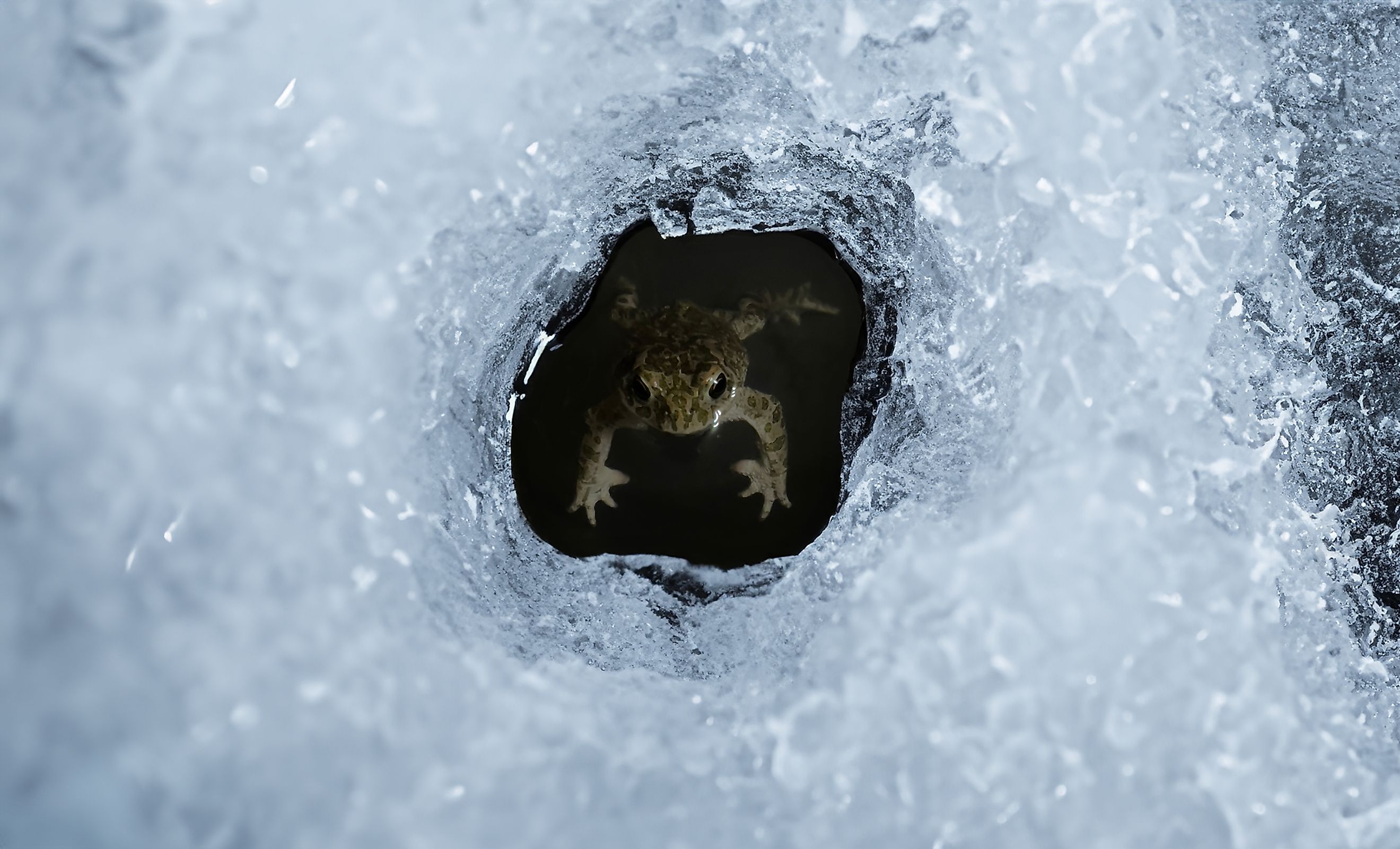
Large aquatic species spend the cold season underwater. The American bullfrog (Lithobates catesbeianus) and the northern leopard frog (Lithobates pipiens), both common across much of North America, sink to the floor of a pond or slow stream and settle in for months. A widespread misconception holds that they bury themselves in mud the way aquatic turtles do. They do not. A frog packed into oxygen-poor mud would suffocate, so it rests on top of the sediment or only partly settled into it, where water can still reach its skin. Oxygen crosses that skin directly through a process called cutaneous respiration, which supplies more than enough for a body running at a fraction of its summer pace. Cold water helps, because it holds more dissolved oxygen than warm water does. Depth helps too. Water is densest a few degrees above freezing, so the bottom of a deep pond stays near 4 degrees Celsius (about 39 degrees Fahrenheit) even as ice seals the surface, and that floating ice insulates everything below it. The real danger is a long, hard winter that freezes a shallow pond to the bottom or lets decomposition strip the trapped water of oxygen, a problem anglers know as winterkill.
Buried Below The Frost Line

Not all frogs have access to suitable ponds, and many do not spend the winter in water at all. Terrestrial species remain on land, escaping the cold by burrowing into the soil. Toads are particularly well adapted to this approach, with strong hind legs that allow them to dig deep into the ground. The American toad (Anaxyrus americanus), found through much of the eastern United States, backs into loose soil and works downward until it sits below the frost line, the depth past which the ground does not freeze. Spadefoot toads take the same idea to an extreme, using hardened spades on their hind feet to sink well under the surface and wait out not only winter but long dry spells. Frogs that cannot dig as well wedge themselves into rock crevices, root cavities, and the loose debris under logs. These are the same animals people often struggle to tell apart from true frogs, and winter behavior marks one more line between the groups, since toads lean toward deep burrowing while many frogs stay close to the surface.
The Frogs That Freeze Solid

The strangest winter strategy belongs to frogs that do not avoid freezing at all. The wood frog (Lithobates sylvaticus) shelters under a thin layer of leaf litter where the cold reaches it fully, and then it freezes. Ice fills its body cavity and spreads beneath its skin, its heart stops, its breathing stops, and no measurable brain activity remains. By most outward signs the animal is dead. What keeps it alive is chemistry. As ice begins to form, the frog's liver floods its tissues with glucose, and urea built up earlier in the season adds to the effect. These cryoprotectants gather inside the cells and hold water there, so that ice forms in the spaces between cells rather than inside them, where crystals would tear a cell apart. Up to about two-thirds of the water in the frog's body can turn to ice without killing it. When spring warmth returns, the frog thaws from the inside, its heart restarts, and within hours it is moving again. Spring peepers, gray treefrogs, and chorus frogs rely on milder versions of the same trick, which stands among the more extreme adaptations found anywhere within the traits that define amphibians.
Frozen In The Far North

The wood frog pushes deeper into cold country than any other amphibian on the continent, across Canada and well into Alaska, including ground north of the Arctic Circle. A field study of frogs overwintering near Fairbanks tracked animals that stayed frozen for roughly 193 days on average and endured body temperatures that fell close to minus 18 degrees Celsius, near zero degrees Fahrenheit, with every monitored frog surviving to spring. Those northern frogs tolerate temperatures about 10 to 13 degrees Celsius lower than their southern relatives can bear. The edge seems to come from autumn itself. As the ground around them freezes and thaws repeatedly in early fall, the frogs make and store far more glucose than a single hard freeze would trigger, banking protection before deep winter sets in. Researchers working on the problem have compared a thawed wood frog in spring to a steak that leaves the freezer in better condition than it went in, a reminder of how little repeated freezing costs an animal built for it.
The Cold-Blooded Neighbors

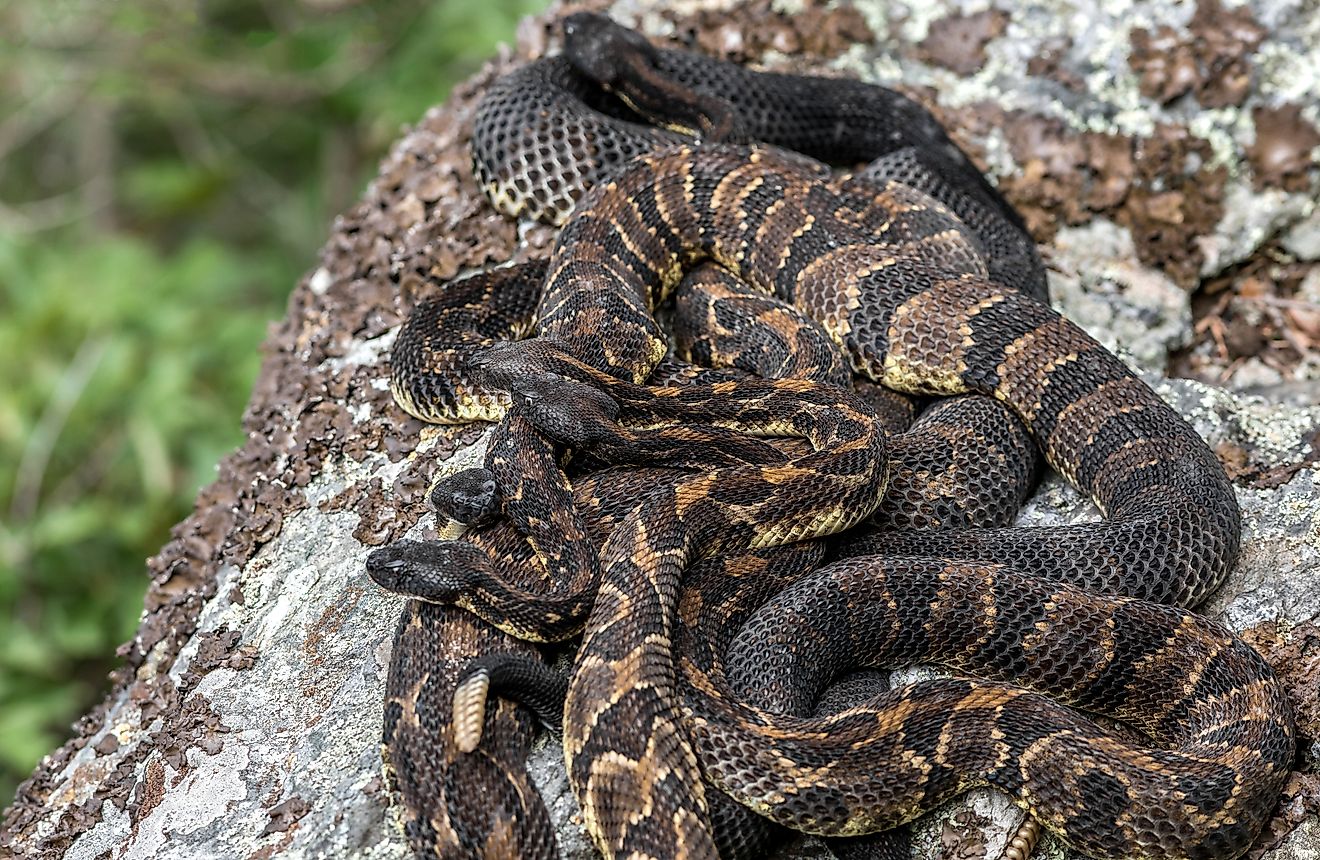
The hellbender, a fully aquatic salamander of clear Appalachian streams, stays in cold flowing water through winter and breathes across its wrinkled skin much as a submerged frog does, so a closer look at this giant salamander shows how far an amphibian can carry the underwater approach. Reptiles face the same ectothermic bind and answer it with their own timing, which is why the way rattlesnakes pass the cold season often comes down to shared underground dens set below the frost line, where many individuals wait together until the ground warms. The pattern repeats across every group that cannot make its own heat. The shelter changes with the animal, but the logic does not.
Winter Beyond North America

In Europe, the common frog (Rana temporaria) spends the cold season in much the same split fashion, with some adults resting in pond mud and others sheltering under log piles, stone walls, and compost heaps, and the species ranges far enough north to live inside the Arctic in Scandinavia. Milder and less predictable winters appear to be shifting the pattern, and tadpoles that once rarely lasted until spring now overwinter more often in parts of the continent. The strategy inverts in hot, dry places. Many frogs there never meet frost and face drought instead, so they burrow and enter a summer dormancy called aestivation, as the water-holding frog of inland Australia does when it seals itself underground in a cocoon of shed skin and waits for rain. In the wet tropics, where neither extreme arrives, a frog such as the golden poison frog simply stays active all year, one sign that winter dormancy is a response to local climate rather than a fixed feature of being a frog. The sheer count of frog species alive today guarantees a wide spread of answers to the same seasonal question.
What Winter Asks Of A Frog
Frogs have evolved several ways to survive winter, but each depends on conditions remaining within certain limits. Some retreat beneath the ice of ponds, others burrow into the soil, while a few can withstand the freezing of much of their bodies. These adaptations have allowed them to survive countless winters, yet changing climate patterns are beginning to test their limits. Shorter periods of ice cover, unpredictable autumn temperatures, and sudden freezes after warm spells can disrupt even well-established survival strategies. As winters become less predictable, the ability of frogs to withstand the cold may prove just as important to their future as the habitats they depend on during the warmer months.