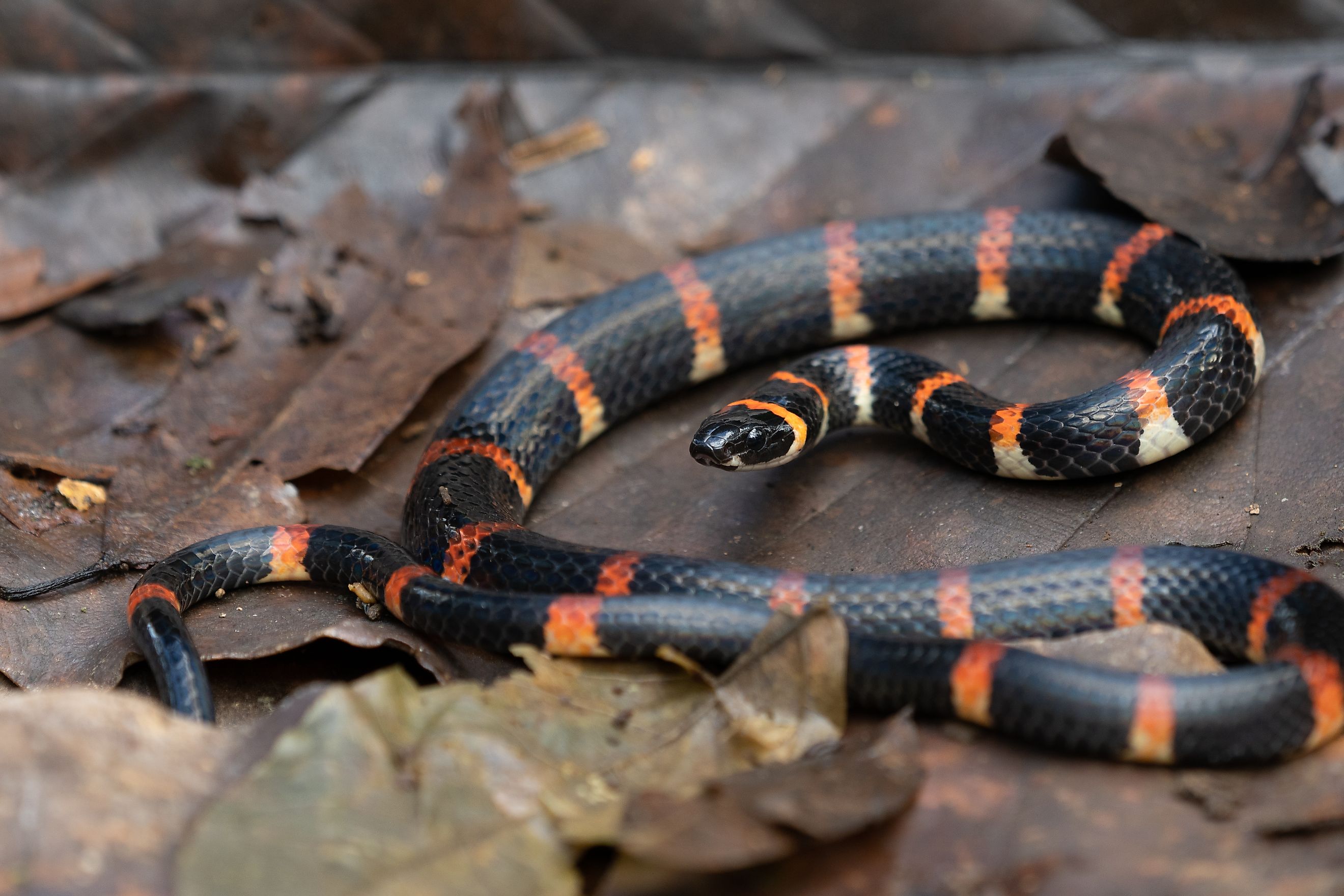
Where Coral Snakes Go In The Winter
A coral snake spends most of winter in a place almost no one will ever look, a foot or more beneath the surface, curled inside a rotting stump hole or a burrow some other animal dug and abandoned. The brightly banded harlequin coral snake does not migrate, and it does not truly hibernate, yet for several weeks each cold season it all but vanishes from the ground people walk across every day. Knowing where it goes explains why winter sightings are uncommon and why the handful that happen tend to surprise the person who stumbles into one. It also shows how a small, reclusive relative of the cobra manages to live quietly alongside the millions of residents across its warm southern range. This is what the season looks like for the most recognizable banded snake on the continent, and how to avoid trouble once warmer days coax one back toward the open.
The Short Answer Is Underground

Coral snakes retreat underground as temperatures fall. As ectotherms, they depend on external sources of heat to regulate their body temperature, and colder air makes it increasingly difficult for them to remain active. That response is brumation, the reptile equivalent of a mammal's winter sleep but lighter and more flexible. Instead of a deep, unbroken hibernation, a brumating snake slows its metabolism, stops feeding, and settles into a sheltered spot below the reach of frost, rousing only if conditions turn mild. Research on the eastern coral snake describes exactly this pattern, with animals entering brumation for several weeks during the coldest stretch of the year and spending the rest of their time underground or beneath cover. Because they cannot dig well themselves, they borrow the architecture of others, sheltering in animal burrows, rotten logs, and stump holes in the loose, well drained, sandy soils they favor. A coral snake does not disappear in winter so much as withdraw into the ground beneath its own summer range.
Coral Snake Country

To understand where coral snakes winter, it helps to know where they live the rest of the year. Three native species occupy the United States, and each rides out the cold in a different landscape. The eastern coral snake, Micrurus fulvius, is the one most people picture. It ranges across the southeastern states, through Florida, Georgia, Alabama, Mississippi, and Louisiana, and up the coastal plain into the Carolinas, reaching South Carolina and the southeastern corner of North Carolina. It prefers longleaf pine sandhills and well drained flatwoods rather than swampy lowland, which is why its winter shelters tend to be dry, sandy, and easy to burrow beneath.
Farther west lives the Texas coral snake, Micrurus tener, long treated as a subspecies of its eastern cousin and now recognized as a species in its own right. It occupies eastern and central Texas, western Louisiana, and southwestern Arkansas, then continues south across the border into Mexico. In the arid Southwest, a third and smaller species takes over. The Sonoran coral snake, Micruroides euryxanthus, lives in the rocky desert uplands of Arizona and southwestern New Mexico and down into northern Mexico, including parts of the Sonoran Desert for which it is named. Beyond the border, the wider coral snake family spreads through Central America and deep into South America, where most of the roughly 80 New World species live. Across North America, only those three species occur, and they mark the cool northern limit of a group that is far more varied in the tropics.
Winter varies considerably across the coral snake's range. In the southern tip of Florida, around the Everglades, the cold season is so mild that coral snakes may stay loosely active for much of the year. In the sandhills of Georgia or the woodlands of Arkansas, where hard frosts arrive, the same kind of snake settles in for a longer, deeper dormancy. The farther north a coral snake lives, the longer its winter dormancy tends to last.
What A Coral Snake Winter Looks Like

During brumation, coral snakes usually shelter below the leaf litter rather than remaining near the surface. They may occupy cavities in rotting pine stumps, abandoned mammal burrows or the tunnels of gopher tortoises. These deep burrows provide shelter from winter temperatures and are also used by many other animals during the colder months. Underground, temperatures stay far steadier than the air above, rarely swinging to the extremes that would kill a snake caught in the open. The animal does not sleep straight through. On a warm winter afternoon, particularly in the milder south, a coral snake may ease partway toward the surface to take in heat before retreating again, and a mild rainy spell can bring one briefly into the open at almost any point in the season. Feeding essentially stops, which suits a snake that eats infrequently in the best of times and preys mainly on other small snakes and lizards. Only when spring returns, usually around March through May, do the animals move back to the surface in numbers to hunt and breed.
When People And Coral Snakes Cross Paths

Winter brings the lowest chance of encountering a coral snake, but sightings are still possible. The problem is that the shelters snakes choose are often the ones people disturb in the off season. Clearing a brush pile, splitting and stacking firewood, raking deep leaf litter, pulling up old boards, or turning over a neglected corner of the yard can all put a hand or a foot within reach of a dormant snake. Pets add another route to an encounter, since a dog nosing through debris may corner a snake its owner never saw, and the same regions that lead the country in snakebites to people also rank high for where dogs run into snakes most.
North American coral snakes account for well under one percent of the venomous snakebites reported in the United States each year. A review of poison center records counted about 1,370 coral snake bite cases over a 17 year span, an average near 80 a year that has stayed remarkably steady even as some other snakebite totals climbed. Florida and Texas alone made up roughly 90 percent of those cases, and 20 states in all reported at least one. Bites cluster hard in the warm months, and a study of snakebite timing in Georgia found only a weak and uncertain signal in winter. The cold season lowers the odds. It does not erase them.
How Dangerous A Winter Encounter Really Is

A coral snake bite can be serious, even if its effects take time to become apparent. Its venom is strongly neurotoxic, built around proteins that interfere with the signals passing between nerve and muscle, and a serious envenomation can lead to drooping eyelids, slurred speech, trouble swallowing, and in the worst cases paralysis of the muscles used to breathe. The danger is compounded by timing, because symptoms can take many hours to appear, which has lulled bitten people into believing they escaped unharmed. Laboratory work on eastern coral snake venom has traced how its main neurotoxin travels through the body and drives that respiratory failure, which is why any confirmed bite is treated as an emergency rather than watched and waited out.
Two things keep coral snakes far less deadly than their venom suggests. The first is the animal itself. Coral snakes are shy and reluctant to bite, with short fixed fangs that are poor at penetrating boots or thick clothing, and many defensive bites deliver little or no venom. The second is modern medicine. The country relies on a single approved product, the North American Coral Snake Antivenin, a horse derived treatment effective against the eastern and Texas species. Its original manufacturer discontinued production in 2003, and for years afterward regulators repeatedly extended the expiration dates on existing stock to keep usable vials on hospital shelves through a national shortage, though manufacturing has since resumed and supply has eased. Even so, deaths are vanishingly rare. The poison center review that logged more than a thousand bites recorded none at all, and the United States has seen only one well documented coral snake fatality since the 1960s, in a case where the victim never sought treatment.
Staying Safe Around Dormant Snakes

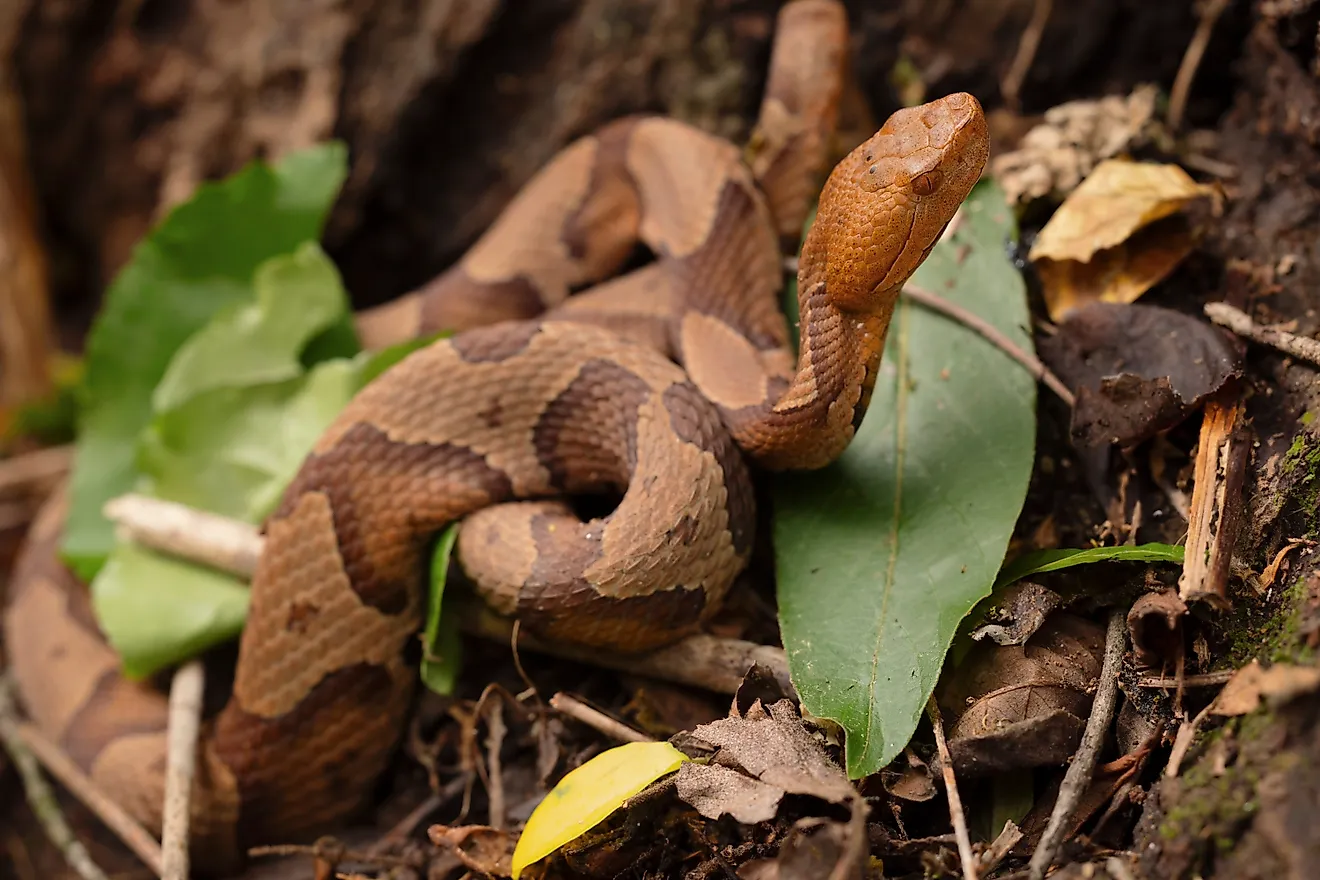
For anyone who works or plays outdoors in coral snake country, winter calls for the same habits that serve in summer, with a little extra attention to the ground. Wear closed boots and leather gloves for cold weather yard work, and never plunge a bare hand into a leaf pile, a woodpile, a stump hole, or the gap under an old board or sheet of plywood. Move debris with a tool rather than a hand, and roll a log toward you so that anything underneath faces away as it is exposed. Keep dogs close and supervised around brush and burrows, since pets account for a real share of encounters. Learn the old rhyme that works for the three species north of Mexico, where a red band touching a yellow band warns of a coral snake and a red band touching black marks a harmless mimic, but trust it nowhere else, because the rule fails for the many coral snakes of Latin America and for several lookalikes. When a banded snake turns up, the right response is to stop, step back, and let it leave on its own. Coral snakes do not pursue people and will almost always retreat if given room.
If a bite does occur, treat it as the emergency it is. Get the person to medical care without delay, call emergency services or a poison center on the way, keep them calm and the bitten limb still, and remove rings or anything that could bind if swelling begins. Do not cut the wound, try to suck out venom, apply a tourniquet, or pack the area in ice, since these old remedies cause harm and do nothing for a neurotoxic bite. Above all, do not wait for symptoms, because a coral snake's venom can take hours to show its hand.
A Quiet Season, Not An Empty One
Winter does not remove coral snakes from their range. Instead, they retreat underground into sandy soil, tortoise burrows and rotting stumps beneath the trails, yards and woodlots of the southern states. There they remain dormant until warmer temperatures return, often just below the surface where people continue their daily activities. For those who spend time outdoors, winter brings a lower risk of encountering these snakes, but it does not mean they have disappeared. The main danger comes from disturbing their hiding places, particularly by reaching into burrows, cavities or decaying wood. Leaving these shelters undisturbed is usually enough to avoid an encounter.