What Rattlesnakes Do Inside The Den All Winter
Ten timber rattlesnakes were fitted with temperature-sensing transmitters and tracked through a full winter in their hibernaculum. Over the six months they occupied it, their body temperatures ranged from 6 to 29 degrees Celsius, with a mean of 11.3. That spread is the answer to the question. A snake sitting at 29 degrees in January is not asleep, and one at 6 degrees is not comfortable either. What rattlesnakes do inside a den all winter is move around inside it, constantly, chasing the warmest spot available.
Ten Degrees Is The Switch

The telemetry data showed a clear threshold governing everything the snakes did underground.
As long as body temperatures stayed at around 10 degrees Celsius or above, the snakes were active within the den and often emerged to bask at the mouth of the hibernaculum on sunny days. Below that figure they went still.
There is a physiological reason for the line. Laboratory work on the relationship between body temperature and heart rate shows a significant decrease in cardiac activity below 10 degrees, which matches the observed activity pattern almost exactly.
They Shuttle To Follow The Heat
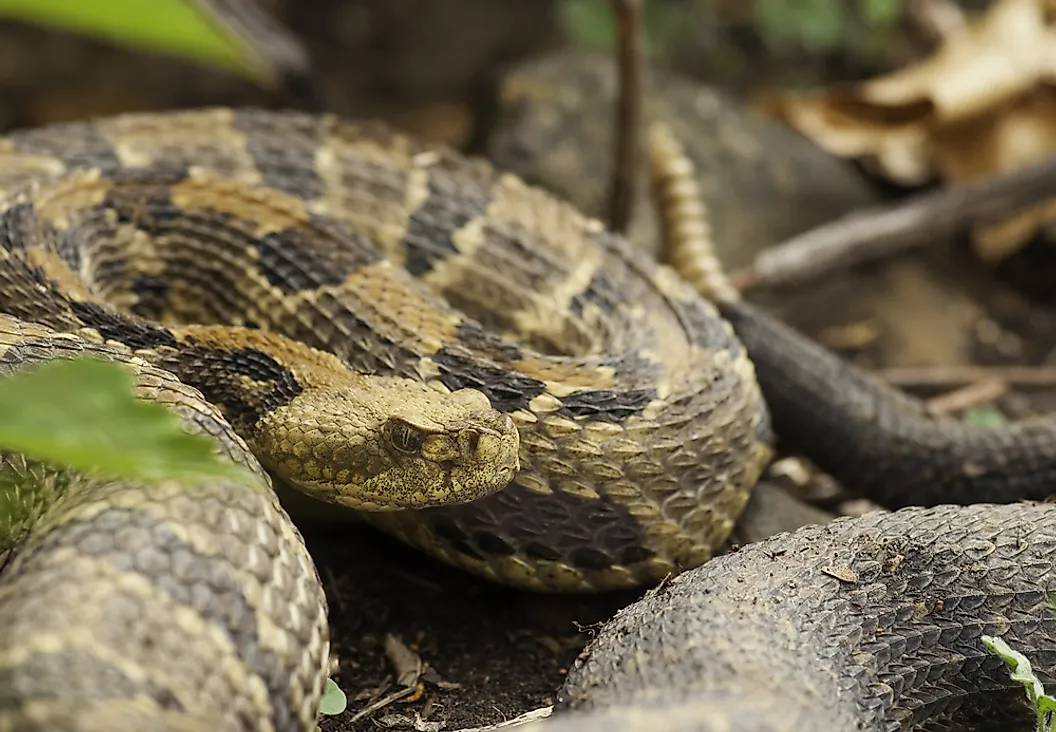
A den is not one temperature, and the snakes inside exploit that.
Movements within underground dens continue through winter as snakes take advantage of warmer sections, which themselves shift as the season progresses. The animal is not in one spot from October to April.
With a recorded range of 6 to 29 degrees inside a single hibernaculum, a snake that can find the top end of that range rather than the bottom is saving itself a great deal of trouble.
Most Of Them Come Outside At Least Once

Midwinter emergence is far more common than the word hibernation suggests.
One survey found that although most winter movement happened below ground, about 80 percent of the snakes studied made at least one above-ground movement during the winter. Prairie rattlesnakes in northerly latitudes have been recorded basking outside the entrance during warm spells.
The behavior is documented across species and regions, and it is more frequent in southern populations where mild winter days are routine.
They Come Out To Drink

One observation from Arizona is the most striking thing in this literature.
A Georgia State University study at communal western diamondback dens recorded adults emerging after a cold rain shower even when the temperature was 37 degrees Fahrenheit, just above freezing. A 175-day drought had preceded it.
The snakes came out and coiled up outside the den, collecting rainwater and melting snow on their own bodies in order to drink it. Dehydration was worth leaving shelter for at a temperature where they could barely move.
Thirst Is The Real Winter Problem

That behavior makes sense once you understand what actually threatens a brumating snake.
Snakes cannot eat during brumation but still need to drink, and a hibernaculum that is too dry risks killing its occupants through dehydration. Prolonged exposure to dry conditions can be fatal.
Which is why a den near the water table matters, and why a snake will accept a dangerous trip to the surface to collect precipitation off its own coils. Hunger waits. Thirst does not.
They Pile Up For More Than Warmth

Communal denning serves three separate functions, and only one of them is obvious.
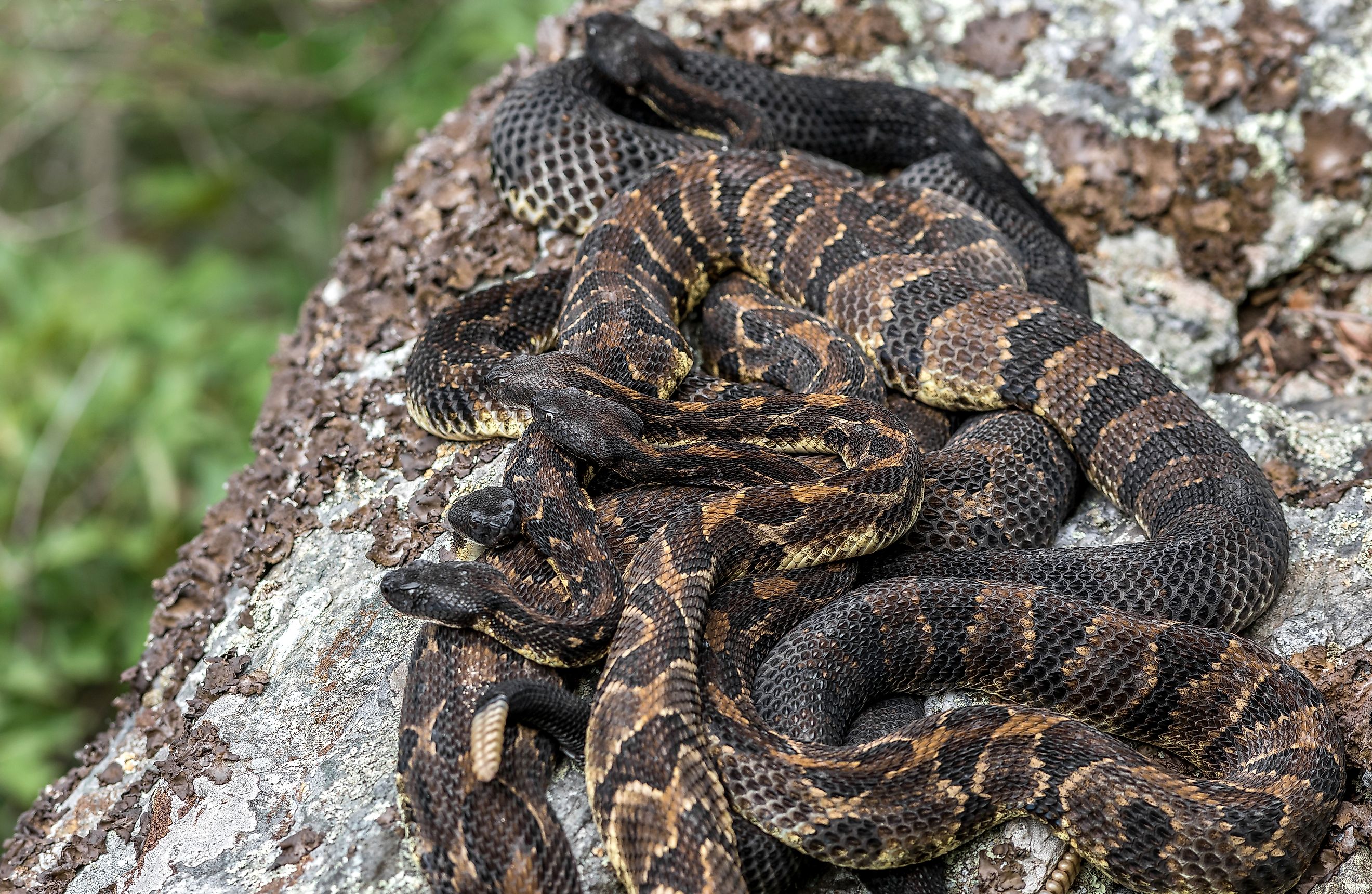
Midget faded rattlesnakes den in groups sometimes reaching 100 individuals, and the aggregating behavior is understood as an adaptation enhancing predator defense alongside both thermoregulation and osmoregulation.
That last one is water balance. Packing bodies together reduces evaporative loss from each of them, which connects directly to the dehydration problem. The pile is partly a humidity strategy.
Females Are Carrying Sperm Through It

For a proportion of the occupants, something is happening internally that has nothing to do with temperature.
Female timber rattlesnakes can store the sperm of several mates, which allows sperm-mixing and lets them delay fertilization and reproduce the year after copulation.
So a female that mated in autumn spends the winter in a den holding viable sperm from multiple males, with fertilization deferred until conditions suit. The reproductive clock runs on a different schedule from the thermal one.
Nothing Is Eaten For Months

Digestion stops entirely, and the animal runs on reserves built the previous season.
Laboratory work on western diamondbacks fasted for 168 days found resting metabolic rate depressed by up to 72 percent, with the animals burning lipids while sparing protein. That experiment was conducted on warm, awake snakes, so a cold brumating one is doing better still.
A rattlesnake in a den is not starving in any crisis sense. It is running an extremely efficient engine on a tank filled in September.
They Remain Capable Of Striking

The practical consequence of all this activity is that a den entrance is never an entirely safe place to stand.
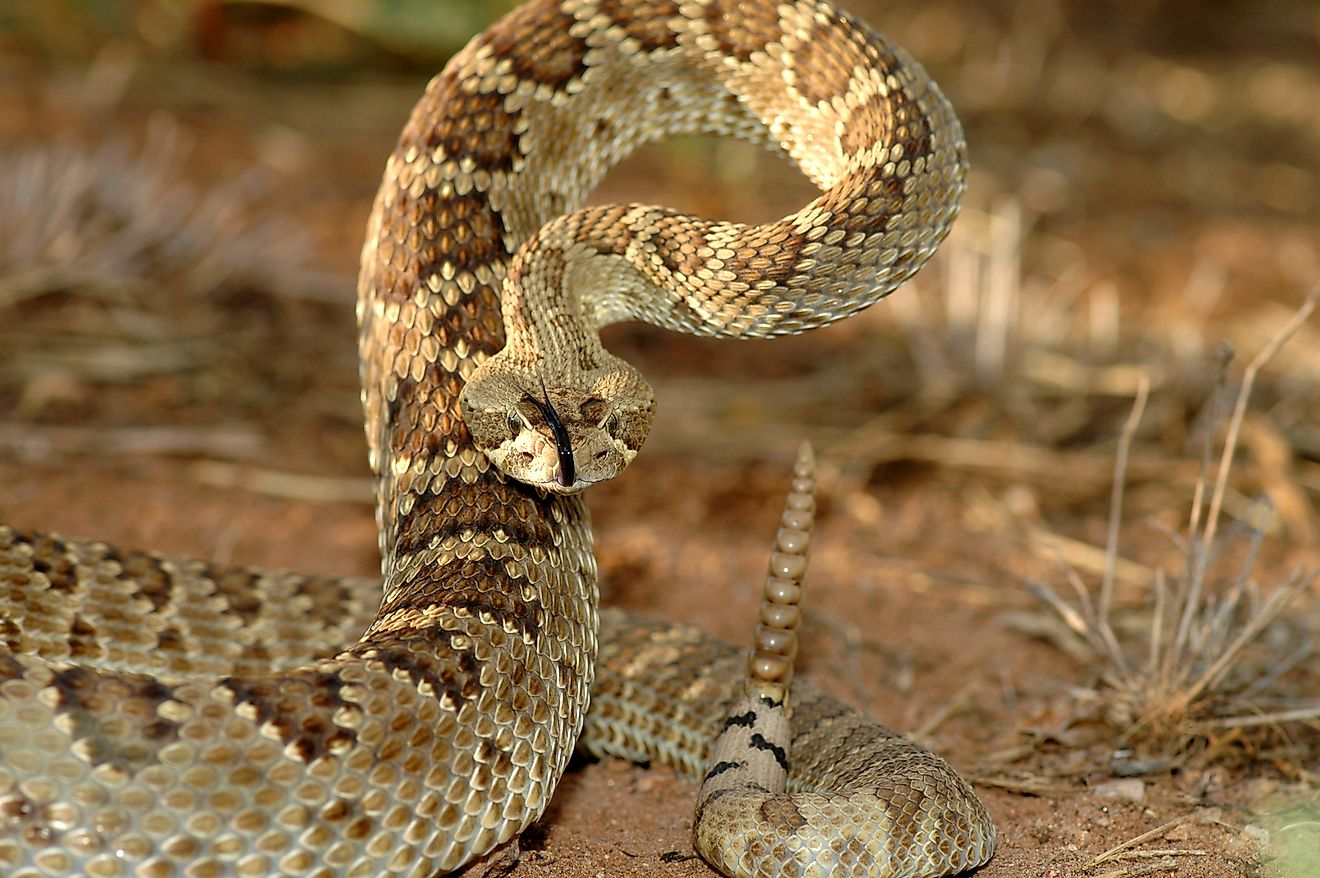
A rattlesnake is sluggish when cold but remains capable of striking at temperatures above freezing. The risk is localized to the immediate vicinity of the den during warm spells, but it does not disappear for the season.
Anyone working around known hibernacula in February should treat them as occupied and awake rather than as empty holes.
They Edge Toward The Door In Spring

The exit is gradual rather than sudden, and it starts well before anything emerges.
As early spring warms the ground, den temperatures rise and the snakes gradually edge closer to the entrance. Emergence depends on sustained rises in ambient and soil temperature rather than isolated warm days, with researchers using maximum daily temperature and accumulated degree days to predict the timing.
For some species the average ground-level temperature needs to sit at or above roughly 50 degrees Fahrenheit before regular basking begins.
Then They Loiter For Weeks

Emergence does not mean departure, which is the final phase of the winter cycle.
After coming out in April and May, midget faded rattlesnakes stay near the den entrance for two to three weeks before moving to shedding habitat characterized by large flat rocks. Gravid females typically move less than 20 meters from the hibernaculum at all.
Males and non-gravid females then migrate up to seven kilometers, among the longest movements recorded for any rattlesnake. The den empties slowly and unevenly.
The Short Version

Rattlesnakes inside a winter den move constantly between warmer and cooler pockets, with recorded body temperatures ranging from 6 to 29 degrees Celsius across one six-month occupancy. Above about 10 degrees they are active, because below that their cardiac function drops sharply. Around 80 percent make at least one trip above ground before spring.
They do not eat, they do drink, and they will leave shelter at 37 degrees Fahrenheit to collect rainwater on their coils if they are dry enough. They pile together for warmth, for defense and to hold moisture. Some of the females are carrying stored sperm the entire time. Whatever brumation is, it is not sleep.