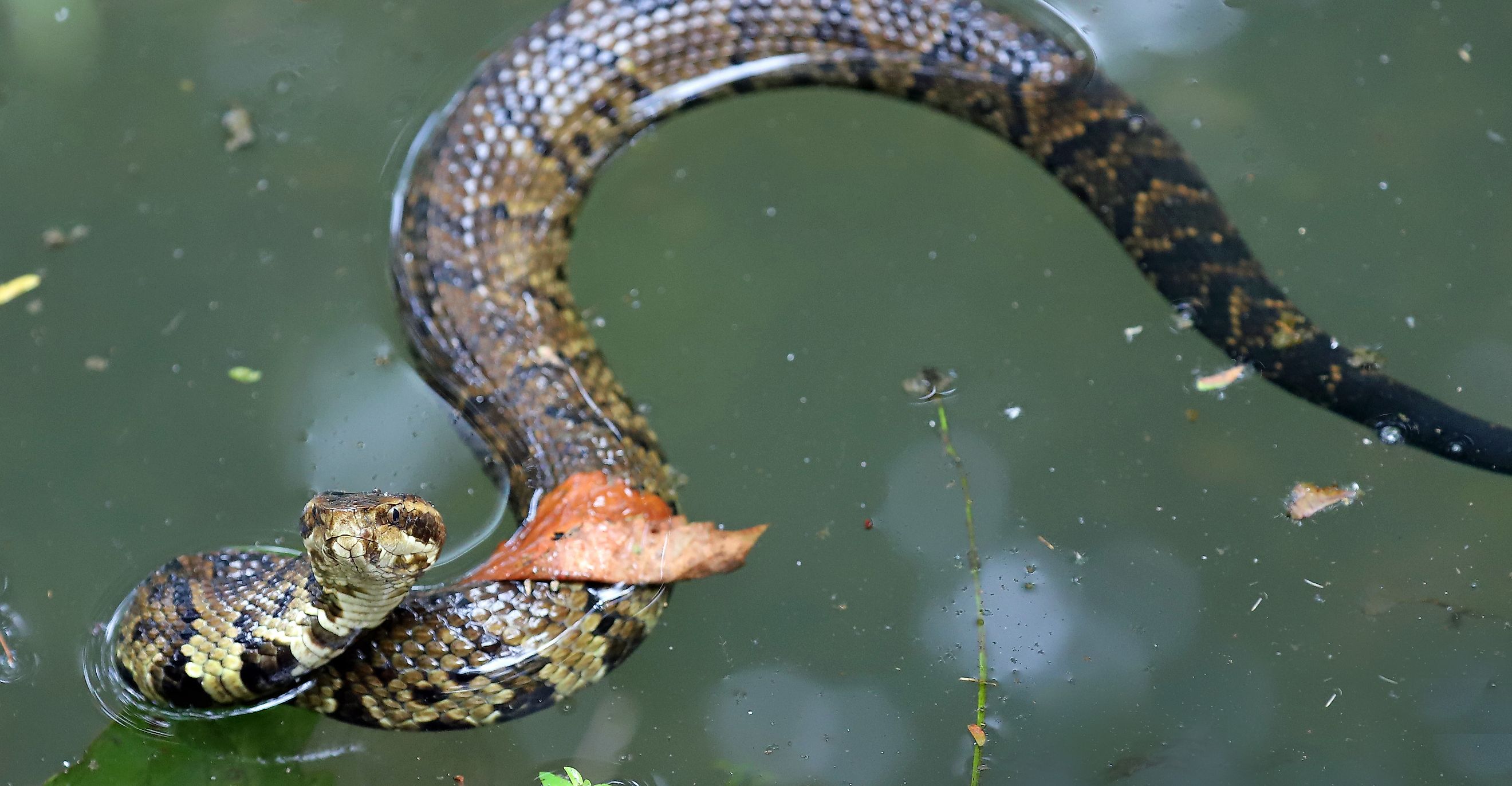
Where Water Moccasins And Copperheads Overlap
Two of the most feared venomous snakes in the American South turn out to be close cousins, even if the two rarely get mistaken for each other. The copperhead haunts dry, wooded uplands, while the water moccasin, known to scientists as the cottonmouth, rules the swamps and rivers. Across the warm Southeast, their ranges overlap almost completely, which means that in a great deal of snake country you have both snakes living nearby. The twist is that they stay out of each other's way by splitting the landscape right down the middle. Here is where water moccasins and copperheads overlap, and how to tell the two apart.
The Overlap Zone

The copperhead is one of the most widespread venomous snakes in the eastern US, ranging from the Northeast down through the Southeast and west into Texas. The water moccasin's range is smaller and more southern, covering the Southeast from southeastern Virginia down through Florida, west along the Gulf Coast into East Texas, and up the Mississippi Valley as far as southern Illinois. Lay those two maps on top of each other and the entire Southeast lights up: the coastal plain, the Gulf states, the Carolinas, and the lower Mississippi all host both snakes. Anywhere you find a wooded hillside sitting near a swamp or river in the South, the two ranges are almost certainly overlapping.
Meet the Copperhead

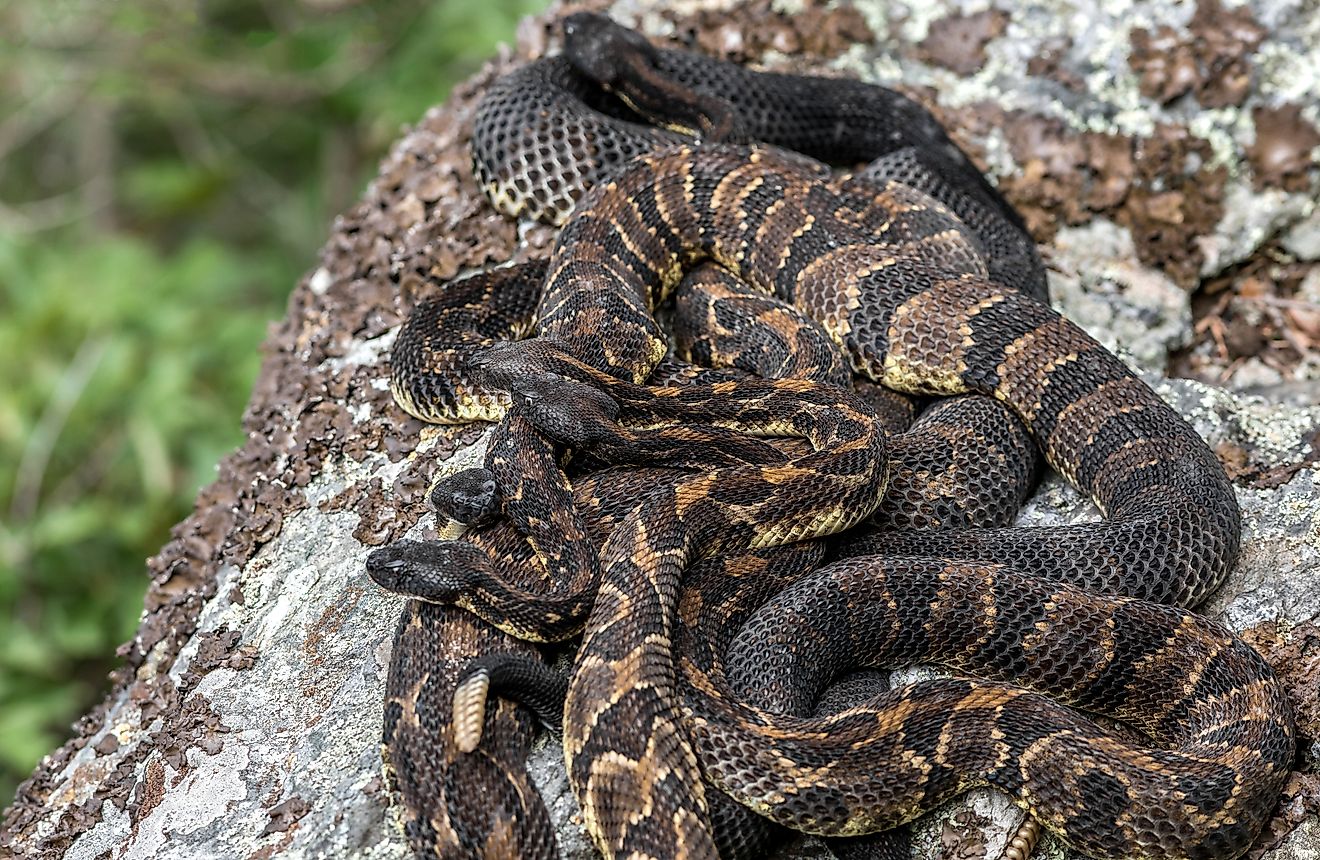
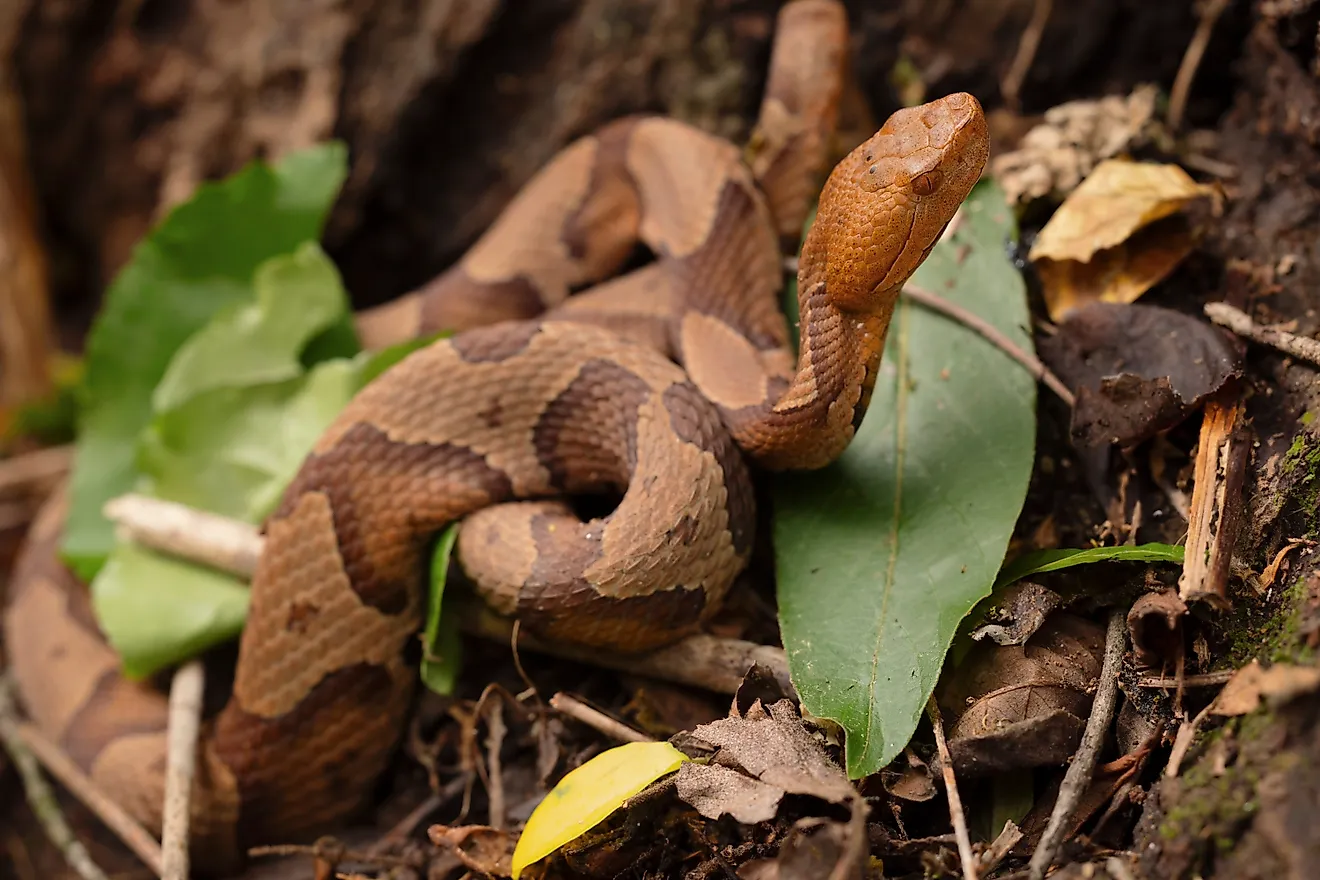
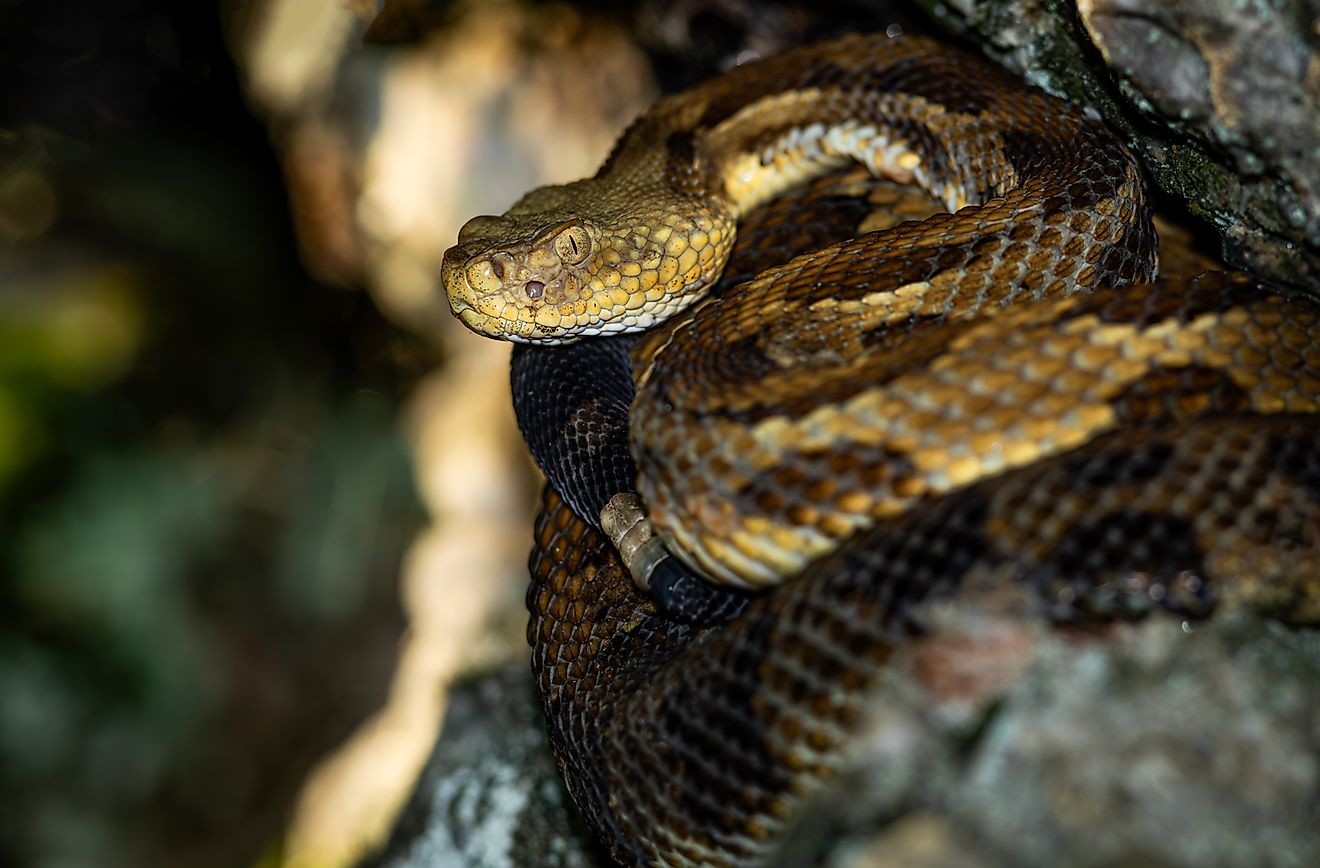
The copperhead, Agkistrodon contortrix, is the upland half of this pair. It prefers dry, rocky, wooded terrain, where its coppery, hourglass-banded body disappears into the leaf litter almost perfectly. An ambush hunter, it tends to freeze and rely on that camouflage rather than flee, which is exactly why people so often step close to one without ever seeing it. Its venom is relatively mild as pit vipers go, and while a bite is genuinely painful, it is rarely life-threatening. This is the snake of the forest floor, the woodpile, and the rocky slope.
Meet the Water Moccasin

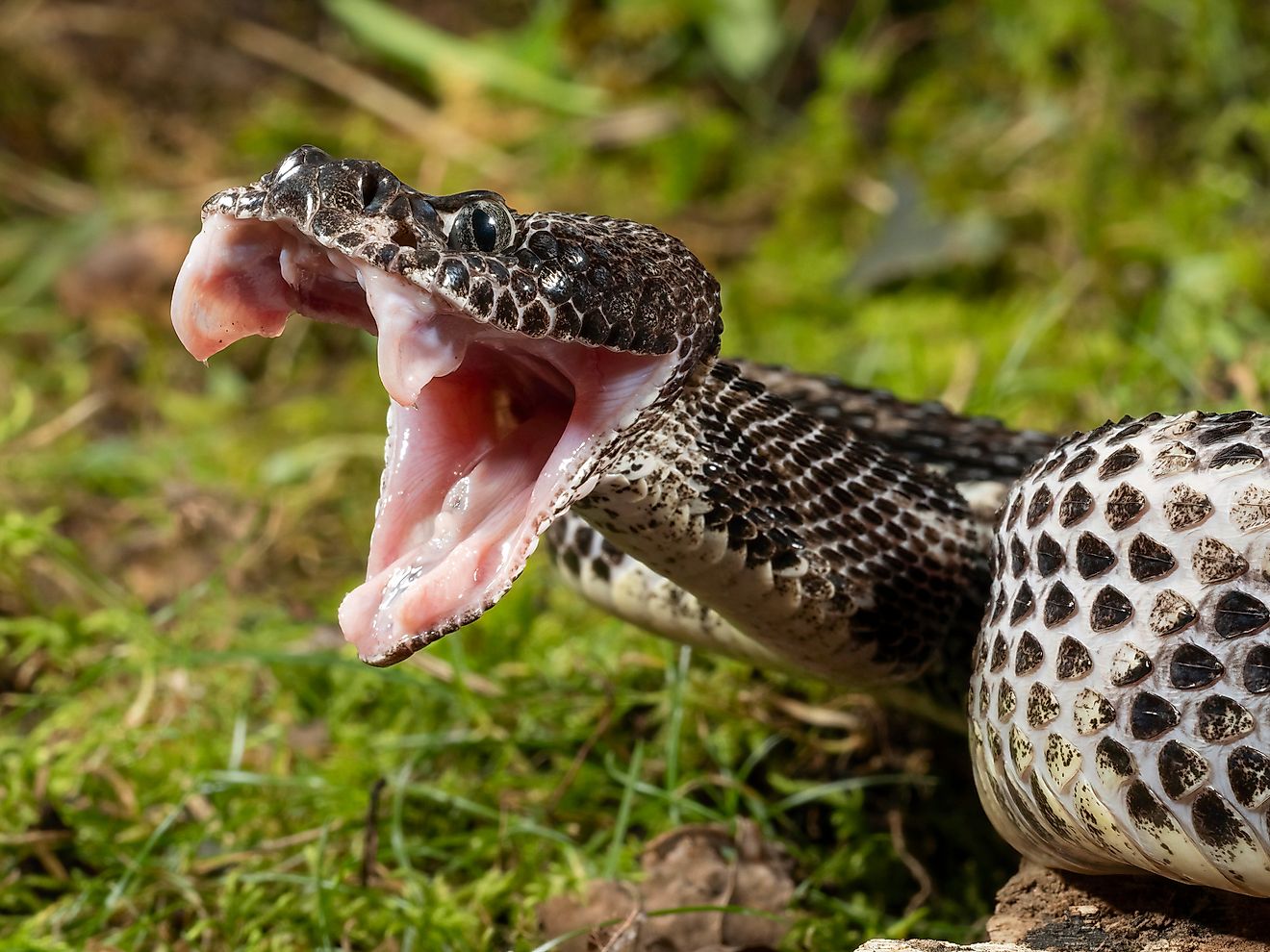
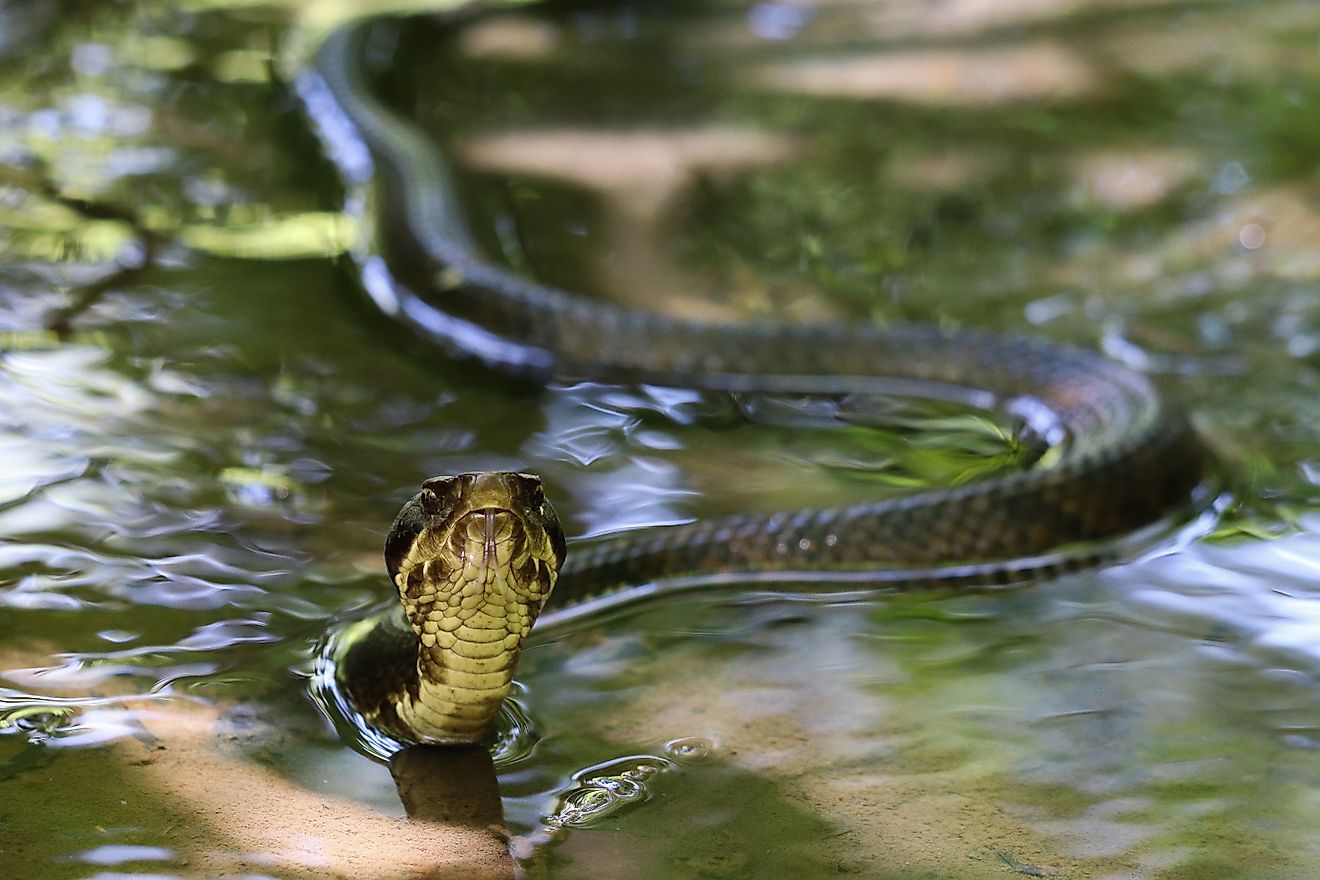
The water moccasin, or cottonmouth (Agkistrodon piscivorus), is the aquatic half, and a rather different animal in temperament. Thick-bodied, dark, and semi-aquatic, it lives in and around swamps, marshes, rivers, ponds, and drainage ditches, and it is a strong swimmer that often cruises along with its body riding high on the surface. When threatened, it famously throws its head back and gapes to flash the stark white lining of its mouth, the "cotton" that gives the snake its name. Its venom is more potent than the copperhead's, which makes it the more dangerous of the two cousins.
Cousins That Split the Water

Here is the key to how these two coexist so peacefully across the same enormous range. Both snakes belong to the same genus, Agkistrodon, which makes them close relatives, and close relatives usually end up competing. These two sidestep that problem by partitioning the habitat almost perfectly: the copperhead claims the dry uplands and the forest floor, while the water moccasin claims the water and its edges. Each one dominates a world the other largely ignores. The place they are most likely to actually cross paths is the transition zone, where a wooded slope runs down to a creek, pond, or swamp, giving the two cousins a shared borderland.
Telling Them Apart

So how do you know which cousin you are looking at? A copperhead is coppery-tan with clean, hourglass-shaped crossbands, narrow across the back and wide down the sides, and you will almost always find it on dry ground. A water moccasin is darker, often olive to nearly black, noticeably heavier-bodied with a blocky head, and it will be in or very near water, frequently giving that open-mouthed warning display. One catch worth knowing is that the juveniles of both species look remarkably alike, both banded and tipped with a bright yellow-green tail they wiggle to lure prey. In the end, the safest approach is exactly the same for either one: both are venomous, so admire them from a good distance and never try to handle or kill one.