The Truth About Turtles Breathing Through Their Butts Under Ice
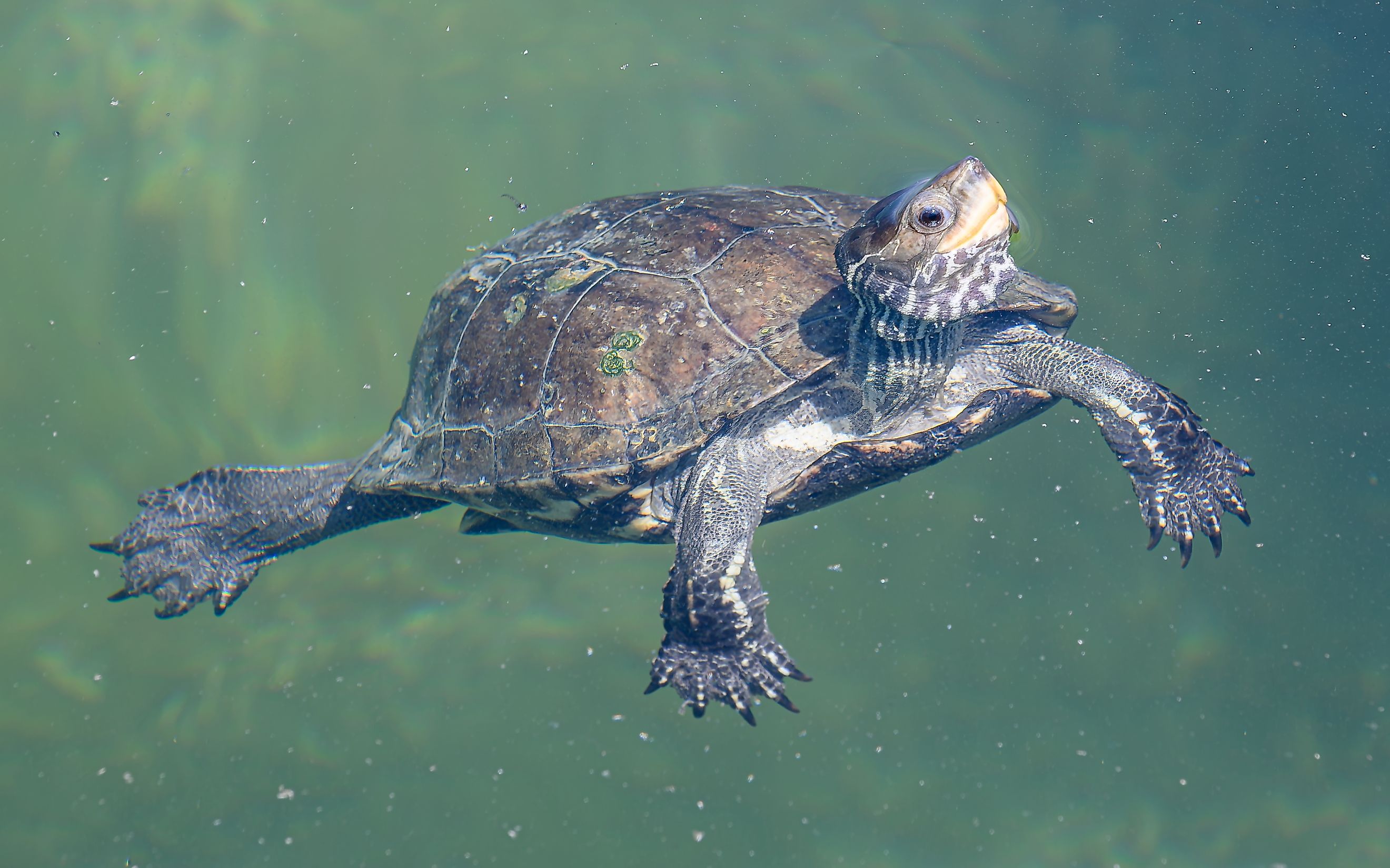
A painted turtle can spend four months stuck on the muddy bottom of a pond sealed by ice, never coming up for air, and still emerge in spring just fine. This ability has given turtles a quirky reputation for breathing through their rear ends. That idea is partly true and partly exaggerated. Some turtle species really can absorb oxygen from water through the lining of the cloaca, which is the opening under their tail. However, the turtles that are best at this live in warm rivers and never deal with ice, while the tough northern turtles trapped under frozen ponds in winter mostly rely on other survival tricks.
The Reptile That Sleeps Half the Year Underwater

Turtles are reptiles, and like other reptiles, they are ectothermic. This means their body temperature follows the water and air around them instead of being controlled by an internal heat source. That fact, which often confuses people who wonder why turtles aren't amphibians, affects how they survive winter. In the northern parts of North America, turtles can spend more than half the year in a dormant state called overwintering. This cold-season shutdown is somewhere between true hibernation and a lighter dormancy called brumation. Freshwater turtles live as far north as about 50 degrees latitude, so the toughest populations are found in the northern United States and southern Canada. When the water cools in autumn, these turtles settle at the bottom of ponds, lakes, or slow rivers and basically shut down. Once the surface freezes over, they can no longer reach the air above, leaving them to survive until spring on the oxygen dissolved in the water, which can eventually run out.
Turtles rely on a simple advantage to survive winter underwater. Their bodies slow down as temperatures drop. As a turtle's body cools, its metabolism slows down. When chilled to just above freezing, a turtle uses much less energy and oxygen than it does in summer. A reptile that needs to breathe every few minutes in July can go for days just using the oxygen dissolved in cold water. This deep slowdown, called metabolic depression, makes all their other winter adaptations possible.
How a Sealed-In Turtle Finds Oxygen

When a turtle spends the winter under ice, its lungs don't work, so it has to get oxygen directly from the water. This is called aquatic or extrapulmonary respiration. Oxygen can pass through any part of the body that is thin, moist, and full of blood vessels. For northern pond turtles, the skin and the lining of the mouth and throat do most of this work. The turtle moves water over these areas in slow pulses. The cloaca, which is the single opening under the tail used for waste and reproduction, also helps. Inside the cloaca are two balloon-like sacs called cloacal bursae. In some turtles, these sacs have walls full of blood vessels that can take in oxygen from the water. That's where the idea of "butt-breathing" comes from. But for painted and snapping turtles, the cloaca doesn't do much. Careful studies by the late physiologist Donald Jackson showed that most of the oxygen exchange happens through the skin and throat, not the rear end.
The Real Bum-Breathers Live in Australia

The turtles best at cloacal breathing aren't the ones living in icy waters. Instead, they're found in Australia's warm rivers. The Fitzroy River turtle (Rheodytes leukops) is the standout. Locals even call it the bum-breathing turtle because it relies so much on this method. Its cloacal bursae are much larger than usual and covered with finger-like papillae that increase the surface area for gas exchange, similar to how lung folds work. Instead of waiting for oxygen to passively enter, the Fitzroy River turtle actively pumps water in and out of its cloaca. Research led by University of Queensland physiologist Craig Franklin found that this turtle can absorb much of its oxygen through its cloaca, sometimes accounting for around 70 percent of its total oxygen uptake. This ability allows it to stay underwater in fast, oxygen-rich rivers for hours or even weeks without coming up. The Mary River turtle and the white-throated snapping turtle, which live nearby, can do the same thing. According to the Australian Museum, both the Mary and Fitzroy River turtles absorb oxygen across the surface of the cloaca. These turtles are some of Australia's most unusual native animals. Unlike marine turtles that have to come up for air, these river turtles can breathe underwater for long periods.
When the Pond Runs Out of Oxygen

Turtles can only get oxygen from water as long as there's some left, but under thick ice and snow, that's not always the case. Snow blocks sunlight, so aquatic plants can't do photosynthesis, while bacteria and decay keep using up the remaining oxygen. In shallow ponds, this can lead to almost no oxygen, a state called anoxia. When that happens, the turtle's skin, throat, and cloaca can't absorb any more oxygen, and the turtle has to survive for months without it. Some species handle this with one of the most impressive endurance feats in the animal world. They can eventually stop relying on oxygen and shift entirely to anaerobic metabolism, using stored sugars, mainly glycogen from the liver, to produce energy without it. The painted turtle is the champion at this, with the snapping turtle close behind.
A Shell That Works Like a Chemistry Set

Anaerobic metabolism comes at a high cost. It fills the body with lactic acid, the same substance that makes an athlete's muscles burn. If this acid buildup isn't controlled, the drop in blood pH would be deadly within hours. The painted turtle survives thanks to a clever adaptation, its shell. Donald Jackson's research showed that the shell and skeleton work as a natural buffering system, neutralizing acid in two ways. The bony plates release carbonate minerals, mainly calcium and magnesium carbonate, into the blood to absorb acid. They also remove lactic acid from the blood and store it in the bone. Along with a major slowdown in metabolism, this allows a painted turtle to survive three to four months without oxygen in the wild, and over five months in the lab at near-freezing temperatures, all while carrying blood lactate levels that would be fatal to most other vertebrates.
The shell's importance becomes clear in both turtles that survive winter successfully and those that fail to do so. Softshell turtles, with their flexible shells that contain much less mineral, do not handle a lack of oxygen well. Across different species, the ability to survive without oxygen closely matches how much buffering mineral their shells provide. This patience during harsh winters helps explain why turtles are among the longest-lived animals on Earth. Some snapping turtles in northern lakes can live for more than a hundred years.
What It Means Above the Ice

If you fish, paddle, or walk along frozen shorelines, you might notice that even when a pond is sealed by ice, life continues underneath. This system is tough but not perfect. If winter lasts too long or a drought lowers water levels before freezing, a whole wintering site can be lost. Scientists have seen mass die-offs called winterkill, like one in Illinois where hundreds of turtles and thousands of fish died, and another in South Dakota where painted turtles were lost after a drought. Young painted turtles have a different strategy. They often stay in their nests through their first winter and can survive even if some of their tissues freeze, a trait the adults don't have.
If you spot a turtle resting beneath clear winter ice, there is usually no reason to intervene. It is likely in its normal state of winter dormancy and does not need to be rescued. In fact, breaking the ice or pulling the turtle out can actually harm it. If you own a pond and worry about winterkill, the best way to help is to keep a spot aerated and free of heavy snow so some oxygen and light can reach the water. These turtles also appear in stories from warmer months, especially in rivers where they grow largest and where people wonder how far north the alligator snapping turtle can survive. The snapping turtle is one of the biggest reptiles in the country. But cold isn't their only challenge. In Australia, dams, farming, and sediment are reducing oxygen in rivers that bum-breathing turtles rely on. Since their cloacal surfaces only work in oxygen-rich water, polluted rivers are especially tough on young turtles. Harsh conditions on land can be just as dangerous, which is why snakes sometimes end up frozen in the ice if they misjudge when winter will start.
The Long Game
If you look past the headline, the way turtles survive winter is really about doing less. They cool down until their bodies almost stop, breathe through their skin when possible, and use their shells to handle acid when they can't. This lets them turn what could be a deadly frozen trap into a long, dreamless sleep. There are animals that actually breathe through their rear ends, and while that's amazing, those creatures live in warm water, not under ice. Some turtles take this adaptation even further, surviving for months beneath the ice with little or no oxygen. During this time, they can also draw minerals from their own shells and bones to help buffer the acids that build up in their bodies. This quiet toughness has helped turtles get through winters for well over 200 million years.