Why Some Animals Turn White In Winter
In the northern hemisphere, more than 20 species of birds and mammals swap their brown or gray summer coats for white ones in winter. This change isn't triggered by cold, but by light. As autumn nights get longer, the animals' eyes notice the difference, and their bodies start growing new coats without pigment. That's why you might see a white hare on snowy ground, a white fox on an open plain, or a white bird on a windswept ridge. The timing of this change is built in and matches the calendar closely. This makes the system strong, but as the snow line shifts, it can also be a weakness.
The Trigger Is Light, Not Cold

Across North America, through the boreal forests of Canada up into Alaska, the snowshoe hare (Lepus americanus) molts twice a year. Light triggers this change. When light enters the hare's eye, it sends a signal to the pineal gland, which then releases melatonin during the dark hours. Longer nights mean more melatonin is released each night. This increase changes other hormones, which stop the hair follicles from adding pigment. As a result, new hairs that grow in over the next few weeks are white. Temperature and snow cover can shift the timing by a few days. If autumn is warm and late, the molt happens a bit later. Still, day length is the main factor, so a hare will turn white even if snow arrives late.
Camouflage, For The Hunted And The Hunters

The white coat helps animals blend in with snow. For prey like hares and ptarmigan, having white fur or feathers makes it harder for predators that hunt by sight to spot them. For predators, the same white coat helps them sneak up on prey across open snow without being noticed. Different animals have come to this solution on their own. Hares, foxes, weasels, lemmings, and grouse aren't closely related, but all of them in the far north change to white. The collared lemming is the only rodent known to do this.
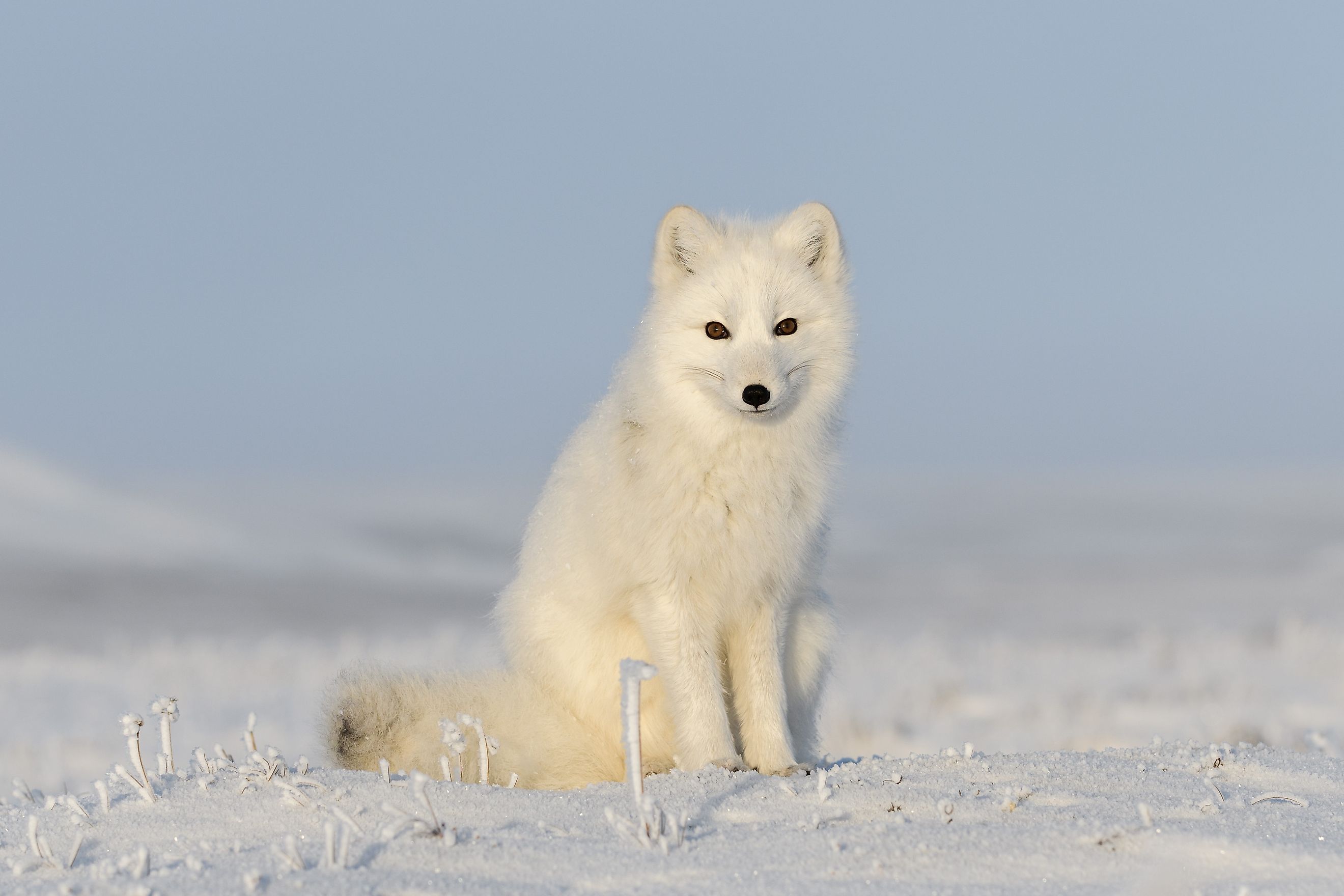
These animals live all across the circumpolar north. Arctic foxes are found around the top of the world, in most countries with Arctic land, including Canada, Greenland, Iceland, northern Norway, and Russia. The mountain hare (Lepus timidus) fills a similar role in Europe and Russia, across the mountains of Scandinavia and into Siberia. Look across the far north and you'll find foxes, hares, and lemmings all spending the winter there. Not every Arctic fox changes color. There's also a blue morph that stays dark gray-brown all year and is more common along coasts, where bare rock and open water remain through winter.
Three types of weasels also change color. The stoat, the least weasel, and the long-tailed weasel all trade their brown summer fur for white in the northern parts of their range. Farther south, where snow doesn't last long, these weasels often stay brown all winter. In between, some animals look patchy, with white and brown mixed together. The timing of the molt depends on day length, not the current weather, so a weasel might still be white even after the snow has melted.
The Molt Itself

Some animals change color by molting twice a year. In autumn, they shed their brown for white, and in spring, they reverse the change. The autumn molt starts early. For example, an Arctic fox begins shedding its brown fur around September, before the first heavy snow. This happens because shorter days trigger the change, not the first snowstorm. The white fur has no melanin, which is the pigment that makes the summer coat brown. Some white hairs are hollow, trapping air for a bit of extra insulation, but the main reason for the white coat is to blend in, not to stay warm. The timing of these changes is strict. Studies on radio-collared hares in Montana show that hares can speed up their spring molt a little if the snow melts early, but the start dates for both molts stay the same each year. A hare can't choose to stay brown just because the ground is bare. Its molting is controlled by light, and the color change follows.
Why Some Hares Stay Brown

Not all snowshoe hares turn white. In milder areas along the Pacific coast, like parts of Washington, many hares keep their brown coats all winter. This difference comes from a single gene called Agouti. Hares that stay brown in winter have a version of this gene that keeps pigment in their new fur. This brown-winter gene didn't originally come from snowshoe hares. It arrived long ago from black-tailed jackrabbits through hybridization and spread among hares living where winters are short and snow is light. This trait can move between groups and become common where it's useful. That's important for what happens next.
The Ptarmigan's Reverse Problem

The rock ptarmigan (Lagopus muta) faces a unique challenge with its camouflage. In spring, females molt into a mottled brown about a month before the males do. Males stay white for about three weeks after the snow has melted from the tundra, making them stand out against the dark ground and easy for gyrfalcons to spot. However, being white also makes males easier for females to find, which is the trade-off. Once a male's mate starts laying eggs, he gives up his white color. He rubs dirt into his feathers and becomes about six times less noticeable, almost as hidden as the brown females. If the nest fails and the female can breed again, the male can clean himself and become conspicuous once more. The female, in her summer plumage, is one of the hardest birds to spot on the open tundra, which helps her protect her nest. A long field study in the Canadian Arctic figured this out over 17 years. A ridge where rock ptarmigan stay white after the thaw is a rare sight in the Arctic spring.
When The Snow Comes Late

The system relies on snow arriving when animals' coats turn white and leaving when they turn brown. But this timing is starting to fall out of sync. Across the temperate north, the snow season is getting shorter at both ends. Research from Montana suggests that, on average, snow will cover the ground for 29 to 35 fewer days by the middle of this century, and 40 to 69 fewer days by its end. Since coat color changes are triggered by light, not snow, animals will be the wrong color for more days each year. The number of mismatched days could increase four to eight times.
This mismatch comes with real costs. In a study of 186 radio-collared snowshoe hares in western Montana, hares that were white on bare ground or brown on snow had up to 7 percent lower weekly survival than those whose coats matched their surroundings. Researchers said a white hare on dark ground stands out like a light bulb to predators like lynx or owls. Over a season, these losses add up, and models predict sharp population declines by the end of the century if nothing changes. For two Montana populations, the projected drop is about a quarter of their numbers by 2100. According to the same research group, at least 14 color-changing species worldwide face similar challenges, including the mountain hare, Arctic fox, and several weasels.
There is hope, and it involves the brown-coated hares. In places where winter-brown and winter-white animals live together, natural selection can favor the coat color that matches the local snow. The gene for brown winter coats can spread to other populations that need it, as long as animals can move and breed between areas. Keeping habitats connected is up to us. Human-caused warming has shortened the snow season, and our roads, fields, and cut forests decide whether a brown-coated hare in one valley can reach another.
Bottom Line
A winter coat is a gamble made well before the season starts. Animals sense the days getting shorter, turn white, and rely on snow arriving before their transformation is complete. For most of their history, this strategy worked because daylight and snowfall usually matched up in the north. Now, that link is breaking. Snow comes later and melts sooner, so the coat that once hid a hare or ptarmigan now makes it stand out, and the cost is survival, not appearance. The animals most likely to adapt are those with genes for brown winter coats and who live where both types can still mix and breed. Seeing a white animal on bare brown ground might seem odd, but it's actually a clear sign of a warming climate that anyone outdoors in spring can notice.