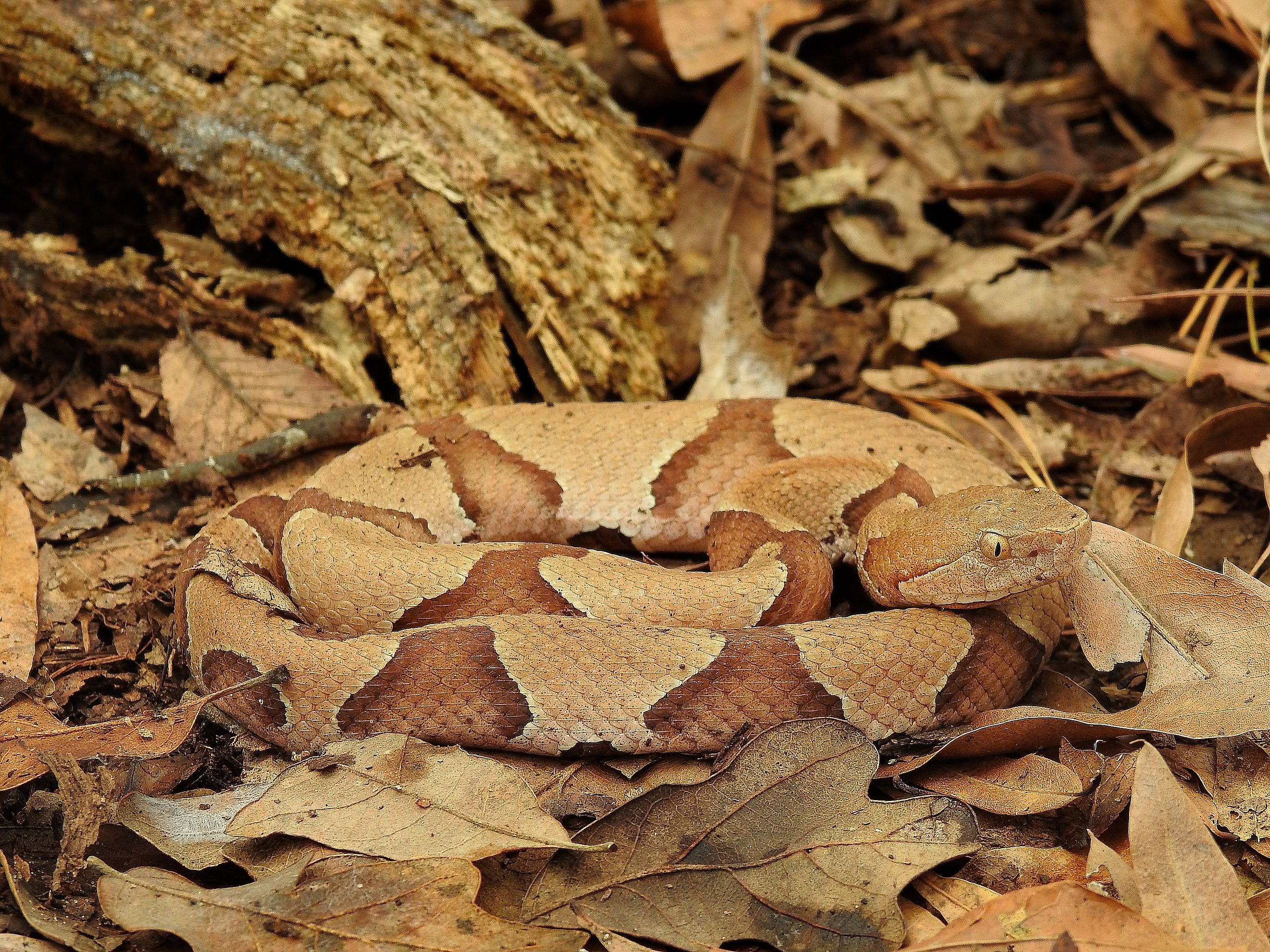
Where Copperheads Live In The United States
The copperhead is one of the most widely distributed venomous snakes in North America and the one people in the eastern United States are most likely to encounter. Adaptable and shy, it turns up even inside cities, which is part of why it is credited with biting more people than any other venomous snake in the country, though its bites are rarely fatal. Understanding where copperheads actually live means looking at two closely related species, a broad swath of the central and eastern states, and a set of habitat preferences that keep these snakes close to forests, rocky slopes, and the edges of human settlement.
Two Species, Two Ranges

For most of the twentieth century, the copperhead was treated as a single species with five subspecies. That changed with molecular work by Frank Burbrink and Timothy Guiher. Recent genetic analysis showed that what had been five subspecies is better understood as two species. These are Agkistrodon contortrix, the eastern copperhead, and Agkistrodon laticinctus, the broad-banded copperhead (formerly treated as the subspecies laticinctus together with the Trans-Pecos form). Using a Bayesian implementation of the multispecies coalescent model, Burbrink and Guiher (2015) recognized these as distinct, incompletely separated lineages.
The two species divide the copperhead's overall footprint roughly east and west. A. contortrix runs the length of the Atlantic seaboard, reaching its northern limit in Connecticut and its southern limit in Florida, and it pushes well inland to the west. The broad-banded copperhead occupies western and central Texas, central Oklahoma, and eastern Kansas. Where they meet, they interbreed. Hybridization between the two occurs along an ecological transition zone that runs north out of southeastern Texas into eastern Kansas, a gradient of increasing elevation and decreasing precipitation. That large contact zone is why some herpetologists still prefer to treat the two as subspecies, but the two-species arrangement is the current standard followed by references such as the Reptile Database.
The Eastern Copperhead's Range

The eastern copperhead accounts for the great majority of the species' distribution. Copperheads are found in roughly 28 states across the central and eastern United States. A useful summary of the eastern species' limits comes from the Orianne Society. Its range reaches north into southern New England and south to northern Florida, then runs west across the southern Great Lakes states and southern Iowa into southeastern Nebraska, eastern Kansas, central Oklahoma, and eastern Texas.
Within that broad area, the snake is a fixture of the Appalachian and Piedmont uplands. Its overall range runs west through southern Pennsylvania, Ohio, Indiana, and Illinois, and south through the upland interior into northern Alabama, Georgia, and South Carolina. It reaches the Gulf states and the lower Mississippi Valley, and the Smithsonian's National Zoo describes the northern form as having the widest distribution of any copperhead population, reaching the Florida panhandle in the south, Massachusetts in the north, and Nebraska and Illinois in the west. In the Southeast it is often the most frequently seen venomous snake, including in suburban areas, covering most of the eastern seaboard, the central states, and west into Texas.
The Broad-Banded Copperhead's Range

The broad-banded copperhead occupies a compact south-central range built around Texas and the southern Great Plains. Its distribution runs through central and north-central Texas into central Oklahoma and north to Kansas. This species absorbs the snakes formerly called the broad-banded and Trans-Pecos copperheads, extending north out of Texas through eastern Oklahoma into eastern Kansas. In the arid western part of this range, the snake is tied closely to wooded creek bottoms and rocky canyon country rather than the continuous forests of the East.
Where Copperheads Are Absent

Copperheads are widespread, but a few gaps stand out. The most notable is peninsular Florida. Copperheads are distributed over the eastern United States except Florida, with the northern form ranging south through the Appalachian Mountains and Piedmont as far as Georgia. In practice, the snake reaches the Florida panhandle, but very few sightings have been recorded south of the panhandle.
Elevation and latitude also set limits. In the mountainous Northeast the copperhead is rare or absent at higher altitudes, and toward the northern and northeastern corners of states like Connecticut its populations thin out and disappear. West of the Great Plains, the dry country of the Rockies and the Southwest lies beyond the range of both species.
Preferred Habitats

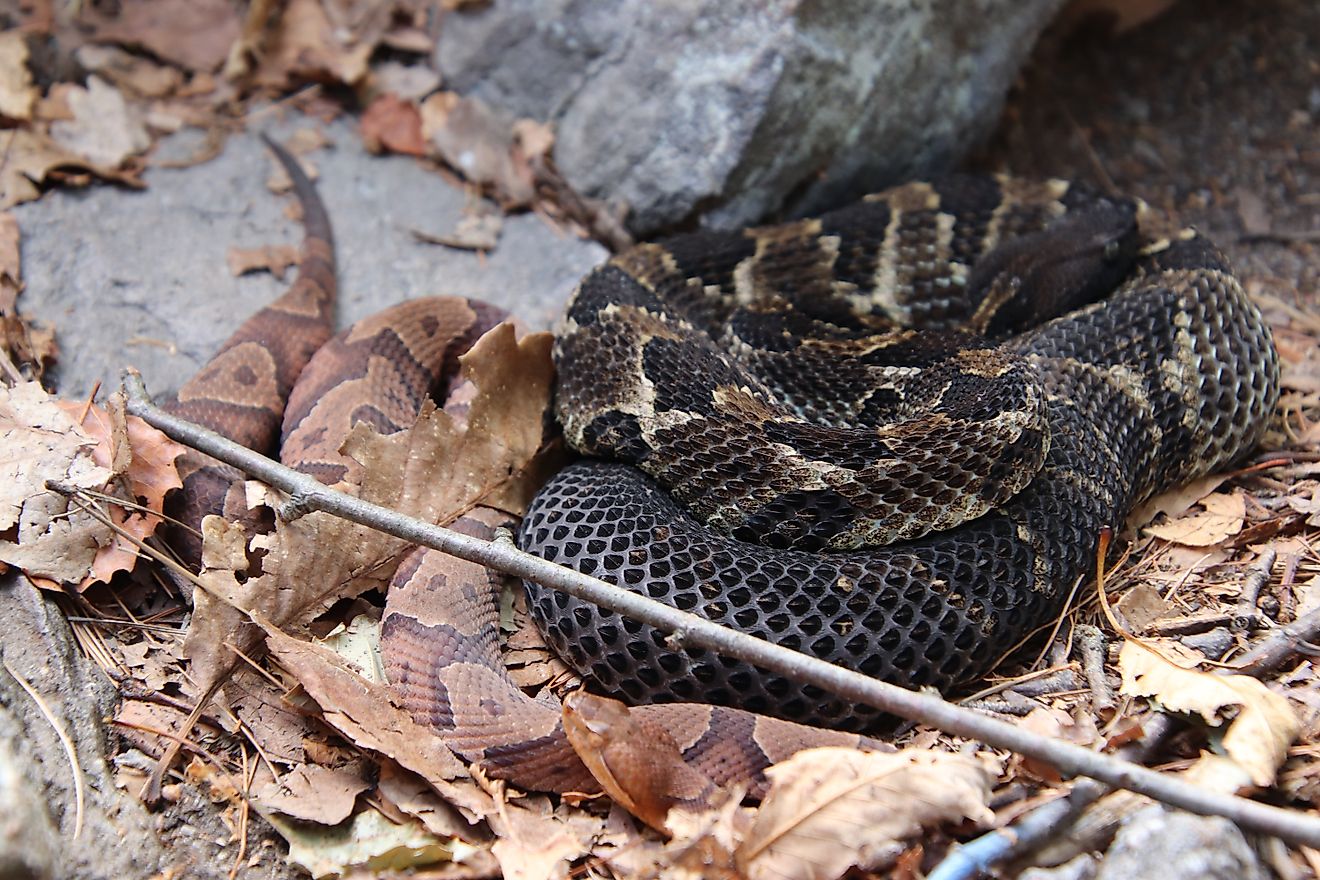
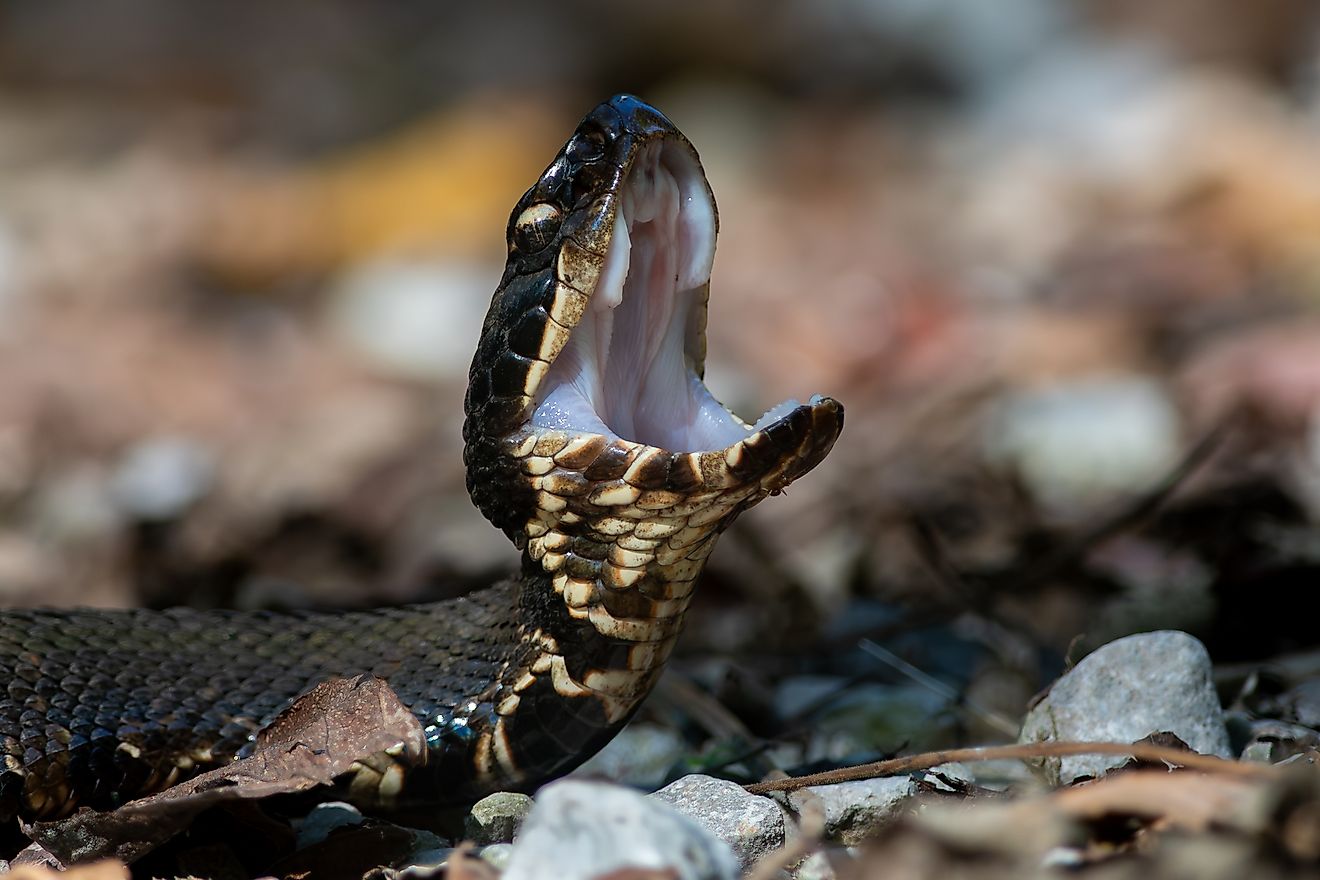
Across this range, copperheads are fundamentally terrestrial snakes of forest and forest edge, which distinguishes them from their semiaquatic relative, the cottonmouth. Studies at the University of Georgia's Savannah River Ecology Laboratory treat A. contortrix as the terrestrial member of its genus, representing the ancestral land-dwelling condition. In most of its range the eastern copperhead favors deciduous forest and mixed woodlands, and it may occupy rock outcroppings and ledges as well as low-lying, swampy ground.
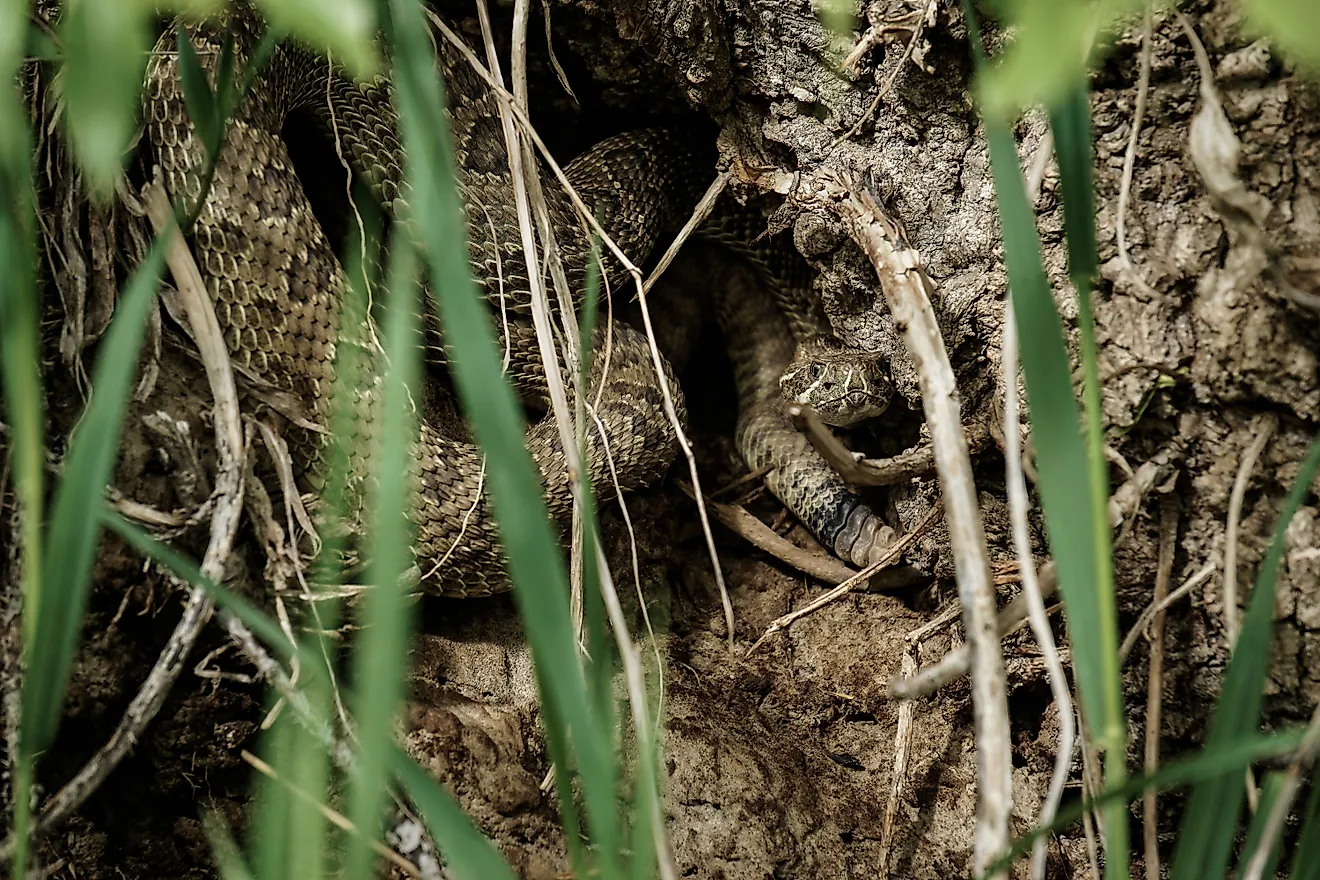
The snake's tolerance for varied terrain is wide. Georgia wildlife biologists describe its habitats as lowland cane thickets, high ground around swamps and river floodplains, hardwood and pine forests, mountainous areas, and rural habitats in farming country. That flexibility, combined with excellent leaf-litter camouflage, lets it persist in second-growth woods, overgrown lots, and the wooded margins of neighborhoods. The Smithsonian notes that copperheads occupy both terrestrial and semiaquatic habitats, including rocky forested hillsides and wetlands, and will also use abandoned and rotting wood or sawdust piles, construction sites, and sometimes suburban areas. This adaptability, rather than any single signature landscape, explains the snake's broad presence.
Seasonal Movement and Denning

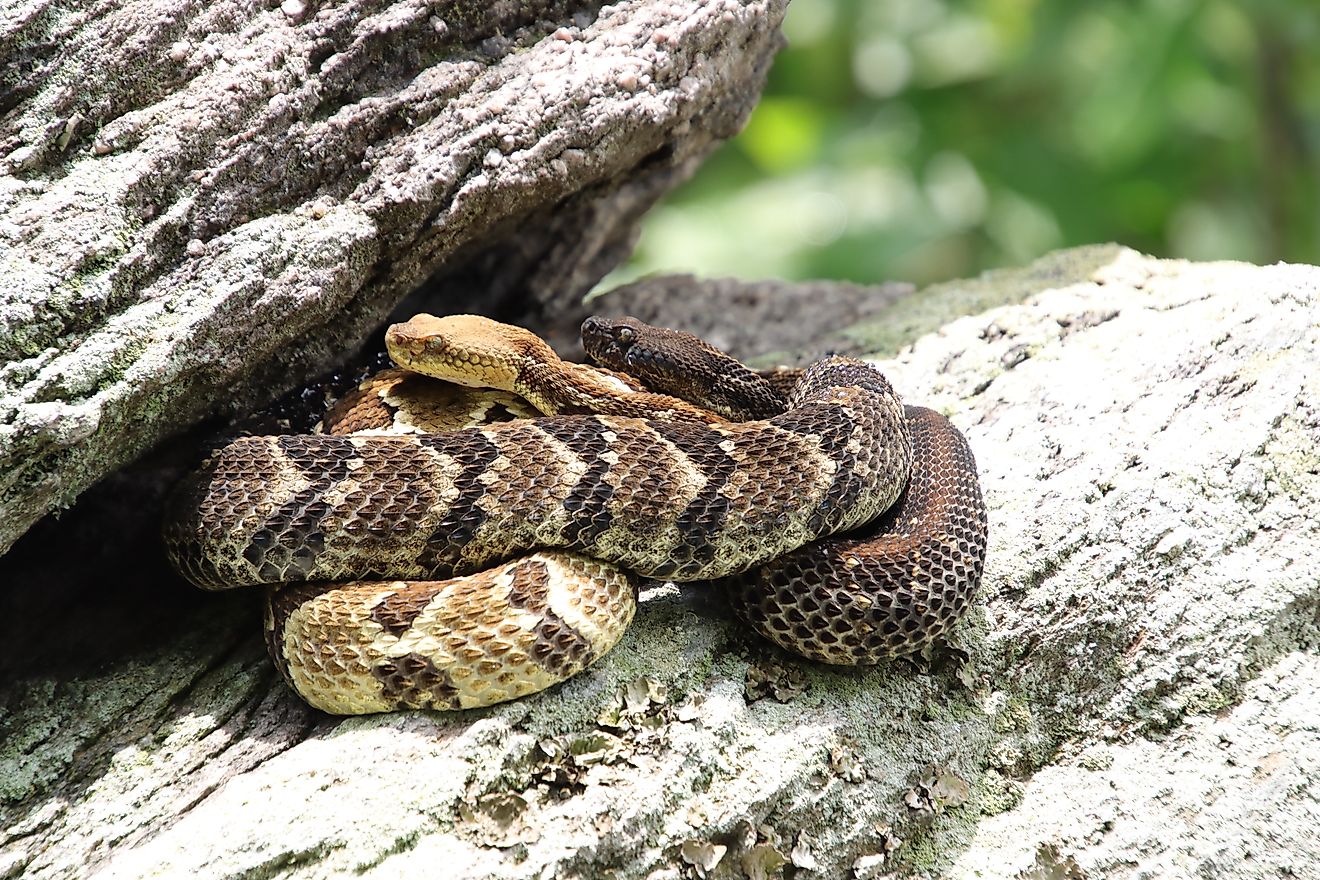
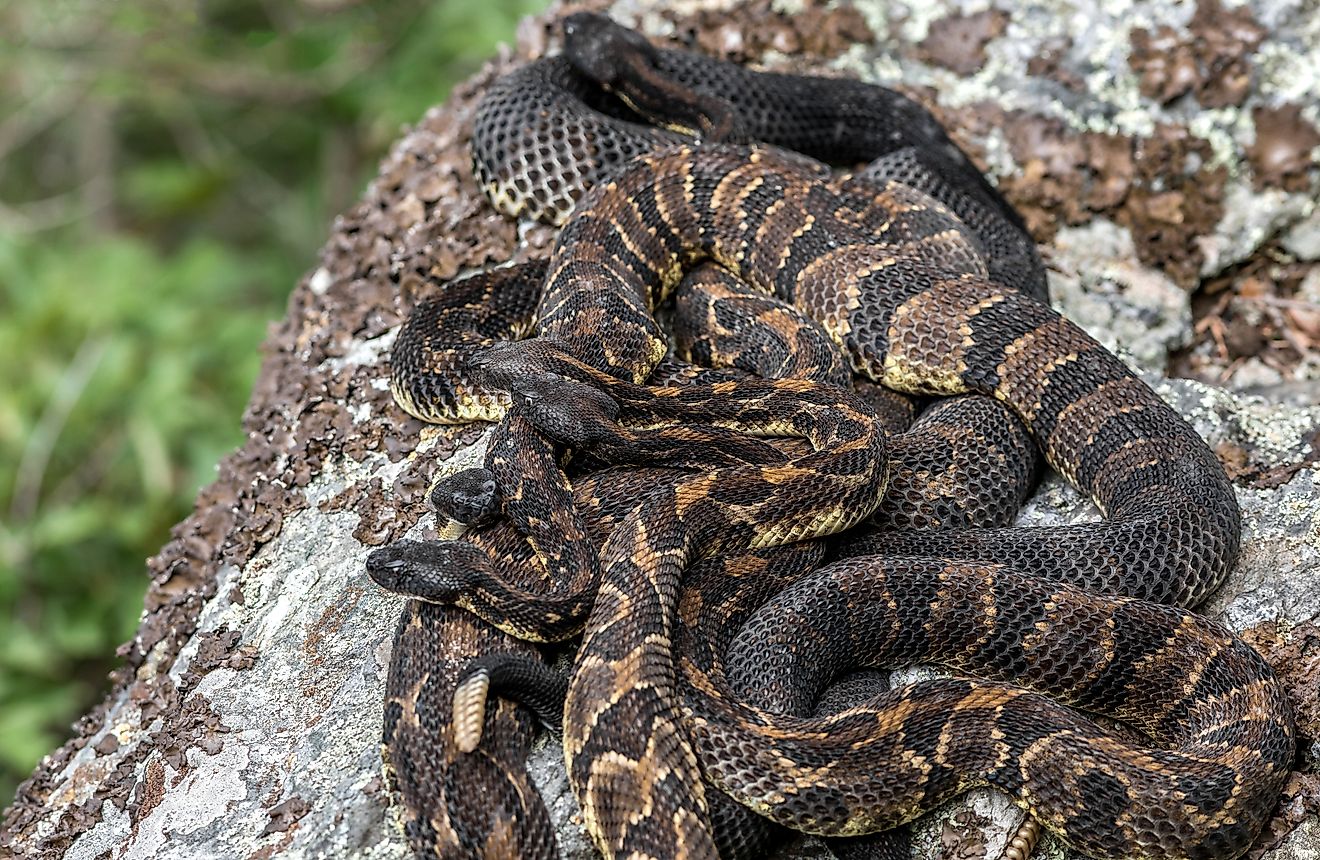
Where a copperhead lives also shifts with the seasons, because the places it spends winter are often not the places it feeds in summer. Copperheads hibernate over winter, usually between November and April, emerging on warm days to bask; their overwintering sites are typically south- or west-facing rock crevices and outcroppings. These hibernacula are frequently communal. The snakes may share dens with other copperheads and even other species, such as timber rattlesnakes and black rat snakes, and tend to return to the same den year after year.
Because good denning sites and good hunting grounds do not always coincide, copperheads undertake seasonal movements between them. Hibernacula often lie outside the snake's warm-season feeding range, which requires relatively long movements to and from the den on a seasonal basis. In the hotter parts of the range, the snake also shifts its daily schedule, becoming nocturnal in midsummer and more active by day in spring and fall.
Conservation Status Across Its Range

Despite being heavily persecuted in places, the copperhead remains common and secure across most of where it lives. The IUCN Red List classifies Agkistrodon contortrix as Least Concern, and its population was assessed as stable. It carries a NatureServe global rank of G5 (Secure) and has no federal protection. Georgia's wildlife agency reaches the same conclusion, noting that with such a widespread distribution, copperheads appear abundant and have stable populations.
Security at the continental scale, however, hides trouble at the edges. Copperheads are listed as endangered in Massachusetts and as a species of special concern in New Jersey, with local declines driven by habitat loss and degradation, collection for the pet trade, road mortality, and deliberate killing. They are also listed as endangered in Iowa and as a species of conservation concern in other states at the northern margins of the range. In other words, the copperhead is a snake of the broad, forested American interior that thrives in the heart of its range while growing fragile precisely where that range runs out.
The Shape of Copperhead Country
The question of where copperheads live resolves into a handful of consistent rules. The ground is split between two species, with the eastern copperhead holding most of the central and eastern states and the broad-banded copperhead occupying the south-central plains, and neither strays far from woodland, rocky ground, and the leafy margins of towns. Their numbers run high through the warm, forested middle of the country and fall away where the terrain shifts to peninsula, high elevation, or open dry plain. In the end, what the land looks like predicts the snake better than any line drawn on a map.