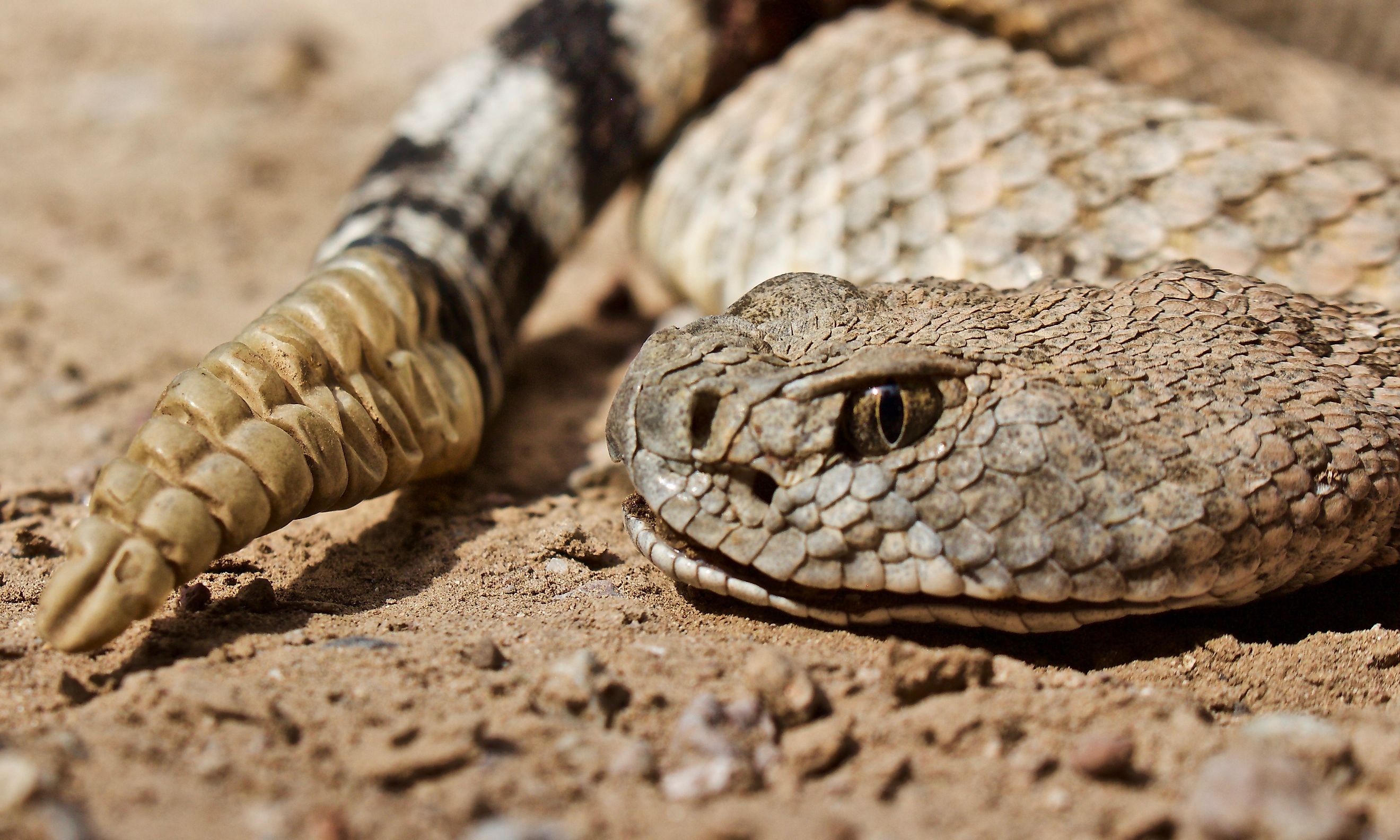
How A Rattlesnake Chooses Its Den
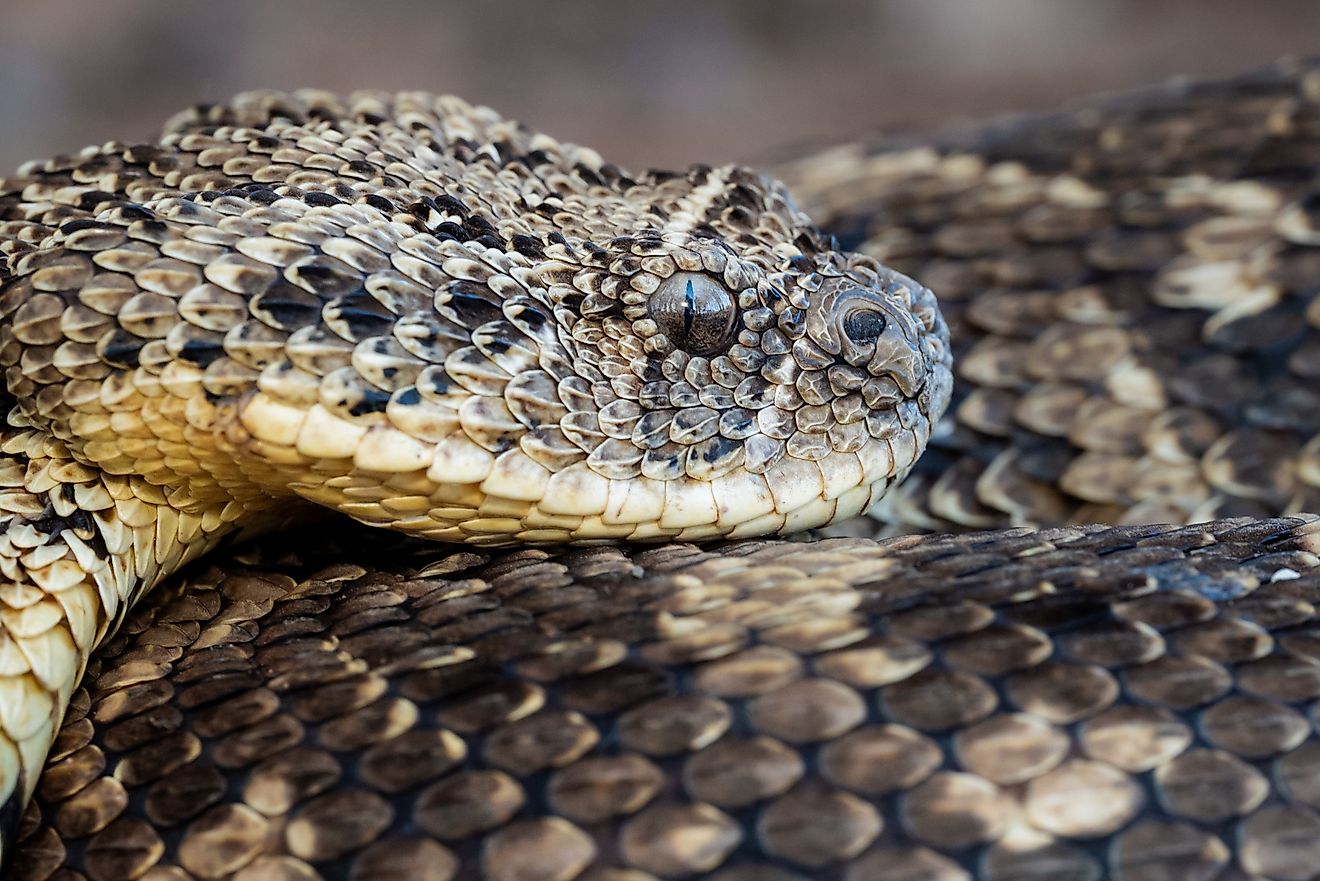
Mostly it does not. A rattlesnake inherits its den, following the scent of adults to a site that generations have already used, and the ones that do have to pick somewhere new are working against a landscape that offers almost nothing suitable. Ontario's guidance for building artificial hibernacula runs to a minimum depth of two meters, excavation below the winter water table, frost tubes sunk three meters to establish the frost line, and water table readings taken across multiple years. That is the specification a snake has to satisfy with whatever hole it can find.
It Must Clear The Frost Line

The first requirement is absolute and it varies enormously by region.
Below the frost line, soil temperature stays above freezing all winter. That depth runs from a few inches in the Deep South to four or six feet in Wyoming, where one researcher notes the ground can freeze that deep in really cold climates.
A den that does not reach it kills its occupants. There is no partial credit on this criterion.
It Must Not Reach The Water Table

The second requirement runs in the opposite direction and squeezes the available space.
Go too deep and the site floods. Canadian research on massasauga overwintering recorded water table depth every ten minutes across whole winters, finding it generally rising through the season and most variable in late winter.
Ontario's habitat description puts the requirement plainly: below the frost line, but above the water table.
The Gap Can Be Six Inches

Researchers have a term for the band between those two lines and have measured how thin it gets.
The intersection point between frost line and water table indicates the depth at which unflooded and unfrozen conditions are maximized, which they call the critical depth. In Ontario peatland hummocks that figure came out at 15 centimeters.
Six inches of viable ground. Both boundaries move during the winter, so the safe zone shifts under the animal while it is in it.
Aspect Matters For Rock Dens

For snakes using rock rather than soil, which direction the site faces becomes a selection criterion.
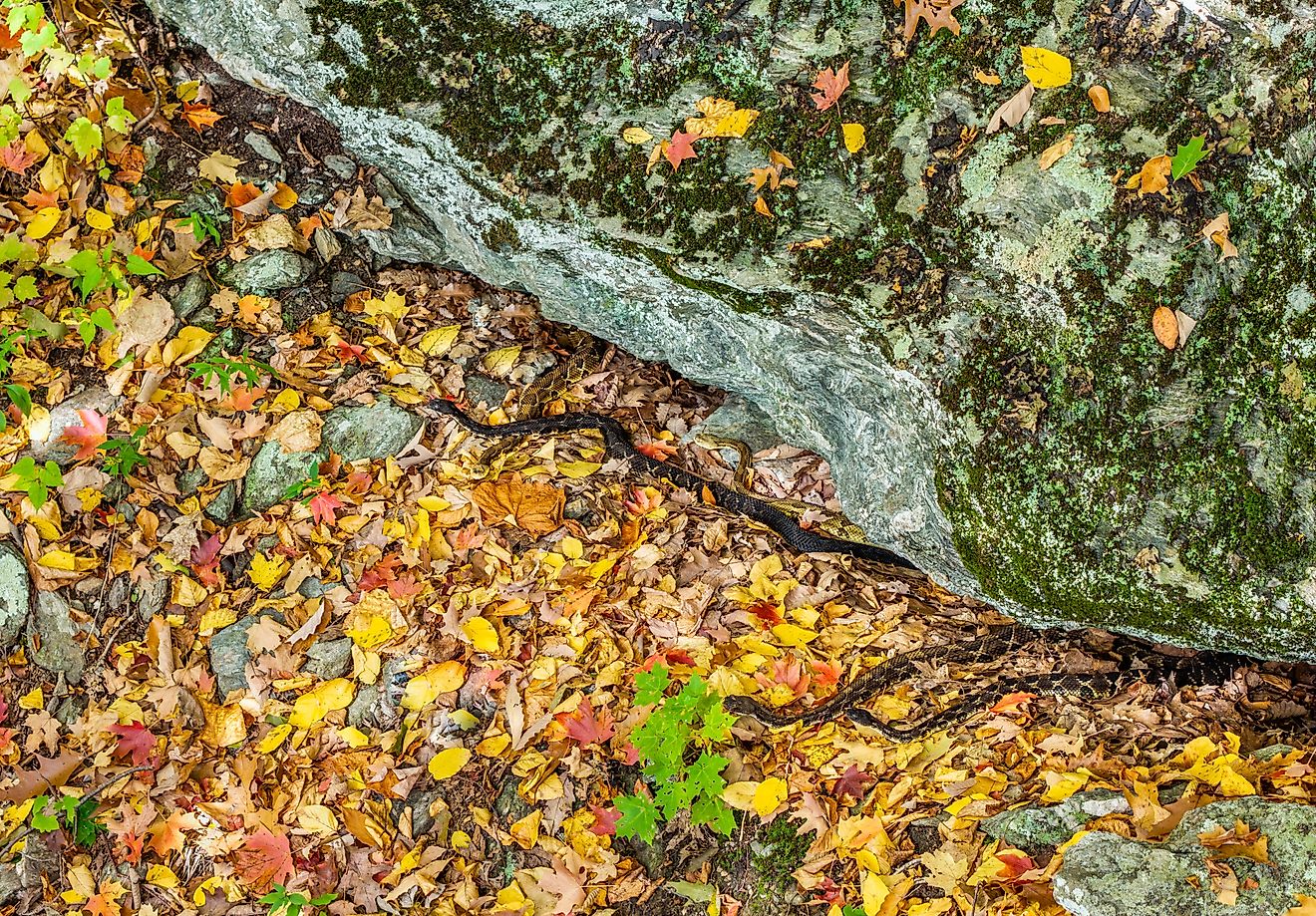
Missouri's field guide states that copperheads and rattlesnakes overwinter at south-facing rocky ledges. A Colorado study found a dichotomy in insolation dependence, with rock dens dependent on sun exposure and prairie dog burrow dens not.
South-facing ground warms first in spring and last in fall. A north-facing crevice at the same depth is a worse proposition.
It Has To Already Exist

The constraint underneath every other criterion is that the snake cannot dig.
A rattlesnake needs a pre-existing passage: a rock fissure, talus over bedrock, a crayfish burrow, a rotting root system, a mammal tunnel. The animal is selecting from a fixed inventory rather than building to requirement.
Gila monsters, by contrast, excavate their own winter dens with long claws and wide feet. A rattlesnake takes the geometry the geology provides.
Prairie Dog Towns Are The Exception

On shortgrass prairie there is no rock, and a different animal supplies the inventory.
Radio-tracked prairie rattlesnakes in Colorado chose prairie dog burrows for dens even though the study area held far more rocky habitat than prairie dog colony. Of the dens located, only four were in rock outcrops and all the rest were in burrows.
USDA figures put those burrows at 3 to 6 feet deep extending about 15 feet underground, typically well below the maximum winter frost line.
Scarcity Forces Them Together

How few sites meet the specification shows up in how crowded the ones that do become.
A single prairie rattlesnake den in Wyoming was documented holding more than 600 individuals. Midget faded rattlesnakes den in groups sometimes reaching 100.
Ontario notes that massasaugas typically hibernate independently but share sites where overwintering habitat is limited. Communal denning is a symptom of scarcity rather than sociability.
Most Snakes Never Choose At All
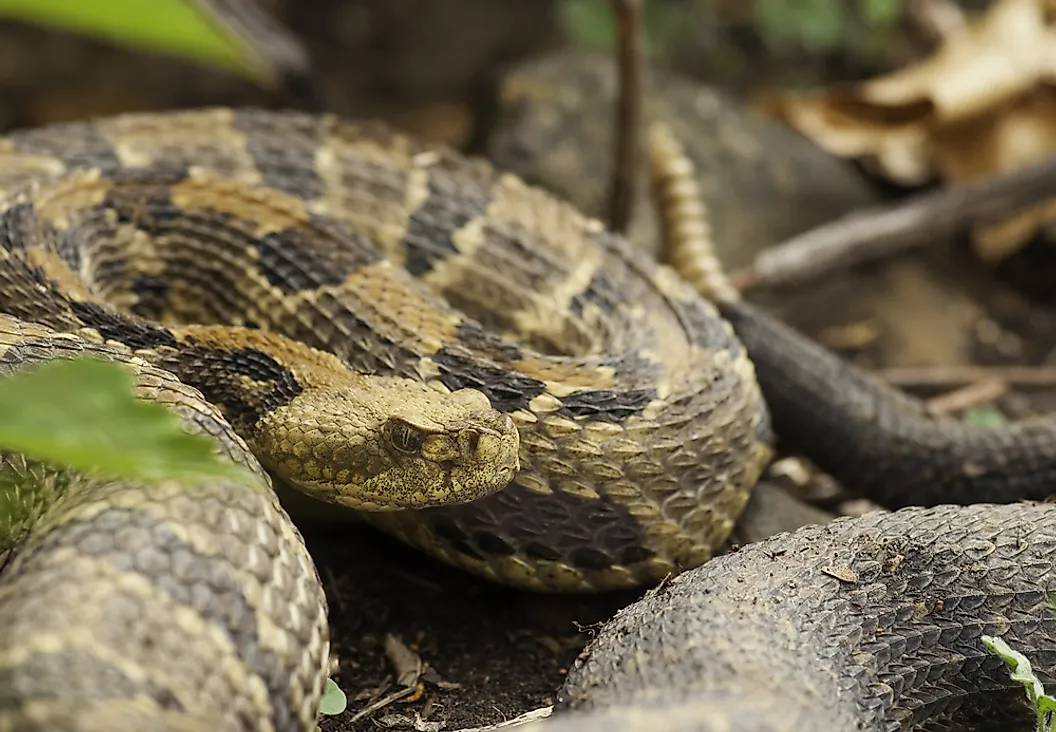
The selection process described above applies to a minority of animals.
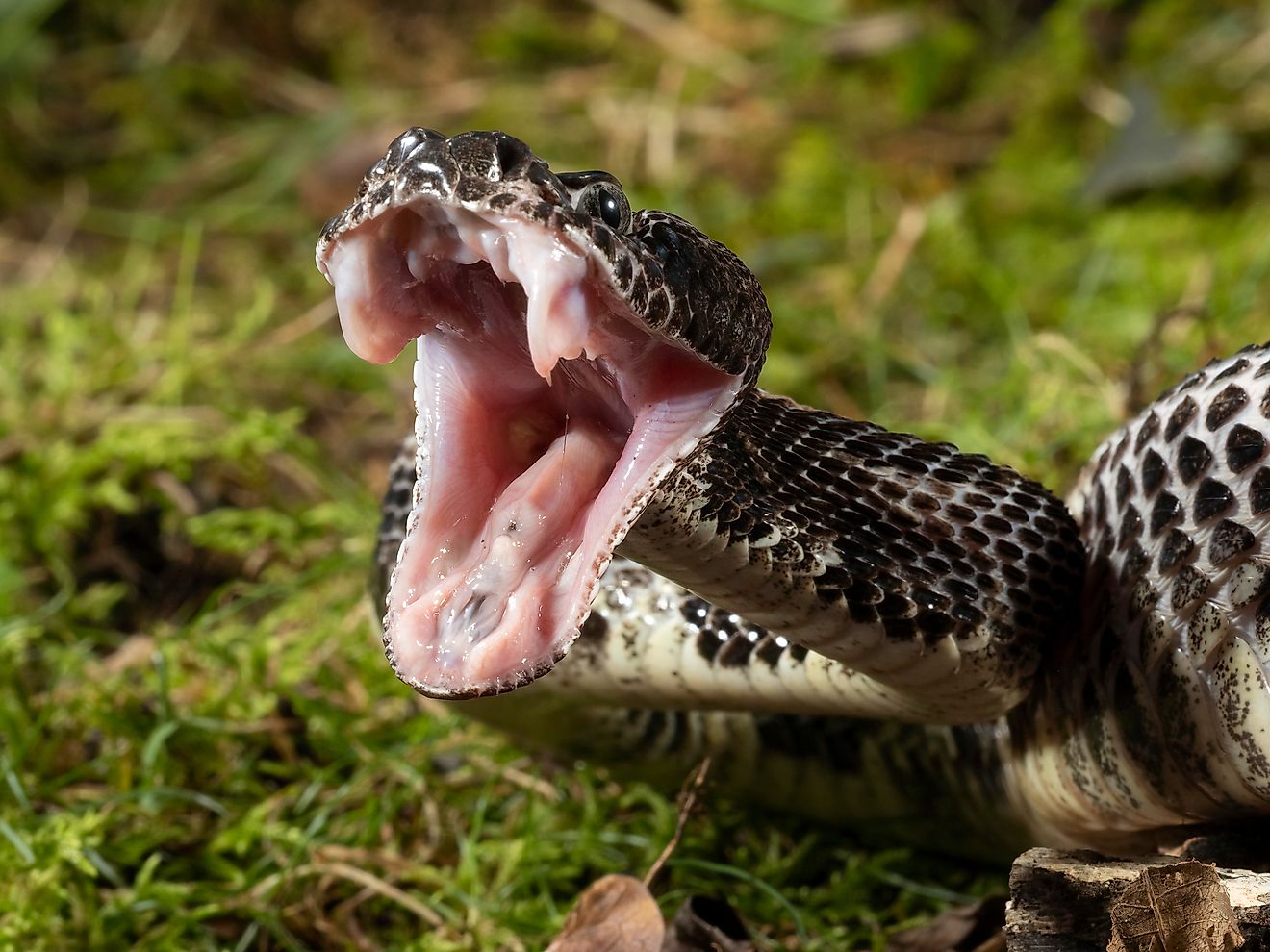
Newborn timber rattlesnakes follow adult pheromone trails to dens they have never seen. The site was selected by an ancestor and the location is passed down as a chemical record rather than a decision.
Timber rattlesnakes show high fidelity to hibernacula with only occasional exchange between sites, which means most individuals use the den their line has always used.
A Site Can Pass For Years And Still Fail

The hardest part of judging a den is that the test only comes occasionally.
Ontario's guidance warns that a hibernaculum may function for multiple years until an exceptionally cold winter arrives. A site that has worked for a decade can kill everything in it once.
Depth recommendations are therefore set against the worst plausible frost rather than the average one. The snake only needs to be too shallow once.
Losing One Den Removes A Population

Everything above explains why destroying a hibernaculum is more serious than it looks.
An entire local population may use one site, the occupants are closely related, females breed only every two to four years, and there is no documented natural recolonization of an extirpated den.
Massasaugas moved outside their home range have been found unable to survive the winter, presumably because they could not locate a suitable site in time. Choosing a den from scratch is a problem most snakes are not equipped to solve.
The Short Answer

A den has to sit below the frost line, above the water table, face south if it is in rock, hold humidity, and already exist, because the snake cannot dig. In Ontario peatlands the band satisfying the first two conditions has been measured at about six inches thick.
Most rattlesnakes never run that assessment. They follow a scent trail to a site their species has used for generations, which is why losing one outcrop can end a population and why relocated snakes so often fail to find anywhere at all.