How Squirrels Find Buried Nuts Under A Foot Of Snow
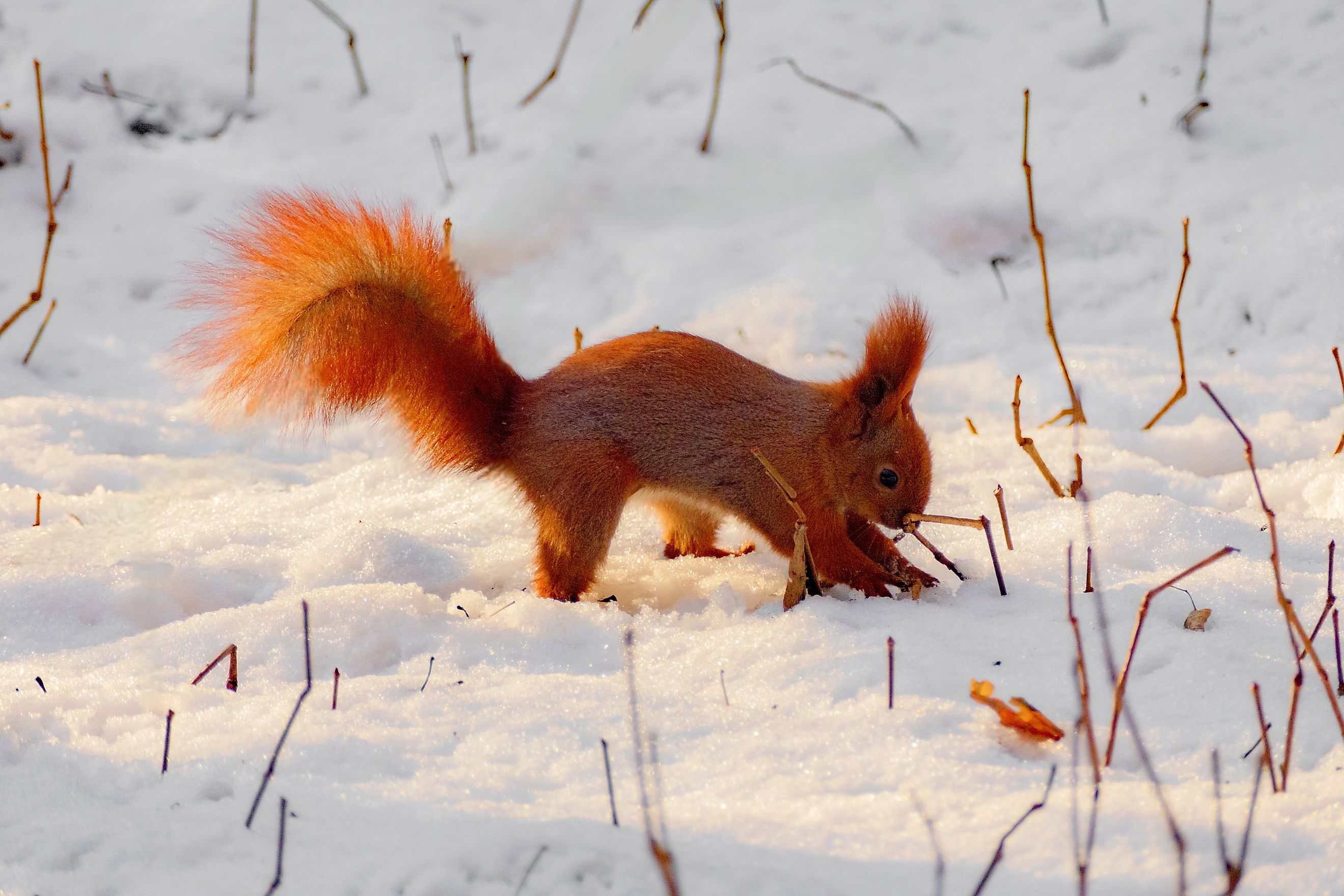
The common assumption is that squirrels sniff their caches out. The research says otherwise. In laboratory work where every odor cue was removed from buried seeds, chipmunks still recovered more of their own caches than caches made by other animals, with no drop in accuracy after 35 days. Their spatial memory is precise to within about a foot. Smell confirms the final dig, but under snow it is memory doing the work.
Memory Beats Scent

The experiment that settles this removed smell from the equation entirely.
With all odor cues stripped from buried seeds, chipmunks recovered their own caches more successfully than those of other chipmunks, and the accuracy did not degrade over 35 days.
If scent were the mechanism, a squirrel would find any nut equally well regardless of who buried it. They do not. They find their own.
Accurate To Within A Foot
The precision of the recall is the part that is hard to credit.
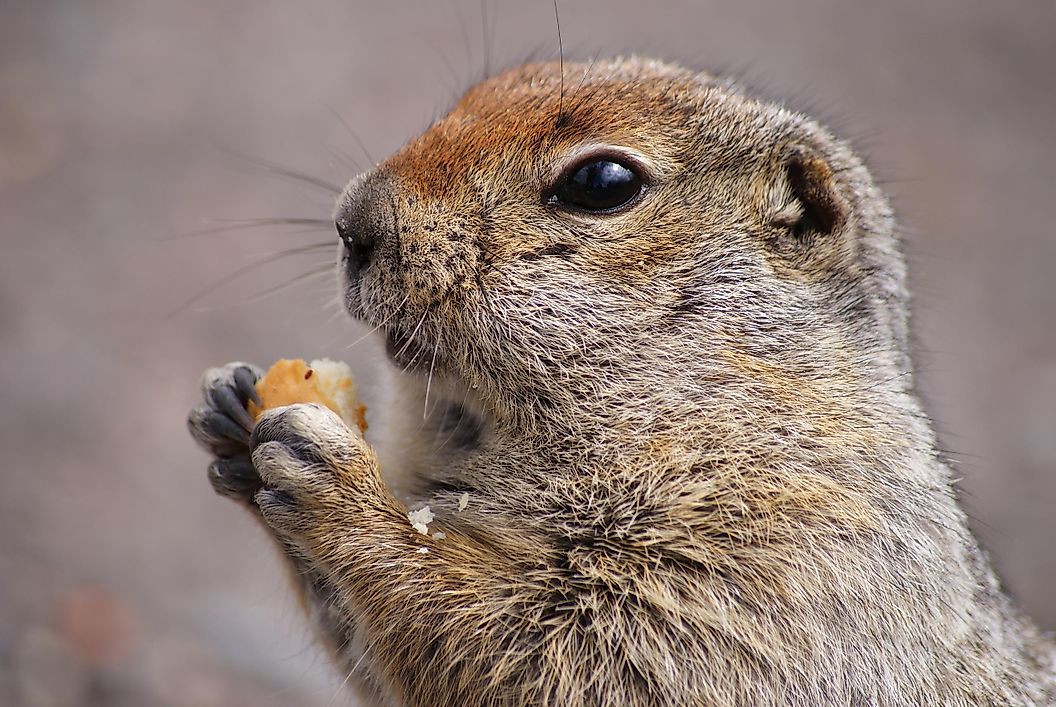
Squirrel spatial memory is precise to within roughly a foot, and remains good enough to support targeted searching after delays of days to weeks.
Natural landmarks guide the retrieval. The animal is navigating to a remembered point in a landscape, then searching a small radius around it.
Snow Is Why Memory Matters

The two systems trade places depending on conditions.
In winter, when snow covers the ground and masks odors, or in dry environments where scent does not carry, spatial memory becomes the dominant strategy. Snow depth obstructs both visual and olfactory cues.
Smell still finalizes things. It lets a squirrel pinpoint a cache within inches once it has arrived at roughly the right place.
They Sort Caches By Species

The organizing principle behind the memory was only demonstrated recently.
A study of 45 eastern fox squirrels, 17 female and 28 male, given four species of tree seed in varied order, found they organized caches in spatial patterns consistent with chunking: the same type of nut buried in the same general area.
It was the first demonstration of spatial chunking in a scatter hoarder. The squirrel is not remembering a thousand separate points, it is remembering a filing system.
The Recovery Rate Is Disputed

Published figures for how many nuts a squirrel actually gets back do not agree, and the gap is enormous.
A 1980 urban study estimated gray squirrels retrieve roughly 85 percent of their caches. Research from the University of Richmond concluded they fail to recover up to 74 percent. Cache recovery rates have been reported anywhere from 26 to 95 percent.
The honest reading is that it depends heavily on the mast crop, competition and conditions. Any single figure quoted for this is picking one study out of many.
Their Brain Grows For The Season

Like chickadees, squirrels appear to build capacity ahead of the demand.
The hippocampus, the brain region handling spatial memory, grows larger during the months squirrels are actively burying food. Both gray squirrels and chipmunks show increases in hippocampal volume during caching season.
Not every study agrees. At least one investigation of caching behavior found no associated increase in squirrel brain size, so this is less settled than the chickadee equivalent.
They Watch Each Other
A squirrel's mental map covers more than its own work.
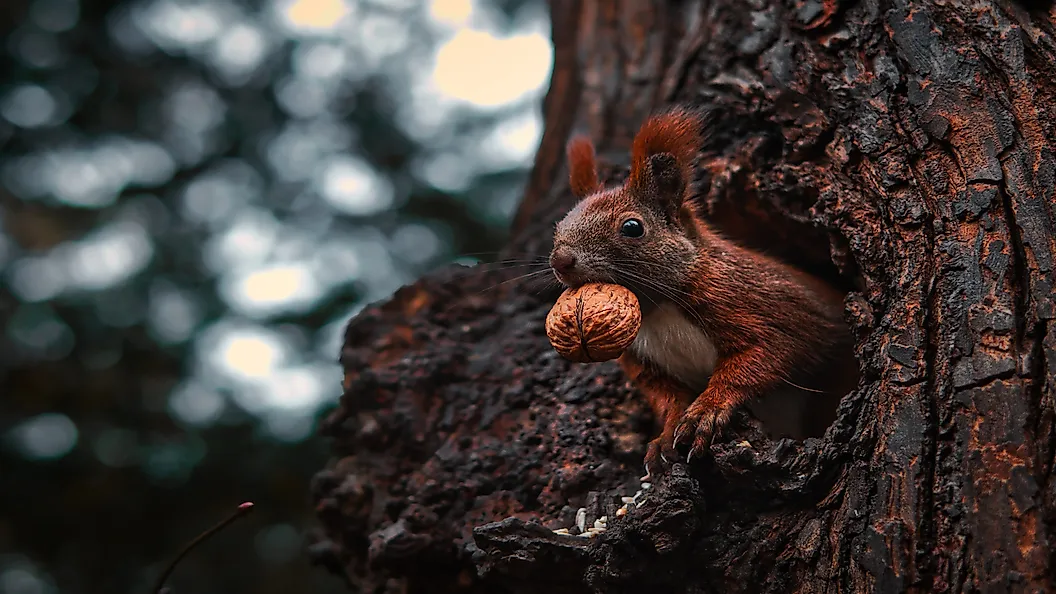
Squirrels are not territorial, and they watch each other's caching behavior, steal food and re-cache it elsewhere. One researcher describes them as holding a color-coded mental map: one color for their own caches, another for spots where other squirrels have stored food.
Up to 25 percent of a squirrel's caches may be taken by other squirrels or by birds.
They Fake It To Fool Thieves

Being watched has produced a countermeasure.
Squirrels perform deceptive caching, going through the motions of burying a nut they are still holding, to throw off anything observing them.
That behavior only makes sense in an animal that understands it is being watched by something that will remember where it dug.
Scatter Versus Larder
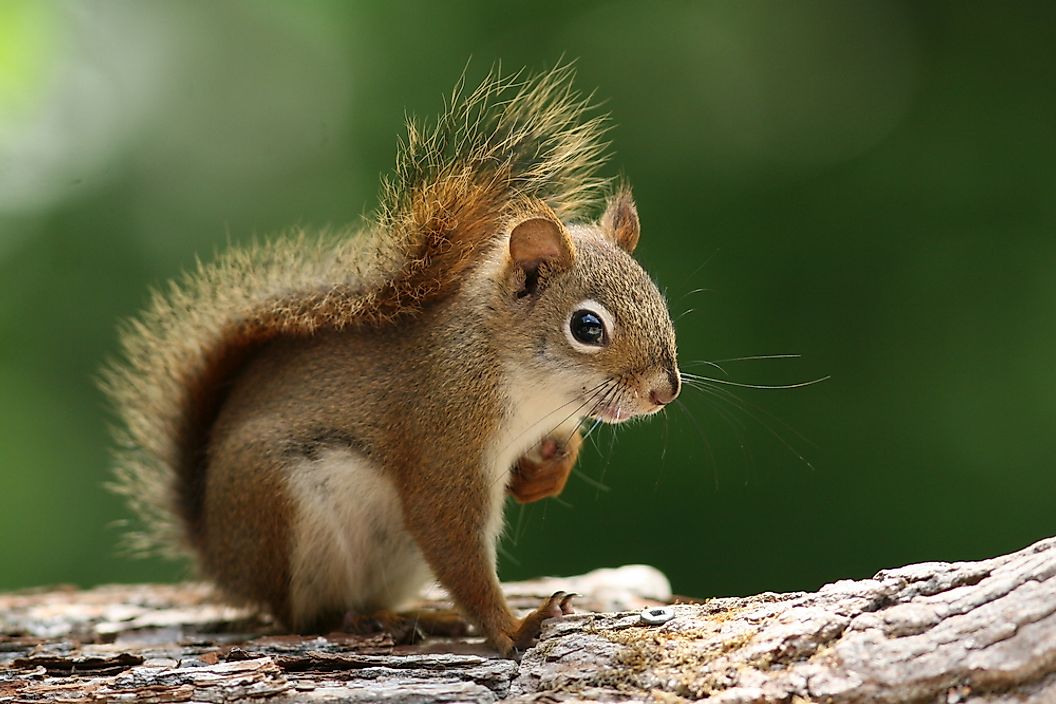
Not every squirrel uses the same system, and the choice shapes everything else.
Scatter hoarding spreads single nuts across many locations. Larder hoarding keeps one central store. American red squirrels favor larders, often in a tree hollow, while gray and fox squirrels scatter.
A larder is easier to remember and easier to lose in one raid. Scattering costs memory and buys insurance.
The Misses Plant The Forest
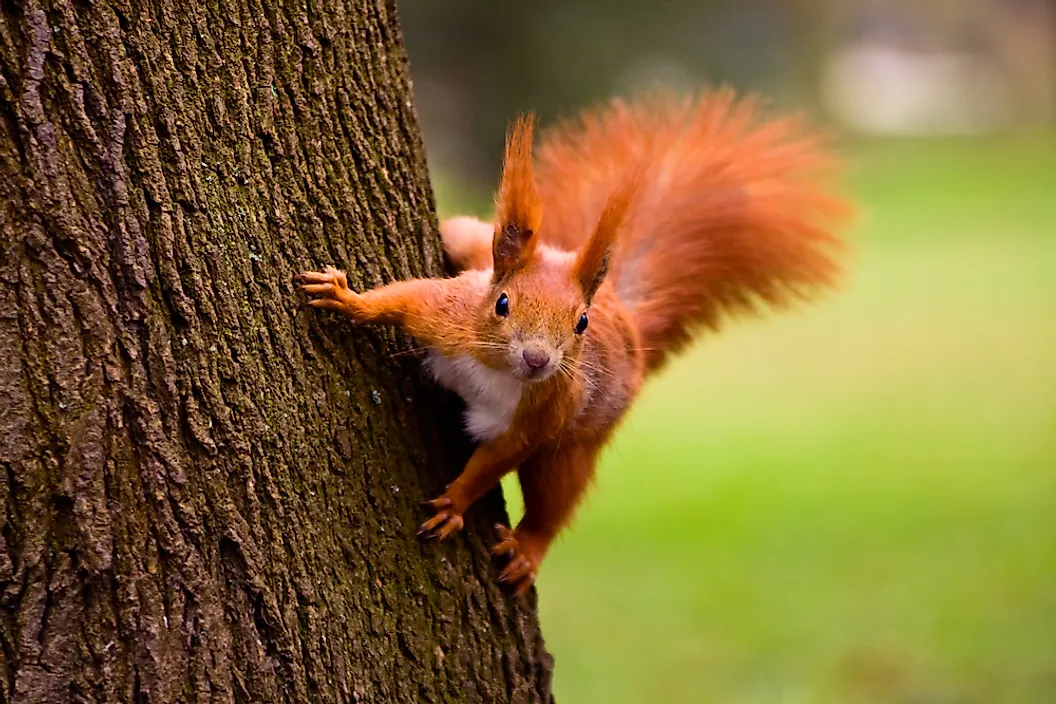
Whatever the true recovery rate, the shortfall has consequences.
Nuts that are never retrieved germinate, and squirrels are credited with planting millions of oak, walnut and hickory trees that would not otherwise have grown.
The failures are not a flaw in the system. They are the reason oak forests regenerate, which is why the relationship is described as seed dispersal rather than simple theft.
The Short Answer

Primarily by memory. Spatial recall accurate to within about a foot gets a squirrel to the right spot, organized by chunking so that the same nut species sits in the same general area, and smell finalizes the dig once it arrives. Under a foot of snow, with visual and scent cues both obstructed, memory carries almost all of it.
How much they recover is genuinely contested, with published figures running from 26 to 95 percent. What is not contested is that the ones they miss become trees.