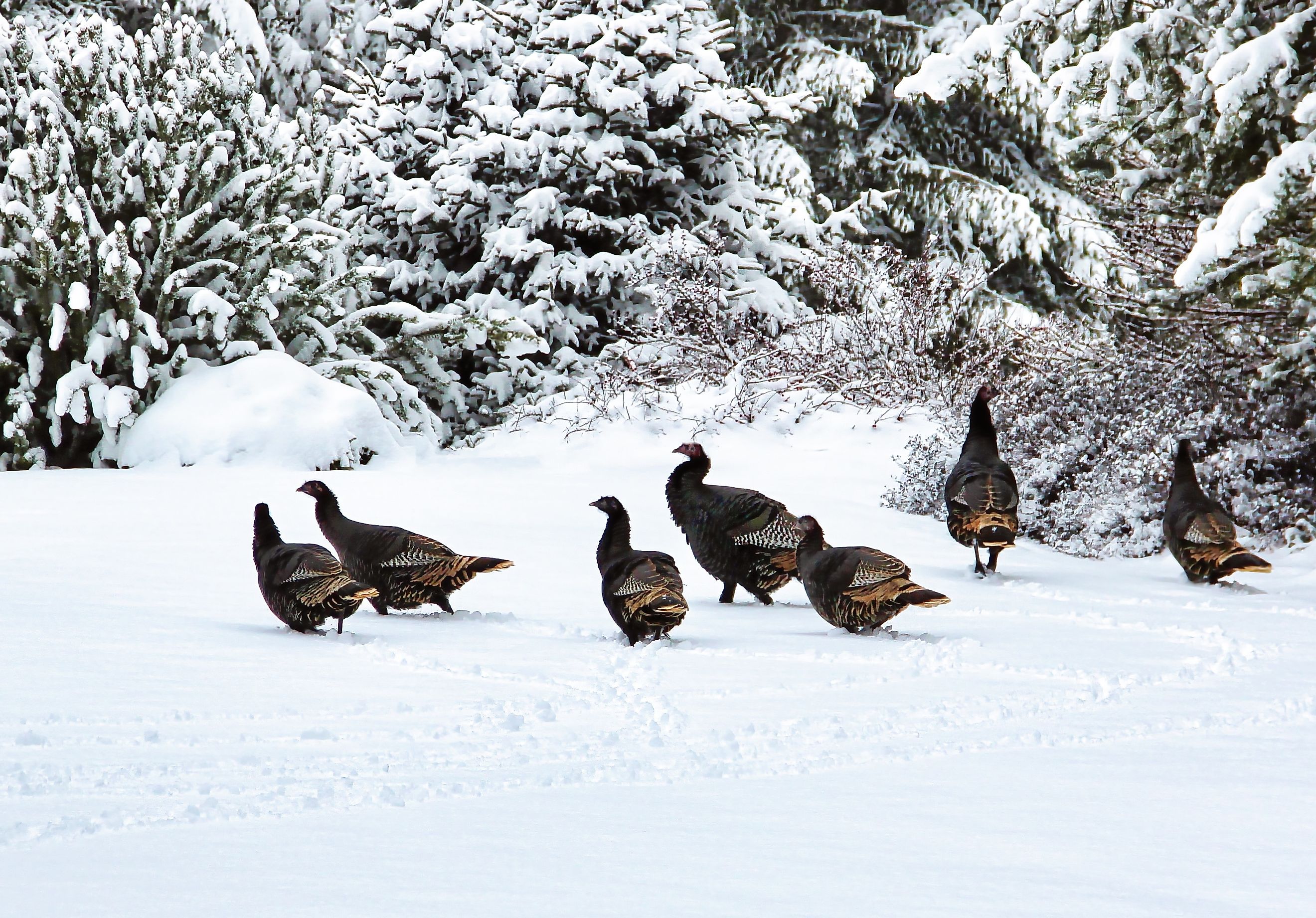
Where Wild Turkeys Sleep On A Winter Night
In trees. At dusk a flock flies up into the canopy and spends the night there, and an entire flock may roost in a single tree or in a cluster of neighboring ones. In winter they favor dense conifers, which block wind and hold snow in the branches above them. When a storm sets in they can stay up there for a week or more, waiting it out without coming down to feed at all.
They Fly Up At Dusk

The daily routine is fixed and it is the opposite of how most people picture a turkey.
Turkeys spend their days on the ground and usually prefer to walk or run from danger, but at dusk they fly into trees to roost and spend the night there.
Getting a ten to twenty pound bird into a canopy takes a short powerful flight. They are capable of it with surprising speed when they choose to use it.
Conifers Win In Winter
Tree choice shifts with the season and the reason is shelter.
Turkeys typically roost in tall trees, preferring dense conifers such as pines and spruces, because evergreens offer better protection from wind and snow than bare hardwood branches.
When powder covers the ground, flocks congregate in stands of hemlock, pine and other softwoods. Those stands hold snow in the canopy, leaving less of it underfoot.
The Whole Flock Goes Up Together

Roosting is a group activity and it concentrates a lot of birds in a small space.
An entire flock may roost in a single tree, or spread across a number of nearby trees. That is a considerable amount of bird in one canopy.
The arrangement changes with age. Once fall arrives, poults often stop roosting in the same trees as their mothers and move to nearby ones instead.
They Tuck Their Heads In

The sleeping posture is a heat-conservation measure.
Turkeys tuck their heads under their back feathers to reduce heat loss overnight. Their plumage traps air and insulates well enough that cold alone rarely troubles them.
Birds exposed to minus 22 degrees Celsius showed no measurable physiological changes. It is snow rather than temperature that threatens them.
A Storm Can Keep Them Up There A Week

The roost doubles as a refuge when conditions make the ground unusable.
When a storm strikes, turkeys can spend as much as a week or more on the roost waiting the weather out. In extreme cases birds remain on their roosts without food for days or even weeks.
They can manage it because a healthy wild turkey can survive roughly 14 days without eating, drawing down stored fat while it waits.
Position Matters As Much As Species

Where the tree stands turns out to be as important as what kind it is.
Turkeys prefer to roost in trees near hillsides, which gives them early sunlight in the morning and feeding areas sheltered from northwest winds during winter.
A roost is chosen for what surrounds it rather than for the branch itself. The bird is picking tomorrow's working conditions.
Height Is The Defense

The whole behaviour exists for one reason that has nothing to do with weather.
Being off the ground overnight puts a turkey beyond most of what hunts it. Poults can fly at eight to ten days old, and once they can reach a roost their survival odds improve sharply.
Before that they are extremely vulnerable. Around 76 percent of turkey poults do not survive their first two weeks.
Hunters Have Always Known

The predictability of roosting has been exploited for as long as people have hunted turkeys.
Historical accounts note that a hunter who found a roost at around ten or eleven at night could shoot as often as he liked, because the birds would simply sit in the trees.
Modern regulated seasons exist partly because that vulnerability nearly removed the species. The eastern wild turkey's recovery is one of the better conservation stories in North America.
Roost Cover Is A Management Target

Wildlife agencies treat suitable roosting trees as habitat worth protecting deliberately.
Minnesota's guidance on managing woodland for turkeys identifies mature trees near hillsides as roosting cover and recommends retaining them. In severe winter weather, turkeys require a reliable food supply and roosting cover together.
One without the other does not work. A flock needs somewhere to sleep within reach of somewhere to feed.
The Short Answer

Wild turkeys sleep in trees, flying up at dusk and favoring dense conifers in winter for shelter from wind and snow. A whole flock may occupy one tree, with young birds roosting separately from their mothers after their first fall, heads tucked under back feathers to conserve heat.
The roost is also where they sit out bad weather. A storm can keep a flock in the canopy for a week or more, which works because a healthy turkey can go about two weeks without eating.