How Far North Tarantulas Live
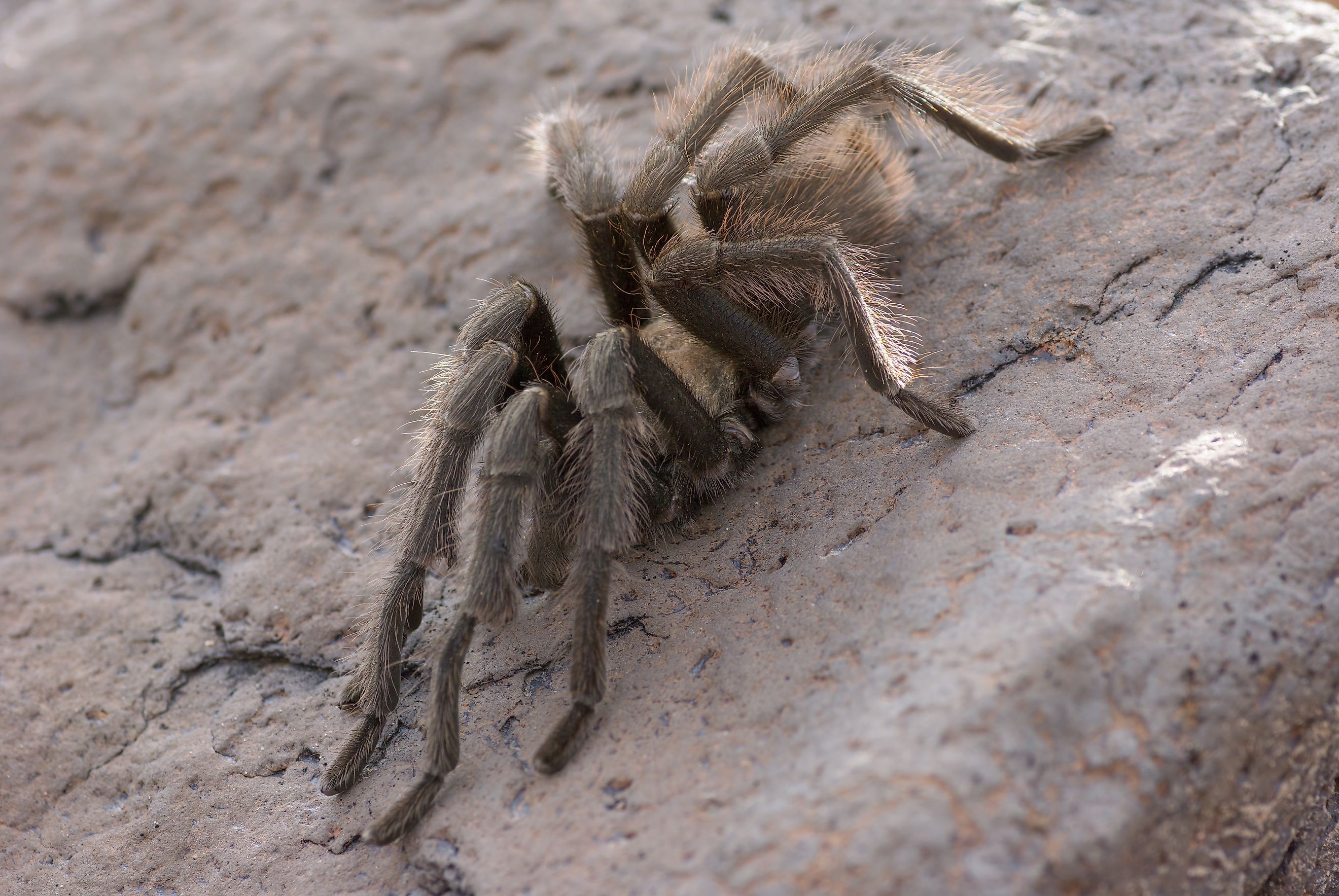
Tarantulas are found as far north as the 40th parallel, but they reach this latitude in just two places worldwide. In North America, burrowing spiders from the genus Aphonopelma live in the southwestern United States, southern Colorado, the dry basins of northern Utah, and the interior of California, reaching up to about Sacramento.
In southern Europe, along the warm Mediterranean coast, a single small species lives on the eastern coast of Spain. The other nine hundred or so described species stay in the tropics and warm temperate regions, across the Amazon basin and the rainforests of the Old World. Wild tarantulas rarely live beyond this northern boundary. This limit has existed for a long time, set by winter, and has changed very little since people began recording it.
The Genus That Reaches Farthest North in America

Aphonopelma is the only tarantula genus found north of Mexico. Its most widespread northern species is the Texas brown tarantula, first described by naturalist Charles Girard in 1852. Today, this spider is known as Aphonopelma hentzi. It lives in Texas and Louisiana, and its range stretches through Oklahoma, Kansas, Missouri, and into the southeastern corner of Colorado. The Mississippi River marks its eastern boundary, while the Missouri River limits its spread farther north. Early researchers gave this spider nearly eight different names before anyone compared the specimens directly. Because of this confusion, Chris Hamilton, Brent Hendrixson, and Jason Bond conducted a survey of the genus in 2016. Their work identified twenty-nine species in the United States and removed most of the old names. Since then, a few more species have been discovered in the high mountain ranges of the Southwest.
The northernmost populations of Aphonopelma are found near the 40th parallel in two main areas. In Colorado, the genus appears in the Arkansas Valley counties around La Junta. There, males can be seen crossing roads and open ground at dusk between late August and October as they search for females. This is the time of year when people are most likely to spot them. In California, the genus has been reported near the same latitude north of Sacramento. Some accounts suggest the range extends into northern Utah, reaching as far as Cache County near 42 degrees, but these records are rare and not well confirmed. No members of this family are found in Canada.
The Mediterranean Edge

Ischnocolus valentinus is the only theraphosid found on the European mainland. This modest spider was first described by the French naturalist Léon Dufour in 1820, based on specimens from the area around Valencia. In Europe, the only other tarantula is a single species that lives on Crete. Anton Ausserer established the genus Ischnocolus in 1871. The species is also found in Morocco, Algeria, Tunisia, Sicily, and Libya, so most of its range lies to the south. Its northern limit is in eastern Spain. A 2022 phylogeographic study of western Mediterranean tarantulas found the northernmost records near Benidorm on the Alicante coast, between the 38th and 40th parallels, and inland as far as the hills above Córdoba.
At the eastern end of the Mediterranean, there is another genus called Chaetopelma. It lives in Turkey, Cyprus, Syria, and stretches across the Middle East into Iran, where a new species was described as recently as 2023. The same 2022 study found that Ischnocolus and Chaetopelma are not closely related. This means the family arrived in the Mediterranean twice, through two separate lineages, instead of spreading there just once. Farther east, the family stays much farther south. Theraphosids in southern China and tropical Asia remain in the subtropics and do not reach the higher latitudes that their American and Mediterranean relatives do.
The common name 'tarantula' is actually a mistake. The word comes from the town of Taranto in Italy, and it was first used for a wolf spider, which is not a theraphosid. So, the whole family ended up with a name from a place where none of them have ever lived. The old story that a bite from the Taranto spider made people dance the tarantella actually refers to that other spider, not the tarantulas. The medieval records behind this story are thin and often debated.
Why the Range Ends Where It Does

Tarantulas live life at a slow pace, and that slow pace explains their northern limit better than any map. A female Aphonopelma can take nearly ten years to mature and then live several more, spending most of her life in a burrow. She comes out mainly to eat, and males emerge only to find a mate during a brief late-season period. The burrow helps protect them from the cold, but north of about the 40th parallel, winters are long and the warm season for feeding is short. At some point, a spider just can't gather enough food in a year to complete its slow life cycle and reproduce. No one has pinpointed exactly where this happens, and the evidence is sparse at the very edge, which is still uncertain territory.
People living along the Missouri River often say the river itself keeps the spiders away, but the river is just a convenient marker, not the real reason. Tarantulas are limited by how long the winter lasts, not by anything drawn on a map. This pattern shows up in other cold-blooded animals across the plains and the West. Scorpions disappear around the same latitude, and there's a clear point where the cold stops these hunters from moving. Warmth-loving mammals leave similar evidence, as southern animals trying to survive northern winters have shown over the past century. A line on a map might make us think it's important, but the spiders never paid attention to it.
Staying Safe

Despite their size, New World tarantulas like Aphonopelma move slowly, rarely bite, and often give a warning bite without any venom. Their venom is mild, similar to a bee or wasp sting, and there are no recorded human deaths from tarantula bites. Their main defense is a patch of barbed, irritating hairs on the abdomen, which they release in a cloud when threatened. These hairs can get stuck in your skin and, even worse, in your eyes, where they may cause lasting irritation that needs an eye doctor's care. Old World tarantulas from the Mediterranean and Asia do not have urticating hairs but have stronger venom, though there are still no recorded deaths from their bites.
If you're hiking, camping, or searching for rocks in places like Colorado or Spain and see a tarantula, the best thing to do is simply leave it alone. You're most likely to see one during the male wandering season, usually at dusk in early autumn, when the spider just wants to cross the trail. If you do handle one, avoid touching your face afterward, since the hairs are most dangerous to your eyes. If you get bitten, wash the area with soap and water and treat it like a bee sting. Only see a doctor if you have an allergic reaction or if hairs get in your eyes. The worst thing the spider can do is cause an itch, which usually happens to the person who picked it up.
The Bottom Line
Tarantulas become scarce near the 40th parallel, where winters grow too cold for many species to survive. In the American West, burrowing Aphonopelma are found across parts of the southern states, with their range reaching into southern Colorado and the interior of California. Across the Mediterranean, Ischnocolus species live along Spain's coast. The details differ, but temperature and the length of the warm season help determine how far north these spiders can live. Despite their fearsome reputation, tarantulas are generally harmless to people, though handling them can expose the skin to irritating hairs. Folklore sometimes puts their northern limit at the Missouri River or the Kansas border, but the spiders follow the conditions they need to survive, not the boundaries people have drawn.