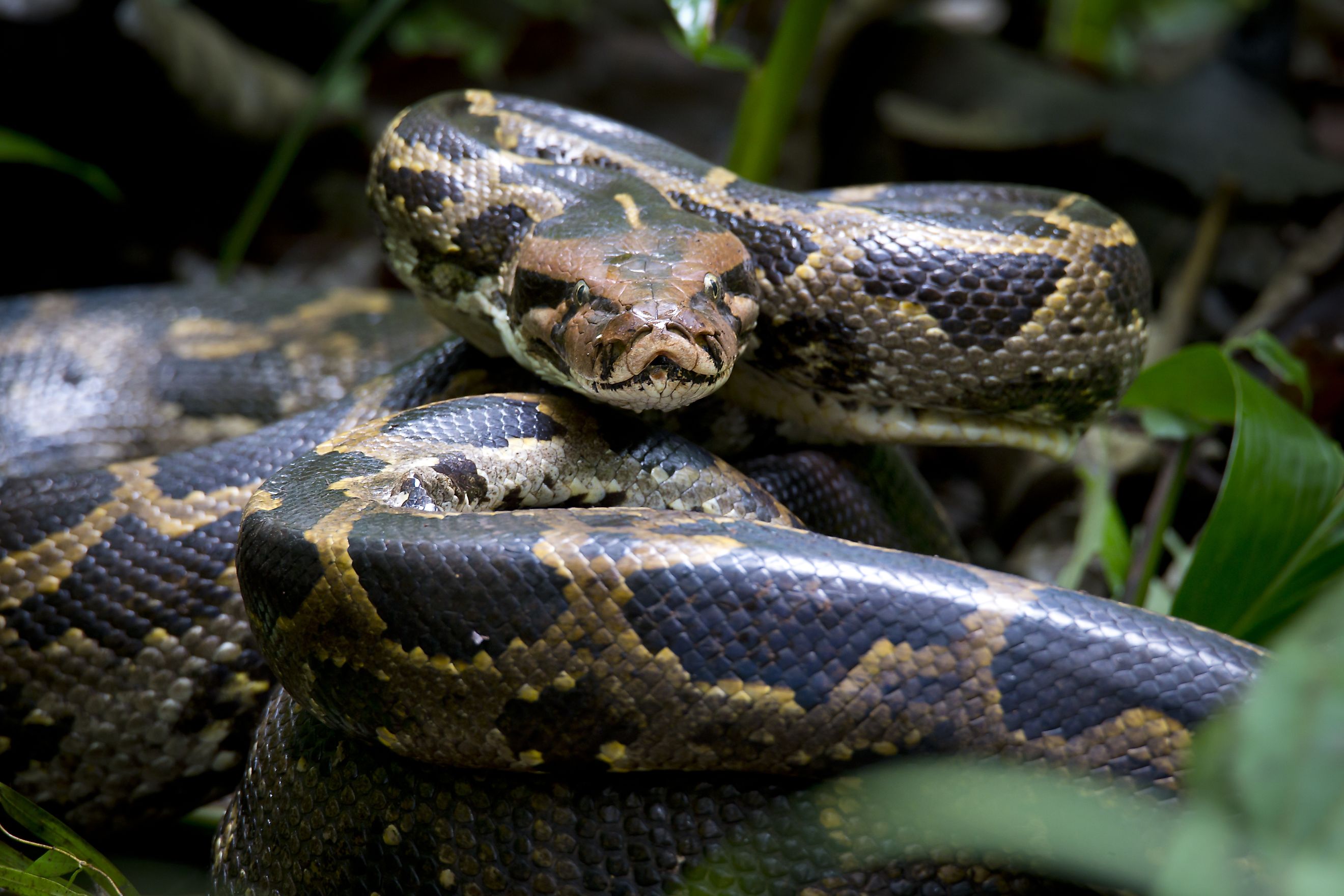
How Far North Burmese Pythons Have Spread In Florida
The Burmese python didn't make its way to Florida by itself. People brought it over, first as a popular exotic pet imported by the tens of thousands, and later as an unwanted animal released into canals and sawgrass when it became too big for its owners. These snakes are native to Myanmar and the warm lowlands of Southeast Asia. A Burmese python can grow longer than eighteen feet and weigh more than two hundred pounds, making it one of the largest snakes in the world and a poor fit for a glass tank. The National Park Service recorded its first python removal from Everglades National Park in 1979. By the time biologists confirmed a breeding population around 2000, the snakes had already spread through the Everglades in numbers too large to count.
The story of how the first pythons ended up in the wild is a mix of fact and legend. When Hurricane Andrew hit southern Florida in August 1992, it destroyed a python breeding facility. For more than thirty years, people have said that the escaped snakes started the Everglades population. However, genetic studies show there were many separate releases, not just one big escape, so the hurricane story is simpler than what really happened.
Where The Breeding Range Actually Sits

The actual range is smaller than what headlines often claim. According to the Florida Fish and Wildlife Conservation Commission, the breeding population covers a block of marsh and swamp at the bottom of the peninsula. Its northern edge sits just south of Lake Okeechobee and the range reaches down to Key Largo, with Collier County marking the western boundary and western Broward County the eastern one. Pythons occasionally turn up well outside this zone, but those finds are rare exceptions rather than signs that the breeding range has moved.
No one knows exactly how many pythons live in that area. Estimates for 2024 run between thirty thousand and three hundred thousand, which shows just how uncertain the numbers are. The US Geological Survey has called the invasion "one of the most intractable invasive-species management issues across the globe." This is a rare admission from an agency that usually uses more cautious language.
The Documented Outliers To The North

The northernmost sightings of pythons are scattered, with each animal checked to see if it escaped, was released, or arrived on its own. By 2007, researchers had found pythons in northern Florida and along the Panhandle coast, but these were isolated cases, not signs of a colony. On November 9, 2012, a Burmese python was found and removed in Charlton County, Georgia, just outside the Okefenokee National Wildlife Refuge. This briefly brought the species across the state line into Georgia.
The most notable case happened in October 2023, when two alligator trappers, Chuckie Burgess and Jay Strickland, found a nearly twelve-foot python near a road in the T.M. Goodwin Waterfowl Management Area in southern Brevard County, close to the Indian River County line. They killed the snake before it reached the tall grass. The python weighed almost eighty pounds and was about one hundred miles north of the nearest breeding population. The Fish and Wildlife Conservation Commission admitted it did not know how the snake got there, showing honest surprise. Finding one large snake that far north does not mean pythons have established themselves in central Florida, and biologists have stressed the difference between a dramatic capture and an established population, since these are often mixed up in stories.
What The Cold Does, And What The Snakes Did About It

Pythons have not spread further up the peninsula mainly because of winter. Since they are ectotherms, they cannot warm themselves, and a hard freeze can be deadly if they do not find shelter. This was shown during a record cold spell from January 2 to 11, 2010. Frank Mazzotti and his team tracked radio-tagged snakes during that freeze and found in a 2011 study in Biological Invasions that only one out of ten tagged pythons survived. About sixty percent of a larger untagged group made it through. Some of the dead snakes had tried to bask in the cold instead of going underground, which proved fatal.
A few years earlier, Gordon Rodda, Catherine Jarnevich, and Robert Reed compared the climate of the python's native range to the mainland United States. In a 2009 study, they predicted that suitable conditions stretched across the southern United States, reaching as far west as California and as far north as the mid-Atlantic near Virginia. Other researchers disagreed, saying that only southern Florida and the southern tip of Texas truly matched the python's native climate. This ongoing disagreement is why predictions of pythons reaching Canada in a warming climate should be seen as the extreme end of a model, not as a timeline you can count on.
The freeze did more than kill snakes. It also favored individuals with traits that helped them survive the cold. Todd Castoe's lab compared python genomes from before and after the 2010 freeze. In a 2018 paper in Molecular Ecology, they found signs of directional selection in genes related to temperature sensing and metabolism. This suggests that the surviving snakes and their offspring are a bit more tolerant of cold than those that died in January. This is evolution happening in real time, and it is the main reason to think the current northern limit of pythons might not stay the same.
What This Means If You Spend Time Outdoors

If you're hiking, paddling, or hunting in central or southern Florida, the actual risk from wild Burmese pythons is low and should be kept in perspective. According to a 2023 review by federal and university scientists, there are no records of anyone being killed by a wild Burmese python in Florida. These snakes are constrictors without venom and are much more interested in rabbits and wading birds than people. The main losses have been small pets near canals and marshes, and native mammals in the southern Everglades. Researchers at the University of Florida, including Robert McCleery, have documented the steady disappearance of small and mid-sized mammals across the southern Everglades and tied it directly to python predation.
If you see a large snake you can't identify, the best advice is simple. Keep your distance, don't try to catch or kill it, take a photo from a safe spot if possible, and report it to the state's exotic species hotline. This way, trained responders can handle it and record the location. It's still unclear if these snakes will spread to other states beyond Florida, and the next harsh winter may help answer that. Every reported sighting, even those far north, helps scientists track the python's slow and uneven spread from the Everglades.
The Line As It Stands
For now, the established breeding range of Burmese pythons remains confined to the southern part of Florida, below Lake Okeechobee. The snakes found near the Georgia border in 2012 and at T.M. Goodwin in 2023 were isolated cases rather than signs of expanding breeding populations. Wildlife officials generally attribute such far-northern animals to escaped or released pets, though in the 2023 Brevard County case the commission said it could not determine how the snake arrived. Winter temperatures remain the main obstacle to their spread north. Reports from beyond South Florida have attracted attention, but they do not yet indicate that the species has established itself farther up the peninsula.
That boundary may not remain fixed. The January 2010 freeze killed many pythons, but it also favored individuals with greater cold tolerance. This raises the possibility that the species could gradually adapt to conditions that once restricted its range. For now, its northern limit in 2026 is based on the populations researchers have documented, not a guarantee of where the snakes will remain in the future. Continued monitoring, including the freeze surveys led by Frank Mazzotti and the mammal studies conducted by Robert McCleery, will help reveal whether the pythons are moving beyond their current range or simply producing occasional sightings farther north.