How Far North Armadillos Have Reached
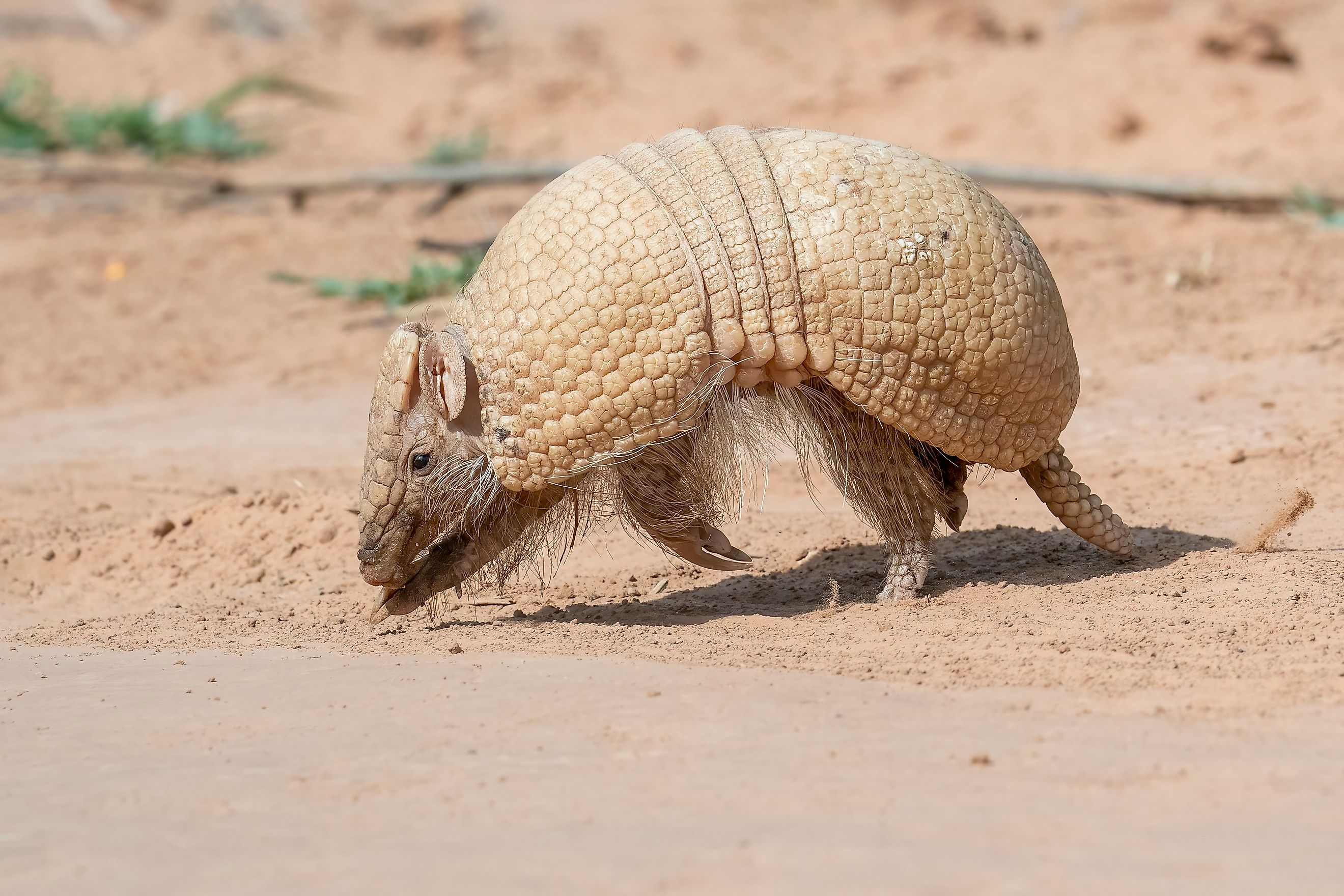
The northernmost armadillo in the most recent national compilation turned up in Porter County, Indiana, about 8.5 kilometers south of the Michigan line, at roughly the latitude of Chicago and a long way from the lower Rio Grande Valley of Texas, where the species first entered the scientific record of the United States in the middle of the nineteenth century. Brett A. DeGregorio of the U.S. Geological Survey and Anant Deshwal of Bradley University gathered 2,143 occurrence records from citizen-science platforms, national camera-trap projects, roadkill reports, and state wildlife agencies for a paper they published in the journal Diversity in February 2025, and they concluded that armadillos now live in established populations in 17 states, with occasional reports from Nebraska, Michigan, Ohio, and Virginia. They judged the Porter County animal almost certainly a lone disperser, and any honest answer to how far north armadillos have come depends on the difference between a wanderer and a breeding population.
An Animal of the Americas

Armadillos are found only in the Western Hemisphere, and all of the roughly two dozen living species in the Americas come from South America. The pichi, for example, digs burrows as far south as Patagonia's steppe. After the Isthmus of Panama connected North America and South America during the Pliocene, armadillo ancestors moved north. One extinct relative, known as the beautiful armadillo, was a heavier cousin with thicker armor and lived in the southern and central United States until about 11,000 years ago.
The armadillo now moving toward the Great Lakes was known as the nine-banded armadillo, Dasypus novemcinctus, for many years. In June 2024, an international team including Anderson Feijó from the Field Museum in Chicago and Frédéric Delsuc from the French research agency CNRS published a genomic study in Systematic Biology. Their research split the old species into four. Now, the animals in Mexico and the United States are called Dasypus mexicanus, or the Mexican long-nosed armadillo. This change means Texas's official state small mammal has a new scientific name, even though it hasn't gone anywhere.
Across the Rio Grande

John Bachman, a Lutheran pastor from Charleston, South Carolina, wrote most of the text for The Viviparous Quadrupeds of North America. In the 1854 volume, he gave the first scientific account of the armadillo in the United States, noting that it lived in the lower Rio Grande Valley by 1849 and was already fairly common there. His partner, John James Audubon, had died in January 1851. As a result, the armadillo made its American scientific debut in a book with Audubon's name on the title page, even though Audubon never read that section.
Stephen R. Humphrey, a mammalogist, studied the spread of the species for a 1974 paper in BioScience. By 1972, he mapped its permanent range across southern and eastern Texas and Louisiana, almost all of peninsular Florida, and southeastern Georgia. Humphrey and later researchers suggested that several human changes in the Texas borderlands played a role, such as suppressing grassland fires, killing large predators, and building new roads and bridges across the river. However, there is little evidence about which of these changes mattered most.
People helped the species move east. According to University of Florida wildlife extension specialists, a pair escaped from a zoo in Cocoa Beach in 1924, and more armadillos got loose as pets or were released on purpose throughout the 1920s and 1930s. Another group reportedly escaped from a traveling circus in 1936, though there is less evidence for this story than for the zoo escape. Texas ranchers who shipped cattle by rail also moved armadillos by accident, as several reports describe the animals climbing out of cattle cars at unloading pens. By the early 1980s, the Florida and Texas populations had met across the states along the Gulf of Mexico. University of Florida figures estimate the average rate of spread since the Rio Grande crossing at about 7 kilometers a year.
The Northern Edge Today

DeGregorio and Deshwal created density maps for each frontier state. This helped them tell apart areas where armadillos are seen often from places where only one has passed through. Their findings show that the established northern edge is near the 40th parallel, but some wandering armadillos have reached almost 42 degrees north.
Kansas biologists first recorded armadillos in the early 1940s. The authors say the northward movement there has been slow, about 207 kilometers. Most sightings are along the Arkansas River in Barton and Pawnee counties, with regular reports along the Kansas River and only a few beyond it. The Iowa Department of Natural Resources started tracking sightings in 2017, the same year it got its first report of a live armadillo. Since then, it has collected 145 records, many near the Des Moines River, likely from animals that walked north from Missouri, where armadillos now live throughout the state. Iowa newspapers reported armadillo roadkill as early as 2016, so the species first appeared in state records, as in several others, because of a car.
Illinois recorded its first armadillo in Alexander County in 1983, at the southern tip of the state. The animals then moved up the Mississippi drainage from Missouri, and established populations reached Pike County in the west, Shelby County in the center, and Wabash County in the east. An armadillo found in DuPage County in 2004, in Chicago's western suburbs, is still the northernmost record for the state, and the authors consider it a wandering individual. Deshwal later photographed a live armadillo with a camera trap in Peoria. Researchers are still unsure if regular sightings along the Fox, Des Plaines, and Kankakee rivers mean there are settled populations or just passing animals.
Indiana confirmed its first armadillo in Gibson County in 2003, near the Illinois border. The animals almost certainly came from the west, since DeGregorio and Deshwal believe the Ohio River is too wide for armadillos to cross and does not have enough bridges for them. Now, the species seems established as far north as Benton and White counties along the Wabash and Tippecanoe rivers. The authors say the leading edge is about 90 kilometers from Ohio, with the Whitewater and Ohio river valleys as the most likely entry routes.
The eastern expansion is happening more quickly. North Carolina's first confirmed record was in Macon County in 2007. By 2022, the North Carolina Wildlife Resources Commission had received about 900 public reports from 70 counties and confirmed armadillos in 28 of them, including Madison County on the Tennessee border. Armadillos now live in almost all of Tennessee, though they are still rare in the northeastern Appalachian highlands near the Great Smoky Mountains. In Kentucky, they seem established as far east as the Kentucky River in Scott and Fayette counties, near Lexington. Nancy Moncrief from the Virginia Museum of Natural History and state wildlife biologist Michael Fies documented Virginia's first confirmed armadillo in a 2021 note in Southeastern Naturalist. Moncrief collected several more reports by May 2022, but it is still unclear how many armadillos live in the state.
What Holds Them Back

Brian K. McNab, a physiologist at the University of Florida, studied armadillos' energy use for a 1980 paper in the Journal of Mammalogy. He found that armadillos have a low metabolic rate, little insulating fat, and cannot hibernate. This means that a long freeze, which hardens the soil over their insect prey, can starve them. In 1996, James F. Taulman and Lynn W. Robbins of Missouri State University used this information to create a map in the Journal of Biogeography, showing a temperature limit to the north and a moisture limit to the west. They updated this map in 2014. In 2015, Xiao Feng and Monica Papeş used an ecological niche model that suggested armadillos could expand further northeast. A 2025 model by DeGregorio and Deshwal found that more of Kansas and Iowa may be suitable for armadillos than earlier studies suggested. However, no published model has yet included future climate change.
Field studies at the edge of the armadillo's range provide more local details. A team led by Max Larreur, including Clayton Nielsen of Southern Illinois University, analyzed camera-trap images from the southernmost counties of Illinois. They reported in the Journal of Mammalogy in 2025 that armadillos were less likely to be found in areas with heavy agriculture, but more likely in forested river corridors. The team concluded that armadillos will probably move along wooded valleys faster than across open farmland. The cameras also showed that northern armadillos had not changed their foraging to the warmer afternoon hours, which surprised the researchers.
Armadillos and People

In 2011, Richard W. Truman from the National Hansen's Disease Programs in Baton Rouge led a genetic study published in the New England Journal of Medicine. The study found the same unique strain of Mycobacterium leprae in 28 out of 33 wild armadillos and 25 out of 39 leprosy patients from the southern United States. This gave researchers their strongest evidence so far that armadillos can pass leprosy, also known as Hansen's disease, to people. Scientists began using armadillos as laboratory hosts for leprosy in the early 1970s because the animals' cooler body temperatures are ideal for the bacterium. So, the animal that now concerns Florida gardeners has actually helped medicine study the disease for about fifty years.
Leprosy is still rare. In 2020, there were 159 cases in the United States, with about one-fifth in central Florida. A 2023 report in the CDC journal Emerging Infectious Diseases described a lifelong central Florida resident, a landscaper with no travel history and no known armadillo contact. This case led the authors to suggest that leprosy may now be endemic in the southeastern United States. In 2023, Florida had 23 of the 225 cases reported nationwide. A 2025 study led by Emory University researchers found that armadillo contact was similar between patients and their household contacts. However, 67 percent of patients gardened, compared to 36 percent of contacts, which suggests that soil may play a role in how people are exposed.
In the northern areas, the results are less concerning. Carissa Turner and her team at the University of Tennessee at Chattanooga tested blood from 61 road-killed armadillos collected in Tennessee in 2021 and 2022. All of the animals tested negative, and there was no sign that leprosy is spreading north. The federal National Hansen's Disease Program estimates that about 95 percent of people are naturally immune, and antibiotics can cure the infection.
Practical Safety for Travelers and Outdoor Enthusiasts

Armadillos are not a direct threat to hikers, campers, or anglers. They do not attack people, and their small teeth are made for eating ants and beetle larvae. If they feel threatened, they usually run away or dig. It is best to leave armadillos alone and avoid picking them up for photos. If you handle a live or dead armadillo, a trap, or soil in areas where armadillos live, wear gloves and wash your hands afterward, as the University of Florida extension specialists recommend. Eating armadillo meat can spread leprosy, so it is safest not to eat it.
A bigger risk comes on rural roads at night. Armadillos are most active from dusk until morning, and when startled, they often jump straight up, sometimes nearly a meter high. Drivers who try to drive over them may hit them instead. Slowing down on wooded back roads at dusk helps keep everyone safe. Hikers and riders should watch their step near the edges of woods, since armadillos dig deep burrows that can cause injuries. Dog owners should keep pets on a leash, because a cornered armadillo will use its strong claws to defend itself.
People visiting the northern edge of armadillo territory can help too. The 2025 national map relied on photos that regular people uploaded to iNaturalist. If you take a photo of an armadillo with the date and location and send it to your state wildlife agency, you add valuable information about how far north these animals are spreading.
Wanderer or Resident
The question of how far north armadillos have reached has two different answers. The established breeding range sits near the 40th parallel and has expanded northward at an average rate of about seven kilometers per year since the species crossed the Rio Grande, following wooded river valleys that Larreur and Nielsen found the animals favor over open farmland. Individual dispersers can appear much farther north, however, sometimes turning up in a state years before a breeding population becomes established. The northern limit is shaped less by distance than by the animal's biology. Armadillos carry little insulating fat, cannot hibernate, and need soft soil for digging, so winter temperatures and soil moisture ultimately determine where they can persist. The 2025 niche models suggest that more of Kansas and Iowa could become suitable, but they do not yet account for a warming climate. The maps available today therefore show where armadillos have established themselves, not necessarily where they will end up.