Mountain Lion
The mountain lion answers to more names than any other animal on record. Cougar, puma, catamount, panther, painter, ghost cat and many more names have been given to this species. Guinness World Records recognizes it as the mammal with the most names, with more than 40 English names alone. All of them point to a single species, Puma concolor, a lean, tawny predator that ranges farther than any other wild land mammal in the Western Hemisphere.
It is a cat of extremes wrapped in a plain coat. The mountain lion is the second-largest cat in the Americas after the jaguar, yet it cannot roar. It holds the record for the highest jump of any mammal. It hunts animals many times its own weight, then vanishes so completely that most people who share its territory will never see one.
Taxonomic Classification

The mountain lion belongs to the family Felidae and the order Carnivora. Carl Linnaeus described it in 1771 as Felis concolor, meaning "cat of one color," a reference to its uniform coat. Modern genetics moved it into the genus Puma, so the accepted scientific name today is Puma concolor. Older sources still using Felis concolor are out of date.
Despite its size, the mountain lion sits in the subfamily Felinae, the lineage of smaller cats, rather than with the roaring big cats of the genus Panthera (lions, tigers, jaguars, leopards). Genetically, it is closer to the domestic cat than to the African lion it superficially resembles. Its nearest living relatives are the jaguarundi and the cheetah, all part of the puma lineage that diverged several million years ago.
Historically, taxonomists split the species into as many as 32 subspecies. A 2017 revision by the IUCN Cat Specialist Group's classification task force reduced the recognized subspecies to two, with Puma concolor couguar covering North and Central America and Puma concolor concolor found across South America. The Florida panther, once treated as its own subspecies (coryi), now falls under the North American group.
Physical Description

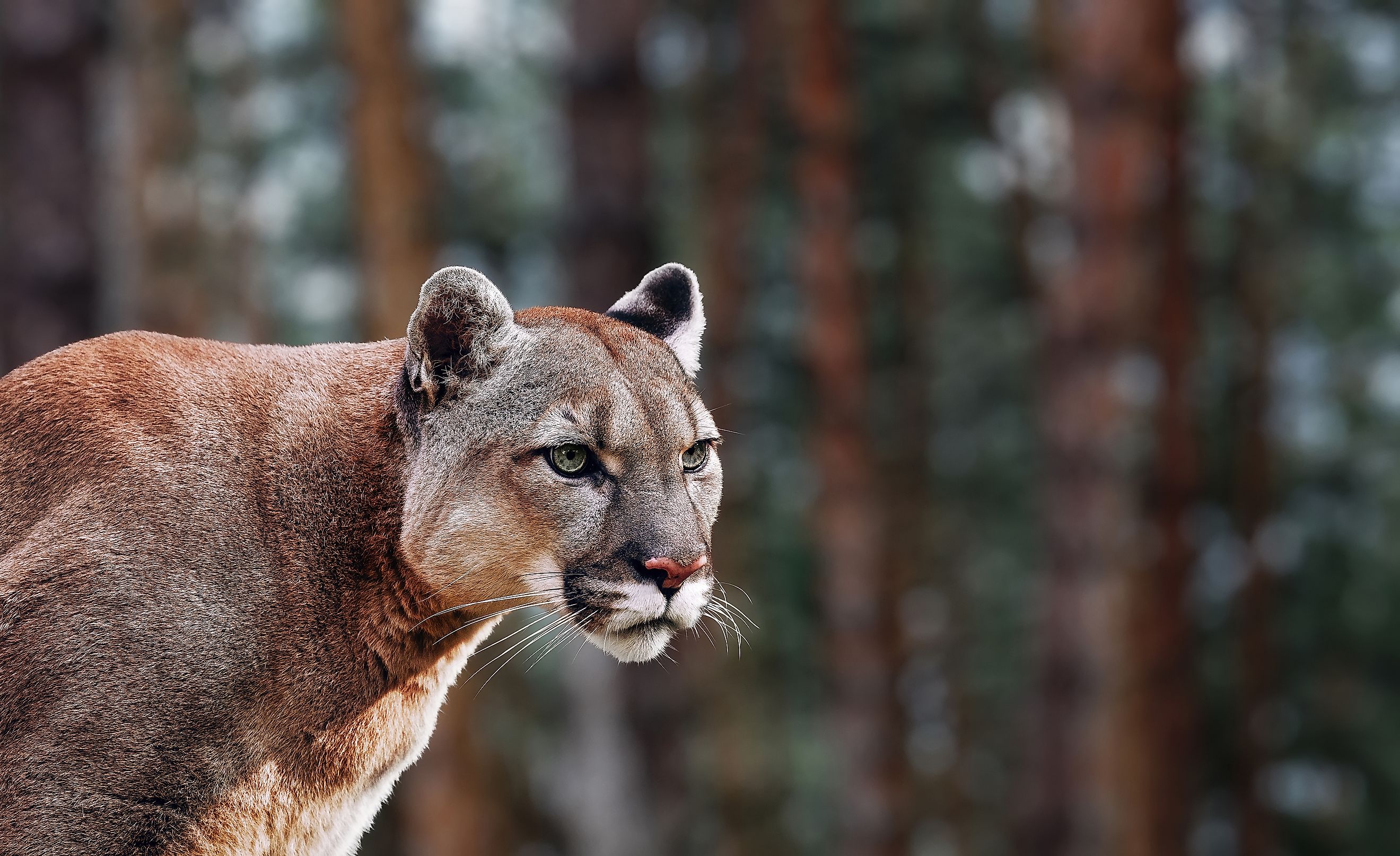
A mountain lion measures 5 to 9 feet (1.5 to 2.7 m) nose to tail tip, with the tail alone accounting for roughly a third of that length. At the shoulder it stands 24 to 35 inches (60 to 90 cm), about the height of a large dog. Males are markedly heavier than females. A male typically weighs 115 to 220 pounds (53 to 100 kg), while a female runs 64 to 141 pounds (29 to 64 kg). Cats in colder, higher-latitude regions tend to be larger than those near the equator.
The coat is short and unspotted in adults, colored grayish tan to reddish brown, always paler on the belly, chest, and inner legs. The muzzle, the backs of the ears, and the tip of the long tail carry dark markings. Kittens are born with dark spots and blue eyes, both of which fade as they mature.
The body is built for ambush and explosive movement rather than endurance. The hind legs are longer and more heavily muscled than the front legs, which supplies the power behind the cat's jumping and sprinting. Large paws with retractable claws grip rock and bark, and a flexible spine driven by muscle rather than long ligaments lets the animal twist and change direction in mid-leap. A mountain lion can sprint at about 40 to 50 miles per hour (64 to 80 km/h) in short bursts and leap distances that few land mammals can match. One key difference from the true big cats is found in the throat. Mountain lions lack the modified hyoid apparatus that allows lions and tigers to roar. Instead it purrs, hisses, growls, and produces a piercing scream, which is the origin of names like "mountain screamer."
Range and Habitat

No other wild land mammal in the Western Hemisphere covers as much ground. The mountain lion's range stretches across the Canadian Yukon in the north and the southern Andes of Argentina and Chile in the south, spanning more than 100 degrees of latitude and every country in between that offers suitable cover and prey.
That breadth is possible because the cat is a habitat generalist. It occupies coniferous forest, tropical rainforest, lowland swamp, grassland, dry scrub, and high mountain slopes above 13,000 feet (4,000 m). Its consistent requirements are cover for stalking, adequate prey, and distance from heavy human disturbance rather than any single vegetation type. In Florida, the endangered panther population persists in cypress swamp and pine flatwood, a very different setting from the pinyon-juniper canyons of the American West.
The current range is smaller than the historical one. Before European colonization, the species occupied nearly the entire continental United States coast to coast. Two centuries of hunting, habitat clearing, and government predator-control programs eliminated it from the eastern half of North America, with the Florida population the sole survivor east of the Mississippi. In recent decades, western populations have expanded eastward, and confirmed dispersers have turned up in the Midwest, evidence that the species will reclaim ground where prey and protection allow.
Diet and Hunting

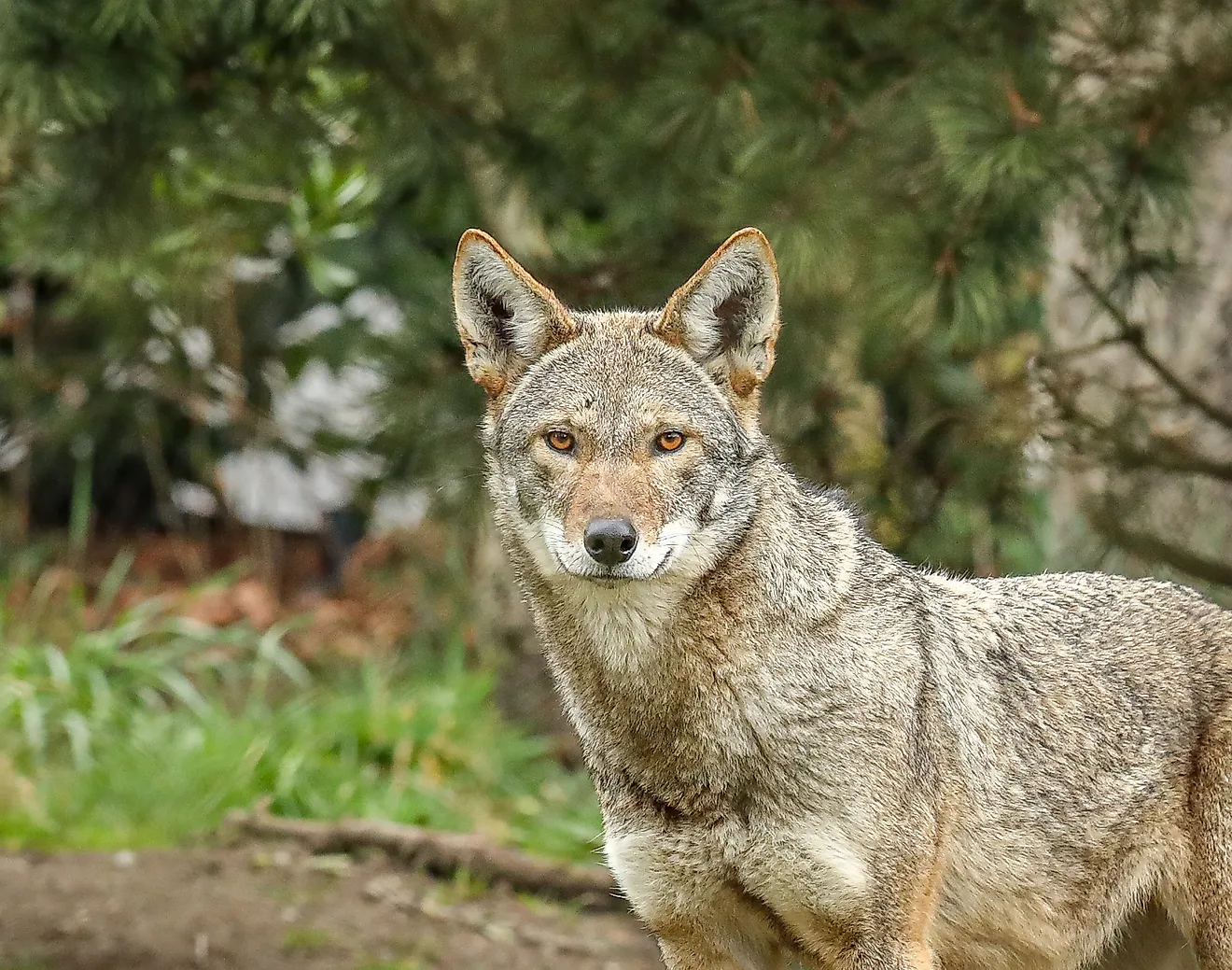
The mountain lion is an obligate carnivore and, across most of its range, a specialist in large hoofed prey. Deer form the core of the diet in North America, mule deer and white-tailed deer especially, supplemented by elk, bighorn sheep, and young moose. In South America, the menu shifts toward guanaco, capybara, and various deer species. When larger prey is scarce, the cat readily turns to smaller animals, including rabbits, rodents, raccoons, coyotes, birds, and even insects.
Its hunting method is ambush, not pursuit. The cat relies on cover and patience to approach within a short striking distance, then closes with a burst of speed and a leap onto the prey's back, killing large animals with a bite to the base of the skull or the throat. An adult can bring down prey several times its own weight. After a kill, the mountain lion drags the carcass to a secluded spot and caches it under leaves, dirt, or brush, returning to feed over several days. A single adult needs roughly the equivalent of one deer every week to two weeks, which places it among the more demanding predators for prey per capita.
Behavior

Mountain lions are solitary and territorial. Adults live alone except for females raising kittens and the brief periods of mating. They are most active at dawn, dusk, and through the night, a crepuscular-to-nocturnal pattern that helps them avoid people and hunt when many prey species move.
Each cat maintains a home range whose size depends on prey density and terrain. A male's range can exceed 150 square miles (390 km2) and overlaps the smaller ranges of several females, while males exclude other males. They mark boundaries with scrapes of soil and leaves topped with scent, along with urine and vocal signals. Communication between individuals is mostly indirect through these markers, which reduces the need for direct, dangerous encounters. Dispersing young males travel the longest distances of any age class, sometimes hundreds of miles in search of unclaimed territory, which is why lone cats occasionally appear far outside established populations.
Reproduction

Mountain lions breed year-round, with peaks that vary by region. Females reach sexual maturity between 1.5 and 3 years of age and typically produce a litter every two years. After a gestation of about 90 to 96 days, a female gives birth in a sheltered den to a litter of one to six kittens, most often two or three.
Kittens are born blind, spotted, and helpless, weighing about a pound (0.45 kg). The mother raises them alone; males play no part in rearing and may kill unrelated young. The kittens open their eyes at around two weeks, begin taking meat within two months, and stay with their mother for a year to two years while they learn to hunt. In the wild, mountain lions generally live 8 to 13 years, with predation, disease, vehicle strikes, and conflict with humans limiting lifespan. In captivity, protected from those pressures, individuals have reached 20 years and beyond.
Importance to the World

As an apex predator, the mountain lion shapes the ecosystems it occupies. By preying on deer and elk, it limits herbivore numbers and keeps grazing pressure in check, which allows streamside vegetation and young trees to recover. This influence extends throughout the ecosystem. Healthier plant communities can support greater numbers of birds, amphibians, and insects, creating a chain of effects known as a trophic cascade. Research in areas where the cat has returned documents measurable improvements in vegetation and biodiversity.
The mountain lion also functions as an ecosystem provider. Its cached and abandoned kills feed a long list of scavengers, including bears, coyotes, eagles, foxes, and beetles, redistributing nutrients across the landscape. Studies have counted hundreds of species that benefit from puma kills. Beyond ecology, the animal carries deep cultural weight across the Americas, featuring in the mythology and iconography of Indigenous peoples such as the Inca, who revered it, and nations across North America who named it Lord of the Forest and Father of Game.
Threats and Conservation

The IUCN Red List classifies Puma concolor as Least Concern, a status that reflects its enormous range and adaptability rather than security. The most recent assessment notes that the global population trend is decreasing. Reliable rangewide counts do not exist, and estimates vary widely; regional figures point to tens of thousands across the Americas. The species is treated as Near Threatened in Argentina, Brazil, Colombia, and Peru, and some national subpopulations face steeper declines.
The threats are consistent across the range. Habitat loss and fragmentation from development sever the large territories the cat needs and isolate populations. Roads are both a direct threat and a barrier to genetic exchange. Small, isolated populations, such as those near Los Angeles, can suffer from inbreeding, which is why California has built wildlife crossings to reconnect them. Legal hunting continues in much of the western United States and Canada, and retaliatory killing follows conflicts with livestock. Estimates suggest thousands of pumas are killed each year through hunting and conflict in North America alone.
Two cases show the range of outcomes. The eastern cougar, the population that once lived across the northeastern United States, was declared extinct and removed from the U.S. endangered species list in 2018. The Florida panther, by contrast, was pushed to roughly 20 to 30 animals in the 1990s and has recovered to an estimated 120 to 230 today through legal protection, habitat conservation, and a genetic rescue that introduced Texas cougars to restore diversity. Both illustrate that the species' fate at any given place depends heavily on human decisions.
Takeaway
The mountain lion has earned its many names through a remarkable combination of traits. It spans two continents, can take down prey far larger than itself, and is stealthy enough to live alongside people while remaining almost unseen. Its role as an apex predator makes it a linchpin for the health of the landscapes it patrols, across western canyon country and the South American highlands. Yet its Least Concern label hides a population in slow decline and a patchwork of local pressures that have already erased it from much of its former range. The Florida panther's rebound and the return of western cats to old ground show that recovery is possible where habitat is protected and movement corridors are kept open. Whether the ghost cat holds its place will depend less on the animal's own resilience, which is considerable, than on the choices made in the human landscapes it now shares.
Fun Facts

- Record holder twice over. Guinness World Records lists the mountain lion as the mammal with the most names and the mammal with the highest recorded jump, at 23 feet (7 m) straight up from a standstill.
- The largest cat that purrs. Because it lacks the specialized voice box of true big cats, the mountain lion cannot roar, but it can purr like a house cat.
- A leap over a school bus. From a standstill a mountain lion can bound roughly 40 feet (12 m) horizontally, clearing a distance longer than a bus.
- Spotted at birth. Kittens arrive covered in dark spots and with blue eyes, both of which fade to the plain adult coat within their first year.
- Long-distance travelers. Young males dispersing for new territory have been tracked moving more than 1,000 miles (1,600 km), among the longest journeys of any American land mammal.
Quick Facts
- Scientific name: Puma concolor
- Family / Order: Felidae / Carnivora
- IUCN status: Least Concern (2015 assessment; population trend decreasing)
- Length: 5 to 9 ft (1.5 to 2.7 m), including tail
- Shoulder height: 24 to 35 in (60 to 90 cm)
- Weight: Males 115 to 220 lb (53 to 100 kg); females 64 to 141 lb (29 to 64 kg)
- Lifespan: 8 to 13 years (wild); 20+ years (captivity)
- Diet type: Carnivore (obligate)
- Range: Western and southern North America through Central and South America to the southern Andes