The Eastern Edge Of Rattlesnake Country
Rattlesnakes are found only in the Americas. Their range covers the dry parts of North America and reaches as far south as Argentina. No native rattlesnakes live anywhere else in the world. When people think of "rattlesnake country," they often picture the dry West, but these snakes actually live much farther east than most expect. Their range stretches across some of the oldest settled areas in the United States and even crosses into Canada. Two species mark the eastern edge of their range more clearly than any others. The timber rattlesnake (Crotalus horridus) lives in the forests of the Northeast. The eastern massasauga (Sistrurus catenatus), recognized as a separate species in 2011, sets the northern and eastern boundary in one Canadian province.
Where the rattle runs out

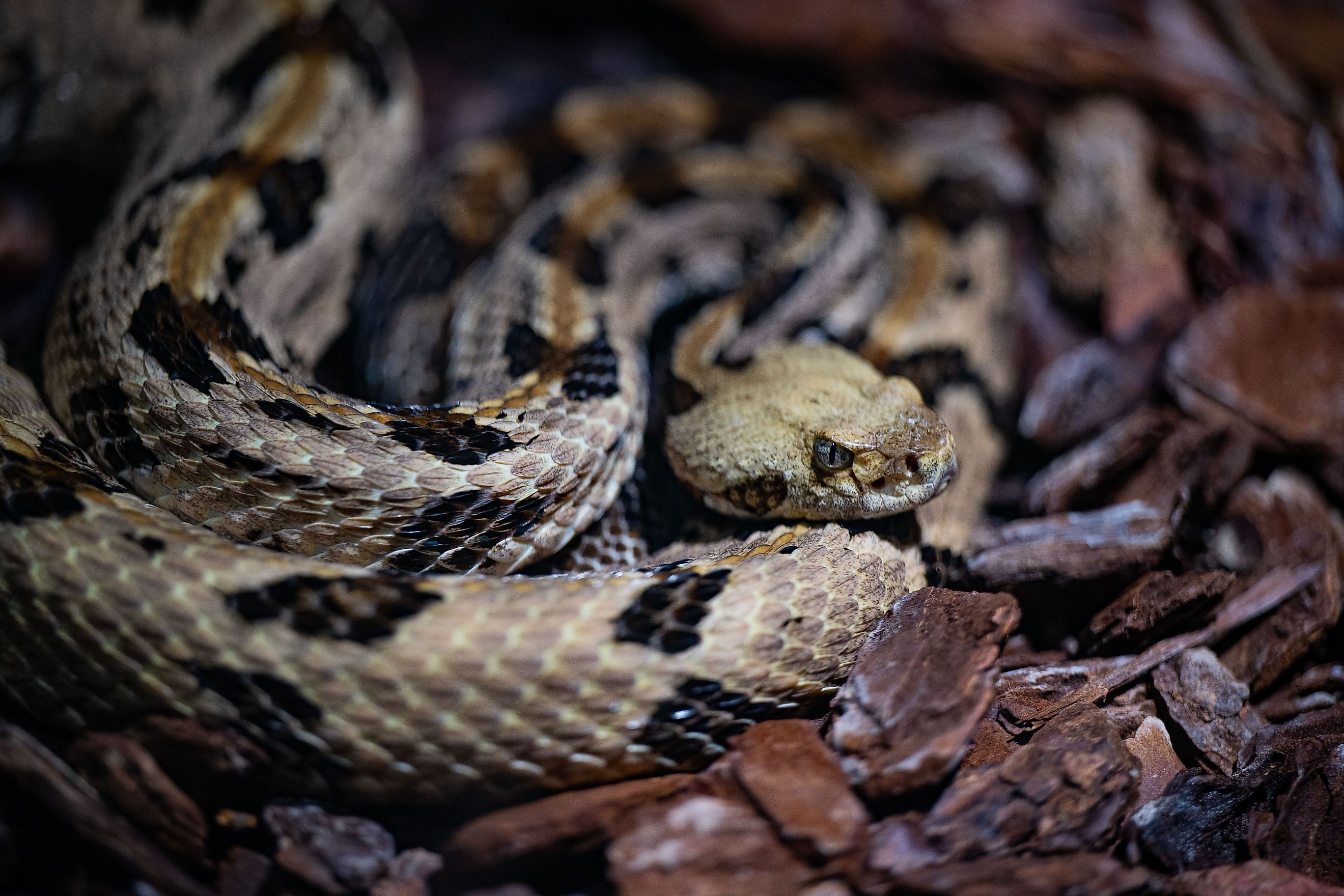
The timber rattlesnake reaches its northeastern edge in south central New Hampshire and the Lake Champlain area of Vermont. From there, it ranges down the Appalachian uplands to northern Florida and west to eastern Texas, southeastern Minnesota, and the edge of the Great Plains. This makes it the only rattlesnake found in most of the populous Northeast and, after the prairie rattlesnake, the most northerly venomous snake in North America. In the Southeastern coastal plain, it shares its habitat with the heavier eastern diamondback rattlesnake, the largest venomous snake on the continent, which lives from Georgia and Florida up the Atlantic lowlands. The smaller, buzzing pygmy rattlesnake also lives in the same warm pine forests.
North of the lakes, only one rattlesnake remains. The eastern massasauga is the only rattlesnake in Ontario and the only venomous snake native to eastern Canada. Its strongest populations now cluster along the eastern shore of Georgian Bay and across the Bruce Peninsula. In the United States, its range continues in Michigan and a few scattered wetlands to the south. By 1988, the massasauga had disappeared from half the counties where it once lived. A survey from 2003 to 2005 found it at only four sites in Ontario, spread across two counties. That is a narrow foothold for the country's only venomous snake. The eastern milksnake and the eastern foxsnake both rattle their tails against dry leaves when alarmed. This imitation is convincing enough to cause many false reports and sometimes leads to the needless killing of harmless snakes.
How the edge got where it is

The eastern edge is where it is today because people forced it there, and the records about this are unusually detailed. Carl Linnaeus described the timber rattlesnake in 1758 and gave it the species name horridus, which means "dreadful." The snake has never really lived up to that name, since it is slow, rarely strikes, and prefers hunting mice over biting people. Still, European settlers hunted it heavily, and the snake vanished from Maine by around 1860 and from much of New England within a generation or two after that. The most effective way to wipe out a species that spends winters in large groups in rocky dens is to pay people to find those dens, and that is basically what happened next.
The naturalist Jon Furman wrote about what happened in his 2007 book on the snake in Vermont and New York. He described a bounty era that lasted from about 1895 to 1971 in Rutland County, Vermont, and in Essex, Warren, and Washington counties in New York. A few hunters searched the dens for money, and the most successful, according to Furman, was Art Moore from New York, who is said to have killed about fifteen thousand rattlesnakes during his career. By the time the bounties stopped, the number of timber rattlesnakes had dropped by about eighty-five percent from their original levels. Now, the species is listed as endangered or threatened in most Northeastern states where it still exists, except in Pennsylvania, where it is managed as a tightly regulated game animal. Old stories mention heavy hunting in the nineteenth century on places like Rattlesnake Island in Lake Winnipesaukee, but there are few exact records, and much more is remembered today than was ever written down.
The actual danger

People have always been more afraid of these snakes than the numbers suggest. In the United States, venomous snakes bite about seven to eight thousand people each year, and around five of those cases are fatal. Most serious injuries and nearly all deaths are caused by rattlesnakes. Studies show that between a quarter and half of rattlesnake bites do not inject any venom, since the snake often saves its venom for prey rather than using it on a person who is not a threat. The massasauga is even less dangerous at the northern edge of its range. Ontario has only recorded two deaths from massasauga bites in its history, both over sixty years ago, and in both cases, the person did not get proper treatment. Data from national poison centers between 1983 and 2007 show that severe rattlesnake bites have become less common, while the fatality rate has stayed about the same. This suggests that better emergency care, rather than changes in the snakes, has improved survival rates.
Recent cases show that people usually recover from rattlesnake bites if they get treatment in time. For example, a 2024 medical report described a healthy twenty-five-year-old man who was bitten on the toe while walking at night in open-toed sandals in Ontario's Eastern Georgian Bay region. He developed severe swelling and a blood clotting problem because he waited to get help, but he made a full recovery after doctors gave him ten vials of antivenom. Most bites happen to people who either step on a hidden snake or try to pick one up. The second group makes up a surprisingly large number of cases, and these accidents can often be prevented.
Walking the edge safely

Hikers and travelers in the eastern range are most likely to see rattlesnakes on warm, rocky, south-facing slopes and sunny ledges. In cooler months, snakes often bask near their dens during the day, so the risk is highest in spring and autumn, with some snakes staying active into October. Wearing sturdy boots and long pants protects your lower legs from most bites. Simple habits help too: watch where you put your hands and feet, step onto logs before stepping over them, keep your fingers out of crevices and woodpiles, and use a light at night. The best way to stay safe is to leave snakes alone. Killing them is unnecessary and, for protected species like the massasauga, illegal.
If you are bitten, stay calm but act quickly. Move away from the snake, keep as still as you can, and take off rings and watches before swelling starts. Keep the bite at about the same level as your body, and get to a hospital or call emergency services right away. Antivenom works well if given soon enough. Experts no longer recommend old remedies, so do not use a tourniquet, ice, cutting, or suction devices. Do not try to catch or identify the snake, as this can put someone else at risk.
What the eastern edge adds up to

The reality of the eastern edge is simpler than its reputation suggests. The timber rattlesnake and the massasauga live at the northern and eastern edges of a family that usually prefers warmer, drier places. They survive in just a few rocky dens and wetlands, and people who live nearby face very little risk from them. That risk is even lower now than it was in the past, thanks to better treatment and the end of bounty hunting. The caution these snakes deserve is simple: watch where you step and keep your hands to yourself. This basic care has always kept hikers safe from bites.
The eastern edge of rattlesnake country is shaped as much by old bounty records and cleared land as by climate. The snakes that remain are shy and spend most of their time in dens on a few rocky hillsides near the northern edge of where they can survive.