The Most Deer-Dense States In The United States
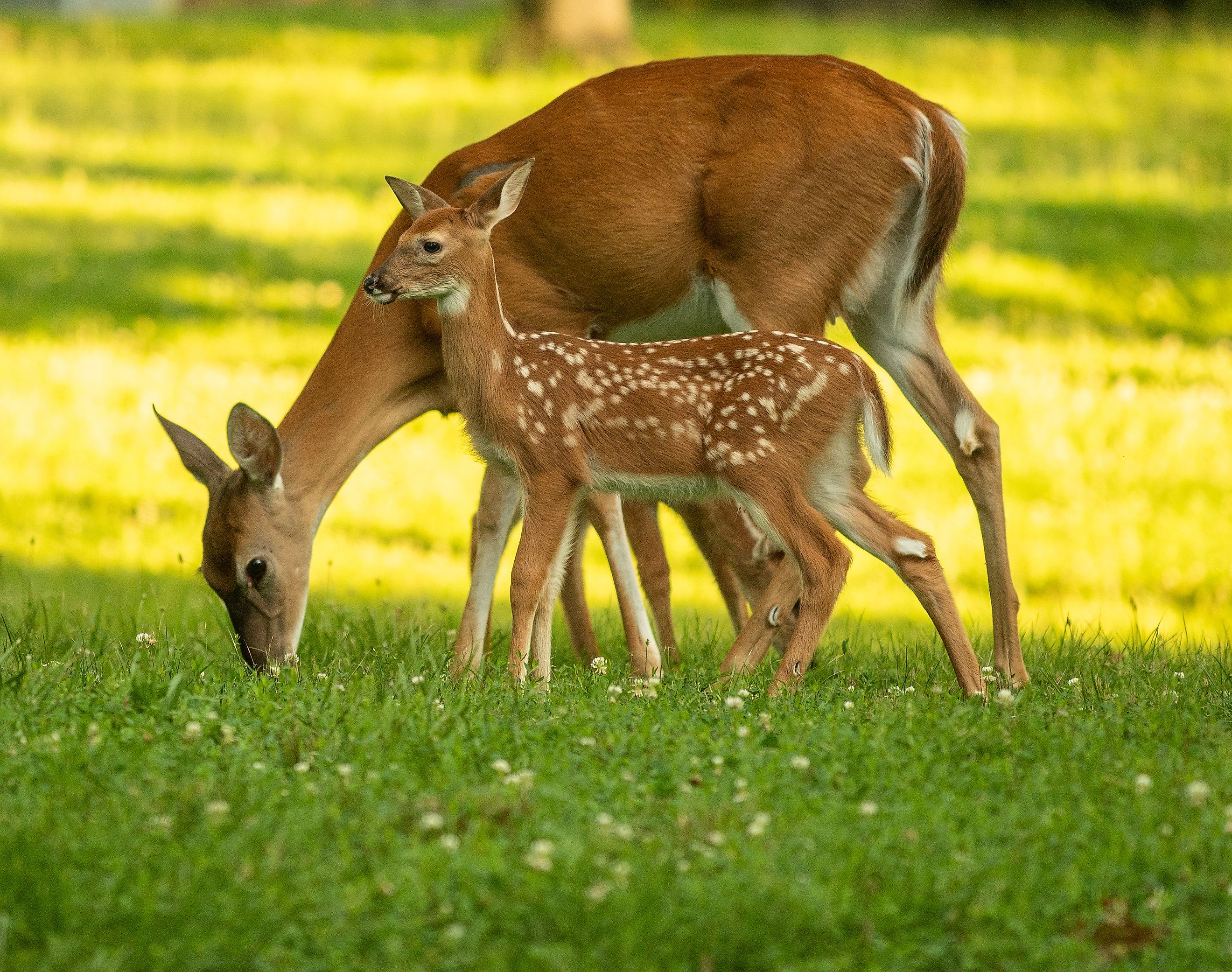
A little more than a century ago, the white-tailed deer (Odocoileus virginianus) had nearly disappeared across much of the country, cut down to perhaps 300,000 animals by unregulated market hunting and cleared forests. Today the national herd is estimated at roughly 30 million, and across the eastern and southern United States the animals press against the land more thickly than at any point in living memory. Density, more than raw numbers, is what turns a welcome backyard visitor into a management headache, a driving hazard, and a quiet engine of disease. The states where deer concentrate most are not always the ones with the largest total herds, because a compact state laced with farm edges and second-growth woods can carry far more animals per square mile than a vast western one. What follows is a grounded look at where whitetails pack in, why that density matters to anyone who drives or walks in deer country, and how to share the ground with them safely.
The Comeback That Overshot

Protective game laws, the end of commercial venison markets, the founding of state conservation departments after 1900, and the regrowth of eastern forests all combined to lift a remnant population back into the tens of millions within a few generations. Research tracing deer numbers across the Southeast documents densities climbing from well under one deer per square kilometer in the early twentieth century to the crowded figures wildlife managers wrestle with now. Suburban growth accelerated the trend, because housing tracts carved into farmland create exactly the brushy edge habitat whitetails favor, with abundant food and few hunters. Readers curious about the biology behind the surge can study the natural history of the white-tailed deer and the way the species exploits human-altered ground. The same adaptability never fully reached some western relatives such as the Columbian white-tailed deer, a subspecies that spent decades on the endangered list even as its eastern cousins overran whole counties.
Where The Whitetails Crowd In

Statewide density estimates vary by source and by survey method, so they are best read as informed approximations rather than exact counts. With that caution in mind, Mississippi is the state most often placed at the top, with estimates near 38 deer per square mile across a landscape of pine woods, river bottoms, and agricultural fields that feed animals year round. Close behind sit Pennsylvania at roughly 34 and Wisconsin near 33, two northern strongholds where farm country meets heavy forest. Michigan and Indiana follow in the high twenties to low thirties, and the warm, forage-rich Southeast keeps Alabama, South Carolina, and Kentucky in the low to mid twenties. Mild winters matter here, since a long growing season and little deep snow let more fawns survive to adulthood than the harsh northern tier allows.
Statewide averages can also conceal much higher local concentrations. A state with an average of 20 deer per square mile may contain suburban areas where numbers exceed 50 per square mile, particularly in densely populated parts of New Jersey, where some areas have recorded close to 100 deer per square mile. Texas tells the opposite story, carrying the largest total herd in the nation yet spreading it thin across an enormous area, which keeps its per-mile density modest. Density, in other words, is a local phenomenon as much as a state ranking, and the friction between people and deer rises fastest exactly where the two share the same small patches of ground.
The Reckoning On The Roads

Insurance records provide one of the clearest measures of how often deer collide with vehicles. State Farm estimated that more than 1.6 million animal-strike claims were filed nationwide between July 2025 and June 2026, with deer accounting for well over a million of those incidents. The company paid approximately $1.9 billion to cover the resulting claims. The average American driver faced odds of about 1 in 145 of an animal-collision claim over that year. The risk is far from evenly shared. West Virginia again topped the list at roughly 1 in 46, a position it has held for more than a decade, followed by Montana near 1 in 54, then Wisconsin, Pennsylvania, and Michigan in the 1 in 60s. Iowa, Virginia, Maine, and South Dakota round out the highest-risk group, according to the Insurance Information Institute summary of the same data.
The number of reported collisions shows how serious the problem can be. Pennsylvania recorded the highest number of insurance claims during that period, at roughly 141,000, while Michigan reported 58,324 vehicle-deer crashes in 2024 alone. Those incidents accounted for about one-fifth of all reported crashes in the state. The timing is predictable. Claims cluster hard into October, November, and December, when the autumn breeding season, called the rut, sends bucks chasing does across roads with little regard for traffic, and shorter days push more commuting into the hours around dawn and dusk when deer move most. November is consistently the single worst month. State Farm has also noted that risky habits such as speeding or phone use raise the chance of an animal strike by roughly a quarter, a reminder that driver behavior shapes the outcome as much as deer numbers do.
What Density Does To Health

High deer populations can also increase the risk of disease transmission. Chronic wasting disease, a fatal prion disorder affecting members of the deer family (Cervidae), has been detected in more than 30 states, according to the U.S. Geological Survey. The disease can spread more readily where deer gather in large numbers, particularly when they repeatedly use shared feeding areas. A 2025 consensus report from the National Academies of Sciences, Engineering, and Medicine laid out how transmission moves through both wild and captive populations and why high local density complicates control. The disease is always fatal in infected animals, and public-health agencies including the Centers for Disease Control and Prevention advise against eating meat from animals known to be positive, even though no human case has been confirmed.
Large deer populations can also support tick populations that pose a risk to human health. The blacklegged tick, commonly known as the deer tick, feeds on white-tailed deer during part of its life cycle. It can also transmit Lyme disease, the most commonly reported vector-borne illness in the United States, according to the Centers for Disease Control and Prevention. Where deer thrive at the forest edge beside suburban yards, the ticks they help feed find plenty of human hosts as well. One check on all of this once came from predators. The near-elimination of the gray wolf across most of its former eastern range removed a natural brake on deer numbers, and surviving coyotes take only a modest share of fawns. Larger relatives in the same family, such as elk, face the same prion threat, which is one reason wildlife agencies watch cervid density so closely.
Sharing The Road And The Woods

Drivers should take extra care at dawn and dusk, particularly during autumn when deer are more active and vehicle collisions become more common. On dark rural roads, use high beams when there is no oncoming traffic. The reflection from a deer's eyes may reveal its presence before the animal itself becomes visible. Scan the shoulders and tree lines, slow down where crossing signs appear, and remember that deer travel in groups, so a single animal in the road almost always means others are near. If a collision becomes unavoidable, brake firmly and stay in the lane rather than swerving, because steering into oncoming traffic or a roadside obstacle tends to cause far worse injuries than striking the animal straight on. Seat belts remain the single best protection, and roadside deer whistles have never shown convincing evidence that they work.
For hikers and homeowners, the main concern is exposure to ticks carried by deer and other wildlife. Use insect repellent, wear long trousers with the cuffs pushed down inside your socks when walking through dense vegetation, and check your clothing and skin thoroughly afterward. Removing attached ticks promptly reduces the risk of contracting certain tick-borne diseases. Gardeners in high-density areas gain little from piecemeal fixes and more from fencing and deer-resistant planting. Anyone venturing into the backcountry should also be aware of the dangers posed by wildlife in America's forests and those visiting the popular trails of the Great Smoky Mountains or exploring the lowland South should also familiarize themselves with the region's most dangerous animals before heading out. Respect, distance, and attention cover most situations, and feeding wild deer, which concentrates them further and spreads disease, should be avoided everywhere.
A Success Story With Sharp Edges
The recovery of the white-tailed deer is one of North America's major conservation successes, but it has also created new challenges. The species' ability to adapt to human activity and thrive along forest edges has allowed its populations to grow in areas where people live, work and travel. Today, large deer populations contribute to vehicle collisions, damage to gardens and crops, and the spread of diseases that wildlife agencies must monitor. Regulated hunting, habitat management and continued population surveys all play a role in keeping those numbers under control. For people living in areas with abundant deer, avoiding collisions and reducing unwanted contact often comes down to simple precautions, particularly when driving at dusk or walking through wooded areas.