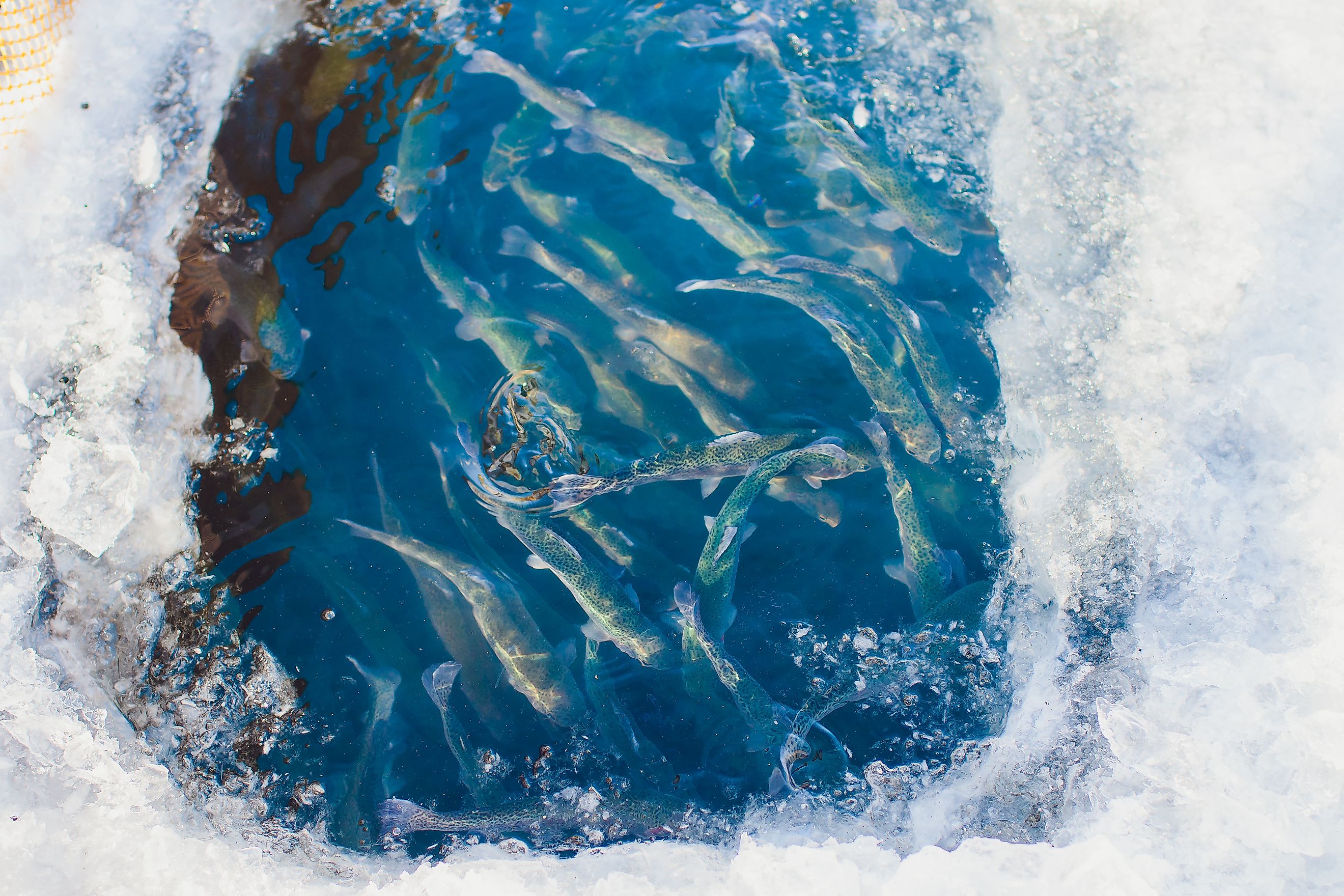
How Fish Breathe Under The Ice
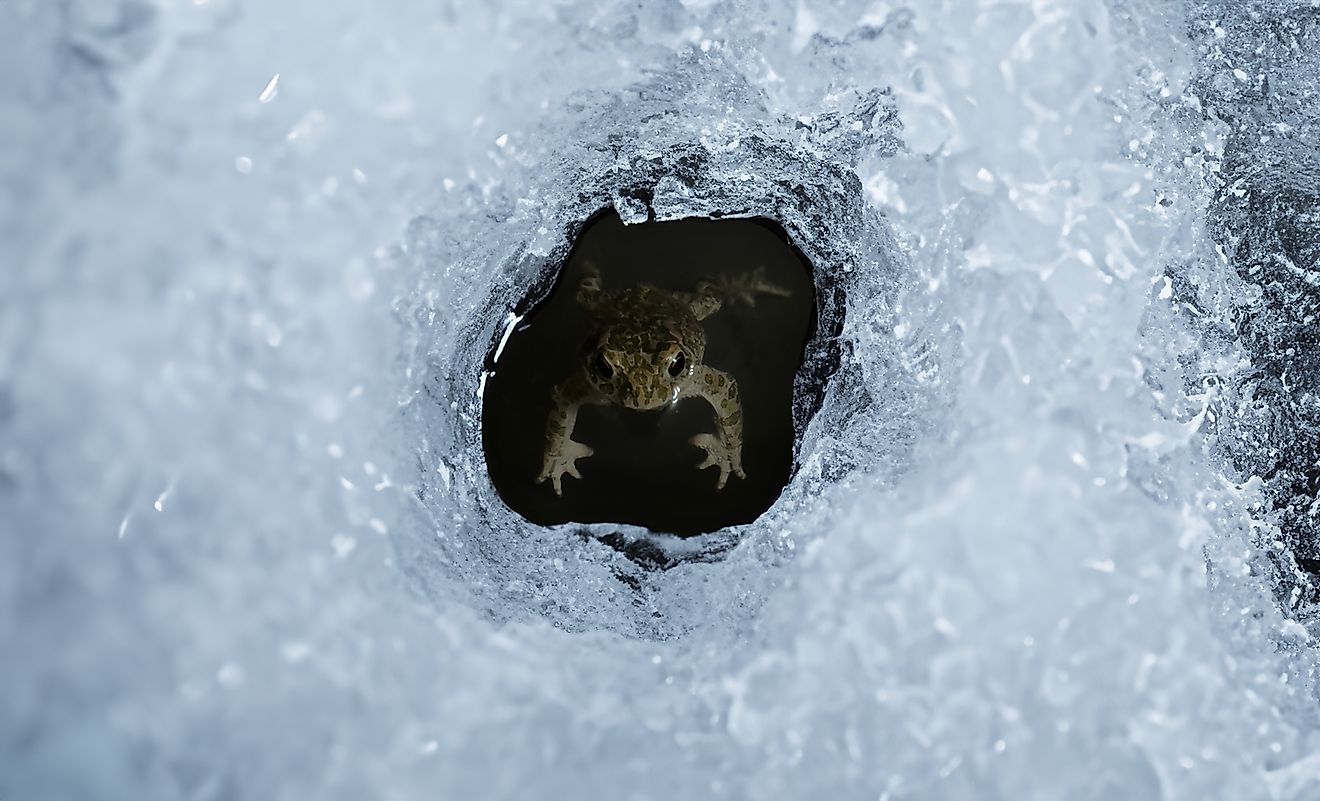
Seal a room full of animals away from the atmosphere for four months and you have a tragedy. Yet that is exactly what winter does to a northern lake: ice closes the surface in December, no new oxygen enters from the air until spring, and underneath, thousands of fish go right on breathing. The trick is not one adaptation but a stack of them, a lake that banks oxygen before it freezes, gills that extract dissolved oxygen with an efficiency lungs can only envy, metabolisms that throttle down to a fraction of their summer rate, and, in one famous case, a fish that survives with no oxygen at all by quietly turning itself into a brewery. Here is how life keeps breathing under the lid.
The Lid That Saves The Lake

The rescue starts with one of water's strangest properties: it is densest at 39 degrees Fahrenheit, not at freezing. As a lake cools in autumn, the whole water column churns in the fall turnover, mixing top to bottom and loading every layer with oxygen from the air, a full tank taken on before the station closes. When the surface finally chills past 39 degrees, that colder water floats instead of sinking, freezes, and forms ice that floats too, a lid rather than a plunge.
So a frozen lake is not a block; it is a sealed, insulated tank, ice on top, and water near that dense 39-degree mark resting at the bottom where fish wait out the season. Better still, the tank is charged: cold water physically holds far more dissolved oxygen than warm water, so the lake enters its sealed months with the richest oxygen supply of its entire year. Winter under the ice begins as a well-stocked pantry. The question is making it last.
Gills Do Not Need Air

The first misconception to drown is the idea that fish need the air above the ice at all. Fish do not breathe air; they breathe oxygen already dissolved in the water, molecules that entered at the surface or were released by underwater plants, and a gill is a machine purpose-built for harvesting them. Water flows across the gill filaments in one direction while blood flows through them in the other, a countercurrent arrangement that keeps the oxygen gradient working along the entire filament and lets fish strip out most of the dissolved oxygen passing through, an extraction rate human lungs, which capture only a fraction of the oxygen in each breath, cannot touch.
That efficiency is why the sealed lake works. The fish never needed the sky, only the dissolved supply, and the fall turnover stocked the water with months of it. Every ice angler pulling fat yellow perch up through a hole in January is holding the proof: an animal that spent weeks in a sealed system and never noticed.
Winter At Quarter Speed
The supply lasts because the demand collapses. Fish are cold-blooded, their metabolic rate chained to water temperature, and the drop into the 30s cuts their oxygen needs to a small fraction of their summer appetite. Bass and bluegill drift into a torpid hover in the deep water, barely finning, eating little, burning next to nothing; carp and bullheads settle toward the bottom and verge on dormancy; even the predators mostly glide and wait. A fish in 39-degree water is running its whole body on pilot light.
The slowdown is the elegant half of the bargain. The same cold that seals the lake also shrinks every resident's oxygen bill, so supply and demand fall together, and a pantry that would feed summer's roaring metabolisms for a week can feed winter's idling ones for a season. Species draw different cards here: trout and other oxygen-hungry cold-water fish ride out winter comfortably but need lakes deep and clean enough to keep the supply high, which is exactly where you find them.
The Light Budget

The sealed lake even keeps a small income stream running. Clear ice transmits sunlight surprisingly well, and beneath it, algae and surviving aquatic plants continue photosynthesizing all winter, trickling fresh oxygen into the water below the lid. In a lake capped with clean black ice, the pantry gets restocked daily, and oxygen levels can hold nearly steady until spring.
Which reveals the real villain of the story, and it is not ice. It is snow. A thick white blanket over the ice cuts the light to nearly nothing, photosynthesis shuts down, and the lake's income stops while its expenses, the slow background breathing of fish, bacteria, and decomposing plants, continue. The difference between an easy winter and a dangerous one under the ice is often just the difference between a clear freeze and a buried one.
When The Oxygen Runs Out

Sometimes the arithmetic fails. In shallow, weedy, nutrient-rich lakes, the decomposition bill runs high, bacteria breaking down summer's dead plants consume oxygen all winter, and under a long snow cover the lake burns through its reserves from the bottom up. Fish respond the only way they can, crowding toward the last oxygenated refuges, spring seeps, creek inlets, and the thin layer just beneath the ice, and if the thaw comes too late, the result is winterkill, the grim spring scene of a lake rimmed with fish that ran out of pantry weeks before the lid came off.
Winterkill is natural, selective, and managed: fisheries agencies aerate vulnerable lakes, anglers report the crowded holes, and the hardest-hit waters are typically recolonized within a few seasons. It is also the exception that proves the system, because the lakes that kill are precisely the ones where the stack of safeguards, depth, cold capacity, light income, and low decay, came up short.
The Overachievers

Then there are the fish that treat even zero oxygen as a solvable problem. The crucian carp of northern Europe and its domesticated cousin, the common goldfish, can survive for weeks and even months in water with no oxygen at all, running their bodies anaerobically and handling the toxic byproduct with the best party trick in fish physiology: they convert it to ethanol and breathe the alcohol out through their gills. A goldfish wintering in an oxygen-dead pond is, chemically speaking, a very small, very slow brewery, and it sobers up unharmed at ice-out.
At the other extreme stands the burbot, the only freshwater cod, which skips the torpor strategy altogether: it stays active in the coldest water, hunts all winter, and gathers to spawn under the ice in the dead of midwinter, the only fish in North America that treats January as the busy season. Between the brewery and the burbot, the species list under any frozen lake covers every possible answer to the same exam question.
Spring Opens The Window
When the ice finally rots and the lid comes off, the lake takes its first breath in months: spring turnover mixes the water column again, oxygen floods every layer, metabolisms spin back up, and the sealed tank becomes an open system until the next December. The fish, for their part, never experienced a crisis, just a long, dim, slow season inside a system that charges its batteries in the fall, spends them at quarter speed, tops up through the skylight, and keeps a few residents who can run on fumes, or ferment them. The ice was never the enemy. It was the lid on the jar that kept everything alive.