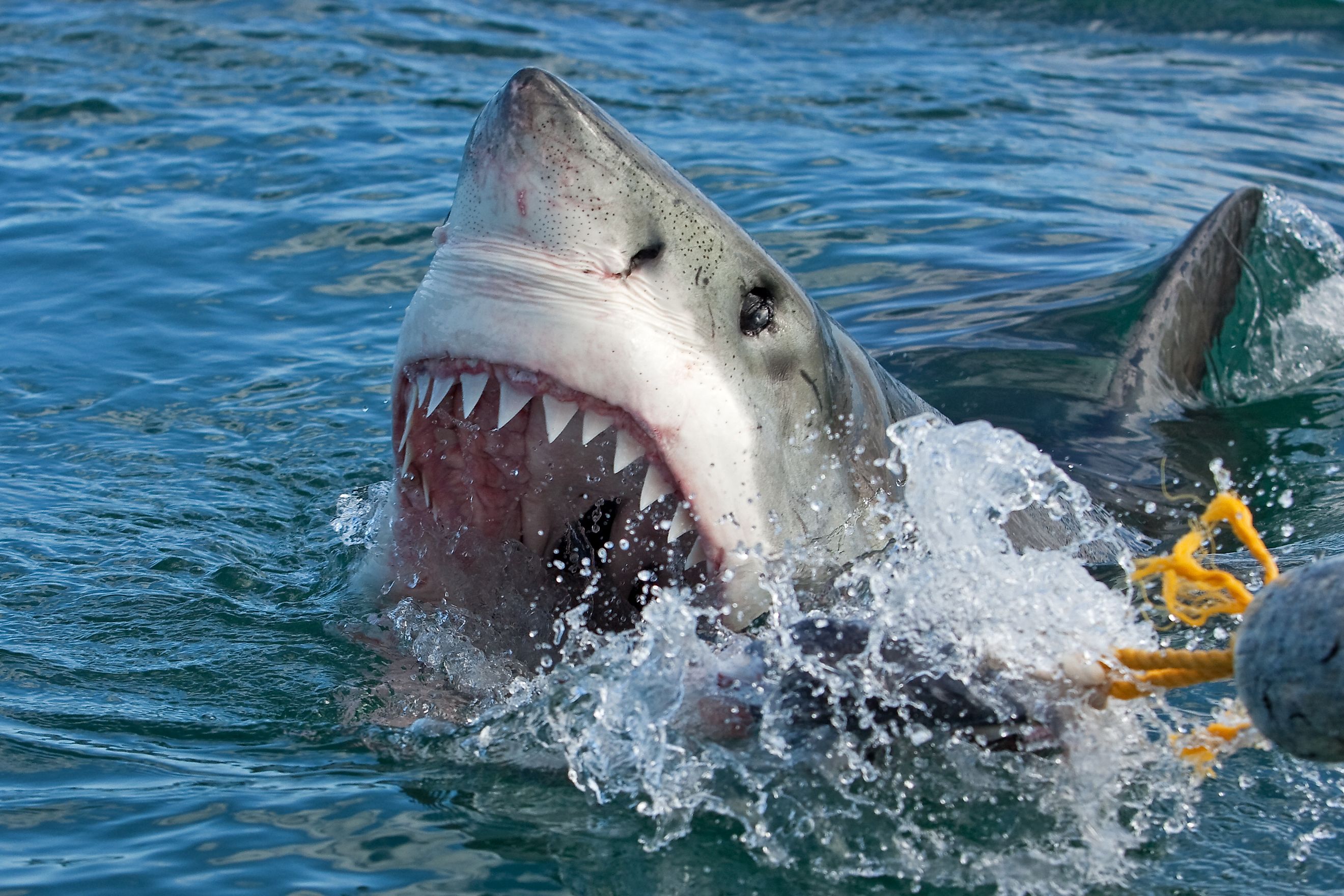
Where Great White Sharks Go In The Winter
Every autumn, as the water cools and the summer seal feasts wind down, great white sharks pull one of nature's great disappearing acts. The predators that spent the warm months prowling famous hotspots like Cape Cod and the California coast simply vanish, leaving beachgoers and scientists alike wondering where on earth they went. For decades, it was a genuine mystery. Thanks to satellite tagging, we now know the answer, and it is far stranger and more impressive than anyone had guessed. Here is where great white sharks actually go in the winter.
They Migrate, They Don't Disappear

The first thing to know is that great whites do not hibernate or hole up somewhere for the cold months; they are among the ocean's great long-distance travelers. When their summer feeding grounds cool below roughly 57°F, they simply leave, following warmer water and food across astonishing distances. What they do next, though, depends entirely on where they spent the summer, because the two main populations in US waters have evolved two completely different winter strategies. One heads for the coast, and the other heads straight for the middle of nowhere.
Atlantic Sharks Head South

The great whites that spend summer gorging on seals off Cape Cod, Nova Scotia, and Newfoundland handle winter the sensible way: they head south. As the northern water chills, they migrate down the East Coast, some traveling more than 2,000 miles, to the warmer Atlantic waters off the Carolinas, Georgia, and Florida, and many push on into the Gulf of Mexico. Scientists at OCEARCH, who have tagged these sharks for over a decade, call this winter gathering spot the Northwest Atlantic Shared Foraging Area, with the thickest concentrations found off Charleston and Cape Canaveral. The famous tracked shark Mary Lee made this exact southbound run year after year.
Pacific Sharks Vanish Into the Open Ocean

The West Coast great whites are far more mysterious. Rather than following the coastline, the sharks that summer off California's Farallon Islands and Mexico's Guadalupe Island strike out straight into the open Pacific, swimming more than 1,000 miles to a remote patch of empty ocean roughly halfway between Baja California and Hawaii. They arrive in winter and spend months out there before turning around and returning in the fall. A few of them keep going even farther, with one tagged male recorded swimming all the way to Hawaii.
The Mystery of the White Shark Café

That remote mid-ocean destination has earned itself a wonderful nickname: the White Shark Café. For years it baffled researchers, because it sits in a seemingly barren stretch of deep water with no obvious reason for an apex predator to bother visiting. Yet dozens of great whites congregate there every winter and spring, making hundreds of deep, repeated dives, some plunging as far as 3,000 feet down. The leading theory is that they are feeding on a hidden, calorie-rich layer of squid and other mid-water creatures, and that the Café doubles as a mating ground. Even now, much of what actually happens out there remains unknown.
Why They Go

Underneath both of these journeys are the same three drivers: warmth, food, and breeding. Great whites are tuned to a fairly narrow temperature band, so when their summer waters drop out of that comfort zone, they chase the warmth, whether that means the balmy Gulf of Mexico or the milder open Pacific. Food follows close behind, with both winter destinations offering rich hunting once the coastal seal buffet has shut down for the year. And increasingly, scientists believe these winter trips are also when great whites mate, with Atlantic sharks likely breeding off the Carolinas and Pacific sharks pairing up at the Café. So the sharks are never really gone each winter; they are simply off doing their most important business far from the crowded beaches where we usually meet them. The great winter vanishing, it turns out, is not a disappearance at all, but one of the most remarkable migrations in the entire ocean.