How Far North Africanized Bees Have Spread
Few insects have ever caused a bigger scare than the Africanized honey bee, the so-called "killer bee" that spent the 1990s terrifying Americans in movies and headlines alike. The fear at the time was that these aggressive hybrids would sweep north and conquer the entire country. Decades later, the reality is far more interesting, and a lot less apocalyptic: they did spread, but only so far, before slamming into an invisible wall. So how far north have they actually gotten? Here is where Africanized bees have spread across the US, and what finally stopped them.
The Short Answer: The Southern Tier

Today, Africanized honey bees are firmly established across the southern edge of the United States, but not much beyond it. Their confirmed range covers Texas, New Mexico, Arizona, southern California, southern Nevada, Oklahoma, Louisiana, Arkansas, Alabama, and Florida, essentially a band stretching along the warm southern tier of the country. Generally speaking, they are found south of about the 34th parallel, the line that runs roughly through Los Angeles, Phoenix, and the Carolinas. North of that, across the Midwest and the northern states, there are no established populations at all. The feared national takeover simply never happened.
From Brazil to Texas

The story starts far from the US. In the 1950s, African honey bees were brought to Brazil for breeding, promptly escaped, and began spreading north at a remarkable 200 to 300 miles per year. They swept through South and Central America, reached Mexico by 1985, and finally crossed into the United States in October 1990, when the first wild colony turned up near Hidalgo, Texas. From there they fanned out both west and east, reaching Arizona and New Mexico by 1993, California by 1994, and Florida by around 2005. It was one of the fastest animal invasions ever documented.
How Far North They Reached

And then, rather abruptly, they mostly stopped. After that explosive march up from Brazil, the bees' northern frontier has barely budged in decades, stalling out along roughly the 34th parallel across the interior of the country. Isolated swarms do occasionally turn up well north of the established zone, often hitchhiking on trucks or trailers, but they fail to take hold and vanish within a season or two. For all the dire 1990s predictions of killer bees reaching the Canadian border, the leading edge has essentially frozen in place across the southern states.
California Is the Exception

There is one notable place where the bees have pushed farther than anyone expected: California. Thanks to the mild winters along the West Coast, Africanized bees crept steadily up the state after arriving in 1994, and a 2015 study found them as far north as Napa and Sacramento, deep into northern California and well beyond where researchers once assumed they would ever stop. They become a clear minority the farther north you go, but their presence that high up suggests the northward spread there may not be entirely finished. If any route lets them keep climbing, it is the temperate Pacific coast.
Why Cold Stops Them

The invisible wall holding them back is simply winter. Africanized bees are a tropical animal at heart, and they never developed the cold-weather survival skills of their European cousins. European honey bees cluster together and carefully stockpile honey to ride out long, freezing winters, but Africanized bees do neither especially well, so their colonies tend to starve or freeze once the cold sets in. That single weakness is the main reason they have stayed confined to the warm southern states. It even comes with a small silver lining, since cold weather also appears to make the bees noticeably less aggressive. The one wrinkle is that, as the climate warms, that northern limit could slowly shift upward over time.
Are They Really 'Killer Bees'?

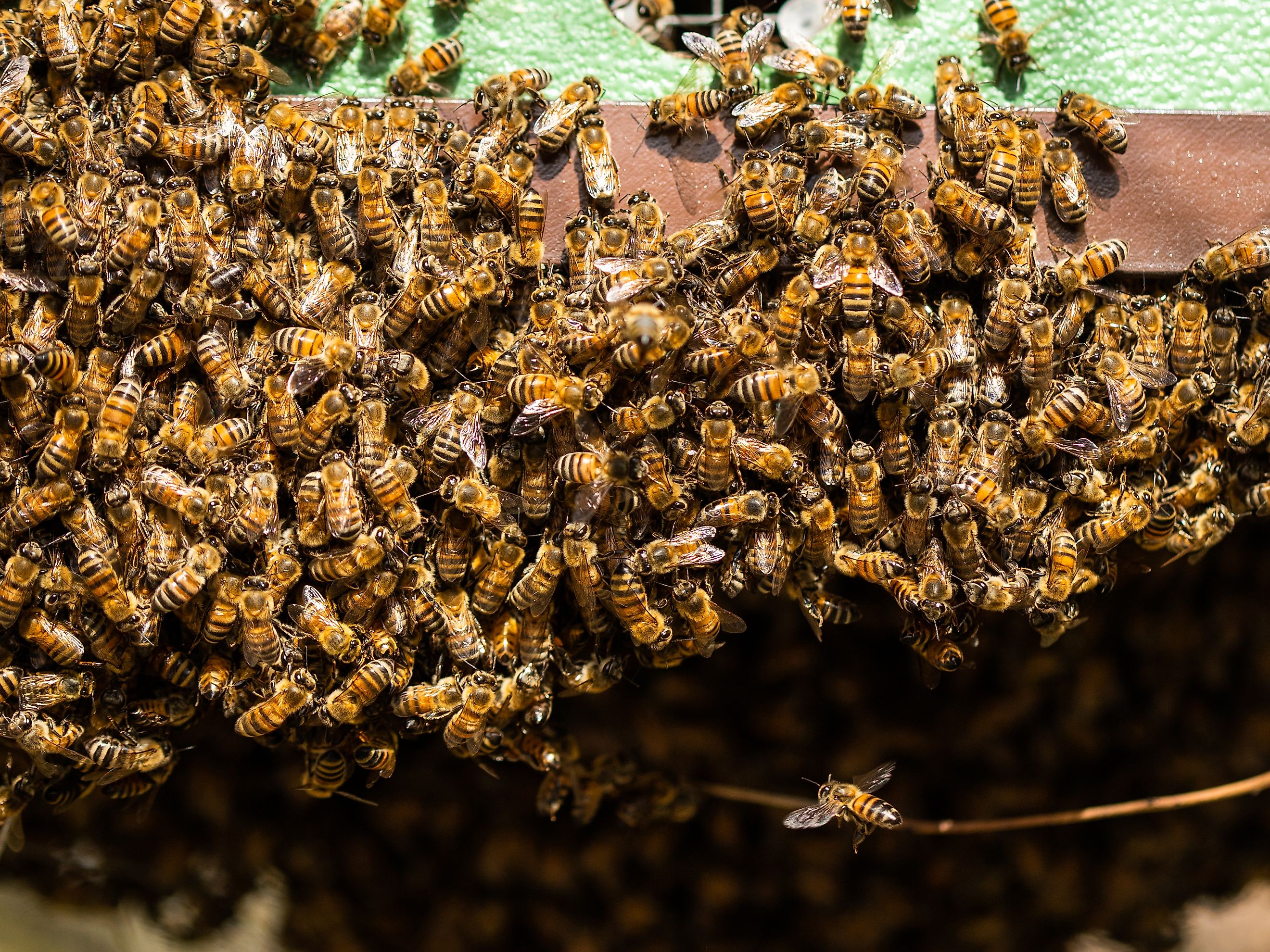
So do they live up to the terrifying name? Mostly, no. An Africanized bee looks completely identical to an ordinary honey bee, and its individual sting is no more venomous than any other. What makes them dangerous is purely their temperament: they are far more defensive, responding to disturbances faster, in much greater numbers, and chasing perceived threats much farther from the hive. A lawnmower or a slammed door can trigger a mass response that a European colony would simply shrug off. Serious attacks and deaths are genuinely rare, but if you ever do stir up a swarm, the advice is simple: run in a straight line, get indoors or into a car as fast as you can, and never jump into water, because the bees will just wait for you to come back up. For now, the killer bee's great northern invasion has stalled at the edge of the Sun Belt, a tropical insect held in check by nothing more dramatic than a cold winter night.