How Many Rattlesnakes Share A Single Den
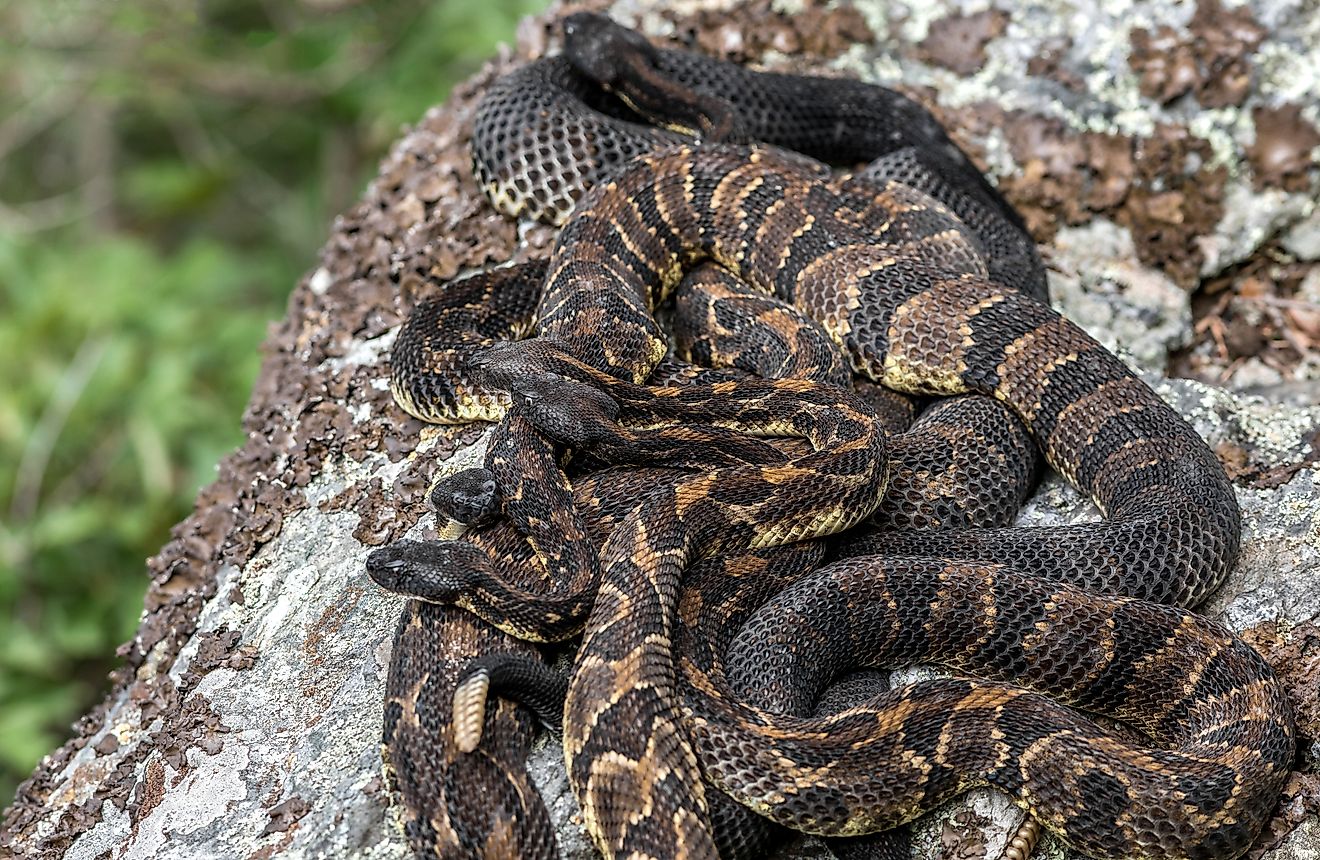
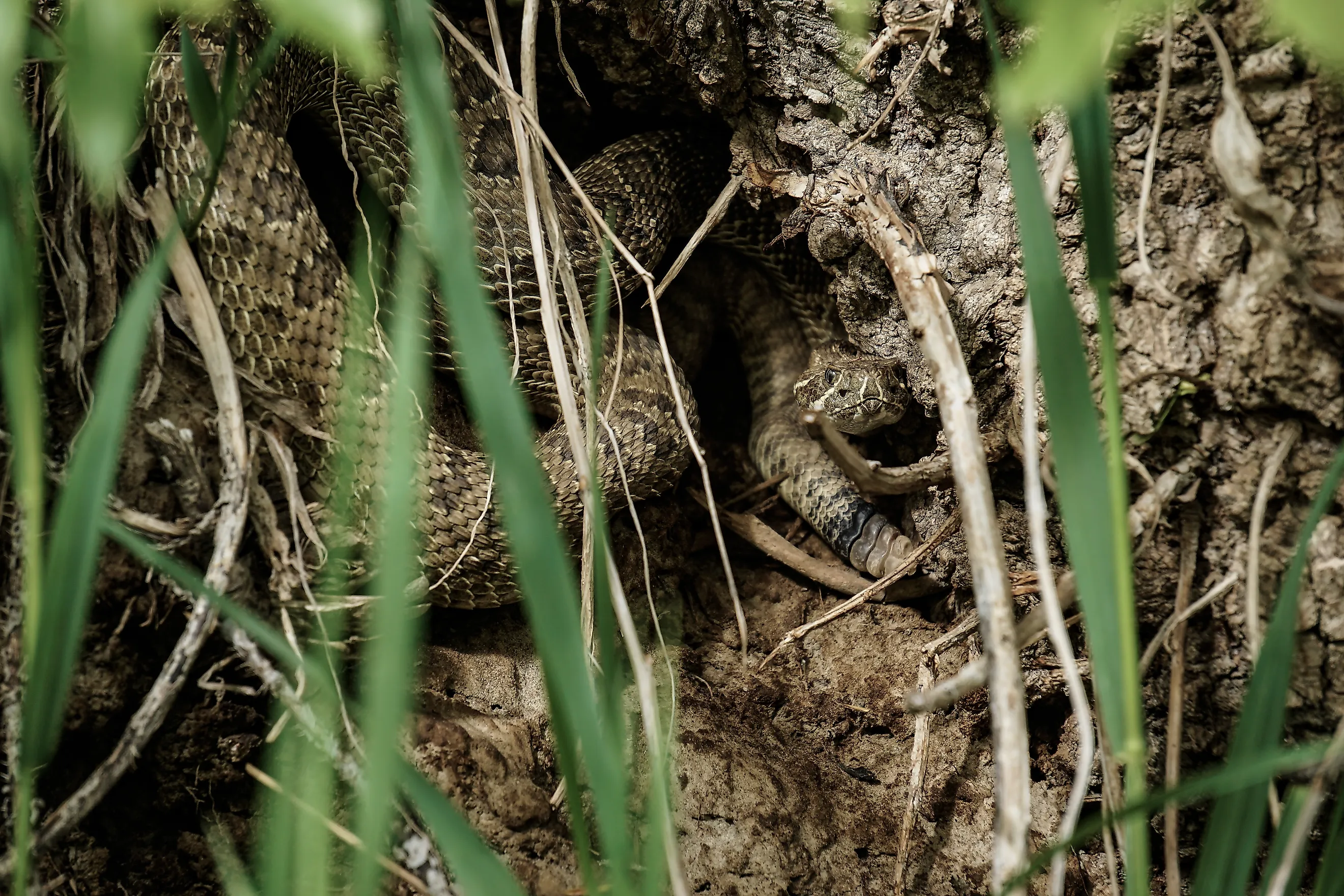
The honest answer spans three orders of magnitude. A rattlesnake den in the Deep South might hold one snake with no roommates at all; a timber rattlesnake den in the Northeast typically shelters a few dozen; and on the northern plains, prairie rattlesnake hibernacula have been documented holding hundreds of snakes in a single hole, with the largest historic dens credibly estimated at close to a thousand. The number is not random, and it is not sociability. It is real estate: a proper winter den, deep enough to beat the frost, is one of the rarest commodities in a rattlesnake's world, and how many snakes pile into one depends almost entirely on how scarce the housing is outside.
Why Rattlesnakes Winter Together

A rattlesnake cannot survive freezing, cannot dig its own refuge, and cannot generate meaningful body heat, which leaves it one option each autumn: find a cavity that reaches below the frost line and stays there until spring. The specifications are strict, a crevice or burrow system descending anywhere from a few feet to 30 or more, with stable cool temperatures, enough humidity to prevent fatal drying, and a sun-warmed entrance for the shoulder seasons. Fractured south-facing rock and deep mammal burrows deliver that package, and in most landscapes, such sites are few and far apart.
Scarce housing makes communal housing. Every qualified den in a region accumulates the rattlesnakes whose summer ranges surround it, snakes converging each fall along traditional routes to the one address that works, and the aggregation itself pays small dividends, with coiled masses of snakes losing moisture more slowly than loners. The den is less a bedroom than a bank vault, and everyone in the valley keeps their winter in the same one.
The Numbers, Species By Species

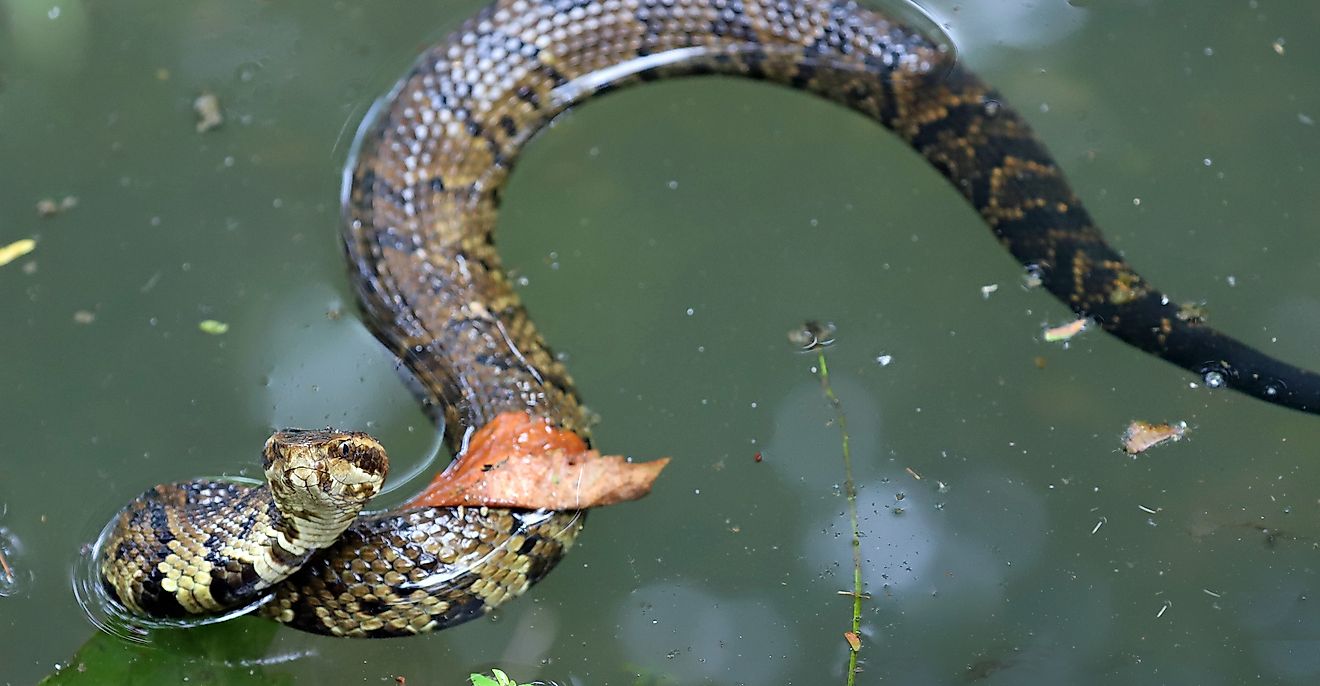
The count climbs as winters harden and dens grow scarcer. In the mild South, where frost barely penetrates, western diamondbacks and canebrakes may winter alone or in small groups of a handful, because almost any hole will do. In the Northeast and Appalachians, timber rattlesnake dens commonly run from a dozen to several dozen snakes, with the best ancestral dens historically holding over a hundred before two centuries of persecution thinned them.
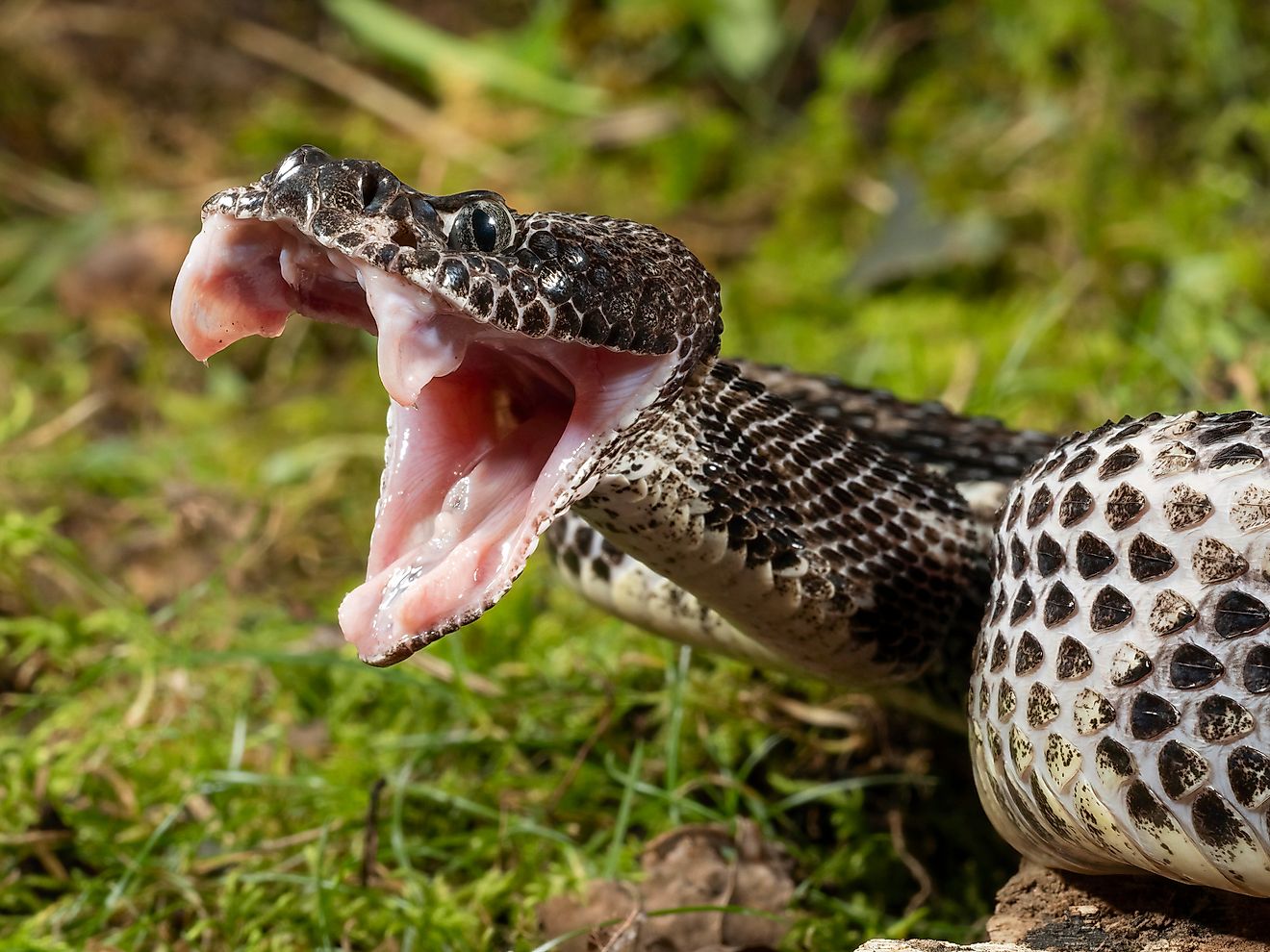
The champions live where winter is harshest and rock is rarest: the northern plains. Prairie rattlesnakes in the Dakotas, Montana, Wyoming, and the Canadian prairies funnel into deep crevice systems and abandoned burrow complexes by the hundreds, the largest documented hibernacula running into many hundreds of snakes, and a single destroyed den there can erase the rattlesnakes of an entire township in one winter. The rule across the map is simple: the fewer the doors, the longer the guest list behind each one.
The Mixed-Species Apartment Building

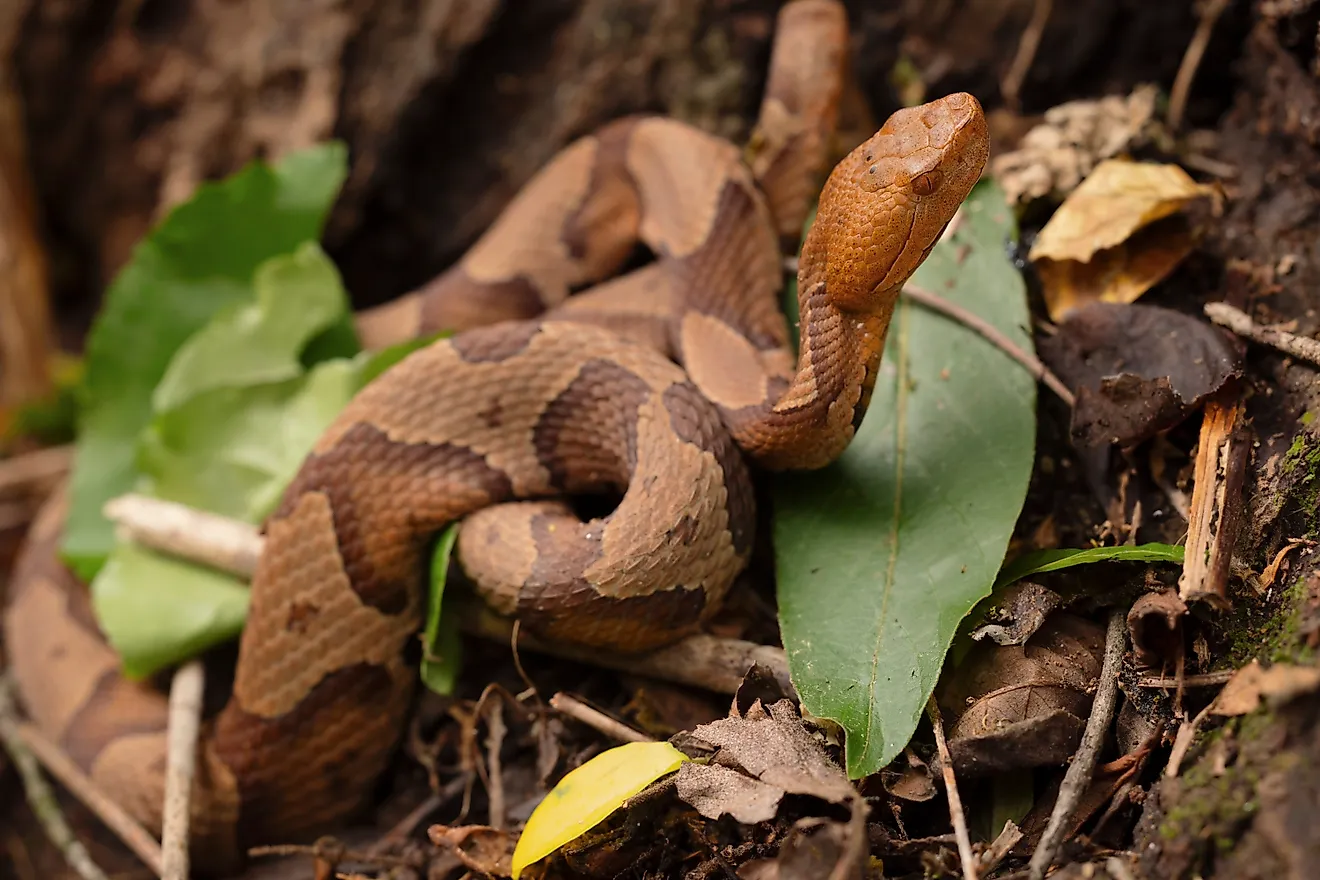
A rattlesnake den's census rarely stops at rattlesnakes. Because good hibernacula are scarce for every reptile in the neighborhood, the same crevice system routinely shelters copperheads, which share denning habits and often denning addresses with their larger cousins, along with bullsnakes, racers, garter snakes, and sometimes skinks and salamanders deeper in the cracks. Herpetologists checking a single plains den entrance in April can log a half-dozen species filing out of one hole over a few warm days.
The arrangement is a truce written by thermodynamics. Predator and prey species coil in the same chambers all winter because nobody is eating at 45 degrees, metabolisms idled too low for hostilities, and the shared den dissolves back into ordinary food-web politics only after everyone has warmed up and dispersed. Winter makes stranger bedfellows than anything else in herpetology.
How A Newborn Finds The Address

The den's population also persists because membership is inherited. Rattlesnakes are born in late summer with no map and a hard deadline, and they solve it with chemistry: newborns follow the scent trails of adult snakes, often their own mother's, along the traditional routes back to the communal den, arriving at an address they have never seen weeks after birth. Once a snake winters in a den, it typically returns to that same den every autumn of its life.
Generations of that loyalty make dens ancient. Researchers consider the great ancestral hibernacula to be very old institutions, used continuously for centuries, the same crack in the same ledge hosting an unbroken chain of winters, which is why a den is best understood not as shelter but as a lineage. The snakes come and go; the address holds the population's entire history.
The Spring Lobby
The den's busiest season is not the dead of winter but the weeks on either side. In spring, snakes emerge but linger, basking in loose crowds around the entrance for days or weeks while their bodies reboot, and at many dens the spring gathering doubles as the social season, with males trailing females right at the doorstep. Fall runs the film in reverse, the valley's snakes trickling home along the same routes. These shoulder-season crowds are when a den's true census shows itself, and when the snakes are most exposed.
That exposure wrote the dark chapter: commercial rattlesnake roundups and casual persecution historically targeted dens precisely because the whole population stood at one door, and gassing or digging out a single hibernaculum could end a region's rattlesnakes outright. Modern conservation inverts the logic, with biologists mapping and shielding den sites as the highest-value real estate in snake protection, since defending one crack in the rock defends every rattlesnake within miles.
One Door, Whole Population

So the answer runs the scale between a loner and nearly a thousand, set by frost depth and the local housing market, and even the biggest rattlesnake dens hold an asterisk: the all-species record belongs to the red-sided garter snakes of Narcisse, Manitoba, whose limestone sinkholes host gatherings in the tens of thousands, the largest concentration of snakes on Earth and a reminder of just how far communal denning can scale. For rattlesnakes, the practical takeaway fits in one line of winter arithmetic: a den is never one snake's home, it is everyone's, which makes the crack in the ledge the most important square foot in the county, in rattlesnake country most of all.