Pygmy Rattlesnake
Venomous snakes like the pygmy rattlesnake trigger a deep-seated fear in most humans. Coincidentally, humans trigger a similar fear in these diminutive rattlers, which would rather be left alone to ambush their prey, bask in the sun, and live their solitary lives in the southeastern United States. Recent research shows that the last thing these rattlesnakes want to do is bite anybody, and they will only do so when repeatedly provoked. In fact, they can more accurately be described as saving human lives than threatening them, since a protein in their venom became the basis for a cardiovascular drug called Integrilin. They are also one of the few snake species with strong maternal instincts, the mother staying with her newborns after birth to give her young a safe and protected start in life.
Taxonomic Classification

The pygmy rattlesnake (Sistrurus miliarius) belongs to the class Reptilia, the order Squamata (scaled reptiles), the suborder Serpentes (snakes), the family Viperidae (vipers), and the subfamily Crotalinae (pit vipers). Its genus Sistrurus includes the pygmy rattlesnakes and the massasauga rattlesnakes. The three recognized subspecies are the Carolina pygmy rattlesnake (Sistrurus miliarius miliarius), the dusky pygmy rattlesnake (Sistrurus miliarius barbouri), and the western pygmy rattlesnake (Sistrurus miliarius streckeri). The name miliarius is derived from Latin and means millet, perhaps referring to its blotched patterns.
Range And Habitat

The Carolina pygmy rattlesnake ranges from southeastern North Carolina through the coastal plains of South Carolina, central Georgia, Alabama, and into eastern Mississippi. It prefers drier microhabitats than its dusky pygmy cousins, frequenting longleaf pine sandhills, scrub oak forests, dry pine flatwoods, sandy ridges, and hardwood forests. The dusky pygmy rattlesnake is widely distributed throughout peninsular Florida, extending into southern Georgia, southern Alabama, and southeastern Mississippi. It keeps to wetter environments like swamps, wet prairies, freshwater marshes, lakes, floodplains, ponds, and ditches. The western pygmy rattlesnake ranges across Louisiana, Mississippi, Arkansas, and lower western Alabama. It also turns up to a lesser extent in eastern Texas and Oklahoma, and as far north as southern Missouri and southwestern Tennessee. It prefers rocky habitat and cedar thickets, along with second-growth forests near rock ledges, south-facing rocky glades, floodplains, and the edges of lakes and swamps. Across all three subspecies, pygmy rattlesnakes rely on dense cover to ambush prey and avoid detection, and they often shelter under brush piles, logs, rocks, leaf litter, and abandoned animal burrows. Several other venomous snakes share this southeastern range.
Food

As carnivorous generalists, pygmy rattlesnakes eat a broad range of prey and tend to target smaller victims to match their diminutive size. Amphibians like frogs and toads make up the largest part of their diet, though they will also pursue reptiles like small lizards, mostly anoles and skinks, and smaller snakes like ringnecks, garters, and earth snakes. Unlike larger pit vipers, pygmy rattlesnakes regularly eat large arthropods like giant centipedes, large spiders, crickets, and katydids. Small mammals like mice, voles, shrews, and moles, along with the occasional bird, are taken when an easy opportunity arises. As ambush predators, pygmy rattlesnakes will sit and wait under cover for days until prey wanders into striking range, though some have been recorded actively stalking prey, mostly frogs, by following scent trails. Juvenile pygmy rattlesnakes rely heavily on caudal luring. They have bright yellow tips on their tails that they wiggle to mimic an insect or worm, drawing frogs or lizards into range. The tail darkens as they mature, however, and this kind of hunting becomes ineffective.
Physical Description

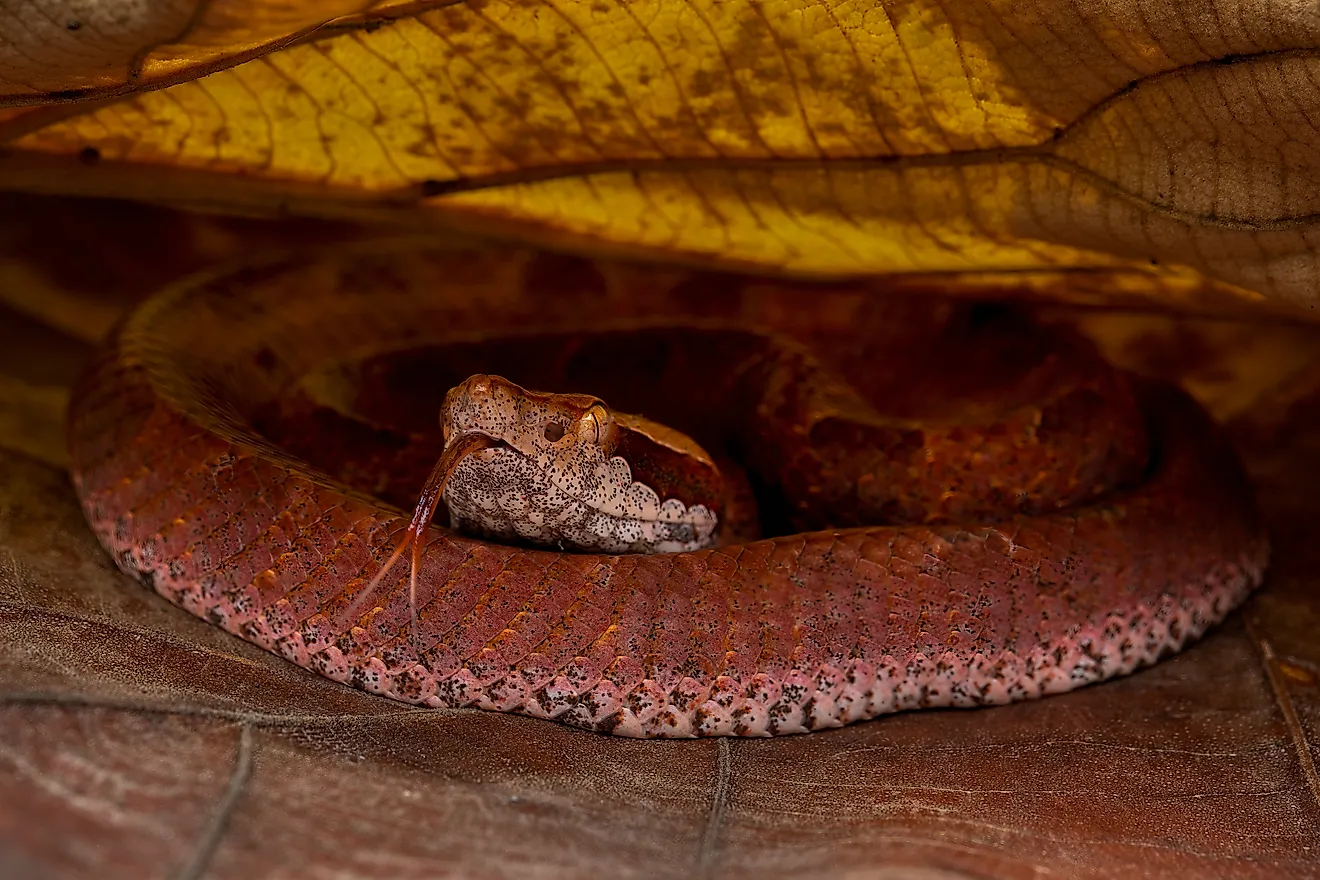
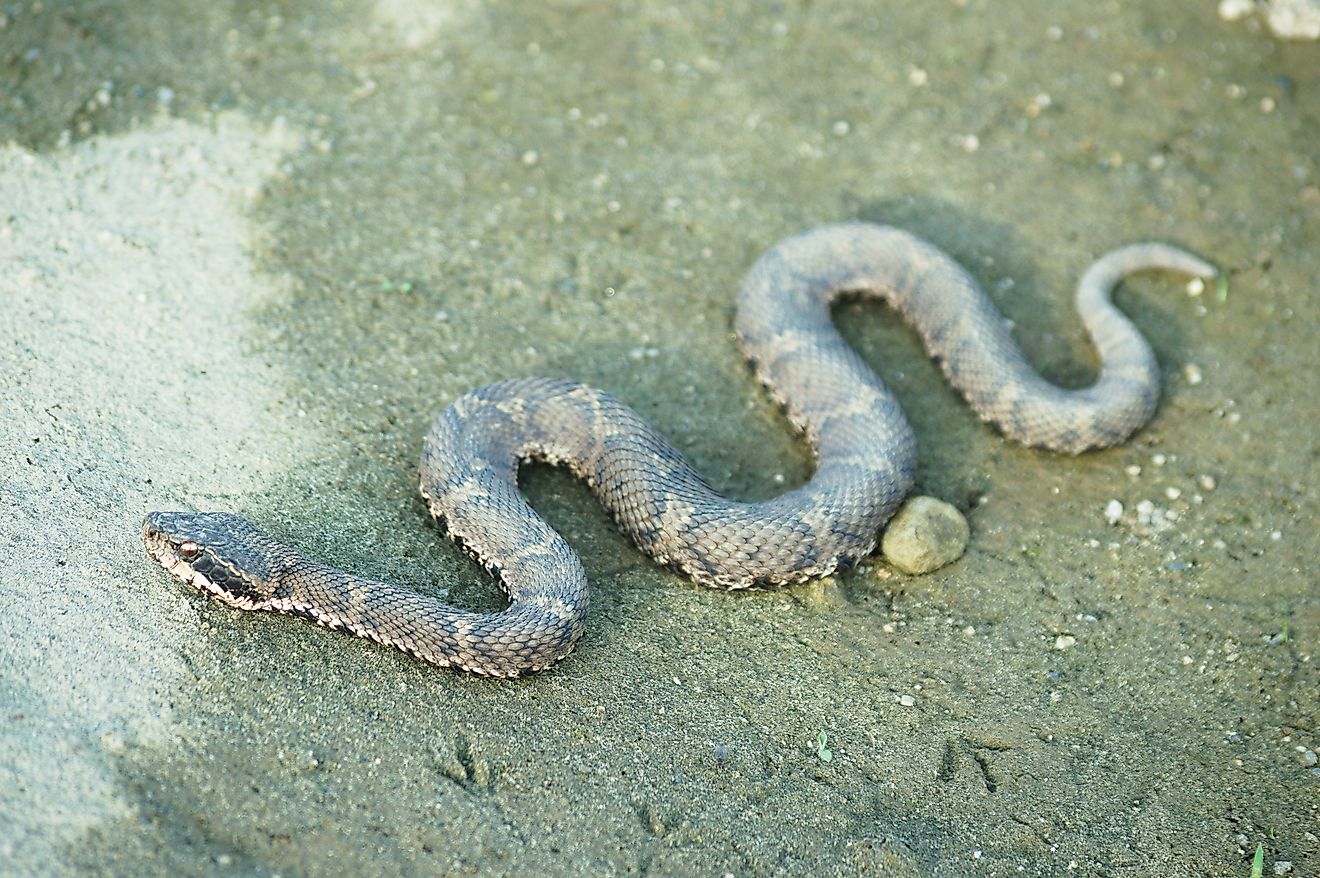
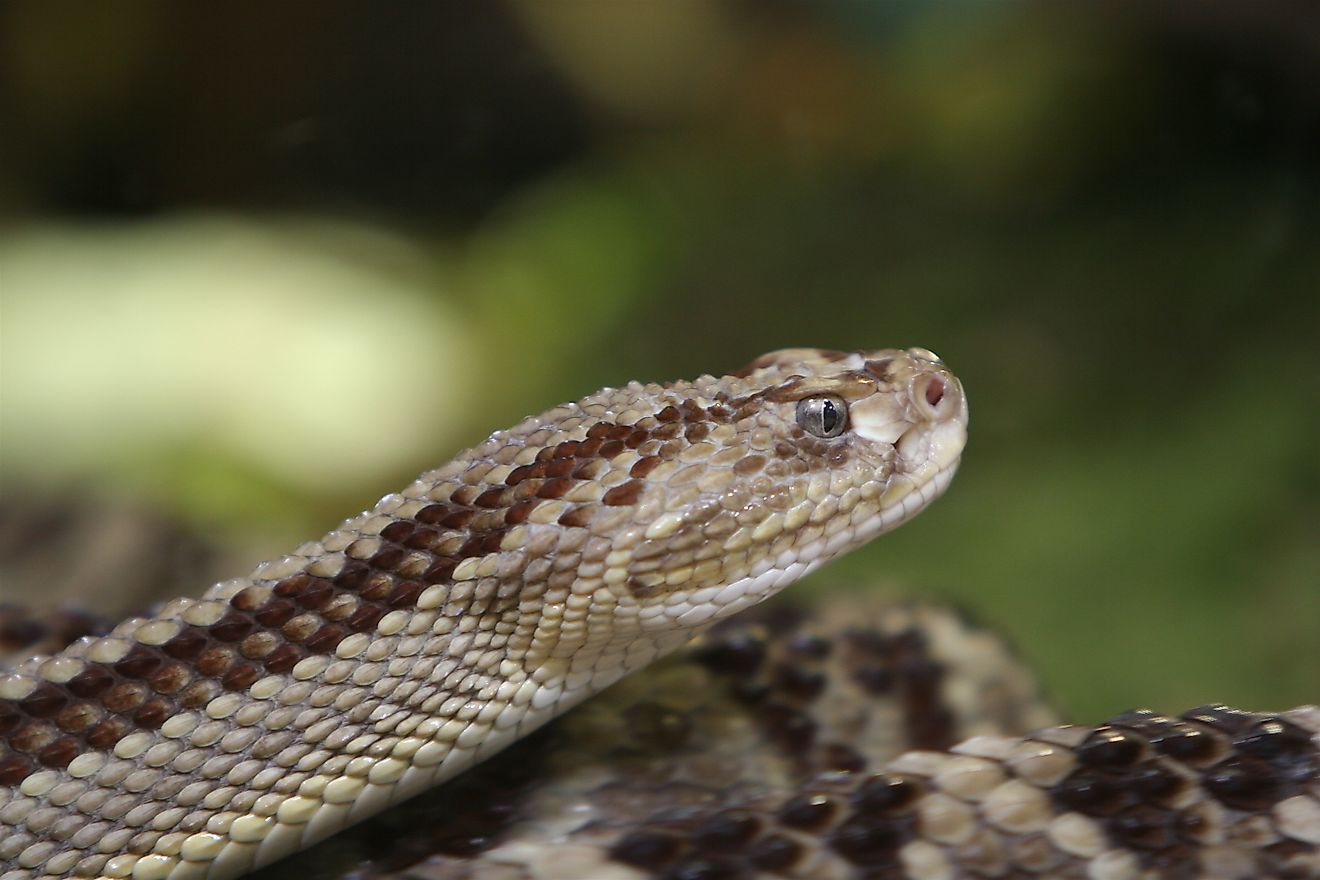
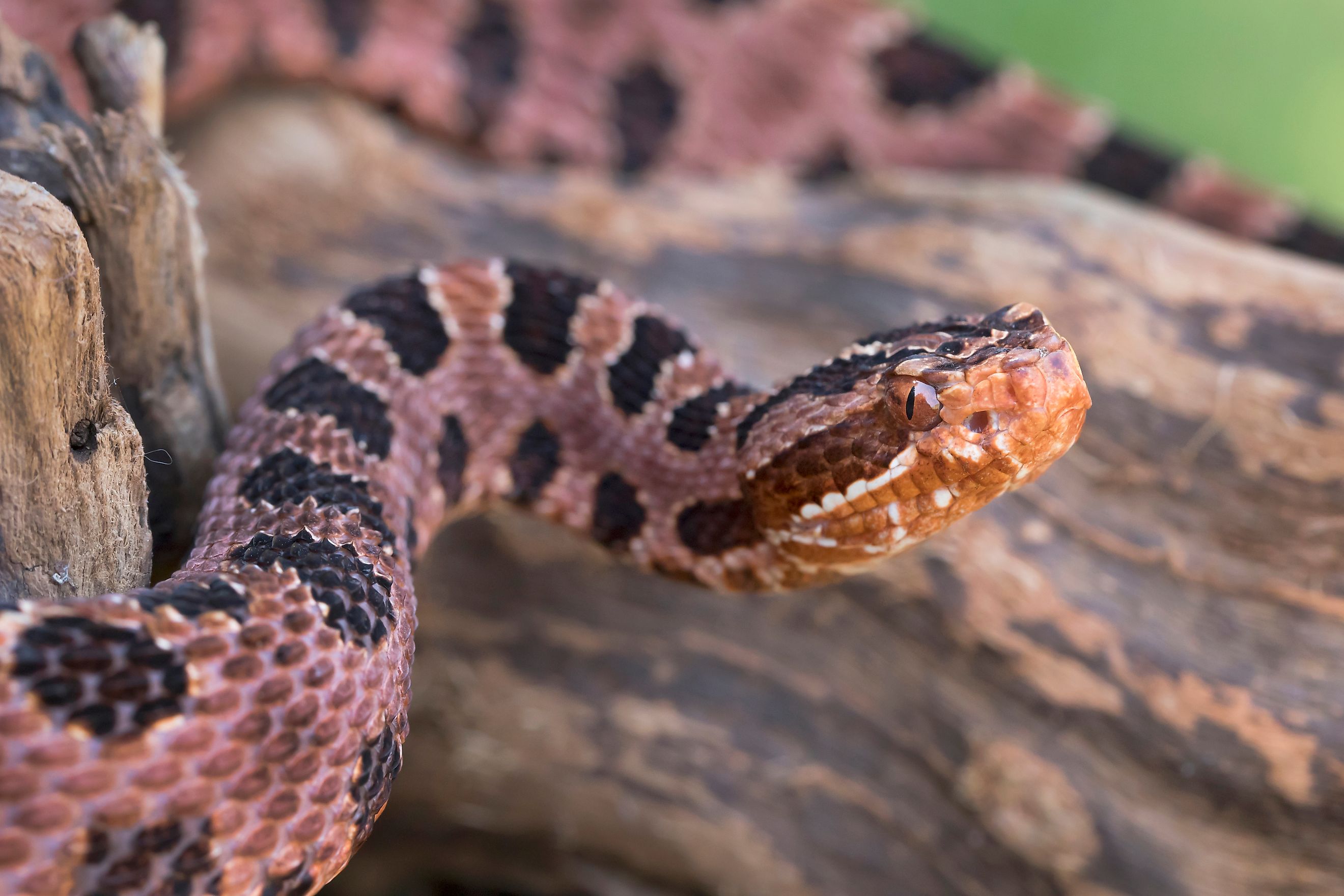
As their name suggests, pygmy rattlesnakes are exceptionally small compared to other family members. Adults measure 15 to 24 inches in total length and rarely exceed 30 inches. Their bodies are thick and strong and are covered in heavily keeled scales. They are usually light to dark gray, tan, or brownish-gray, and they carry dark brown or black blotches down their back and sides, often but not always accompanied by a thin, rusty reddish or orange stripe running along the middle of the spine. In areas like the Carolinas and parts of Georgia, some individuals show a brick-red, pinkish-orange, or lavender background color, while the dusky subspecies runs to a flatter bluish-gray or charcoal black. The head is distinctly pit viper, with a triangular shape and a dark line running horizontally through each eye. Like all pit vipers, they have vertical, elliptical pupils and highly sensitive, heat-detecting loreal pits between the eyes and nostrils. The crown of the head carries large, plate-like scales called scutes. The pygmy rattlesnake's rattle is far less iconic than those of larger species. It is small, produces a faint clicking or buzzing closer to an insect than a warning, and can only be heard from a few feet away. Their lifespan is difficult to document in the wild because of high juvenile mortality from predators, but individuals that survive to adulthood live between seven and 15 years.
Behavior

Pygmy rattlesnakes are extremely sedentary, solitary, and shy animals that spend around 90 percent of their time completely motionless. Rather than relying on speed and aggression to survive, they rely on camouflage and opportunity. When approached by humans or larger animals, their first instinct is to lie perfectly still and flat, as flush to the ground as possible. If cornered or almost stepped on, they will coil, wave their tails, and jerk their heads back as a warning. Striking is the last thing they want to do. Scientific field studies show that pygmy rattlesnakes are generally non-aggressive, and that even when provoked or tapped on the snout, most will remain coiled or try to slip away rather than bite. Striking is a last resort reserved for when they are actively harassed, stepped on, or pinned.
Reproduction
The mating behavior of pygmy rattlesnakes sets them apart from almost all other snakes, combining a complex mating system, unusual physiological adaptations, and a surprising level of maternal care. While most pit vipers breed only once a year, pygmy rattlesnakes use a split mating system with two distinct breeding windows. They mate in the autumn, usually late August through October, and again in the spring, usually March through May. Regardless of when they mate, fertilization is delayed, with ovulation and fertilization always happening in late spring. Females that copulate in autumn can store sperm inside their reproductive tracts through winter hibernation and then release it to fertilize their eggs when ambient temperatures rise. Courtship is also more involved than in most other snakes. When a male detects a female's pheromone trail, he tracks her and stays with her for a prolonged period. If two males cross paths while following the same female, they engage in combat to establish dominance. It is not a fight to the death, however, and the rules of engagement are non-venomous and non-lethal. The match is purely a test of stamina, size, and strength, and the goal is to use weight and leverage to push the other snake's head down to the ground. Neither snake is injured in the process, and the winner moves toward the female, aligns his body with hers, and rubs his chin along her back to court her while the loser slips off to find another mate. Pygmy rattlesnakes are ovoviviparous, meaning they do not lay eggs. Instead, the young develop inside the female's body for three to five months, a stretch when she significantly reduces hunting movements and spends most of her time basking to raise her body temperature. Sometime between July and September, females give birth to a litter of two to 14 live neonates, which emerge enclosed in a thin embryonic sac that they break out of immediately. While most reptiles abandon their young at birth, a female pygmy rattlesnake stays with her litter for seven to 10 days, protecting them until their first skin is shed. After that, the young are on their own to live their solitary lives.
Importance To The World

Despite their small size and feared reputation, the presence of a pygmy rattlesnake is a strong indicator of a healthy ecosystem. Because their diet spans a wide variety of prey and a large volume of food relative to their size, they act as a natural form of pest control. By keeping rodent populations in check, they indirectly protect human crops and reduce the spread of rodent-borne zoonotic diseases like hantavirus and leptospirosis, both of which humans can catch. As a mid-level link in the food web, they consume large numbers of frogs, lizards, and insects while serving as a food source for predators like hawks, eagles, owls, kingsnakes, and opossums. The venom of pygmy rattlesnakes is a complex cocktail of proteins and peptides that, once isolated and studied, can point the way to life-saving pharmaceuticals. The most famous medical contribution traced to the pygmy rattlesnake is the cardiovascular drug Integrilin (eptifibatide), a synthetic peptide modeled on barbourin, a protein in the venom of the dusky pygmy rattlesnake. It prevents blood clots and is used worldwide to treat patients having heart attacks and undergoing angioplasty.
Threats
Pygmy rattlesnakes are currently under pressure from two escalating health crises. The first is snake fungal disease, caused by the fungal pathogen Ophidiomyces ophiodiicola. This highly contagious disease hits pygmy rattlesnakes especially hard, causing severe facial deformities, skin lesions, emaciation, and disrupted reproductive cycles. They are also vulnerable to an invasive snake lungworm introduced to the southeastern United States by Burmese pythons. When a snake is co-infected with both the fungus and the parasite, mortality rates spike. Habitat destruction and fragmentation, road mortality, human persecution, and poaching for the pet trade also threaten the pygmy rattlesnake.
A Small Snake Worth Protecting
Misunderstood, feared, and persecuted, pygmy rattlesnakes have a great deal to offer humans. They indirectly protect agricultural crops by reducing rodent and insect populations, they cut down on harmful pathogens in the environment, and they even helped develop a life-saving cardiovascular drug. They also serve as bioindicators, since they are highly sensitive to changes in their habitat like pollution and shifting climate. As understanding of these animals has grown, conservation efforts have taken shape to protect them against disease, habitat loss, and persecution. One notable program is the Snake Lungworm Alliance and Monitoring (SLAM) project, which tracks the rapid spread of the invasive Raillietiella orientalis parasite across the southeastern United States. Public education and safe relocation programs are also being established to better understand and protect these vulnerable and valuable reptiles.