How Many Bald Eagles Live In The Lower 48 Now
An estimated 316,700, including roughly 71,467 nesting pairs. That is the US Fish and Wildlife Service number and it has not been superseded. The catch worth knowing before anyone quotes it as current: the figure comes from the agency's 2020 population update, built on aerial surveys flown in 2018 and 2019. No new nationwide count has replaced it. The honest answer is 316,700 as of 2019, still the official total as of 2026.
Three Hundred And Sixteen Thousand

The headline total is precise enough to carry a decimal of confidence it probably does not deserve.
The USFWS Bald Eagle Population Size Report put the lower 48 total at 316,708 birds, usually rounded to 316,700, with 71,467 nesting pairs. Some sources round the pairs down to 71,400.
That count covers the contiguous states only. Alaska, Canada and Mexico are excluded entirely.
It Quadrupled In A Decade

The comparison that made headlines is with the previous survey rather than with the historic low.
The 2009 estimate was 72,434 individuals and 30,548 nesting pairs. By 2019 that had become 316,700 individuals and 71,467 pairs.
Individuals roughly quadrupled. Pairs roughly doubled. Those are different multiples and the gap between them matters.
Part Of The Jump Was Method

This is the caveat most coverage left out, and it came from the researchers themselves.
For the 2020 report the agency collaborated with the Cornell Lab of Ornithology for the first time, augmenting its aerial surveys with a population model built from eBird data. Around 180,000 birdwatchers contributed sightings.
Cornell's own write-up says the service found many more eagles than previously thought to exist. Some of the apparent increase is better counting rather than new birds.
The Numbers Were Checked Against Other Data

The methodology change prompted an obvious question, which the agency addressed directly.
Brian Millsap, the USFWS national raptor coordinator, said the estimates line up with other survey data. The eBird modelling supplemented the aerial work rather than replacing it.
The nesting pair figure, which comes from counting occupied territories from the air, doubled rather than quadrupled. That is the more conservative half of the result.
Four Hundred And Seventeen Pairs In 1963

The low point is the number that gives the recovery its scale.
By 1963 only 417 known nesting pairs remained in the lower 48. Widespread DDT use after the mid-1940s had thinned eggshells to the point where breeding failed across most of the range.
From 417 pairs to 71,467 is a factor of roughly 171 across 56 years.
Protected, Then Downgraded, Then Delisted
The legal history tracks the population in three clear stages.
Bald eagles were listed as endangered in 43 of the lower 48 states from 1967 until 1995. In 1995 they were reclassified as threatened across all of the lower 48.
In 2007, with over 10,000 pairs counted, the species was delisted entirely. Known occupied nests have more than doubled again since that delisting.
Alaska Is Not In The Total

The lower 48 framing exists because Alaska would distort any national figure.
Alaska holds its own substantial population, with estimates around 30,000 birds, and the state never suffered the DDT collapse that hit the contiguous states. The Chilkat gatherings each November are the most visible example.
Canada's 2024 species account estimates roughly 110,000 breeding individuals, against a global breeding population near 200,000.
Minnesota, Florida And Wisconsin Lead

Within the contiguous states the birds are not distributed evenly.
Minnesota, Florida and Wisconsin typically report the highest concentrations of nesting pairs. Those states supply the combination eagles need: large waterways and mature forest canopy near them.
Florida held over a thousand pairs through the DDT era while populations elsewhere collapsed, which made it a reservoir for the later recovery.
They Need Water And Big Trees

The habitat requirement explains the geography of the recovery.
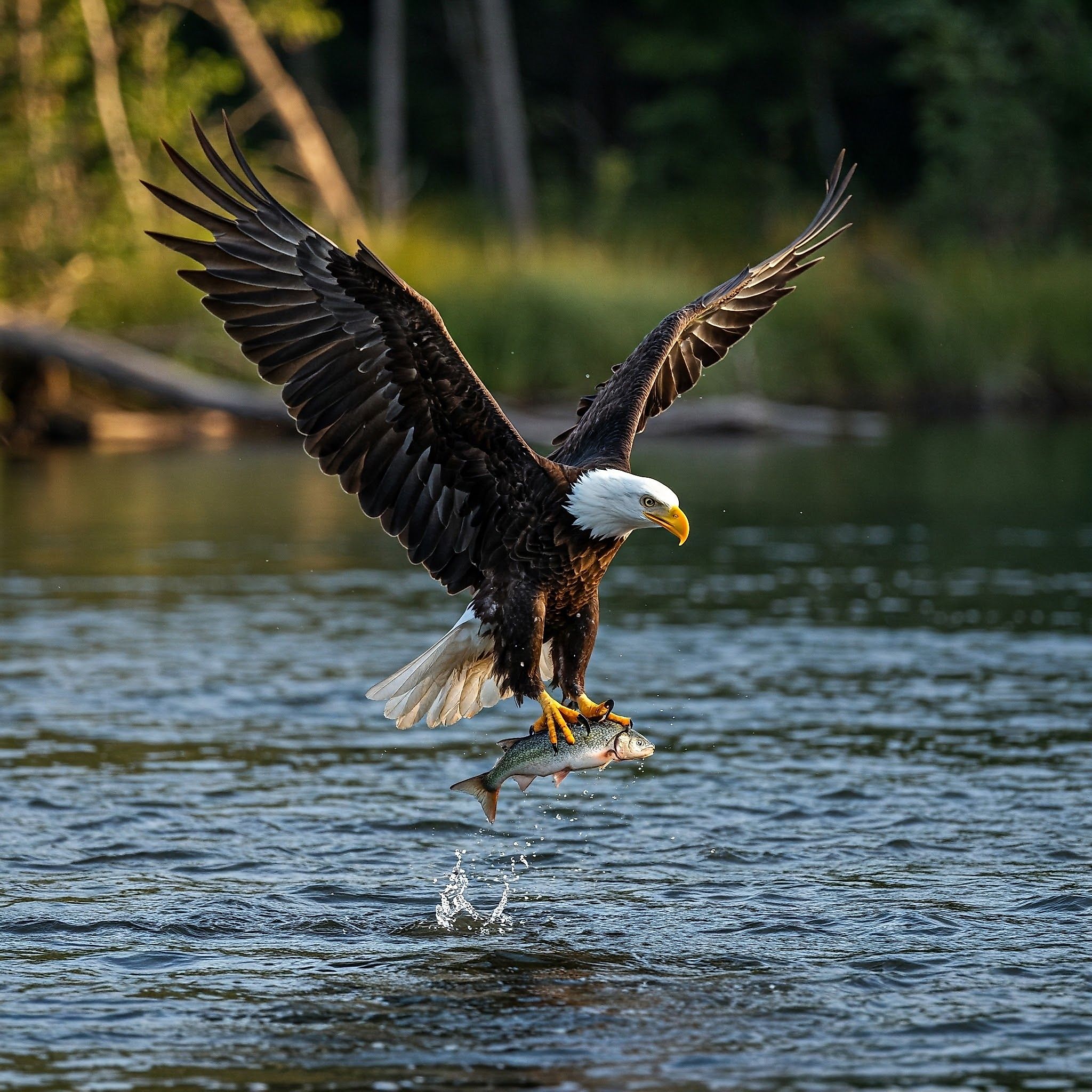
Nesting requires mature trees tall enough to carry a nest that can weigh a ton, positioned near open water with a reliable fish supply. Habitat protection around known nests was one of the three measures credited with the rebound.
The others were legal protection and captive breeding. All three ran alongside the DDT ban rather than after it.
The Data Is Now Seven Years Old

Anyone writing the word now in a headline about this should know what they are standing on.
The surveys were flown in 2018 and 2019 and published in 2020. No new nationwide population survey has superseded that update, which means the true current figure is unknown.
Given the trajectory from 2009 to 2019, the real 2026 number is plausibly higher. Nobody has published it.
Success Brings Its Own Problems

A recovered population creates management questions a scarce one never had.
The agency maintains a regulatory framework for sustainable take, assessing how many eagles can be lost to permitted activities without harming the population. Understanding the status of both bald and golden eagles is the biological basis for that framework.
Delisting removed Endangered Species Act protection but not the Bald and Golden Eagle Protection Act, which still applies.
The Short Answer

About 316,700 bald eagles in the lower 48, including 71,467 nesting pairs, which is the current official federal estimate. It represents a roughly fourfold rise in individuals and a doubling of pairs since 2009, and a rise from 417 pairs at the 1963 low.
Two qualifications belong with the number. Some of the decade's apparent increase came from adding eBird modelling to the aerial surveys rather than from new birds. And the figure rests on 2018 and 2019 fieldwork, so the genuinely current total has not been measured.