The Eastern States Where Elk Have Come Back
The last eastern elk was shot in Pennsylvania on 1 September 1877. The subspecies was gone, and that should have been the end of it.
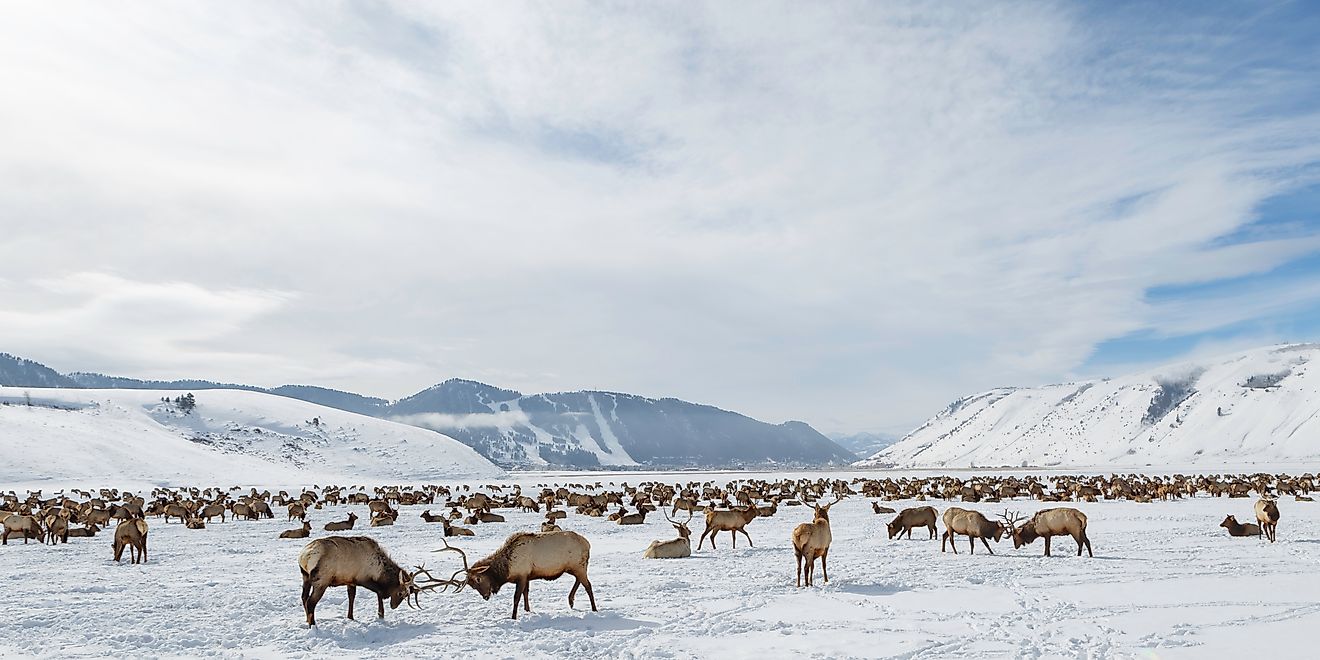
Six eastern states now hold roughly 17,000 elk between them. None of them are the original animal, every herd was carried in by truck, and the largest of them lives on land that was strip-mined for coal and replanted with grass.
What Was Lost, And When

Elk once ranged across the eastern woodlands as far as the Mississippi, and they went out state by state as settlement advanced. Tennessee lost its last elk around 1865, Pennsylvania in the late 1860s, West Virginia and Wisconsin in 1875, Kentucky by about 1880.
The cause was not mysterious. Unregulated hunting, forest clearance for farms, and industrialisation removed both the animal and the habitat within a few decades of each other.
Every elk in the east today descends from Rocky Mountain elk brought in from the west, which makes these restorations rather than resurrections. The eastern subspecies is not coming back.
Pennsylvania Started In 1913

The first attempt came remarkably early. Yellowstone had more elk than it wanted, the newly formed Pennsylvania Game Commission took the park up on its offer, and animals were shipped east beginning in 1913, with further releases through 1926.
Not every release held. A core group persisted in the north-central part of the state, and from that remnant Pennsylvania now has around 1,350 to 1,400 elk across 14 management units, ranging over roughly 3,000 square miles.

Benezette, in Elk County, has become the centre of it, with autumn rut viewing drawing serious crowds to a village of a few hundred people.
Kentucky Did It Properly

The Kentucky programme is the one everybody else copied. Between December 1997 and 2002 the state moved more than 1,500 elk in from Arizona, Kansas, New Mexico, Oregon and Utah, releasing them into a sixteen-county elk zone across the eastern coalfields.
The herd is now around 13,000 animals spread over roughly 4.1 million acres, which makes it the largest elk population east of the Mississippi by an enormous margin, bigger than every other eastern herd combined.

The land is the reason it worked. Reclaimed surface mines had been stripped and replanted in grasses, producing exactly the open grazing habitat elk want and the forested east otherwise lacks. A landscape widely considered ruined turned out to be ideal.
Kentucky hunters now take more than 300 elk a year, and the state has become a source herd, supplying animals to Virginia, Wisconsin and Missouri.
Tennessee, 2000

Tennessee began releasing elk in 2000 onto the North Cumberland Wildlife Management Area, a 200,000-acre block on the plateau, eventually putting out around 200 animals.
The herd now runs somewhere between 400 and 600 depending on whose survey you take, spread across five counties in the state's restoration zone. Hatfield Knob has a viewing tower that has become the reliable place to see them.
The timing was no accident. Tennessee and Kentucky share the same plateau and the same mining history, and the Tennessee releases came three years after Kentucky's began, using the lessons from next door.
North Carolina Put Them In A National Park

In 2001 the National Park Service released 25 elk into the Cataloochee Valley on the North Carolina side of Great Smoky Mountains National Park, followed by 27 more the next year. Fifty-two animals total.
The herd has grown past 250 and spread beyond Cataloochee into the Oconaluftee area near Cherokee, where elk now graze in front of the visitor centre and stop traffic daily.

This is the one most visitors encounter, because the park takes around 12 million visitors a year and the elk have learned that the meadows beside the road are perfectly safe. It is also the restoration with the most friction, since an animal that weighs half a ton and ignores cars creates problems a hunting-managed herd does not.
Virginia, 2012

Virginia's herd started arriving on its own. Kentucky elk began crossing the border into the southwestern coalfields in the late 1990s, and the state formalised matters in 2012 by releasing 71 animals into Buchanan County.
The population is now over 250, concentrated in a three-county restoration zone in the far southwest corner, on the same reclaimed mining ground that made Kentucky work.
Virginia had tried once before, in 1919, releasing an unrecorded number of elk into several counties. That attempt failed completely, which is worth remembering when the modern successes start looking inevitable.
West Virginia Was Last

On 19 December 2016, 24 elk were released onto the newly created Tomblin Wildlife Management Area in Logan County. They were the first wild elk in West Virginia since 1875, ending a 141-year absence.
A second group arrived from Arizona in 2018. The herd sits at around 100 animals, which makes it the smallest of the six and the one with the most room to grow.

The framing at the time was economic as much as ecological. The state pitched elk as a reason for people to visit southern coal country, which is the same calculation Kentucky made twenty years earlier and the reason both herds sit where the mines used to be.
What The Comeback Actually Rests On

Three things recur across all six. The habitat is usually reclaimed industrial land, because grassland is scarce in the Appalachians and surface mining accidentally manufactured a great deal of it. The funding came substantially from hunting organisations rather than general conservation budgets, with the Rocky Mountain Elk Foundation helping protect more than 87,000 acres of eastern elk habitat.
And the motivation was frequently recreational rather than ecological. Kentucky's restoration was pushed by advocates who wanted a huntable herd, not a restored ecosystem, and it succeeded beyond anything a purely ecological case would have funded.
The result is around 17,000 elk standing in six states that had none within living memory, more than half of them in Kentucky. It is one of the largest wildlife restorations in American history, and it happened mostly on ground everybody had written off.