How Far South Wolverines Live In The United States
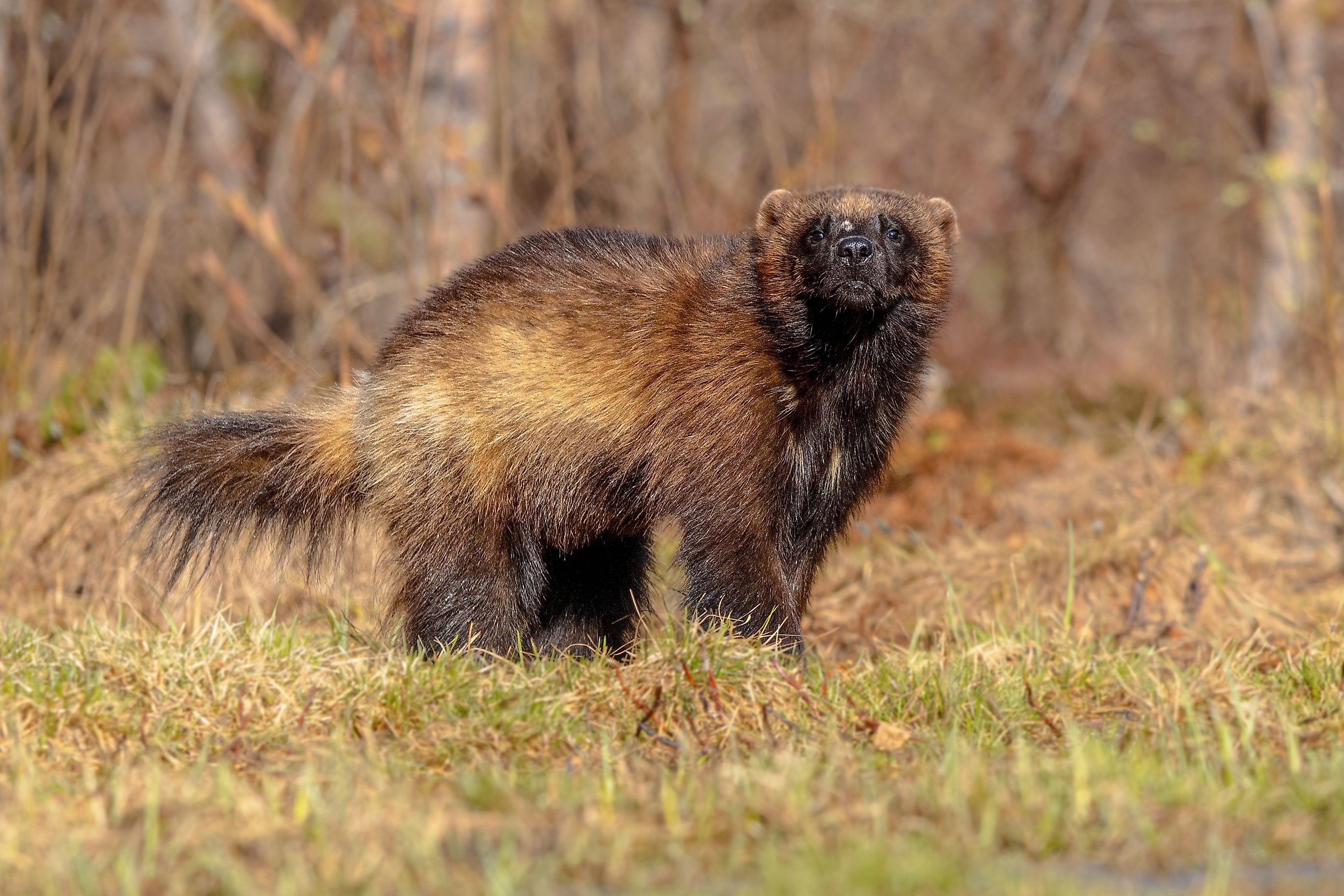
The wolverine (Gulo gulo) is the largest land-dwelling member of the weasel family, built like a small bear on a weasel's frame. For most animals, the question of how far south they can live comes down to heat, food, or cover. For the wolverine, it comes down to snow. Females dig their birthing dens in deep snow that lingers into late spring, and the animals have poor tolerance for summer heat. That is why the southern edge of wolverine country in the United States is not a straight line, but instead follows the cold, high mountains.
The Current Southern Limit

Today, breeding wolverines in the contiguous United States occupy a narrow band of the northern mountains. Recent records are limited to north-central Washington, northern and central Idaho, western Montana, and northwestern Wyoming. The realistic southern edge of that occupied range is the Greater Yellowstone region of northwestern Wyoming. Below it, the animals thin out to nothing.
The true population size in the contiguous United States is unknown, but the best available estimates suggest it is relatively small, on the order of around 300 animals in the western United States. Those wolverines are spread thinly because each one needs a lot of ground. Wolverine home ranges in the Greater Yellowstone Ecosystem averaged about 117 square miles for females and 308 square miles for males, and both sexes traveled more than the circumference of their home range each week. A few hundred animals ranging over territory that large do not fill in a map. They hold a thin northern tier and send occasional wanderers south.
How Far South They Used to Reach

Wolverine range in the contiguous United States contracted substantially by the mid-1900s, and historical records from 1827 to 1960 were located primarily in the western mountains and the Great Lakes region. In the West, the animals once pushed much farther south than Yellowstone. Historical records generally occurred in or near alpine conditions, especially at the southern limits of the species in the Cascade Range, the Sierra Nevada, and the southern Rocky Mountains.
The Sierra Nevada supported wolverines well into the twentieth century, and the southern Rocky Mountains carried them down into Colorado and toward northern New Mexico. A museum record captures the older, broader picture. The wolverine was once found in nearly all of the Rocky Mountain states and as far east as New England, and its numbers and distribution have declined since the late 1800s because of human settlement and activity. The causes of extirpation from the southern portions of the range are not fully known but are likely tied to high levels of human-caused mortality combined with very low immigration from the north.
By the early twentieth century, the southern populations were gone. Wolverines were greatly reduced and possibly extirpated from the contiguous United States by the early 1900s, and they are now absent from Utah, with only single individuals known from California and Colorado. The matrilines unique to those southern animals were lost when the populations vanished, which is part of why natural recovery of the far southern range has been so slow.
The California Wanderers

California is the clearest case of how far a lone wolverine will travel and why that is not the same as a population. Wolverines once roamed the Sierra Nevada but disappeared from the state around 1922, likely because of hunting and fur trapping. For most of the next century there was nothing.
Then came two famous travelers. The first was an individual nicknamed Buddy. A single wolverine was documented in California from 2008 to 2018, first discovered in February 2008 in the Truckee region of the Tahoe National Forest. The second appeared in 2023. California wildlife officials confirmed multiple May 2023 sightings of what they believed was the same wolverine in the eastern Sierra Nevada, with two sightings in the Inyo National Forest in Inyo and Mono counties and a third in Yosemite National Park in Tuolumne County. Because only two wolverines had been confirmed in California in roughly a century, officials described the detections as exciting. Given that wolverines typically live only 12 to 13 years, the 2023 animal was almost certainly not Buddy.
Both animals are best understood as dispersers from the northern Rockies, not evidence of a resident southern population. A young wolverine can cover enormous distances looking for unclaimed territory, which is how one ends up in Yosemite with no mate and no neighbors for hundreds of miles.
Colorado and the Southern Rockies

The southern Rocky Mountains are where the southern range may actually return, through deliberate reintroduction rather than natural spread. The idea has a long official history. In 2013, federal regulators proposed establishing a reintroduced population in the region. The U.S. Fish and Wildlife Service proposed a nonessential experimental population of the North American wolverine in the southern Rocky Mountains of Colorado, northern New Mexico, and southern Wyoming.
Colorado has now moved to make that happen. Governor Jared Polis approved Senate Bill 24-171 on May 20, 2024, with the law taking effect on August 7, 2024. The act authorizes Colorado Parks and Wildlife to reintroduce the North American wolverine, but prohibits reintroduction while the species remains federally listed until a final rule designates a nonessential experimental population under federal law. If that process is completed, Colorado's high San Juan and Sawatch ranges could once again hold breeding wolverines, pushing the southern edge of the United States range back down toward the New Mexico border for the first time in roughly a century.
Why Snow, Not Latitude, Draws the Line

Climate largely determines the uneven southern boundary, and ongoing changes are gradually shifting it farther north. Federal protection in recent years rests on exactly this concern. On November 30, 2023, the U.S. Fish and Wildlife Service published a final rule listing the distinct population segment of the North American wolverine in the contiguous United States as a threatened species under the Endangered Species Act. The agency concluded that the contiguous U.S. population is threatened due primarily to the ongoing and increasing impacts of climate change and the associated degradation and fragmentation of habitat.
Climate models predict that by 2050 the spring snowpack needed for wolverine denning and hunting will be limited to portions of the southern Rocky Mountains, the Sierra Nevada, and the Greater Yellowstone region, of which only the last is considered likely to continue supporting the species. In other words, the very mountains that once marked the southern edge of the range are projected to become the least reliable, even as warming shrinks the snowpack everywhere.
The Bottom Line
The southern limit of the wolverine's range varies depending on whether you consider established breeding populations, the historical range, or occasional sightings. Wolverines currently breed only as far south as the Greater Yellowstone region in northwestern Wyoming. In the past, they lived as far south as the southern Sierra Nevada and the southern Colorado Rockies near New Mexico. On rare occasions, a lone wolverine still appears in places such as Yosemite or the eastern Sierra, far from any established population. Whether the breeding range moves south again will depend less on the animals themselves, since they travel easily, and more on how much high-country snow remains in the coming decades.