Payara
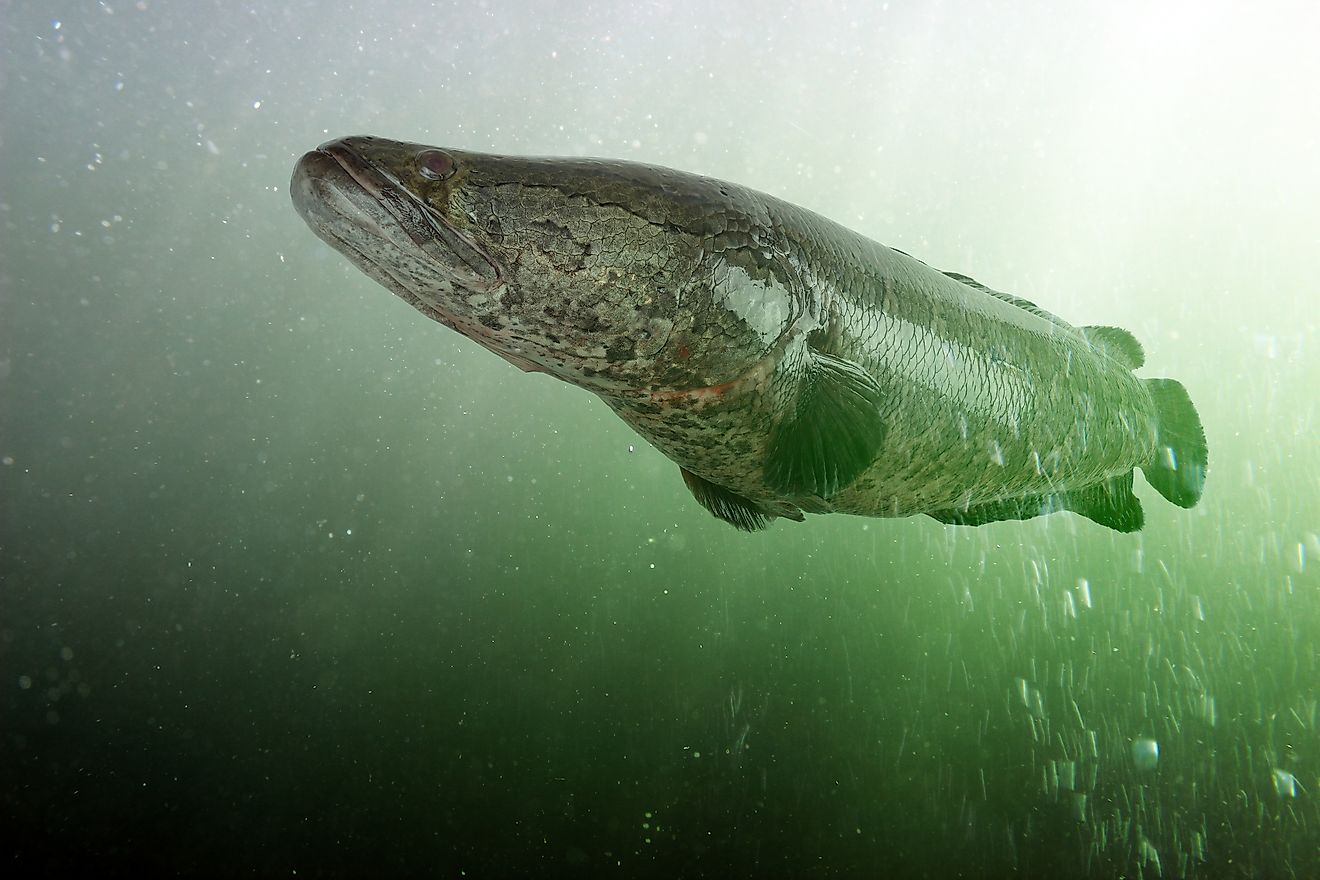
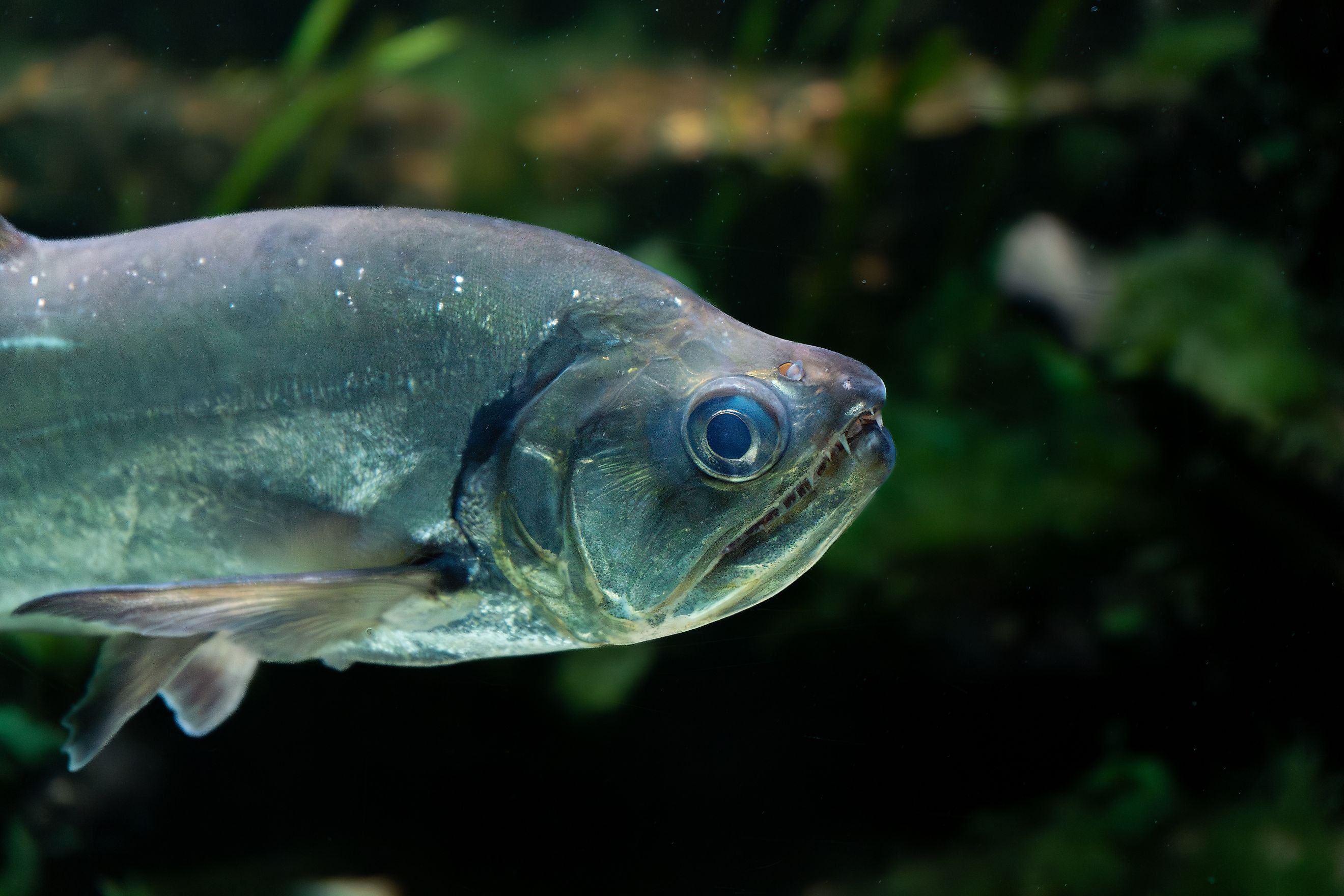
The payara is hard to mistake for any other freshwater fish. Its slender, silver body and two long fangs rising from the lower jaw have earned it names such as vampire fish, saber-tooth barracuda and dogtooth tetra. Those teeth are more than just an intimidating feature. When the fish closes its mouth, the fangs fit into sockets in the roof of its skull, allowing it to carry teeth that would otherwise extend beyond its closed jaws. This unusual adaptation helps make the payara one of the most distinctive predators in South America's rivers.
Known to science as Hydrolycus scomberoides, it patrols fast, oxygen-rich water across the Amazon and Orinoco drainages, chasing down smaller fish with bursts of speed and pinning them on its fangs. For all its fearsome reputation, it poses no real danger to people, and much of its life story remains poorly documented, which only deepens the mystique.
Taxonomic Classification

The payara belongs to the order Characiformes, the vast group of characins that also includes tetras, piranhas, and pacus. Within that order it sits in the family Cynodontidae, the dogtooth characins, and the genus Hydrolycus. The French naturalist Georges Cuvier described the species in 1819, making it the first of its genus to receive a formal scientific name. The genus name joins the Greek words for water and wolf, a fitting label for a swift aquatic hunter.
The genus Hydrolycus contains four recognized species, and the common name payara is applied loosely across several of them. Alongside H. scomberoides sit H. armatus, often called the giant payara, H. tatauaia, and H. wallacei, known as Wallace's payara. All four share the silvery body and oversized canine teeth that define the group. Telling them apart in the field is difficult, and size alone is an unreliable guide, which has led to decades of mixed-up records in sport fishing and the aquarium trade. Many of the giant measurements credited to the payara almost certainly belong to its larger cousin, the giant payara.
Like other characins, the payara is a distant relative of far smaller aquarium favorites such as the blind cave tetra, a reminder that this family spans harmless inch-long fish and meter-long predators alike.
Physical Description
A typical payara has an elongated, compressed body built for acceleration, clad in bright silver scales that flash in moving water. Most individuals of H. scomberoides reach a standard length of about 12 inches (30 cm), with larger specimens growing to roughly 20 inches (51 cm). Reports of fish measuring up to 46 inches (117 cm) and weighing nearly 40 pounds (17.8 kg) do appear in game-fishing records, but biologists believe those giants are almost always the related giant payara rather than the true payara.
The signature feature is, of course, the dentition. Two long fangs rise from the front of the lower jaw and grow enormous in proportion to the head, reaching several inches in large individuals. To keep from impaling its own skull, the fish is born with openings in the upper jaw that receive the fangs when the mouth shuts. The rest of the mouth is lined with smaller sharp teeth, and the whole jaw is set at an upward angle, well suited to striking prey from below.
Coloration is understated against that dramatic hardware. The body is overall silvery, usually marked with a dark spot just behind the gill cover and another at the base of the pectoral fin. In adults the tail tends to be dusky toward its base and clearer toward the tips. Large, pointed pectoral fins give the fish extra lift and control, and some observers credit them with helping the payara launch short bursts and leaps when hunting near the surface or fighting a line.
Range and Habitat

The payara is a creature of tropical South America, where it ranges through two of the continent's great river systems. Its core distribution covers the Amazon River basin along with the Orinoco River basin, and payara are also found in the coastal rivers of the Guianas. Taken together, the payara and its close relatives occur across several countries, including Brazil, Venezuela, Colombia, Peru, Ecuador, Bolivia, and Guyana.
Within those waters the payara favors fast, turbulent, well-oxygenated stretches rather than still backwaters. It gathers in rapids, in the churning plunge pools below waterfalls, and in swift main-channel current, where it waits to ambush fish swept along by the flow. Water temperatures across its habitat typically run between about 75 and 82 degrees Fahrenheit (24 to 28 degrees Celsius).
Diet and Hunting
The payara is a dedicated fish-eater, a piscivore that sits near the top of its local food web with an estimated trophic level around 4.5. Smaller fish make up the bulk of its diet, and the species is bold enough to take prey that amounts to a surprising fraction of its own length. Famously, it will attack and swallow the piranha, a reversal of roles that has helped cement its fearsome image.
The hunting method is direct. The payara uses bursts of speed to overtake prey, then drives its fangs into the target to hold it fast. For smaller fish the fangs act more like a cage than a blade, pinning the victim long enough for the predator to reposition and swallow it whole, usually head first. When a meal is too large to gulp down, the fish puts those teeth to their more brutal use and shears the prey into pieces. Powerful jaws and a muscular body make either approach quick and efficient.
Behavior and Reproduction

Payara are often encountered in loose groups rather than tight schools, patrolling the current together while still hunting as individuals. They are strong, restless swimmers suited to the heavy water they prefer, and in the aquarium trade they are notorious for their nervous energy, sometimes injuring themselves by bolting into tank walls when startled. In the wild, that same drive serves them well in rivers that never stop moving.
Much about the payara's private life remains poorly understood, and reproduction is the least documented part of its biology. Available accounts suggest that spawning coincides with the seasonal floods, running roughly between July and September, when rising water opens up new feeding and nursery grounds. During that window females are reported to release several thousand eggs. Beyond those broad strokes, details such as courtship, parental care, and age at maturity are largely unrecorded. Individuals are thought to live somewhere between six and twelve years.
Importance to the Ecosystem
As an agile mid-to-upper-level predator, the payara helps regulate populations of the smaller fish it hunts, a role that keeps river food webs in balance. By preying on abundant species and even on other predators, it forms part of the complex web of hunters that gives the Amazon and Orinoco their reputation for biological richness.
The payara has also earned a following among sport anglers, who prize the fish for its size, speed and striking fangs. Some travel long distances for the chance to catch one in South America's rivers. It is also eaten in parts of its range, making it a source of food as well as a popular game fish.
Conservation and Threats

The International Union for Conservation of Nature lists the payara as a species of Least Concern, an assessment completed in 2020. That standing reflects a wide distribution across major river basins and no evidence of a sharp, range-wide decline. The fish has not become established beyond its native waters, so it is not considered an invasive problem elsewhere.
A Least Concern listing is not a guarantee of a secure future. The rivers the payara depends on face mounting pressure from deforestation, dam construction, pollution, and overfishing, and species tied to fast, clean, flowing water are especially sensitive to the changes that dams bring. Because so little is known about the payara's reproduction and population dynamics, scientists have limited ability to detect trouble early. For now the species appears stable, yet its long-term outlook is bound tightly to the health of the great South American rivers it calls home.
Takeaway
The payara gets its nickname, the vampire fish, from its enormous fangs rather than any unusual feeding habits. This fast-moving predator hunts in the rapids and turbulent waters of South American rivers, using its long teeth to seize prey. Despite its fearsome appearance, it belongs to the characin family, which also includes tetras and piranhas. The species remains widespread, but scientists still know relatively little about its breeding habits and population numbers. Keeping its river habitat intact, particularly the fast-flowing, oxygen-rich waters it favors, will be important to its long-term survival.
Fun Facts
- Fangs with their own sockets. The payara is born with holes in its upper jaw so its long lower fangs have somewhere to go when it closes its mouth.
- It hunts the hunters. This predator readily attacks and eats piranhas, turning one of the Amazon's most feared fish into a meal.
- A name that means water wolf. The genus name Hydrolycus comes from the Greek words for water and wolf, matching its role as a fast aquatic predator.
- Mistaken identity in the record books. Many of the largest payara ever reported were probably the related giant payara, since the species are so hard to tell apart.
- Built for white water. Unlike many river fish, the payara seeks out rapids and the turbulent pools beneath waterfalls, thriving where the current runs hardest.
Quick Facts
- Common names: Payara, vampire fish, saber tooth barracuda, vampire tetra, dogtooth tetra
- Scientific name: Hydrolycus scomberoides
- Order: Characiformes
- Family: Cynodontidae (dogtooth characins)
- Genus: Hydrolycus
- IUCN status: Least Concern (assessed 2020)
- Typical length: About 12 inches (30 cm), up to roughly 20 inches (51 cm)
- Diet: Carnivorous piscivore, feeding on smaller fish, including piranhas
- Lifespan: Around 6 to 12 years
- Range: Amazon and Orinoco basins and rivers of the Guianas, South America
- Habitat: Fast, oxygen-rich tropical freshwater, including rapids and pools below waterfalls