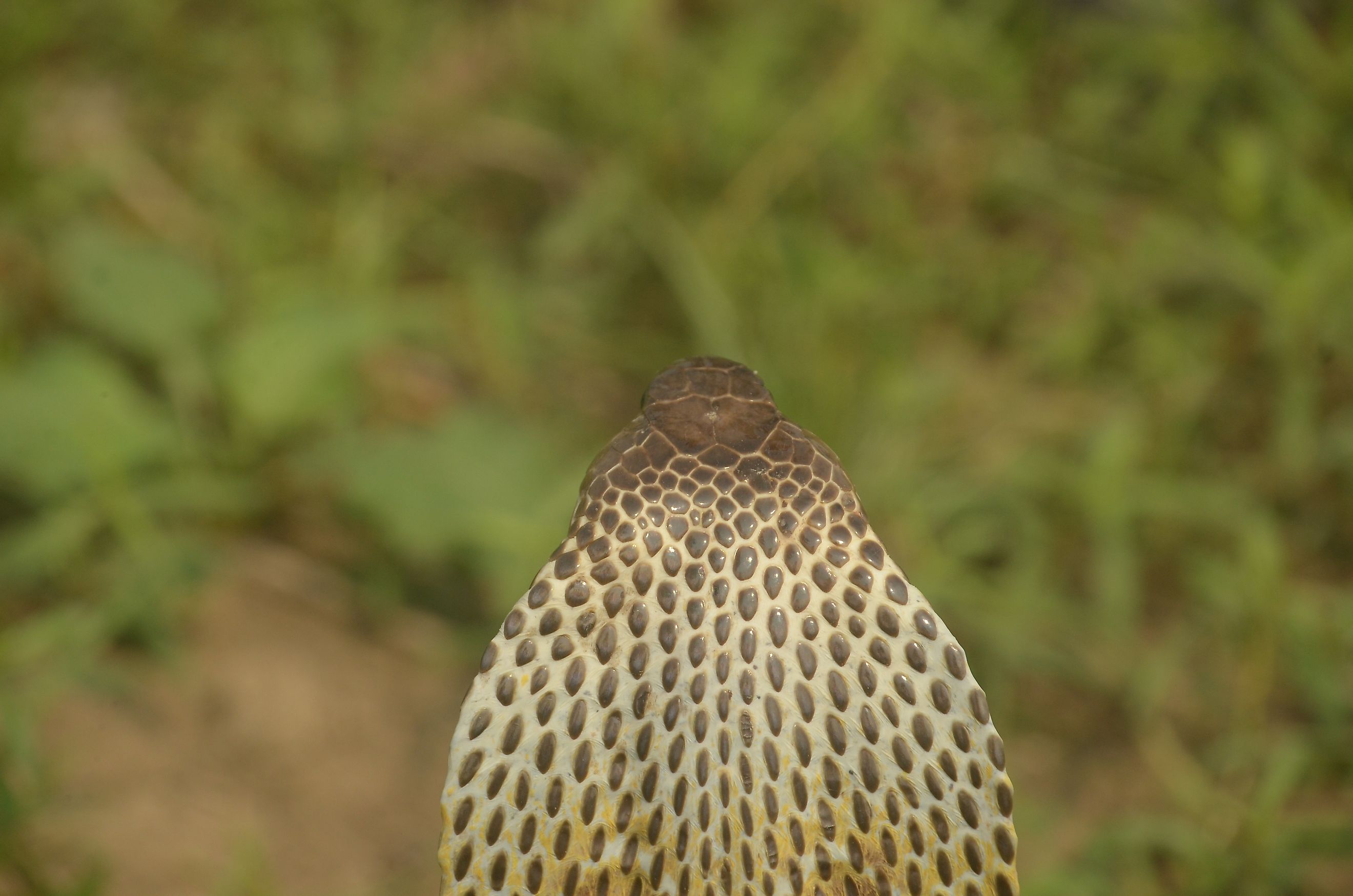
Philippine Cobra
The Philippine cobra ranks among the most dangerously venomous snakes in Asia, and it earns that reputation with a neurotoxic venom potent enough to stop a person's breathing within minutes. Known to scientists as Naja philippinensis, it is a stocky, brown, medium-sized snake that thrives in the rice fields and lowland country of the northern Philippines, often close to the farms and villages where people live and work.
What sets this cobra apart from many of its relatives is a rare double threat. It delivers a bite loaded with fast-acting neurotoxins, and it can also spray that venom from its fangs toward the face of an attacker, striking the eyes from a surprising distance. For the rice farmers who share its habitat, the Philippine cobra is both feared and respected, a familiar hazard of rural life.
Taxonomic Classification

The Philippine cobra belongs to the family Elapidae, the group of front-fanged venomous snakes that also includes mambas, kraits, sea snakes, and coral snakes. Within that family it sits in the genus Naja, the true cobras, and carries the species name philippinensis. American herpetologist Edward Harrison Taylor described the species in 1922.
The scientific name repays a moment of attention. The word Naja is a Latinized form of the Sanskrit word naga, meaning cobra, while philippinensis translates simply as "from the Philippine Islands." Local communities know the snake by several names, including ulupong in Tagalog, carasaen in Ilocano, and agawason in Cebuano-Bisaya.
For years the Philippine cobra was lumped together with other Asiatic cobras, and only careful study of anatomy and venom in the late twentieth century clarified how distinct it is. It should not be confused with its close relative the Samar cobra (Naja samarensis), which occupies the southern Philippines across the Visayas and Mindanao and is sometimes called the southern Philippine cobra. The two are separate species with separate ranges.
Physical Description
The Philippine cobra is a stocky snake of medium length. Adults average about 3.3 feet (1 m), and the largest individuals reach roughly 5.2 feet (1.6 m). Compared with the long, slender cobras of mainland Asia, this species looks thickset, with a heavy body and a broad, rounded head that is not sharply distinct from the neck.
Coloration is understated. Most individuals are a uniform light to medium brown, sometimes closer to grey-brown, with a paler whitish-beige belly. Unlike the spectacled cobras of India, the Philippine cobra has an unmarked hood and shows no bold eye pattern on the back. Young snakes tend to resemble adults in color.
The hood is the animal's signature feature. Like other cobras, it possesses long, movable cervical ribs in the neck. When the snake feels threatened, it raises the front third of its body off the ground and spreads these ribs, stretching the loose skin of the neck into the familiar broad hood. This display makes the snake look larger and warns intruders to keep their distance. The scales are smooth and slightly glossy, and the fangs are fixed and hollow at the front of the mouth, well suited to injecting venom quickly.
Range and Habitat
The Philippine cobra is endemic to the northern Philippines, which means it lives nowhere else on Earth. Its range covers the large island of Luzon along with several smaller islands, including Mindoro, Catanduanes, Masbate, Marinduque, and Lubang. This island-bound distribution makes the species especially sensitive to local pressures, since populations cannot easily be replenished from elsewhere.
Within these islands the cobra favors lowland country rather than high mountains. It occupies forested areas, open fields, grasslands, pastures, and the edges of human settlements. Rice paddies and their surrounding banks, canals, and grain stores are prime territory, because these places attract the rodents the snake hunts. That preference brings the Philippine cobra into frequent contact with people, and it explains why the species is one of the leading causes of snakebite in the region.
Diet
The Philippine cobra is a carnivore that feeds mainly on small warm-blooded prey. Rats and mice make up a large part of its diet, which is one reason it patrols farmland and the margins of villages so persistently. Beyond rodents it will take frogs, lizards, small birds, and even other snakes when the opportunity arises.
The snake hunts largely by moving through cover and seizing prey, then subduing it with a venomous bite. The same fast-acting neurotoxins that make the species dangerous to humans allow it to immobilize a rodent quickly, which reduces the risk of a struggling meal biting back. By preying heavily on rats, the Philippine cobra provides a natural check on rodents that would otherwise damage crops and stored grain.
Behavior
Activity in the Philippine cobra shifts with heat and light. In many areas it is most active around dusk and into the night, a crepuscular to nocturnal pattern that helps it avoid the hottest hours and coincides with the movements of its rodent prey. During the day it often shelters in burrows, holes, and dense vegetation.
When cornered, the snake is far from shy. It rears up, spreads its hood, and may track the movements of an approaching threat with its head, keeping the intruder in view before it strikes or spits. This alert, defensive posture, combined with a willingness to stand its ground, contributes to the number of bites recorded across its range. The Philippine cobra is terrestrial and does not climb or swim habitually, preferring to hunt and hide at ground level.
Reproduction
Like other members of the genus Naja, the Philippine cobra is oviparous, meaning the female lays eggs rather than giving birth to live young. She deposits a clutch in a sheltered spot such as a burrow, a pile of debris, or a hollow, and may remain nearby to guard it. This nest-guarding behavior raises the chance of a defensive encounter for anyone who disturbs the site. The young hatch fully formed and independent, equipped with functional venom from the moment they emerge, and must fend for themselves at once. Detailed field data on clutch size and incubation for this particular species remain limited, in part because much of what is known comes from a snake that people tend to avoid rather than study up close.
Venom and Medical Importance
The venom of the Philippine cobra is what makes the species medically important, and the World Health Organization lists it as a Category 1 snake of the highest medical concern in its region. The venom is a potent postsynaptic neurotoxin. It works by blocking the signals that pass between nerves and muscles, which can lead to weakness, difficulty breathing, and, without treatment, death from respiratory failure.
Laboratory measures back up its fearsome reputation. Studies place the murine intravenous LD50, a standard measure of toxicity, at around 0.18 mg per kg, among the more toxic values recorded for any true cobra. A single snake yields roughly 70 mg of dried venom per extraction on average. Unusually, the venom is dominated by neurotoxins and produces little of the local tissue destruction seen with some other cobras, so a serious bite may show minimal swelling even as the victim's breathing begins to fail. Reported symptoms include headache, nausea, vomiting, abdominal pain, dizziness, and shortness of breath, and in severe cases respiratory paralysis can set in within as little as half an hour.
The species is also a true spitting cobra. It can spray venom from its fangs toward the face of a perceived threat with notable accuracy, reaching targets up to about 10 feet (3 m) away. Venom that lands in the eyes causes intense pain and inflammation and can injure the cornea, a condition known as venom ophthalmia, which needs prompt flushing with water and medical care. Treatment with antivenom and, where needed, breathing support has made survival far more likely for people who reach a hospital quickly.
Threats and Conservation
The Philippine cobra is currently listed as Near Threatened on the IUCN Red List, and its population is described as decreasing. The species is also listed on Appendix II of CITES, the international agreement that regulates trade in wildlife. Conservationists have warned that continued decline could push the snake into the Vulnerable category.
Several pressures drive the decline. Habitat loss is a major factor, as lowland forests and fields are cleared and converted for farming and development. The snake is also heavily persecuted, since people understandably kill a dangerous venomous animal on sight, and it has been trapped and collected in numbers. Because the species is confined to a handful of northern islands, these local pressures carry outsized weight. Protecting lowland habitat and reducing needless killing, alongside better public education about snakebite prevention and first aid, are the measures most likely to secure the cobra's future.
Takeaway
The Philippine cobra is both a threat and a useful predator in the lowlands where it lives. Its venom can be fatal to humans, yet its diet includes rats that damage crops and contaminate stored grain. This uneasy relationship has shaped how farming communities view the snake, which is often killed out of fear despite the role it plays in controlling rodent populations.
The species' future is uncertain. Restricted to the northern Philippines and classified as Near Threatened, it faces mounting pressure from habitat loss and deliberate killing. Protecting the fields and forests it inhabits, alongside better public education on avoiding bites and responding to encounters, could reduce unnecessary conflict. The aim is not to make people less cautious around a dangerous snake, but to help them recognize when killing it is avoidable. Preserving the habitats it shares with people will give the Philippine cobra a better chance of surviving across its native range.
Fun Facts
- A spitter with aim. The Philippine cobra can spray venom toward an attacker's eyes up to about 10 feet (3 m) away, targeting the face with surprising precision.
- Among the most toxic cobras. By standard laboratory measures of toxicity, its venom ranks near the top of all true cobras in the genus Naja.
- Minimal warning signs. A serious bite can cause little swelling or pain at the wound even as the venom shuts down breathing, which makes the danger easy to underestimate.
- A farmer's neighbor. Because it hunts rats around rice fields and villages, this cobra lives close to people and is one of the leading causes of snakebite in the northern Philippines.
- Found nowhere else. The species is endemic to the northern Philippines and lives on no other landmass in the world.
- Named for the islands. Its scientific name, Naja philippinensis, pairs a Sanskrit-derived word for cobra with a Latin term meaning "from the Philippine Islands."
Quick Facts
- Common name: Philippine cobra (also northern Philippine cobra, Philippine spitting cobra)
- Scientific name: Naja philippinensis
- Family: Elapidae
- Order: Squamata
- Described by: Edward Harrison Taylor, 1922
- IUCN status: Near Threatened, population decreasing
- CITES: Appendix II
- Length: average about 3.3 feet (1 m), up to 5.2 feet (1.6 m)
- Diet: carnivore, mainly rodents, plus frogs, lizards, small birds, and other snakes
- Venom: potent postsynaptic neurotoxin, murine LD50 around 0.18 mg/kg
- Reproduction: oviparous (egg-laying)
- Range: endemic to the northern Philippines (Luzon, Mindoro, Catanduanes, Masbate, Marinduque, Lubang)
- Habitat: lowland forests, fields, grasslands, and land near settlements