Why Coyotes Are Showing Up In Big Cities
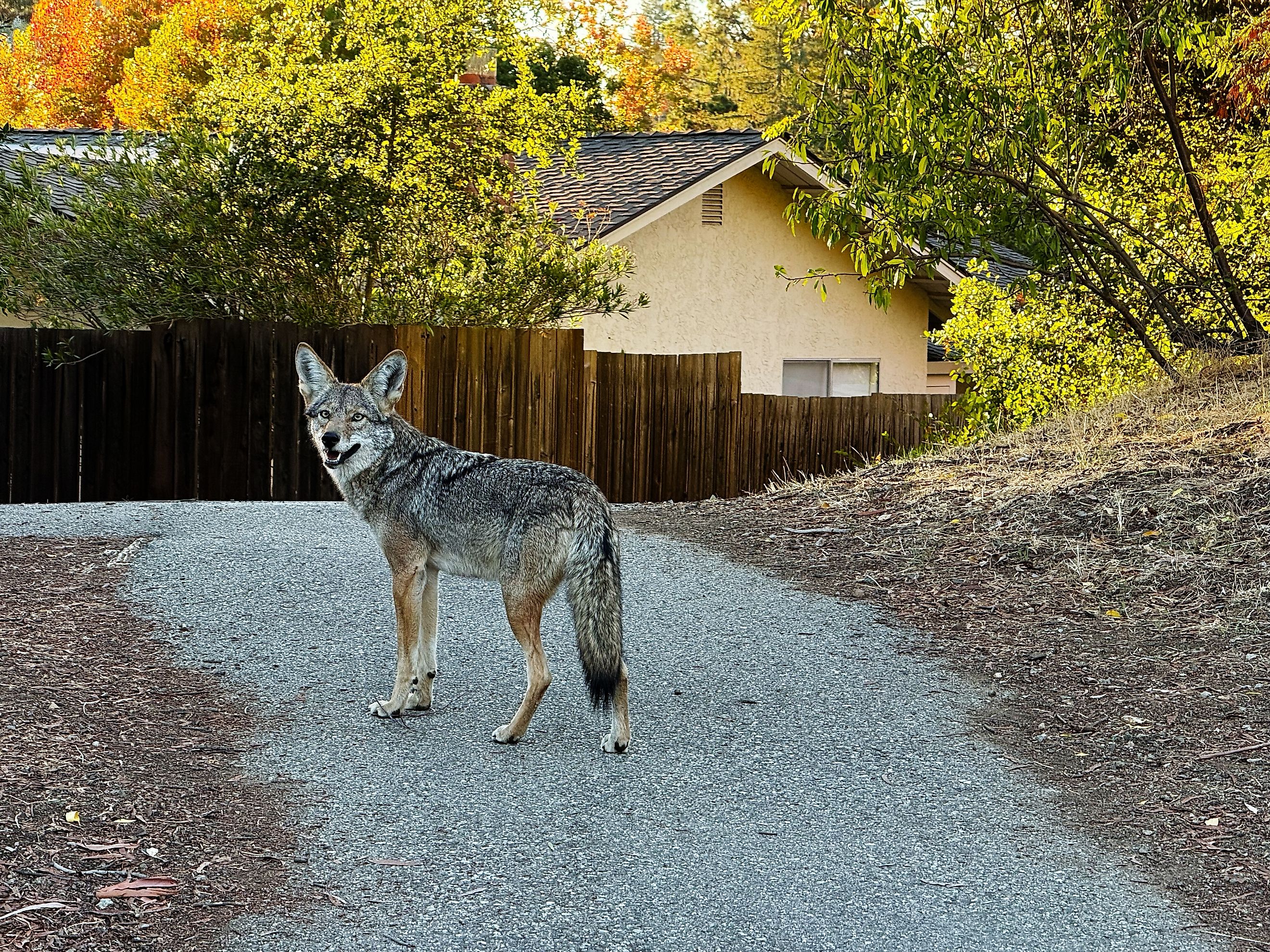
Coyotes now live, hunt, and raise pups in almost every major city in North America. A hundred years ago, they were rarely found east of the prairie states or anywhere near downtown areas. Since launching the Cook County Urban Coyote Research Project in 2000, Stanley Gehrt and his team have documented an estimated 4,000 coyotes in the Chicago area, far exceeding early expectations when animal control first brought him in to investigate. Wildlife officials say coyotes are found in every borough of New York City except Brooklyn. They have lived in the Bronx for decades and are now raising young in Central Park. In California, public health officials have recorded at least 70 coyote bites in Los Angeles County since 2013, though they think this is only 5 to 10 percent of the actual number.
Coyotes are drawn to cities by the same things that attract them to other habitats, including shelter, water and abundant prey such as rodents. Urban areas can also offer fewer threats from hunting and trapping than the surrounding countryside. Their presence in cities, however, is part of a much longer story. Coyotes did not simply move into urban areas on their own. Changes people made across the twentieth century helped create the conditions that allowed them to settle there.
A Prairie Animal That Ran Out Of Prairie

For most of their history, coyotes occupied the open landscapes of central and western North America, particularly the shortgrass plains and deserts where naturalist Thomas Say first described the species, Canis latrans, in 1823. He described a specimen found near the Missouri River during Stephen Long's expedition and made sure to distinguish this smaller prairie wolf from the gray wolf in his account. In a 2018 study, James Hody and Roland Kays used fossils, museum specimens, and over a century of records to map the coyote's original range. They found it ran between about the 55th parallel in Canada and the 20th in Mexico, and it did not go farther east than the Great Plains.
After Europeans arrived, coyotes expanded out of their original range three times, with the last expansion being the most important for cities. During the 1920s, coyotes began expanding eastward along two main routes. One carried them through the Great Lakes region into New England, while the other took them across the southern states. These two groups met in the mid-Atlantic later in the century. They moved into areas that people had changed, since settlers and government hunters spent the 1800s killing off wolves and cougars that once kept coyotes in check. Farmers also turned eastern forests into a patchwork of fields and woods, which suits coyotes better than dense forests. The effort to remove large predators got rid of the wolves first, and coyotes took over their territory, which was not what the bounty programs intended.
As coyotes moved east, they bred with the few remaining wolves that had survived persecution, and to a lesser extent with domestic dogs. This means that coyotes in the Northeast today have some wolf and dog ancestry and are larger than their western relatives. This mix remains visible where coyote and wolf ranges overlap. The popular press calls these animals 'coywolves,' but geneticists use the term carefully, since the animals have a range of mixed ancestry rather than forming a new species. Over the following decades, coyotes reached the Atlantic coast, and they eventually spread through the Southeast and as far south as Panama. By then, the open continent was filled, and the only habitat left was the one shaped by people.
Why The City Works For A Coyote

Cities offer coyotes several resources that can make urban life more appealing than the quieter countryside. Food is the most obvious, with rabbits, voles, rats, mice, fallen fruit, pet food left outdoors, unsecured garbage and, occasionally, outdoor cats all providing easy meals. A 2019 National Park Service study found that outdoor cats made up as much as a fifth of the urban coyote diet in Los Angeles. Second, cities offer cover, since coyotes can make dens in culverts, railroad embankments, cemeteries, golf courses, or any neglected green space. Third, cities provide safety from rifles and traps that still threaten coyotes in national forests. Because of this, a coyote in Chicago has about a 60 percent chance of surviving each year, while a rural coyote has only a 30 percent chance, according to Gehrt.
These advantages change how coyotes act, as research shows. Urban coyote packs have smaller territories, usually between 5 and 10 square miles, while rural coyotes roam much larger areas. They also become more active at night, which explains why many people live near coyotes but rarely see them. Gehrt's radio-collared coyotes mostly stayed in parks, cemeteries, and other green spaces, even in busy neighborhoods, and they made a point to avoid people. Studies of their whiskers showed that coyotes who ate the most human food were also the ones most likely to get into trouble.
What The Attack Record Actually Shows

Serious conflict with coyotes is rare compared to the millions of unnoticed encounters, and the numbers back this up. Lynsey White and Stanley Gehrt recorded 142 reported coyote attacks on 159 people in the United States and Canada between 1960 and 2006. Most of these happened in the southwest and southern California. They found that 37 percent of attacks were predatory and 22 percent were investigative, with children much more likely than adults to be targeted by predatory attacks. Rex Baker and Robert Timm later expanded the count, documenting 367 attacks from 1977 to 2015, with 165 in California. They also noticed a clear seasonal pattern, with more attacks during the breeding and pup-rearing months of March through August.
There have only been two fatal coyote attacks recorded in North America, even after more than a century of people living close to these animals. The first happened in 1981, when a three-year-old was killed in Glendale, a suburb of Los Angeles. The second was in 2009, when Taylor Mitchell, a nineteen-year-old hiker, was killed in Cape Breton Highlands National Park in Nova Scotia. Gehrt, who studied the second case, later found that the park's coyotes had started hunting moose as their main prey because of unusually harsh conditions. This was a rare, local situation, not a sign of a larger trend.
Habituation is the common thread in most coyote attacks, and it almost always starts with food. White and Gehrt found that about 70 percent of attacks happened at or near the victim's home, and at least 30 percent took place where people had been feeding coyotes, either on purpose or by accident. Other researchers have found the same thing. When coyotes start to associate people with easy food, they lose the caution that usually keeps them away from humans. A recent study in Scientific Reports from December 2025 found that urban coyotes are taking more risks than rural ones, which matches the rise in bold daylight sightings. Los Angeles has seen this especially in recent years, with more sightings across the county. After the Palisades fire in January 2025 pushed wildlife toward the coast, there was a noticeable increase in encounters in Santa Monica. In August 2025, a coyote bit a six-year-old in nearby Carson badly enough that the child needed more than twenty stitches. California wildlife officials estimate there are between 250,000 and 750,000 coyotes in the state. With so many animals, cities need to focus more on managing coyotes than removing them.
Living Alongside Them

Wildlife agencies recommend a few straightforward measures to discourage coyotes from visiting residential areas. Secure garbage bins, bring pet food dishes indoors, feed cats inside and never deliberately offer food to a coyote. Always keep small pets leashed or supervised, and keep young children close when coyotes are around, since attacks mostly happen to those who are small and unattended. If a coyote approaches rather than retreating, wildlife managers recommend a technique known as hazing. Stand tall, raise your arms, shout and make as much noise as possible until the animal moves away. Don't run, as that can trigger a chase.
If you see a coyote that stands its ground, follows people, or keeps showing up during the day, it has probably been fed. The best thing to do is report it to local animal control and remove whatever attracted it, since a coyote that gets used to people rarely becomes cautious again. Coyotes help by eating rats, goose eggs, and rabbits, which are common in cities. Research over the past twenty years shows that living alongside coyotes is both likely and practical, as long as people do their part to keep them wild. Anyone bitten by a coyote should wash the wound, seek medical care, and contact local animal control and public health authorities about possible rabies exposure.
The Bottom Line
Coyotes are likely to remain part of urban life, but the level of conflict depends largely on how people respond to them. Unsecured garbage, outdoor pet food and deliberate feeding can encourage them to approach homes and lose their natural fear of humans. Securing waste, supervising pets and keeping a safe distance helps prevent that behavior from developing. Research increasingly supports coexistence through prevention rather than relying solely on removal. The goal is to allow coyotes to live in urban environments without becoming too comfortable around the people who share them.