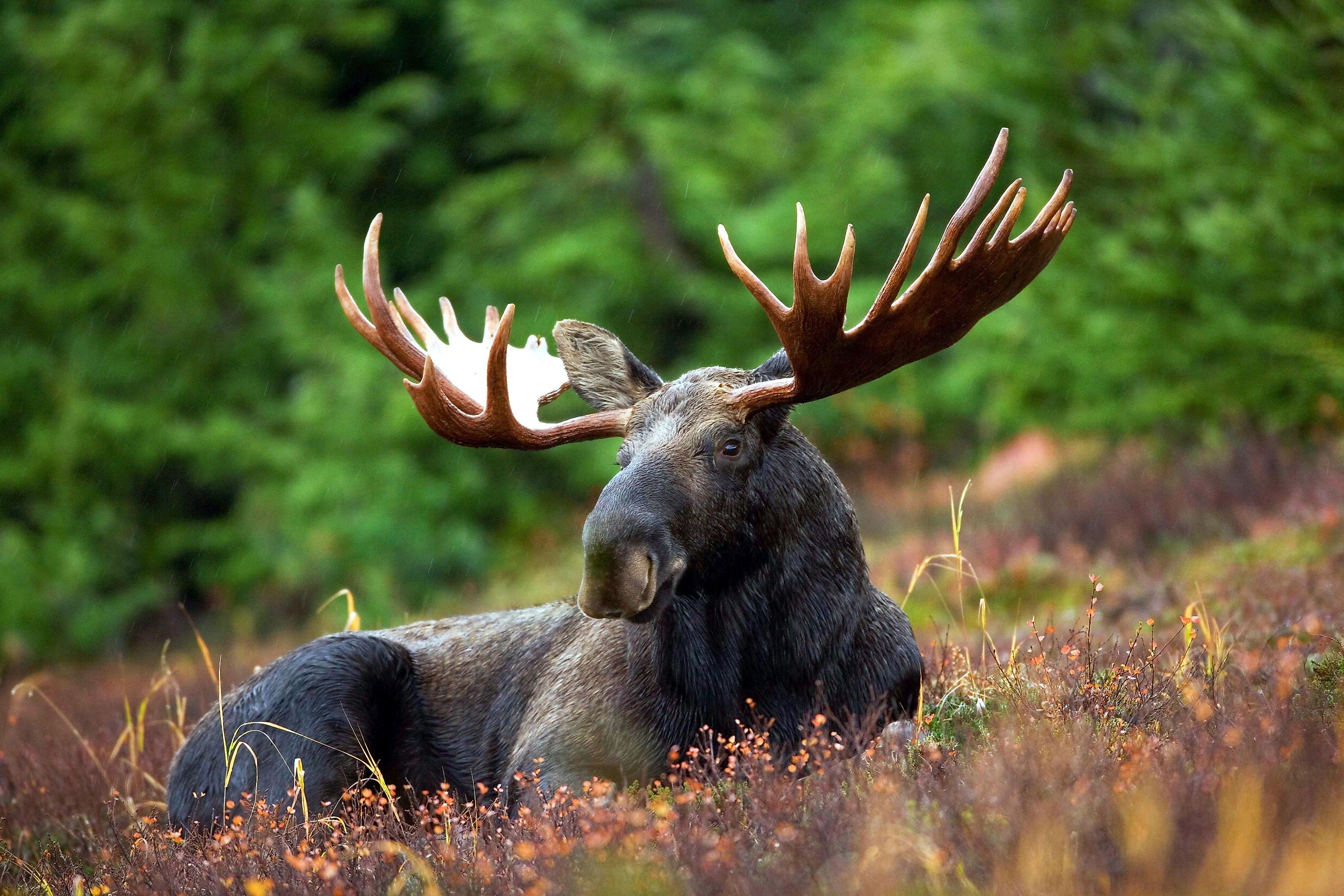
How Big A Moose Really Is
Photographs flatten a moose. Standing beside one, the number that registers is the shoulder height: six to seven feet, which means the top of the back is at or above eye level for most people before you account for the head and antlers above that. The Alaska Department of Fish and Game puts bulls at 1,200 to 1,600 pounds. A big one matches the height of a standard front door at the shoulder alone.
Six To Seven Feet At The Shoulder

Height is the measurement that does the most work, and it is taken at the top of the shoulder rather than the head.
Adult moose stand 1.4 to 2.1 meters at the shoulder, or 4.6 to 6.9 feet, with mature bulls typically in the 6 to 7 foot range. Alaska bulls sit at the top of it.
That is more than a foot taller than the next-largest deer. The head and antlers then rise several feet above that again.
Twelve Hundred To Sixteen Hundred Pounds

Weight figures vary by source, so the state agency number is the one to use.
Alaska Department of Fish and Game puts the biggest bulls at 1,200 to 1,600 pounds and adult cows at 800 to 1,300. Across all subspecies the species range runs roughly 800 to 1,600.
Body length runs about 8.5 to 10 feet. A moose is not just tall, it is long.
The Record Is Nearly A Ton

The largest confirmed moose is well documented and more than a century old.
A bull shot at the Yukon River in September 1897 weighed 820 kilograms, or 1,808 pounds, and measured 2.33 meters at the shoulder. That is 7 feet 8 inches.
Guinness still lists it. No confirmed animal has beaten it in 129 years.
Taller Than A Bison

The comparison that surprises people is with the animal most assume is bigger.
Bison can reach around 2,000 pounds, beating a moose on weight, but stand roughly 6 feet at the shoulder. A big bull moose reaches 7.
That makes the moose the tallest land animal in North America, despite not being the heaviest.
Taller Than A Horse Too

The horse comparison is the most useful one because most people have stood next to a horse.
An average thoroughbred stands 5 feet 4 inches at the withers and weighs 800 to 1,300 pounds. A bull moose weighs about the same as a large horse and stands a foot and a half taller.
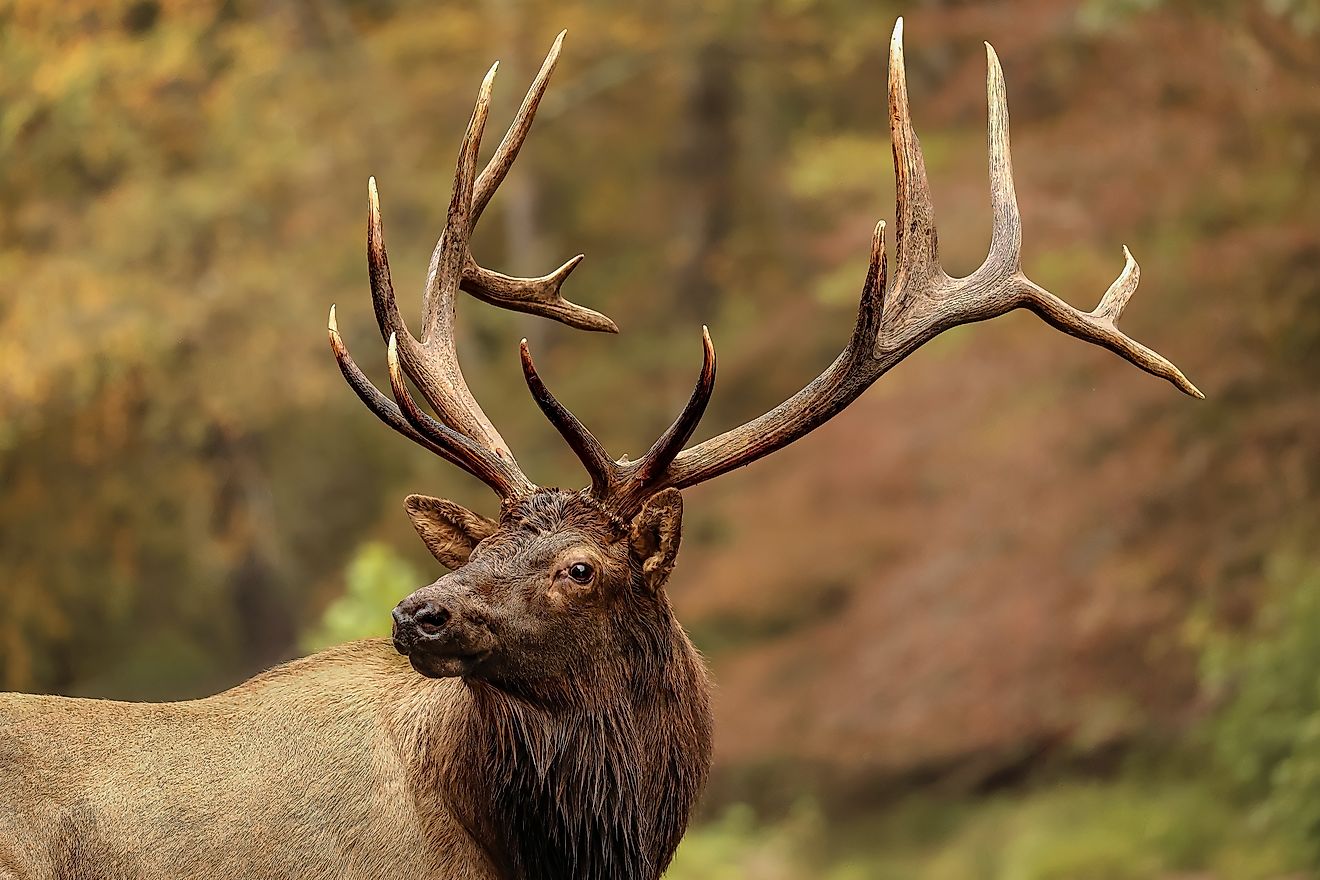
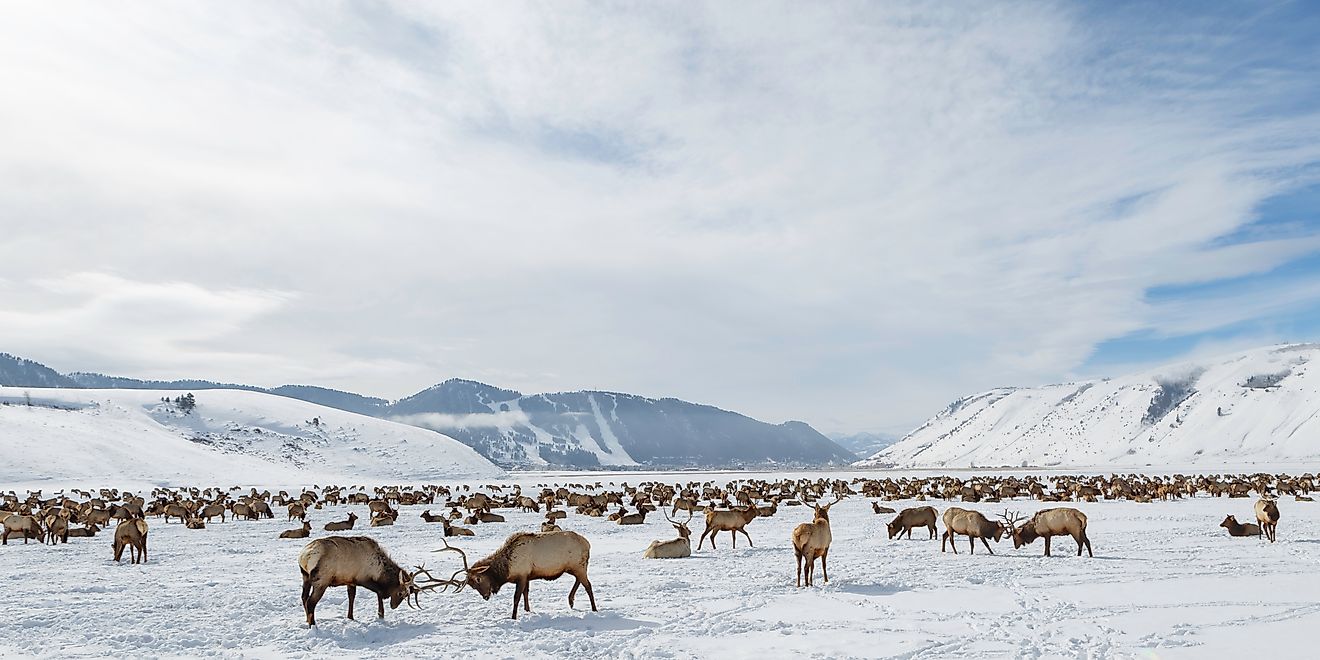
A big bull elk reaches 5 feet at the shoulder. The moose clears it by two.
The Antlers Span Six Feet

Antlers are where the Alaska subspecies separates itself most dramatically.
Mature Alaskan bulls aged 5 to 12 carry a maximum spread greater than 2 meters, about 6.6 feet. The widest ever recorded was 2.1 meters, or 6.9 feet, and an Alaskan bull also holds the weight record at 36 kilograms, roughly 79 pounds.
An Alaskan hunter took a bull with an 80-inch spread in 2017. On smaller subspecies, a typical rack runs 4 to 5 feet and 25 to 30 pounds.
The Antlers Are Also Ears
One function of that palmate shape was only confirmed with a microphone.
A study of trophy antlers found the palm acts as a parabolic reflector, amplifying sound at the moose's ear. Moose carrying antlers have measurably more acute hearing than those without.
Antler beam diameter rather than the number of points indicates age. By about 13 the rack declines in both size and symmetry.
Alaska Bulls Are A Third Larger

Where a moose lives changes the answer to this question substantially.
The Alaska-Yukon moose is typically about 30 percent larger than other subspecies and is the largest antlered animal on the planet. Western Canada moose come second, over 6.5 feet and close to 1,600 pounds.
Eastern bulls reach about 6 feet and 1,400 pounds. The Shiras moose of the Rockies is the smallest, with published top weights ranging from 700 to 1,200 pounds depending on the source.
Calves Gain Ten Times Their Weight

How fast they reach that size is the detail that explains the browsing.
Alaska moose calves weigh about 28 pounds at birth. By five months they can reach 280.
Tenfold in five months is the growth rate behind a moose stripping a willow stand. The food has to come from somewhere.
Bigger Deer Have Existed

The moose is the largest deer alive, which is not the same as the largest ever.
Alaska moose match the extinct Irish elk in size but are smaller than Cervalces latifrons, the largest deer of all time.
Among living species there is no contest. Every other deer on earth is substantially smaller.
Why It Matters On A Road

The height has a practical consequence drivers in moose country know well.
A moose carries its mass on long legs, so a vehicle strikes the legs and the body comes through the windshield rather than over the hood. The center of mass sits above the hood line of most cars.
That geometry is why moose collisions are disproportionately dangerous compared with strikes involving smaller deer.
The Short Answer

Six to seven feet at the shoulder and 1,200 to 1,600 pounds for a bull, 800 to 1,300 for a cow, with a body 8.5 to 10 feet long. Alaska-Yukon bulls run about 30 percent larger than other subspecies and carry antlers spanning 6.6 feet and weighing up to 79 pounds.
Bison outweigh them and no land animal in North America stands taller. The record, a bull shot at the Yukon River in 1897, weighed 1,808 pounds and measured 7 feet 8 inches at the shoulder.