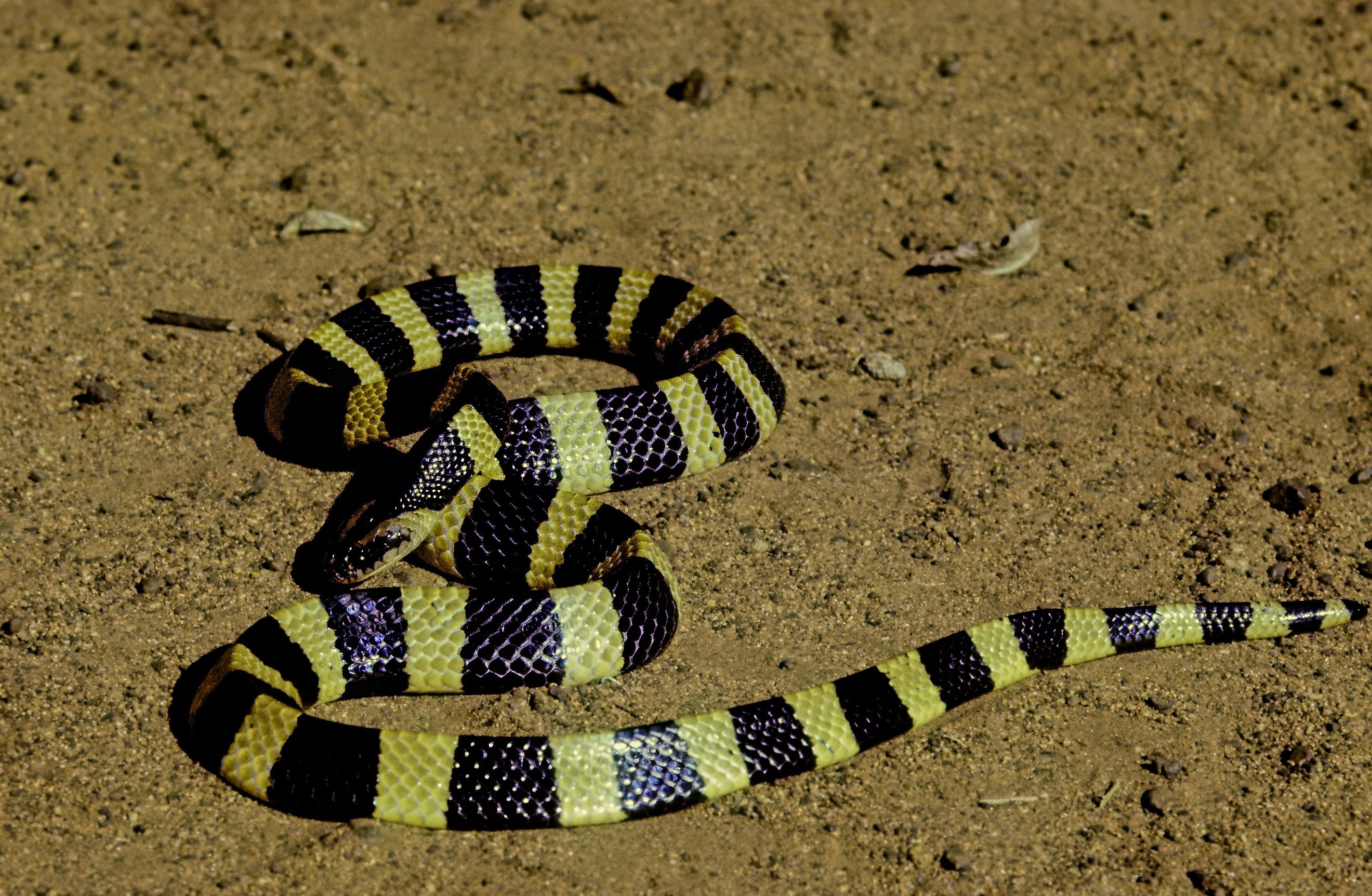
Banded Krait
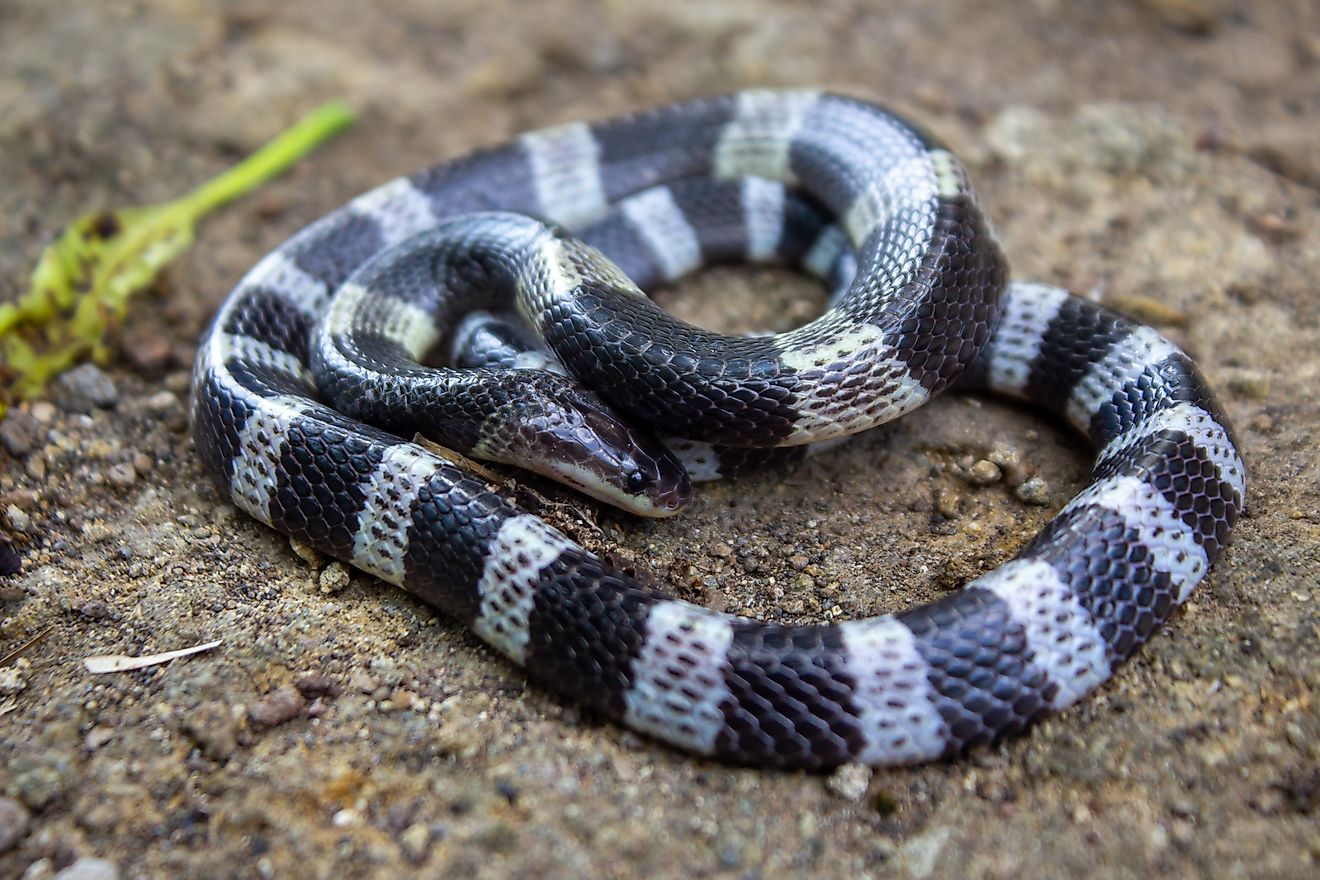
The Banded krait (Bungarus fasciatus) is a highly venomous elapid snake endemic to Asia. This krait occurs across the Indian subcontinent, Southeast Asia, and southern China. Its conspicuous alternating black-and-yellow bands make it easily identifiable, yet encounters are quite rare owing to its shy and night-active habits. Like other members of the Bungarus genus it carries potent neurotoxic venom but is far less aggressive than that implies and usually prefers to avoid confrontation with humans wherever possible.
Inhabiting a variety of lowland habitats, Banded kraits play a vital ecological role in maintaining food web balance by regulating populations of local snakes and small animals. However, habitat loss, human persecution, and road mortality continue to affect banded krait populations. Therefore, a complete understanding of this prominent reptilian species will surely help in replacing fear with an appreciation for one of Asia's most distinctive predators.
Naming And Taxonomic Classification

Banded kraits are members of the Elapidae family, which also includes cobras, mambas, sea snakes, and coral snakes. The taxonomic history of the banded krait is related to the snake's primary documentation and description by the Scottish naturalist Patrick Russell in 1796 using the local Telugu name "Bangarum Pamah," meaning golden snake. In 1801, the German naturalist Johann Gottlob Theaenus Schneider officially named the species Pseudoboa fasciata.
In 1803, the French zoologist Francois Marie Daudin erected the genus "Bungarus," derived from the Telugu word "bangarum," meaning "gold" and referring to the brilliant "yellow bands" on the snake. The species name "fasciatus" comes from a Latin word that means "banded," indicating the alternating black and yellow bands wrapped around the snake's entire body. The English word "krait" has in turn been taken from the Hindi word "karait," describing the black color of the kraits. Recent molecular studies have identified at least three distinct evolutionary lineages within B. fasciatus, indicating that the species as currently recognized may yet be revised.
Physical Description

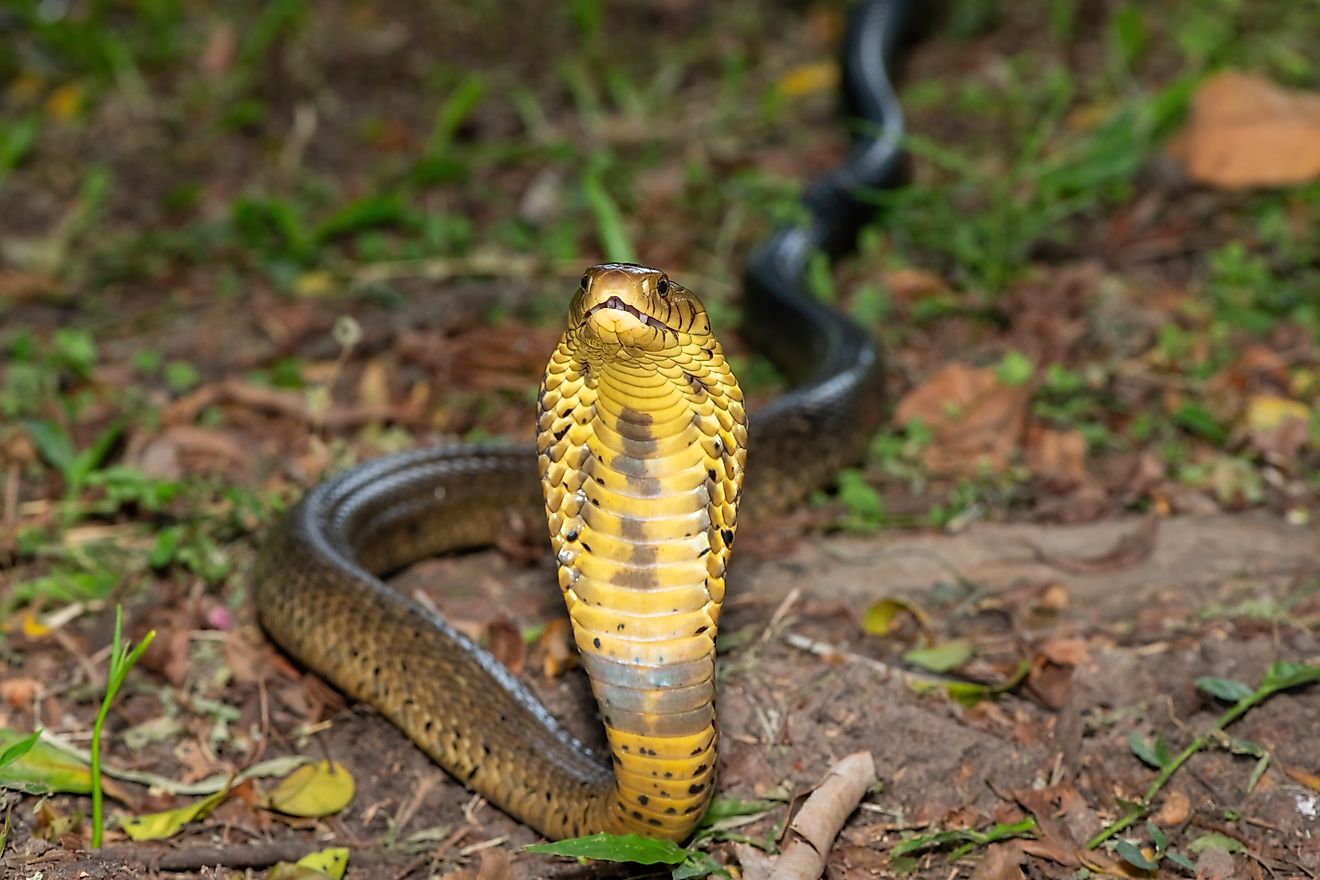
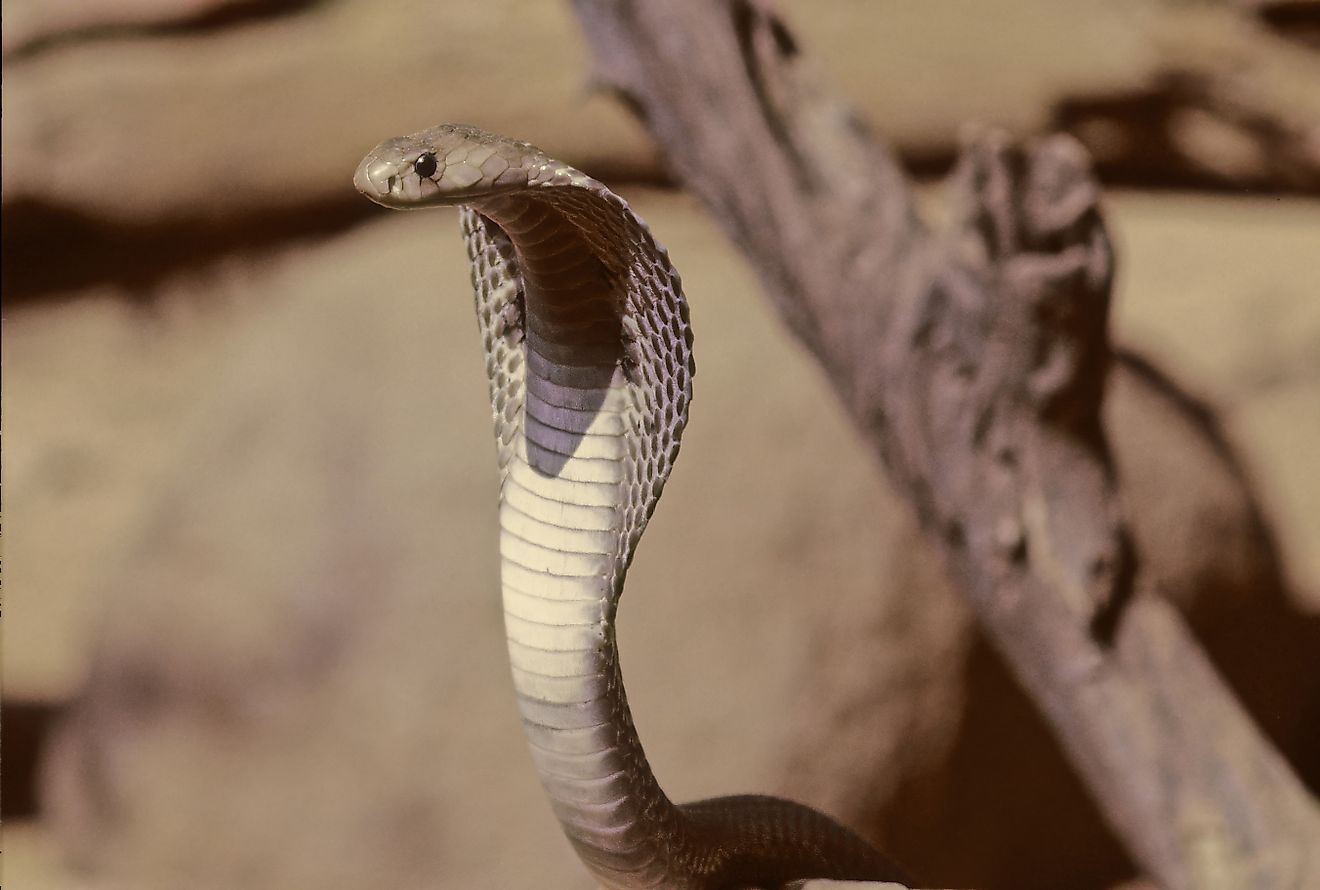
The Banded krait is the longest member of the Bungarus genus, with adults typically reaching about 5 ft (1.5 m) and the longest recorded specimens measuring just over 7 ft (2.2 m). The bold, equal-width, alternate bands of black and yellow which completely encircle the long, slender body of the snake help in easy identification even in low-light conditions, besides serving as a warning signal, a classic example of aposematism, to potential predators. Smooth, glossy scales are arranged in regular rows with about 15 dorsal scales in the midbody, and strongly enlarged hexagonal middorsal scales down the vertebral row.

The cross-section of the body is markedly triangular due to a pronounced vertebral ridge running along the back that gives the snake an unmistakable ridge appearance. The black head is broad and blunt, hardly distinguishable from the neck, and features an inverted V or arrowhead-like yellow marking. Eyes are small, black with round pupils. The short tail has a rounded tip and is about one-tenth of the snake's total length. Akin to other elapids, Banded kraits have fixed front fangs for delivering the highly neurotoxic venom efficiently.
Range and Habitat

Banded kraits have a wide distribution across South Asia, East Asia, Southeast Asia, and the Indonesian archipelago. The species is fairly common in parts of peninsular and northeast India, Nepal, Bangladesh, Myanmar, the entire Indo-Chinese subregion, and Peninsular Malaysia. It also occurs in Singapore and southern China, though it is assessed as endangered in both and is now a rare find in Singapore. In Myanmar, banded kraits have been found up to elevations of 5,000 feet (1,524 m).
As terrestrial elapid snakes, banded kraits inhabit a variety of habitats, favoring open countryside fields, irrigation channels, wet grasslands, rice paddies, dry and moist deciduous forests, bamboo groves, tropical scrub, and especially areas close to rivers, streams, marshes, and swamps. As daytime hideouts, banded kraits often take shelter in abandoned rodent burrows, termite mounds, hollow logs, thick grass clumps, dense bushes, and rock crevices.
Food

Banded kraits are specialized carnivores partial to an ophidian diet and have been reported to feed on other snakes besides eggs of snakes, fish, frogs, skinks, and small mammals. Most of its diet consists of other snakes, both venomous and non-venomous, including Common krait, Russell's viper, sunbeam snake, red-tailed pipe snake, buff-striped keelback, Indo-Chinese rat snake, rainbow water snake, chequered keelback, cat snake, and rat snake.
Banded kraits are nocturnal predators and largely rely on their acute sense of smell and tongue-flicking behavior for navigation and tracking prey in low-light conditions. After capturing the prey, the banded krait delivers a swift venomous bite. The neurotoxic venom, rich in pre-and post-synaptic neurotoxins, immobilizes the prey by disrupting the neuromuscular transmission before the banded krait swallows it whole.
Behavior

Banded kraits are timid in nature and mostly nocturnal. During the day, the snake is sluggish and remains hidden in grass, drains, and pits, becoming active only after sunset in the cool nighttime hours. When disturbed, banded kraits coil their body tightly, hide their heads under the coils, and do not strike right away. Bites usually occur only when provoked or accidentally stepped upon, especially in rural areas where farming activities intersect with snake habitats. Bites are rare, and the rate of envenomation on a defensive bite is thought to be low, but a serious envenomation can be fatal and needs immediate medical attention and appropriate antivenom treatment.
Reproduction

Banded kraits are solitary, coming together only during the breeding season. Mating takes place from late winter to the summer months, with peak activity observed during March-May or in early winter depending on regional climatic conditions. About 2 months after mating, female banded kraits lay small clutches of about 4 to 14 eggs in concealed humid spots like underground burrows, leaf litter, or hollow logs. For roughly 60 to 64 days, subject to optimal temperature and humidity, the eggs incubate, with hatchlings emerging fully venomous around the beginning of the monsoon season.
Threats
While banded kraits are widely distributed, the local populations face severe pressures just like other Asian snake species. Habitat loss is the biggest threat, with deforestation, wetland drainage, urban expansion, and agrarian expansion all destroying suitable habitats. Also, the loss of wetlands and floodplain habitats reduces prey availability and safe shelters for these snakes. Banded kraits crossing roads on warm, humid nights are killed time and again by vehicular movement. Their non-aggressive nature is often mistaken, as people cannot distinguish venomous species from harmless non-venomous ones, leading to unnecessary killing. Though not considered a major threat as of now, these snakes are collected in some regions for their skins, the use of venom in traditional medicine, and the exotic pet trade.
Importance to the World
Although Banded kraits are listed on the IUCN Red List as "Least Concern," native populations in populous regions face considerable pressure from human-induced activities. As specialized predators, banded kraits contribute to trophic balance by regulating local snake assemblages and small vertebrates through predation across forests, wetlands, and agricultural landscapes. Therefore, protecting its habitat, promoting awareness of its ecological role, educating communities about the snake to reduce unnecessary killing, and maintaining calm behavior during encounters will ensure the continual survival of this crucial yet misunderstood species in heterogeneous ecosystems.