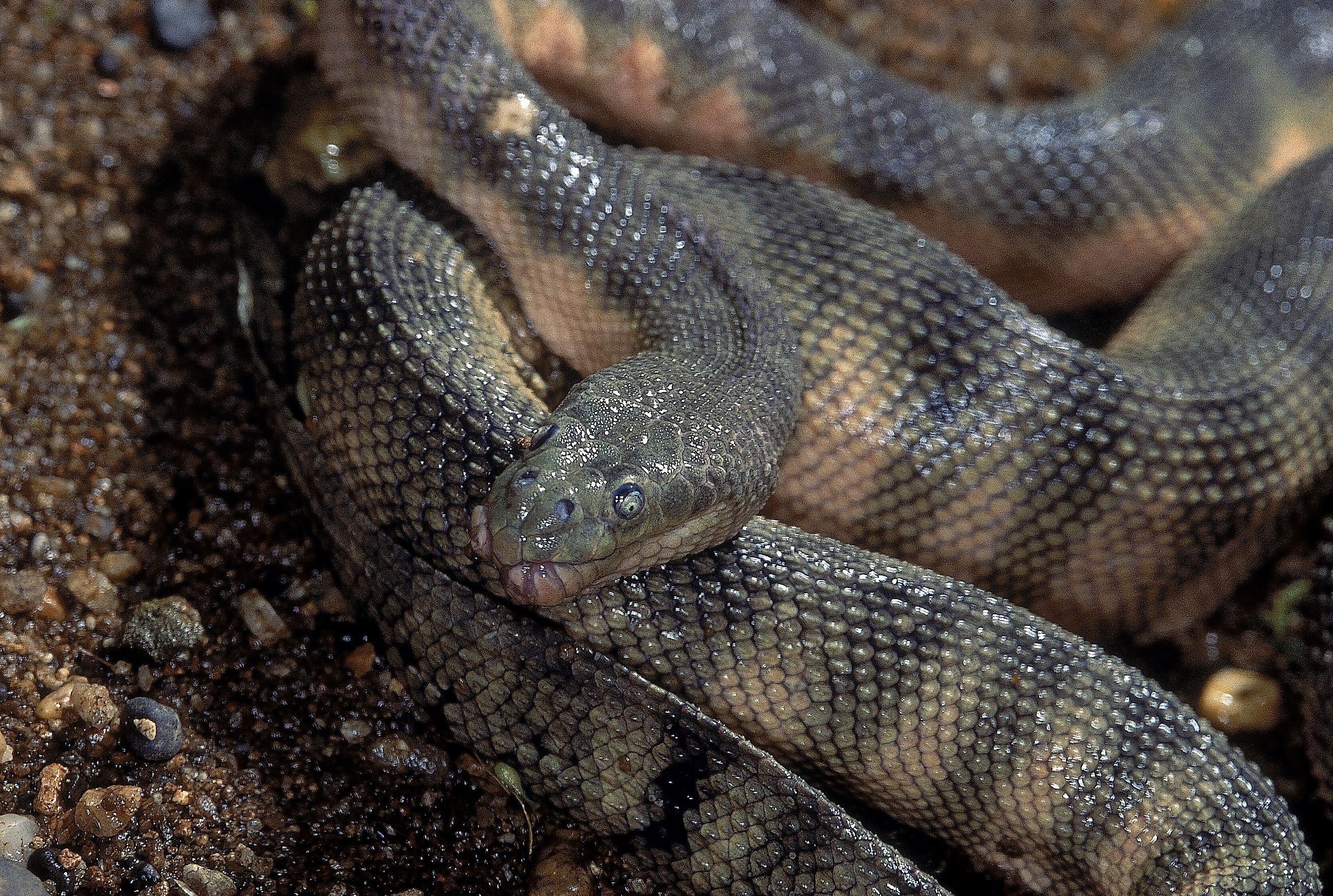
Beaked Sea Snake
Beaked sea snakes are among the most widely distributed marine snakes in the Indo-Pacific, often occupying shallow coastal waters from the Persian Gulf to northern Australia. They are highly venomous, closely tied to estuaries, mangrove-lined shores, and muddy river mouths where fish, their favorite food, are plentiful.
Unlike many reptiles, they spend practically all their lives at sea, surfacing regularly to breathe while hunting in low-visibility waters. Their hooked snout gives them their name, while a paddle-shaped tail drives them through the water after prey.
But even with the beaked sea snake's broad range and frequent encounters with humans in some places (mainly with fishermen), they often go unnoticed in wild, turbid habitats, where much of their behavior unfolds just below the surface, out of our view. Below, we get into their taxonomy, diet, behavior, reproduction, and the threats they face.
Taxonomic Classification

The beaked sea snake (Hydrophis schistosus) belongs to the family Elapidae, the same family that includes mambas, cobras, and coral snakes. It is classified within the broader order of Squamata, which encompasses snakes, lizards, and amphisbaenians, and the suborder Serpentes, which contains all living snake species.
This aquatic species belongs to the genus Hydrophis, a group of true sea snakes adapted to life in coastal and offshore marine environments throughout the Indo-Pacific region. Historically, they were widely known as Enhydrina schistosa, but current taxonomic sources place them in the genus Hydrophis as Hydrophis schistosus. Advances in genetic and morphological research helped clarify this placement.
Physical Description

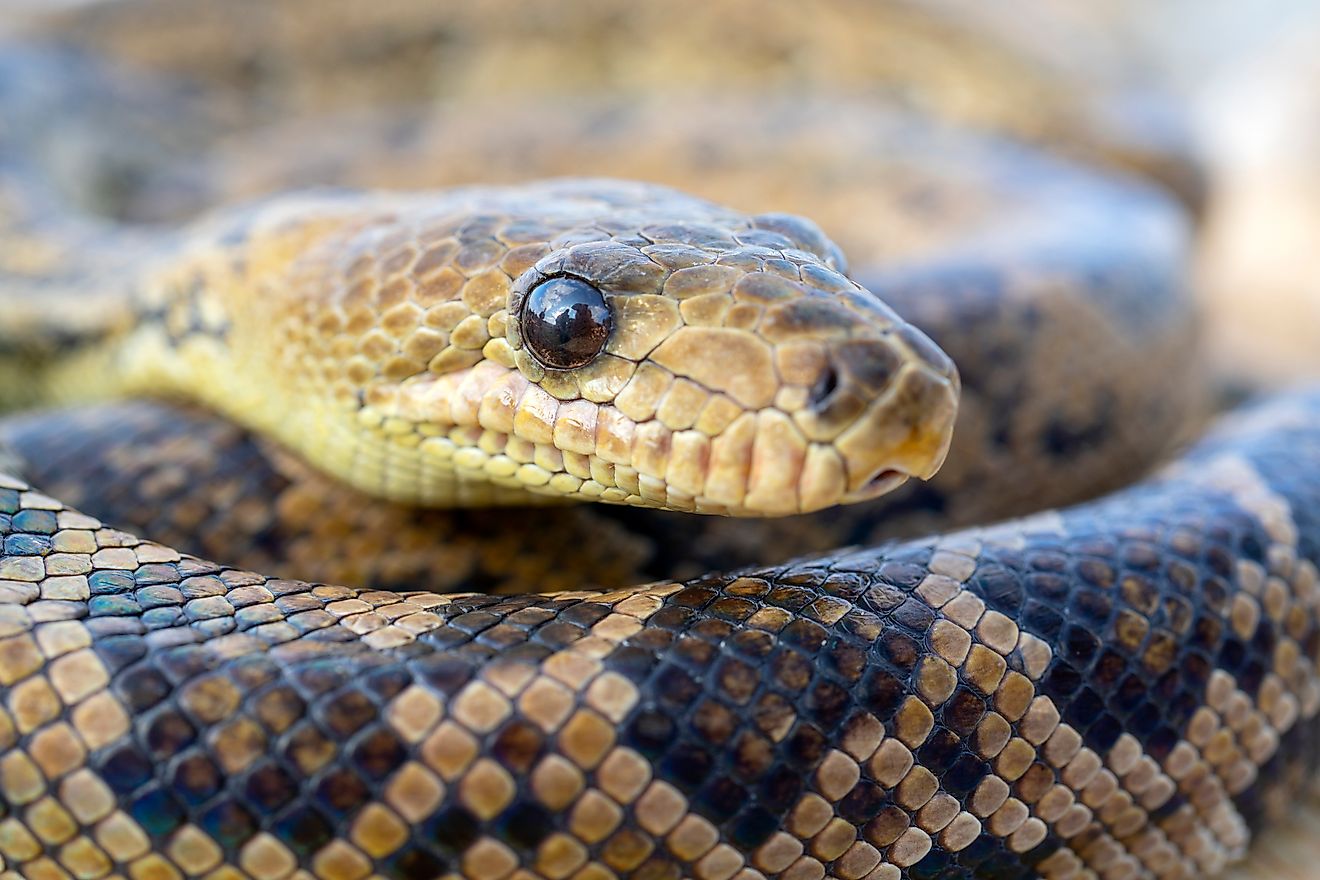
This is a moderately large species that commonly reaches about 3.6 feet (1.1 meters), with maximum lengths reported around 4.6 to 5.2 feet (1.4 to 1.6 meters). Their bodies are laterally compressed, giving them a streamlined profile that enhances swimming efficiency. Like other true sea snakes, they also possess a paddle-shaped tail that provides powerful propulsion.
The species takes its common name from its distinctive beak-like snout, formed by an extended rostral scale that hooks downward over the mouth. Moreover, their nostrils are positioned on the top of the snout and equipped with valves that close when submerged, preventing seawater from entering the respiratory system.
Coloration varies with age, but adults are generally gray above and whitish below, while younger snakes may show dark rings or transverse bars.
Range And Habitat

Beaked sea snakes are widely distributed across the tropical waters of the Indo-Pacific region. In fact, in some shallow coastal and estuarine areas, they are among the more commonly encountered sea snakes.
Their range more specifically extends from the Persian Gulf and the coasts of the Arabian Peninsula eastward through India, Bangladesh, Sri Lanka, Myanmar, Thailand, Malaysia, and Indonesia. Records from Papua New Guinea and the northern half of Australia are taxonomically complicated and are often treated as Hydrophis zweifeli rather than Hydrophis schistosus.
They are most closely associated with shallow environments rather than deep offshore waters, generally staying at depths under about 30 meters. Notable populations frequent the various bays, estuaries, mangrove shorelines, tidal creeks, and river mouths in the aforementioned countries, while many individuals regularly enter brackish environments, tolerating lower salinity levels better than many other marine reptiles.
The muddy and silty seabeds where they typically hunt usually support diverse fish populations and provide productive habitats with shelter and suitable conditions for reproduction.
Diet

These are specialized predators that feed primarily on fish, as many prey species inhabit the same coasts and waterways where beaked sea snakes are most abundant. Sea catfish make up the bulk of their diet, accounting for roughly 80% of prey in one study, with plotosid catfish and puffers making up most of the rest.
Juvenile beaked sea snakes target smaller fish, while larger adults can capture substantially larger prey. Using keen senses and a fast, venomous bite, they immobilize prey quickly and leave it little chance to escape. Once subdued, prey is swallowed whole.
Globally, the species is listed as Least Concern and functions as a mesopredator within coastal marine food webs.
Behavior

Beaked sea snakes are active, free-swimming reptiles that spend most of their lives hunting in shallow coastal, estuarine, and river-mouth habitats. Studies of Hydrophis sea snakes suggest that they use a mix of visual and chemical cues while searching for prey.
Their respiratory adaptations mean they only need to surface for air now and then, staying underwater for long stretches in between. In calmer conditions, they may stay near the surface or among submerged structures for several hours, lying almost motionless between feeding bouts. Activity levels often increase with tidal movement, which in turn brings prey into shallow feeding zones for easier catching.
Socially, beaked sea snakes are solitary outside of breeding periods and generally avoid people, but bites can occur when fishermen handle snakes or nets.
Reproduction

Reproducing through internal fertilization, beaked sea snakes give birth to live young, a trait common among fully marine snakes. Breeding timing varies by region; one west-India study found gravid females between November and May, with males locating females through chemical cues in the water. Courtship then involves closely following each other and synchronized swimming before mating.
Females retain developing embryos internally, where they develop with yolk and may receive some additional maternal nutrition. Gestation can last 5 to 6 months, depending on conditions and food supply, and litter sizes vary widely. Smaller females may carry only a handful of young, while large ones can hold close to 30.
Newborn beaked sea snakes are immediately independent and capable of swimming and hunting, not needing extended parental care. Born in the water, they live their entire lives at sea, with no terrestrial phase at all.
Threats to Beaked Sea Snakes

As with most flora and fauna these days, beaked sea snakes face a combination of human-driven and environmental threats across their range. Bycatch in fisheries is a documented source of mortality, including in trawlers, gillnets, and shore seines operating off coasts where many individuals likewise forage. Because they must surface to breathe, entanglement in nets often leads to drowning.
Coastal development and habitat degradation also take a toll, eating away at the shallow nearshore zones these snakes depend on. Pollution is another pressure, with oil spills and chemical runoff fouling the shallow water these snakes hunt and surface in. Climate-related changes in sea temperature and salinity may further alter prey distribution and coastal habitat suitability, too, creating longer-term strain on local populations.
In some regions, beaked sea snakes are also intentionally killed due to fear of their venomous bites, despite generally low rates of negative human encounters.
Ecological Role and Scientific Value
Beaked sea snakes earn their place in coastal ecosystems mainly by keeping populations of small to mid-sized fish in check. This predation helps maintain balance in food webs, where fish populations can shift rapidly due to factors such as tidal flow and seasonal changes.
As part of the broader marine snake community, beaked sea snakes also serve as strong indicators of ecosystem health. Sea-snake populations can help researchers monitor marine habitat change, but stable populations alone should not be treated as proof of an intact or uncontaminated ecosystem. Additionally, beaked sea snakes help link prey fish with higher levels of the coastal food web.
Their venom has also attracted scientific interest for its pharmacological properties. Like other elapid venoms, it contains compounds that affect neuromuscular function, and it has been studied mainly for toxin composition, neurotoxic and myotoxic effects, and antivenom response.