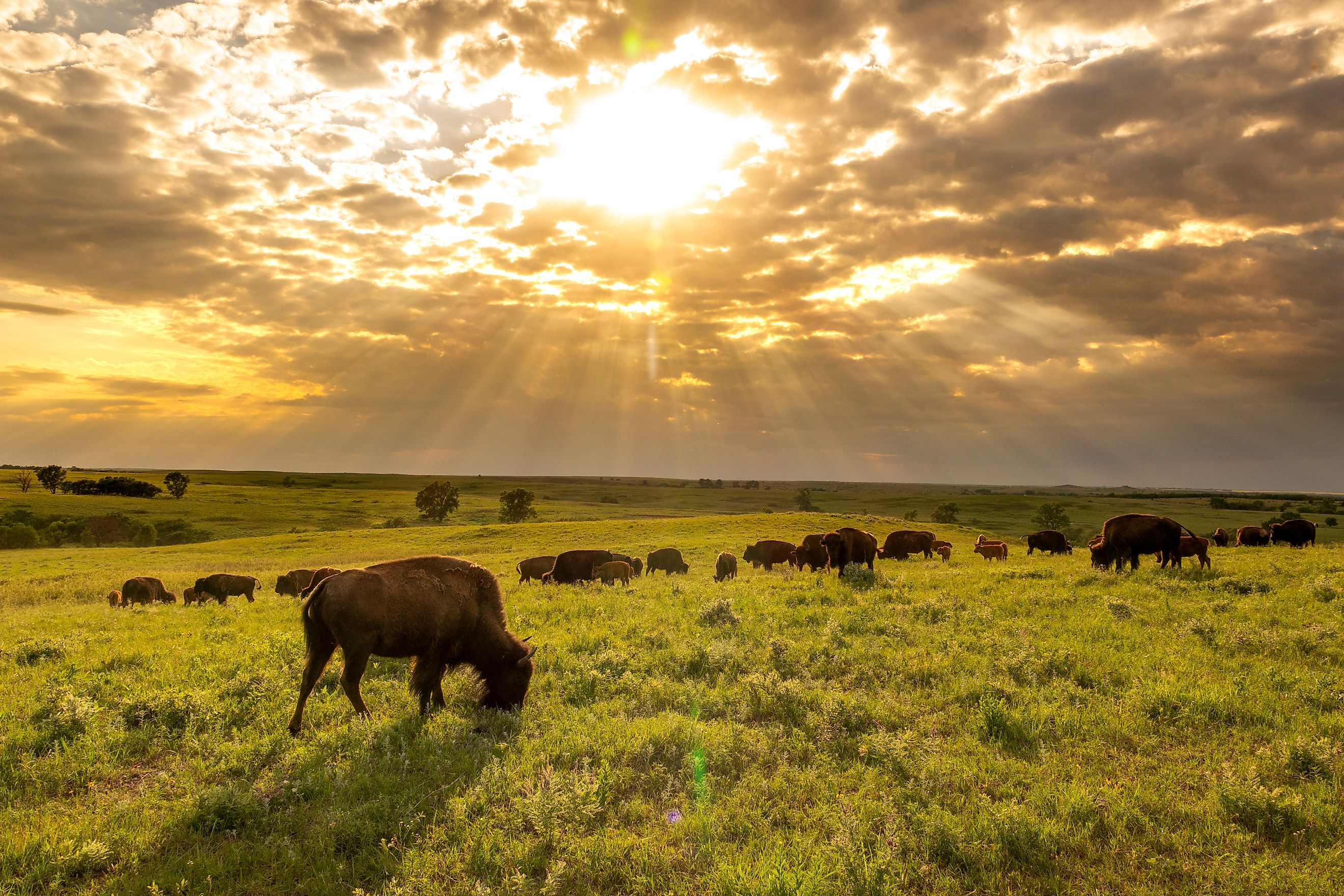
Why Bison No Longer Roam The Great Plains
In May 1886, William Temple Hornaday, the chief taxidermist of the Smithsonian's National Museum, set out from Miles City, Montana, to collect American bison (Bison bison) for the museum before the animals disappeared from the country altogether. Hornaday and his men searched the badlands between the Missouri and Yellowstone Rivers for weeks and found almost nothing, so they returned that autumn and eventually shot about two dozen animals. Three years later he published a census in the Smithsonian's annual report, and the numbers in it read like the final ledger of a bankrupt estate. He counted fewer than 1,100 bison left in North America, and by his estimate, only about 85 of them ranged free in the United States outside Yellowstone National Park.
These animals are what remain of a population that once reached tens of millions. Drought, trade, horses, railroads, a new tanning process, and government policy all contributed to their decline. Since then, fences, cattle, and property laws have kept the herds small, just as much as hunting did in the 19th century.
A Grassland Built for Millions

Bison once ranged as far north as Alberta's aspen parkland and as far south as the deserts of Chihuahua. Most of them lived on the shortgrass and mixed-grass grasslands between the Rocky Mountains and the Missouri River. The often-cited number of 60 million bison mostly comes from 19th-century estimates. In 1991, historian Dan Flores suggested that, based on how much grass the land could support, the Great Plains probably held closer to 28 to 30 million bison.
People hunted bison herds for over 10,000 years before Europeans came to North America. At Head-Smashed-In Buffalo Jump in southern Alberta, Blackfoot hunters and earlier groups drove bison over a sandstone cliff for almost 6,000 years. The site's name comes from a story about a young man who stood under the ledge to watch the bison fall and misjudged the size of the kill. There is no written record of who he was or when he lived.
The Decline Began Before the Rifles

Historians once blamed the collapse almost entirely on commercial hide hunters in the 1870s, but research by Flores and by Andrew Isenberg shows the problem started much earlier. In the 18th century, the Comanche, Kiowa, Cheyenne, and Arapaho acquired many horses, and by the 1830s, their herds were competing with bison for grass and water in the river valleys where both spent the winter. Traders along the Missouri and Arkansas Rivers bought tens of thousands of bison robes each year from Plains nations, mostly from young cows, which reduced the breeding population. Severe droughts struck the southern plains in the late 1840s and the 1850s, and emigrants bound for Oregon and California grazed out the grass along the Platte River. Isenberg explains that these pressures left the bison herds weak by the time the railroads arrived, so the slaughter that followed wiped out the southern herd in just a few seasons.
Tanners, Railroads, and a Veto

Union Pacific crews finished the first transcontinental railroad in 1869, and the line across Nebraska and Wyoming divided the bison into what hunters afterward called the southern and northern herds. The decisive change came from the tannery. In 1871, tanners worked out a practical method for turning bison hides into sturdy commercial leather, and the economist M. Scott Taylor showed in a 2011 paper in the American Economic Review that demand from Europe, where factories used the leather for machine drive belts and military boots, drove much of the killing that followed.
Once buyers showed up, hunters acted quickly. When the Atchison, Topeka and Santa Fe Railway reached Dodge City, Kansas, in 1872, hunters armed with heavy Sharps rifles spread out across western Kansas and the Texas Panhandle. Hornaday later counted railroad shipments and found that more than 1.3 million hides were shipped east between 1872 and 1874. He also estimated that in the early years, hunters wasted several animals for every hide that made it to market. By 1878, the southern herd was gone.
Congress tried to intervene. In 1874 both houses passed a bill that would have made it illegal for anyone other than a Native American to kill female bison in federal territories. President Ulysses S. Grant let the bill die with a pocket veto. He gave no public explanation, so any guess about his reasons is just speculation. However, the Interior Department's 1873 annual report had already said that the loss of game helped the government move Plains nations onto reservations. A pocket veto does not need a signature or a statement, making Grant's decision one of the quietest moments in American wildlife history.
The Army had a similar perspective. According to a story often repeated, General Philip Sheridan told the Texas legislature in 1875 that hide hunters deserved a medal for doing more to solve the Indian question than the regular army. The only source for this speech is a memoir by a former hide hunter published in 1907. Historians have not found any record of the speech from the time, so it remains a story rather than a documented fact.
The Northern Herd and the Bone Pickers

The northern herd survived a bit longer because the Northern Pacific Railway had not reached Montana yet. Once crews started laying track through Dakota Territory and into Montana between 1880 and 1883, hide hunters followed. Hornaday estimated that buyers shipped about 200,000 hides from the northern range in 1882 alone. In Canada, most plains bison were gone from the prairies by 1879. Historian James Daschuk has shown that Canadian officials then used food rations to force starving Cree and Blackfoot bands onto reserves.
After the hides, people turned to collecting bones. Throughout the 1880s, homesteaders and Native families gathered sun-bleached skeletons from the prairie and sold them by the ton at railroad sidings. Buyers shipped these bones east to factories, where they were turned into fertilizer or burned into bone char for sugar refining. The place now called Regina, Saskatchewan, was once known as Pile of Bones because of a large heap of bison bones beside Wascana Creek. In 1882, Canadian officials renamed it to honor Queen Victoria, which is a strange way for a provincial capital to get its name.
How a Remnant Survived

A handful of ranchers and a single national park saved the species. During the 1870s and 1880s, private owners in Montana, Manitoba, and Texas captured calves and raised small herds, some out of sentiment and some because they expected bison to become valuable once they grew scarce, which proved a sound business judgment. Yellowstone National Park, which Congress established in 1872, held the only wild herd left in the United States, but poachers worked the park for years because no law allowed anyone to punish them. In March 1894, soldiers caught a poacher skinning bison in Pelican Valley, and that May Congress passed the Lacey Act, which made killing wildlife in Yellowstone a federal crime.
Park staff still counted only about two dozen wild bison by 1902, and managers bought 21 animals that year from private herds to rebuild the population. Hornaday, meanwhile, turned from collecting bison to protecting them, and he helped found the American Bison Society in 1905, which persuaded Congress to establish public herds in Oklahoma in 1907 and Montana in 1908. Canada bought a large private herd in Montana's Flathead Valley between 1907 and 1912 and moved more than 700 animals north to Alberta.
Why the Herds Stay Behind Fences

Bison managed to survive, but the open range did not. After 1880, farmers turned much of the Great Plains into fields for wheat, corn, and soybeans, while ranchers fenced off most of the rest. Free-ranging bison need thousands of acres and space to move between summer and winter areas. Bison often ignore barbed-wire fences, which is one reason ranchers do not want them nearby. According to the IUCN, there were about 400,000 bison in commercial herds in 2010, making up 93 percent of the total population. The IUCN's 2017 Red List classifies bison as Near Threatened, with about 31,000 animals in conservation herds that rely on protected land.
Ranchers complicated things in the late 19th and early 20th centuries when they crossed bison with cattle in hopes of a hardier beef animal. The geneticist Philip Hedrick reported in 2009 that most public and private herds carry traces of cattle DNA as a result, but Yellowstone's herd shows no evidence of cattle ancestry, and a Texas A&M team reported in 2025 that the park's bison form a single interbreeding population that fluctuates between 4,000 and 6,000 animals.
Montana's livestock industry keeps the Yellowstone bison herd from roaming far. Many of these bison carry brucellosis, a bacterial disease that can cause cattle to lose their calves, so ranchers have long opposed letting bison leave the park, especially when they move to lower ground in winter. Since 2000, an interagency plan has led managers to capture, haze, or remove bison near the park's edge, and state and tribal hunters take hundreds more. In the winter of 2022 to 2023, more than 1,500 bison were removed. A 2016 genomic study found that recent brucellosis cases in Greater Yellowstone cattle came from elk, not bison. In 2024, the park approved a plan to keep the herd at about 3,500 to 6,000 animals.
Most of the recent increase in wild bison herds is thanks to Native nations and conservation groups. The InterTribal Buffalo Council, started by tribes in 1990, now has over 80 member tribes. Yellowstone sends quarantined bison to tribal lands through the Fort Peck Reservation in Montana. Parks Canada released plains bison into Grasslands National Park in Saskatchewan in 2005 and into Banff National Park in 2017. These herds are in the hundreds, not millions, and most are kept inside fences.
Meeting Bison Today

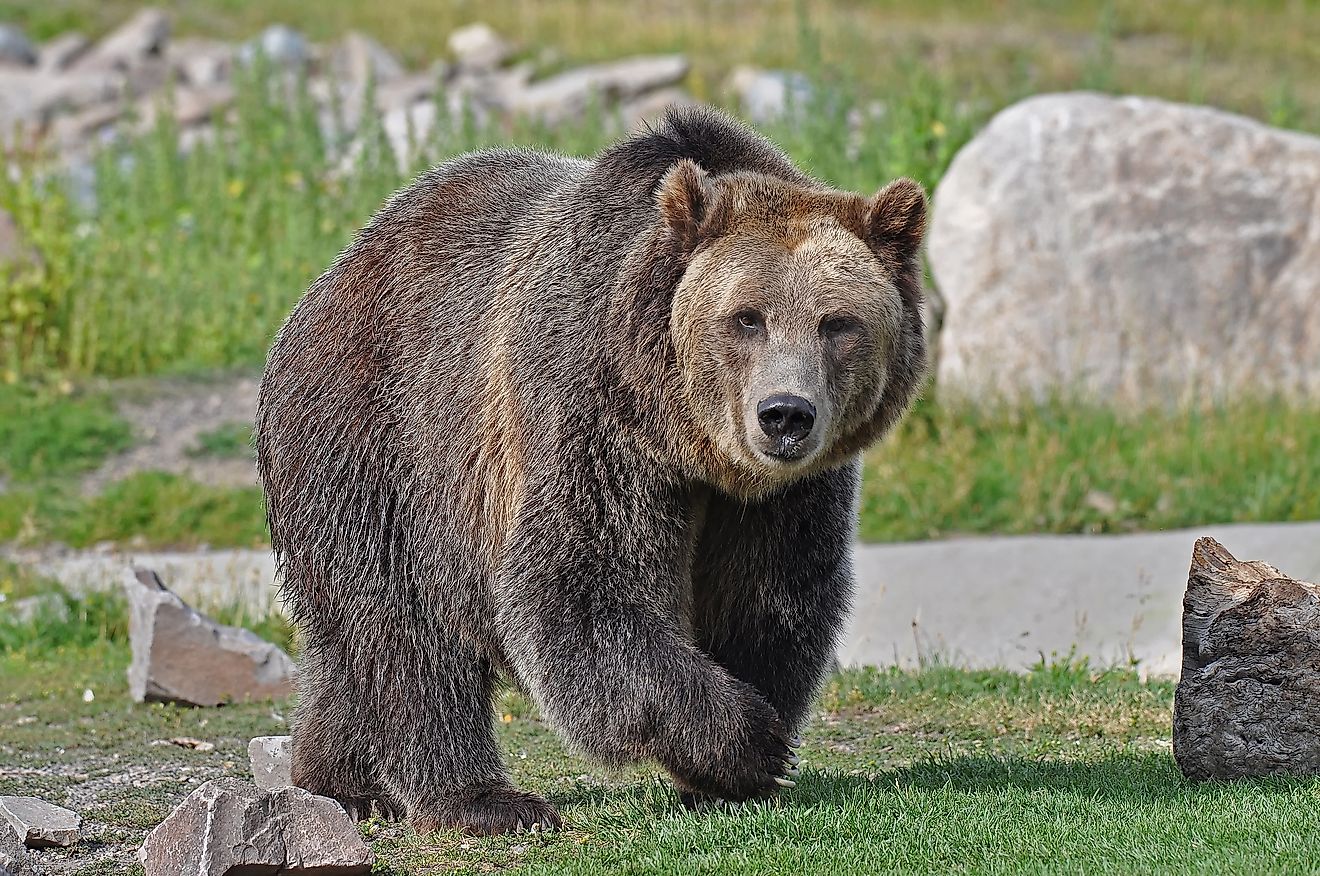
Many visitors who see bison in Yellowstone, Theodore Roosevelt National Park, or Elk Island National Park often underestimate them. An adult bull can weigh up to 2,000 pounds and run as fast as 35 miles per hour. According to the National Park Service, bison have injured more people in Yellowstone than any other animal. The Jackson Hole News&Guide reported at least eight gorings in the park between 2022 and mid-2026. For example, on June 26, 2026, a bison injured a 12-year-old near Mud Volcano, and on July 10, a bull tossed a man into the air at Bridge Bay Campground.
Park rules require visitors to stay at least 25 yards from bison and other large animals. Most gorings happen when someone gets too close, often to take a photo. If a bison raises its tail, paws at the ground, or turns to face you, it might be about to charge. The safest thing to do is back away slowly and put something solid, like a car, tree, or building, between you and the animal. Give extra space to cows with calves in the spring and to bulls during the summer rut. If you see bison on roads or boardwalks, let them pass first.
A Recovery With Limits

The bison that Hornaday prepared for the Smithsonian was on display in Washington from 1888 until the museum took it down in 1957. In 1996, the restored group went back on display in Montana, where the Museum of the Northern Great Plains in Fort Benton now cares for it. Hornaday created the display to document an animal he thought the country would lose, as he explained in his 1889 report. Within a generation, the country he wrote for had protected the bison, raised it in public and private herds, and even put it on the 1913 nickel. In 2016, Congress named the bison the national mammal of the United States, about 140 years after the federal government chose not to stop its slaughter.
The bison survived because a small group of ranchers, soldiers, tribes, and scientists took action before the last animals were gone. The plains, however, never returned to their original state. Farmers plowed the grass, ranchers put up fences, and under state livestock laws, managers still see most bison that leave protected land as a problem to remove. Today, about 31,000 bison live in conservation herds across North America. Yellowstone has the only herd in the United States that has lived wild on the same land since before the mass slaughter. These numbers show the species was saved, but not fully restored.
Today, Native nations, conservation groups, and park agencies lead most of the efforts to restore bison. They keep moving bison onto tribal lands, grasslands, and parks in both Canada and the United States. Most of these herds have only a few hundred animals, and almost all are surrounded by fences. Bison breed easily when given enough space, so their future on the Great Plains depends on how much land people are willing to provide.