Where Rattlesnakes Live In The United States
Rattlesnakes are one of America's most iconic, and most feared, animals, and they live in a lot more of the country than most people realize. Picture a rattlesnake and you probably imagine a sun-baked desert, but these snakes have fanned out into forests, prairies, swamps, and mountains from coast to coast. Nearly every single state has at least one kind. Here is the real map of where rattlesnakes actually live in the United States.
Nearly Everywhere

Let's start with the headline: rattlesnakes are almost everywhere. There are roughly 36 species across the Americas, about 20 of which call the United States home, and they turn up in 46 of the 50 states. Only four states are completely free of them, which we will get to at the end. So unless you happen to live in one of those lucky few, the honest answer to "are there rattlesnakes near me?" is almost certainly yes. They are desert animals at heart, but they are remarkably adaptable, thriving just about anywhere warm enough that offers rocks, cover, and rodents to eat.
The Southwest Is the Epicenter

If rattlesnakes have a capital, it is the desert Southwest. Arizona alone is home to somewhere between 13 and 15 species, more than any other state in the country, with California, Texas, New Mexico, Nevada, and Utah not far behind. This is the land of the western diamondback, the most widespread rattlesnake in the US and the one responsible for a large share of its snakebites, alongside the famously potent Mojave rattlesnake and the sidewinder, which throws itself across loose dunes in a signature looping, sideways crawl. Warm, rocky, and loaded with prey, the Southwest is simply rattlesnake heaven.
The Great Plains

March out onto the grasslands and you will meet the prairie rattlesnake, the undisputed ruler of the Great Plains. This tough, adaptable species ranges across an enormous stretch of the middle of the country, from the Canadian border down to Mexico, and from Montana and the Dakotas through Nebraska and Kansas and into Texas. It hunts prairie dogs and ground squirrels across the open range, and often dens in rocky outcrops and, fittingly, inside abandoned prairie dog burrows.
The Eastern US
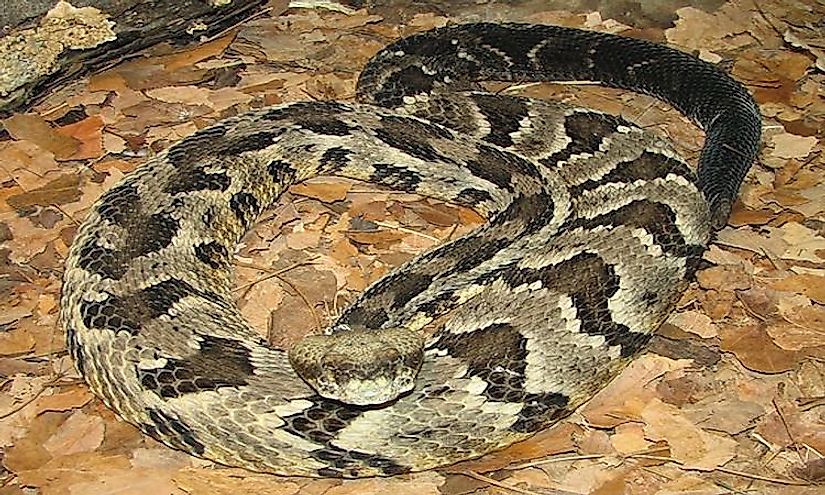
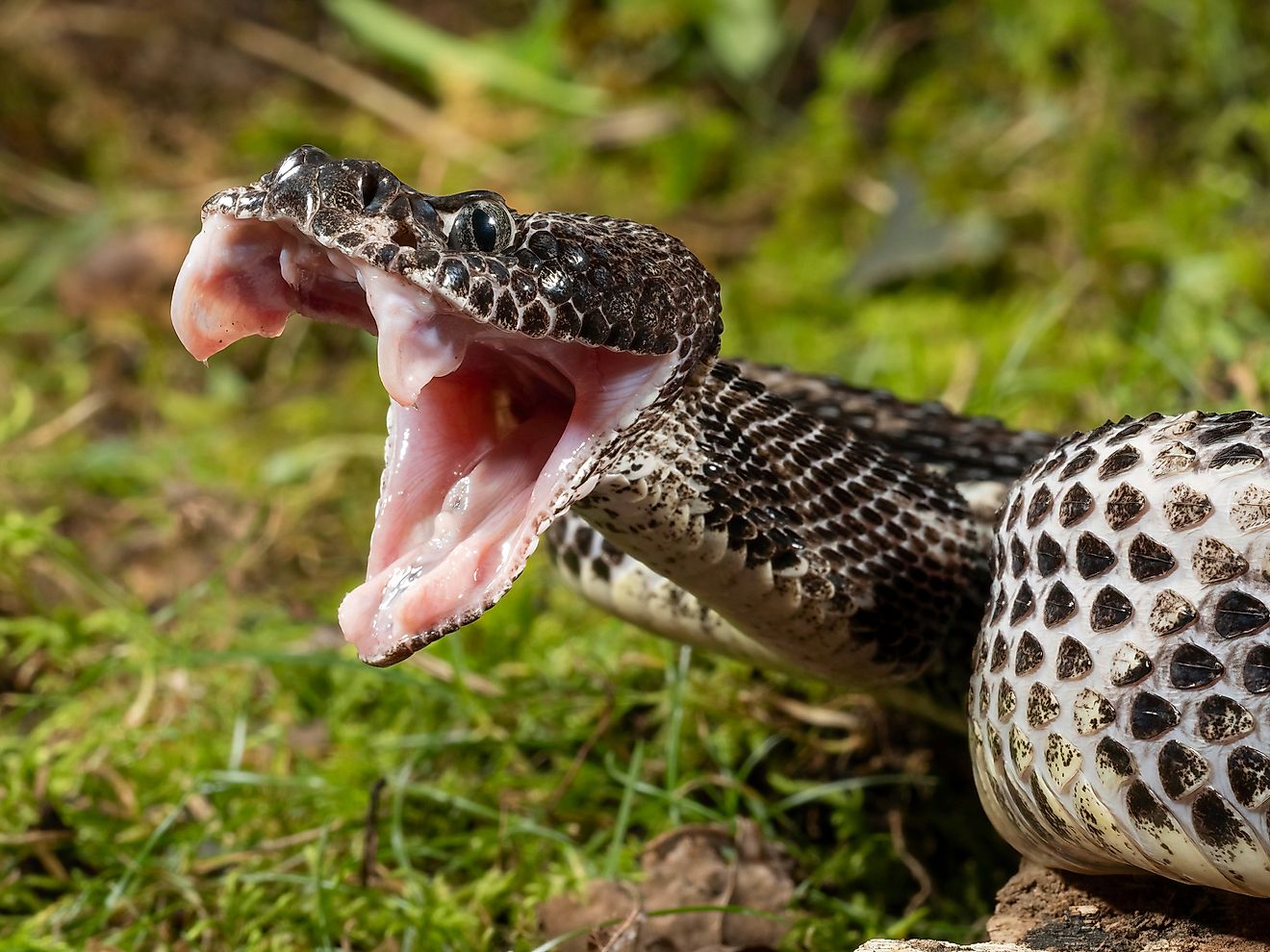
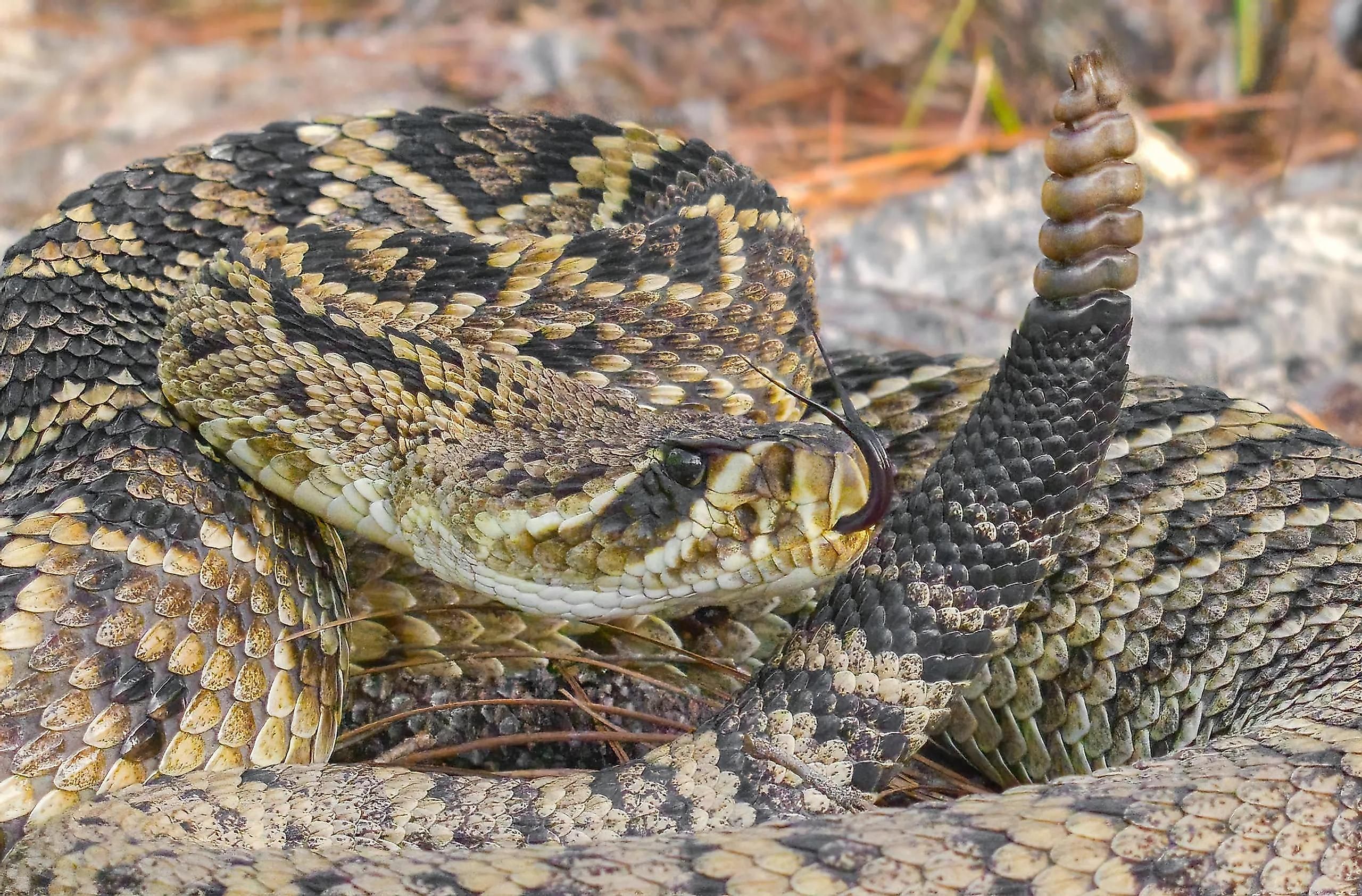
Rattlesnakes are not just a western thing. Across the eastern US, the timber rattlesnake haunts the forested ridges of the Appalachians and spreads north through the woodlands all the way into New England. Down in the Southeast lives the eastern diamondback, the largest rattlesnake on Earth, which can stretch beyond seven feet and prowls the pine flatwoods and coastal plains of Florida and Georgia. The region's pint-sized pygmy rattlesnake rounds out the Southeastern lineup.
The West Coast

Out along the Pacific, one species does most of the work: the Northern Pacific rattlesnake. It is the only rattlesnake found in either Washington or Oregon, where it keeps to the dry, rocky country east of the Cascades rather than the rainy coastline, and it ranges down through much of California as well. If you are hiking the dry, sunny hills anywhere along the West Coast, this is the snake to keep an eye out for.
The States With None

Finally, the good news for the snake-averse. Just four states have no rattlesnakes whatsoever: Alaska, Hawaii, Maine, and Rhode Island. Alaska is simply too cold, and in fact has no native snakes of any kind. Hawaii's extreme ocean isolation kept land snakes from ever reaching it in the first place. Maine and Rhode Island, meanwhile, did once have timber rattlesnakes, but early settlers hunted them out, so the species is now considered extirpated, meaning locally wiped out, in both. Delaware's lone population is clinging on by a thread, too. Just about everywhere else, though, rattlesnakes remain a genuine part of the American landscape, so wherever you roam, it always pays to watch where you step.