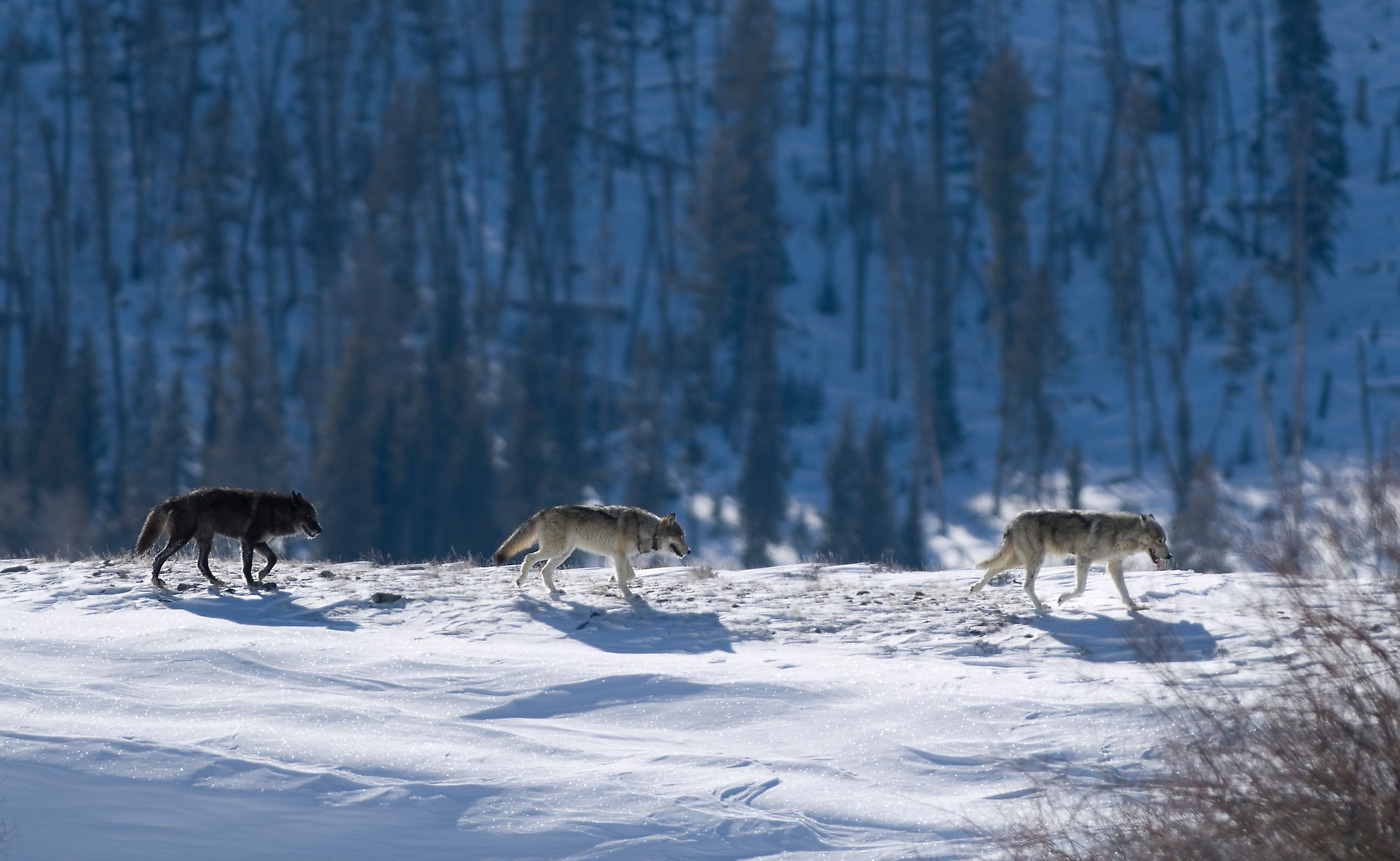
Where Coyotes And Wolves Overlap In The United States
When gray wolves returned to Yellowstone in 1995, the park's coyotes fell by as much as half. That collision is the sharp edge of a relationship that plays out anywhere the two canids share ground. Coyotes have spread into nearly every landscape in the United States, while wolves hold a much narrower range across Alaska, the northern Rockies, the Great Lakes, the Pacific Northwest, the Southwest, and one corner of North Carolina. Where those ranges meet, coyotes give wolves a wide berth, scavenge their kills, and in North Carolina even interbreed with them. GPS collars, trail cameras, and winter surveys have mapped where the two animals cross paths.
Yellowstone National Park, Wyoming and Montana

Yellowstone gave researchers a rare chance to watch what happens when wolves move back into country packed with coyotes. Gray wolves were reintroduced in 1995. Coyotes were already common across the park, especially on the open northern range. National Park Service research found that coyote numbers there initially dropped by as much as 50 percent. Wolves killed adult coyotes and pups, and fights were especially likely around carcasses. Competition over food and territory added more pressure. Coyote numbers later began recovering in areas such as Lamar Valley. National Park Service: https://www.nps.gov/yell/learn/nature/coyote.htm
Coyotes still show up around wolf kills. A carcass can offer days of food, provided the wolves have moved far enough away. Rodents, rabbits, carrion, and young ungulates also keep coyotes busy across the valley floor. Yellowstone's open terrain means some of these encounters actually play out within sight of roads and overlooks. One hillside can hold a wolf pack, scattered elk, and coyotes waiting for a safe chance at leftovers.
Denali National Park and Preserve, Alaska
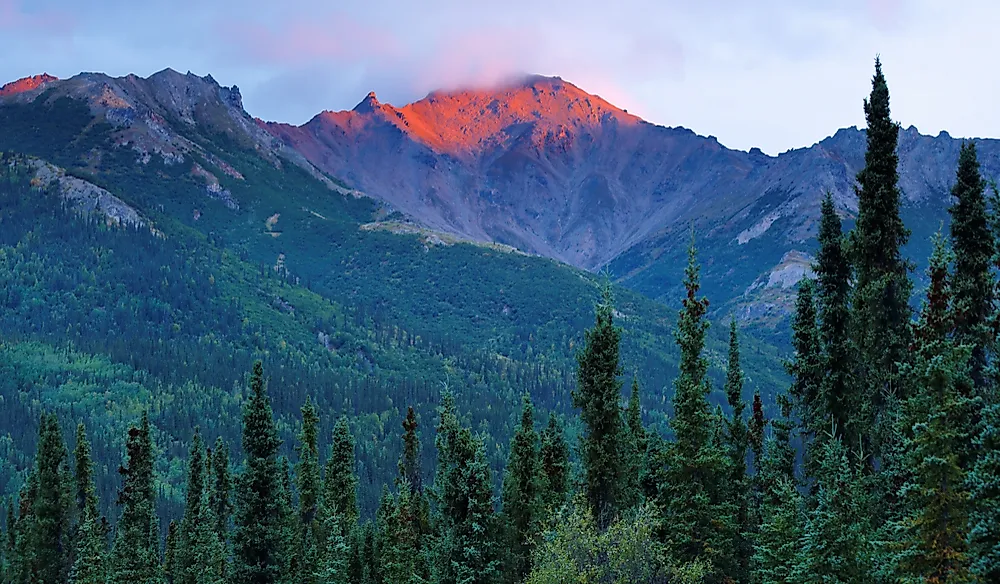
A coyote in Denali may wander across a seriously large patch of Alaska. Researchers GPS-collared nine coyotes during a multiyear National Park Service study. Their average home range covered about 291 square kilometers, or 112 square miles. Scientists compared those movements with locations recorded for collared wolves. National Park Service: https://www.nps.gov/articles/denali-crp-mesocarnivore.htm
Summer coyotes generally kept their distance. They avoided nearby wolves and parts of the landscape receiving heavy wolf use. Winter produced a different picture. Coyotes began using some wolf-heavy areas and occurred closer to wolves than the researchers expected. Deep snow may make established travel routes more useful, while wolf-killed prey offers a tempting supply of meat.
There is a cost to getting too close. The study recorded annual coyote survival at about 50 percent, and large carnivores accounted for the biggest share of known deaths. Across Denali's river valleys, tundra, and spruce country, a coyote can spend one season dodging wolves and another picking through food they leave behind. National Park Service: https://www.nps.gov/articles/000/coyotesandwolves.htm
Greater Voyageurs Ecosystem, Minnesota

Northern Minnesota never completely lost its wolves, so coyotes entering the forests around Voyageurs stepped into a landscape where the larger canid was already established. The Greater Voyageurs Ecosystem covers roughly 2,338 square kilometers near the Canadian border. Wolves there move through hardwood forest, spruce bogs, rocky ridges, wetlands, and an extraordinary concentration of lakes and beaver ponds. Coyotes use the same broader ecosystem. The Voyageurs Wolf Project lists both among the area's resident mammals and has documented wolf densities around 35 to 45 animals per 1,000 square kilometers during long-term research. GPS collars have produced tens of thousands of wolf locations, giving researchers unusually detailed maps of pack territories. Coyotes are harder to notice among the trees, but tracks and cameras regularly reveal smaller canids working the same northern woods. White-tailed deer, snowshoe hares, rodents, carrion, and other food sources give them plenty of reasons to stay. Voyageurs Wolf Project: https://www.voyageurswolfproject.org/greater-voyageurs-ecosystem
Northeastern Washington and the Okanogan

Washington wildlife researchers went straight at the overlap question by putting GPS collars on both species. The Washington Predator-Prey Project tracked wolves, coyotes, cougars, bobcats, elk, and deer in the same study landscapes. Fieldwork covered parts of Stevens, Pend Oreille, and Okanogan counties, all areas where wolves had recolonized ground already occupied by coyotes. Researchers also deployed 100 motion-sensitive cameras and more than 150 audio recorders. Washington Department of Fish and Wildlife: https://wdfw.wa.gov/predator-prey-study
The scenery changes quite a bit across those counties. Northeastern Washington has thick forests close to Idaho and Canada, while the Okanogan includes dry valleys, shrub country, and rugged mountains. Coyotes handle all of it. Wolves returned naturally to Washington, with the state's first confirmed modern resident pack recorded in Okanogan County in 2008. By the end of 2025, wildlife officials counted at least 270 wolves in 49 packs statewide. Tracking coyotes alongside them allowed biologists to see how a smaller predator behaved after wolves reclaimed the same hunting grounds.
Mexican Wolf Country, Arizona and New Mexico

Eastern Arizona and western New Mexico have their own version of the wolf-coyote story. The wolves here belong to the Mexican wolf subspecies, the smallest gray wolves in North America. Coyotes already occupy the forests, grasslands, and uplands used by the recovering population. The U.S. Fish and Wildlife Service specifically warns that the two can be confused where their habitat overlaps, although adult wolves are considerably larger and longer-legged. Elk and deer make up important wolf prey, while coyotes work the same country for smaller animals, carrion, and whatever other opportunities appear. Only four Mexican wolves were counted in the wild in 1998. The minimum population estimate reached 319 animals in 2025, including 143 in Arizona and 176 in New Mexico. Twenty-three breeding pairs were recorded that year. More wolves now roam this country than at any point since the reintroduction program began, putting coyotes in contact with a predator that was nearly absent a few decades ago. U.S. Fish and Wildlife Service: https://www.fws.gov/media/size-comparison-wolves-and-coyotes
Michigan's Upper Peninsula
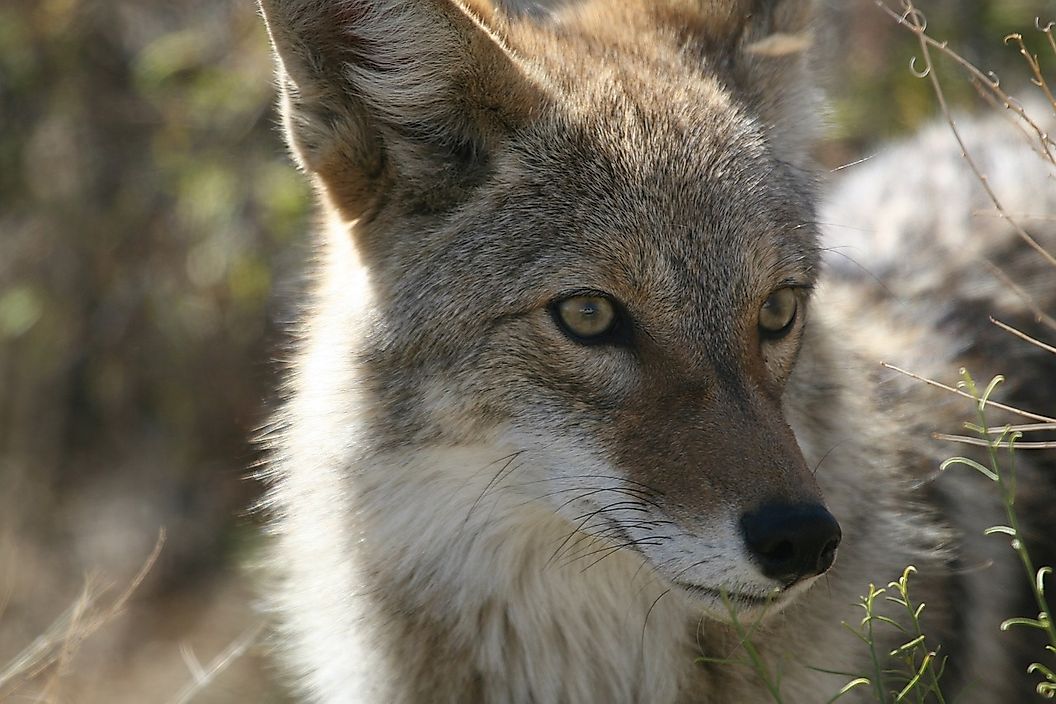
A camera in the Upper Peninsula has a decent chance of seeing both members of this canine pairing. Michigan's 2024 winter survey estimated at least 768 wolves across the U.P. The Department of Natural Resources has also installed more than 1,300 motion-triggered cameras along secondary roads and snowmobile trails. By July 2025, that network had collected nearly 1.5 million wildlife photographs. White-tailed deer dominated the images. Coyotes came second, while gray wolves appeared regularly too. The overlap was close enough to create a technical headache. Automated image software occasionally struggled to distinguish one canid from the other, leaving human reviewers to make the call. Away from the cameras, both species travel through hardwood forest, cedar swamps, wetlands, and miles of lightly populated country. Coyotes may be far more widespread, but in the Upper Peninsula they routinely move through landscapes occupied by established wolf packs. Michigan DNR: https://www.michigan.gov/dnr/education/michigan-species/mammals/wolves-in-michigan
Northern and Central Wisconsin

Wisconsin's wolf population is no small remnant. During the winter of 2024-2025, state biologists estimated 1,087 to 1,379 pack-associated wolves. The most likely estimate was 1,226 animals in about 336 packs. Most live across northern Wisconsin and the state's central forest. Wisconsin DNR: https://dnr.wisconsin.gov/topic/WildlifeHabitat/wolf
Coyotes have a much wider state distribution, so their range cuts directly through those wolf territories. The two animals hunt at very different scales. Wolves concentrate heavily on deer and other sizable prey. Coyotes rely more on rabbits, rodents, carrion, young animals, and other smaller meals. That does not keep them apart. Both move along logging roads, forest edges, wetlands, and frozen waterways during Wisconsin winters.
Snow makes some of the overlap easy to spot even when the animals stay out of view. A wolf track can be nearly twice the width of a coyote track, leaving two very different sets of prints across the same backcountry roads. Wolves also defend their territories against other canids, so a coyote moving through pack country has good reason to keep tabs on who has been there first.
Albemarle Peninsula, North Carolina
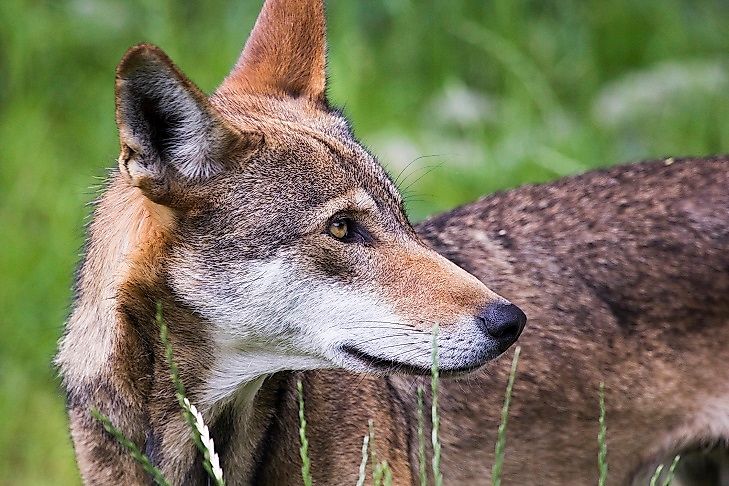
The canid situation in eastern North Carolina gets stranger than anywhere else on this list. The Albemarle Peninsula contains the only wild population of red wolves. Reintroduction began at Alligator River National Wildlife Refuge in 1987, and the current recovery area covers Beaufort, Dare, Hyde, Tyrrell, and Washington counties. Coyotes later established themselves in the same pocosin wetlands, pine woods, farm fields, and refuge lands. They brought a problem that wolves in Yellowstone or Alaska do not face. Red wolves and coyotes can produce fertile hybrids. U.S. Fish and Wildlife Service: https://www.fws.gov/project/red-wolf-recovery-program
Wildlife managers responded with an unusual technique. Some coyotes were captured, sterilized, fitted with radio collars, and released back into their territories. A sterile coyote could continue defending its patch against fertile newcomers without producing coyote pups or wolf-coyote hybrids. That bought managers time for red wolves to establish territories nearby. The numbers remain tiny. In August 2026, federal biologists estimated only 22 to 23 adult and subadult red wolves in the wild, plus 14 to 15 pups. Few places show wolf-coyote overlap with consequences this direct.