Where Cottonmouths Live In The United States
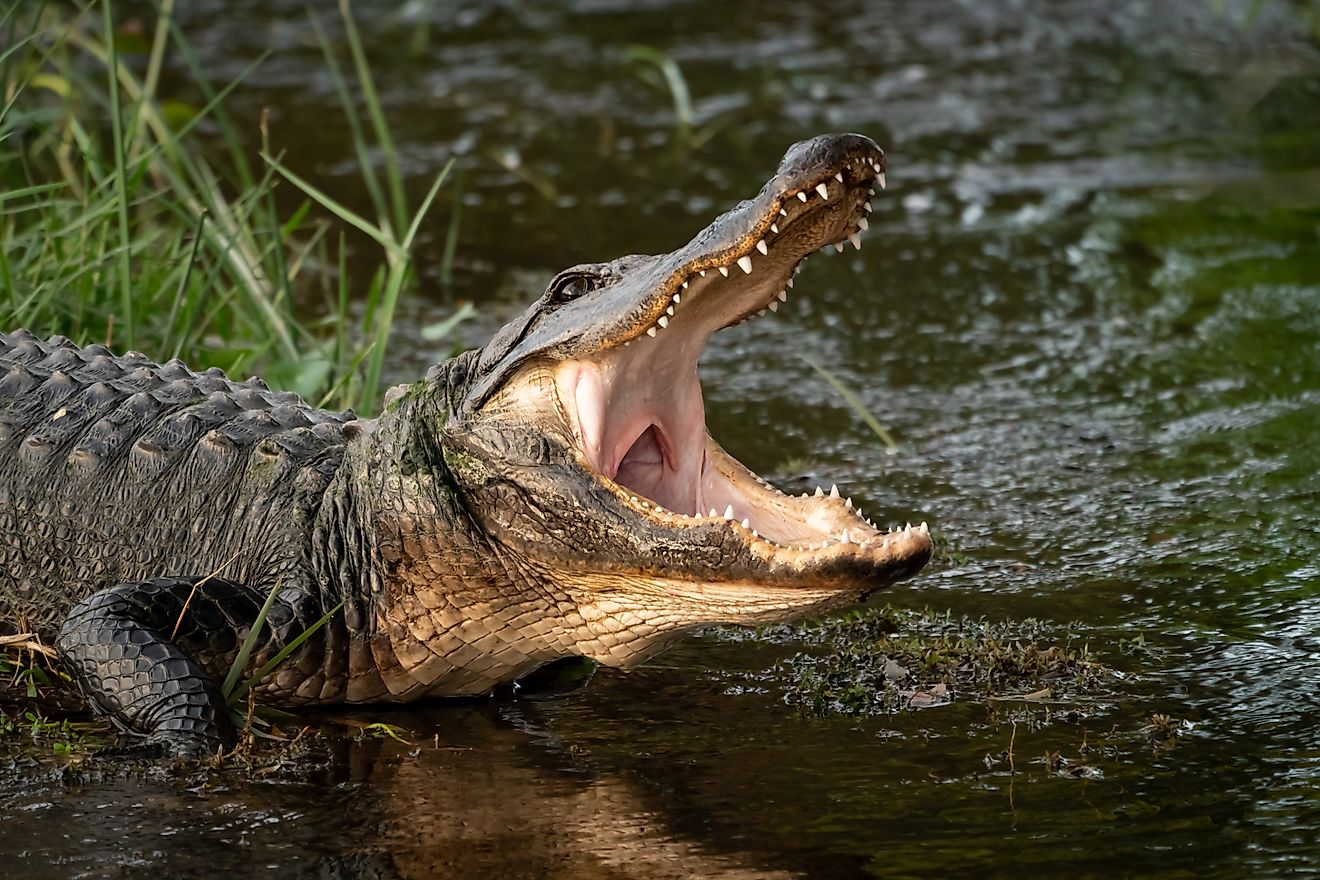
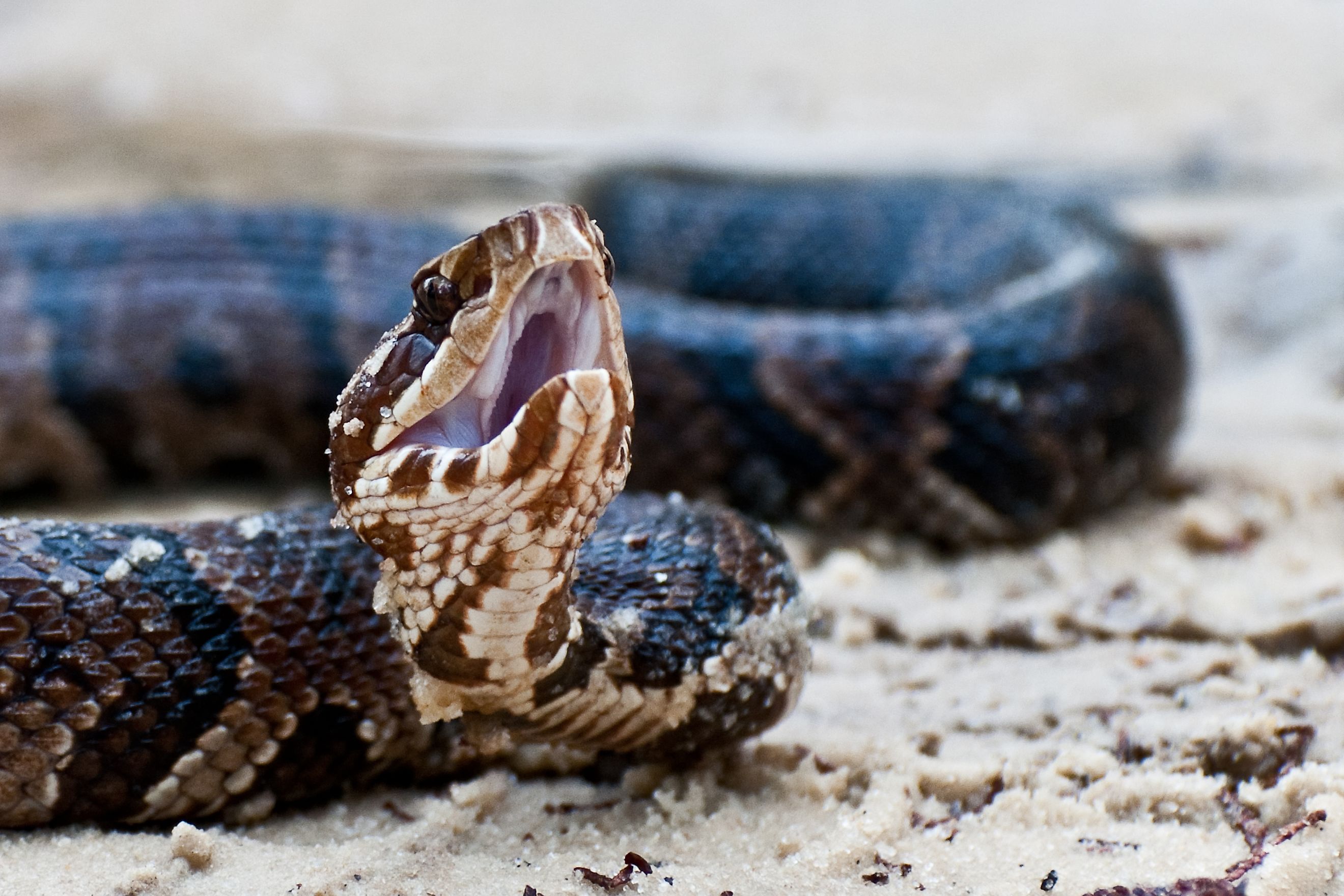
A cottonmouth caught in the open on a riverbank usually does one of two things. It holds still and gapes, showing the white lining of its mouth, or it drops into the water and swims off. Both are defense. Neither is a charge. The cottonmouth, or water moccasin, is the only semiaquatic pit viper in the United States, and where it lives is a simpler question than its reputation suggests. It lives near slow, warm water, and almost nowhere else.
The Core Range

The northern cottonmouth lives in the lower Southeast. Its northern limit is in southeastern Virginia, near the Great Dismal Swamp and the James River. From there, it ranges south through the coastal plains of North Carolina and South Carolina, across southern Georgia, and throughout Florida. To the west, it follows the Gulf coastal plain through Alabama, Mississippi, and Louisiana into eastern and central Texas. Inland, cottonmouths can be found in the wetlands of Arkansas and reach into eastern Oklahoma, southeastern Kansas, and Missouri. Along the Mississippi River valley, the species extends to southern Illinois and southwestern Indiana, with the western edges of Kentucky and Tennessee marking its boundary. Cottonmouths do not climb into higher elevations. They disappear above the fall line and are not found in the Appalachians or the dry interior west.
Two Cottonmouths, Not One

For most of the last century, people thought the cottonmouth was a single species with three subspecies. But genetic studies from 2014 and 2015 changed that. Now, the snake found in peninsular Florida and the far south of Georgia is its own species, called the Florida cottonmouth, Agkistrodon conanti. Snakes found farther north and west are the northern cottonmouth, Agkistrodon piscivorus, and the old eastern and western subspecies are no longer recognized. These two species look very similar in the wild. If you see a dark, heavy-bodied snake in Florida water, it is almost always a Florida cottonmouth. The same kind of snake in a Missouri stream is the northern cottonmouth.
The Water Is The Habitat

Habitat truly defines where cottonmouths live. These snakes stay close to water, sticking to its edges. They turn up in cypress swamps, river floodplains, oxbow lakes, sloughs, marshes, wet prairies, farm ponds, rice fields, and irrigation ditches. Their range stretches from freshwater areas out into brackish marshes, barrier islands, and keys along the Gulf and Atlantic coasts. Cottonmouths sometimes cross dry ground between wetlands, usually after it rains, but they rarely stray far from water. During the hottest months, they are active at dusk and after dark, resting during the day on banks, logs, or overhanging branches. Their diet is varied. Cottonmouths eat fish, frogs, salamanders, other snakes, lizards, small mammals, birds, and even small turtles. They will scavenge a dead fish just as readily as they will ambush a live frog. Each cottonmouth usually stays within a small home range, often just a couple of acres, centered around a pond, slough, or stretch of bank. Because they can eat carrion, cottonmouths can survive almost anywhere as long as the water does not dry up.
Seahorse Key

The best example of how cottonmouths gather comes from a small island off Florida's Gulf coast. Seahorse Key, about three miles southwest of Cedar Key, has one of the highest cottonmouth populations ever recorded. Instead of hunting in the water, the snakes gather on the forest floor under a large rookery of herons, egrets, pelicans, and cormorants. They eat fish that the birds drop or spit up from their nests above. Biologists from the University of Florida have studied the island for decades and call this setup almost a mutualism. The birds accidentally feed the snakes, and the snakes keep rats away from the nests. Some of the cottonmouths there are among the biggest pit vipers the researchers have ever handled.
In 2015, the birds left Seahorse Key almost all at once for reasons that are still unclear, and the snakes soon grew fewer as well. The island sits within the Cedar Keys National Wildlife Refuge and is closed to general public access, so what happens there plays out mostly in front of the researchers who track it.
The Aggression Myth

The cottonmouth's reputation is worse than its actual behavior. In a 2002 study from the Savannah River Ecology Laboratory, two biologists looked at how wild cottonmouths react to people. Out of 45 snakes found in the open, 23 tried to get away. When the researchers used a fake hand to touch them, most snakes opened their mouths, shook their tails, or released a bad smell, and only 13 out of 36 bit the fake hand. When they were stepped on, just one snake bit. Cottonmouths do not chase people. Their wide, white mouth is a warning sign, not an attack, and that's where the snake gets its name.
Bites And The Numbers

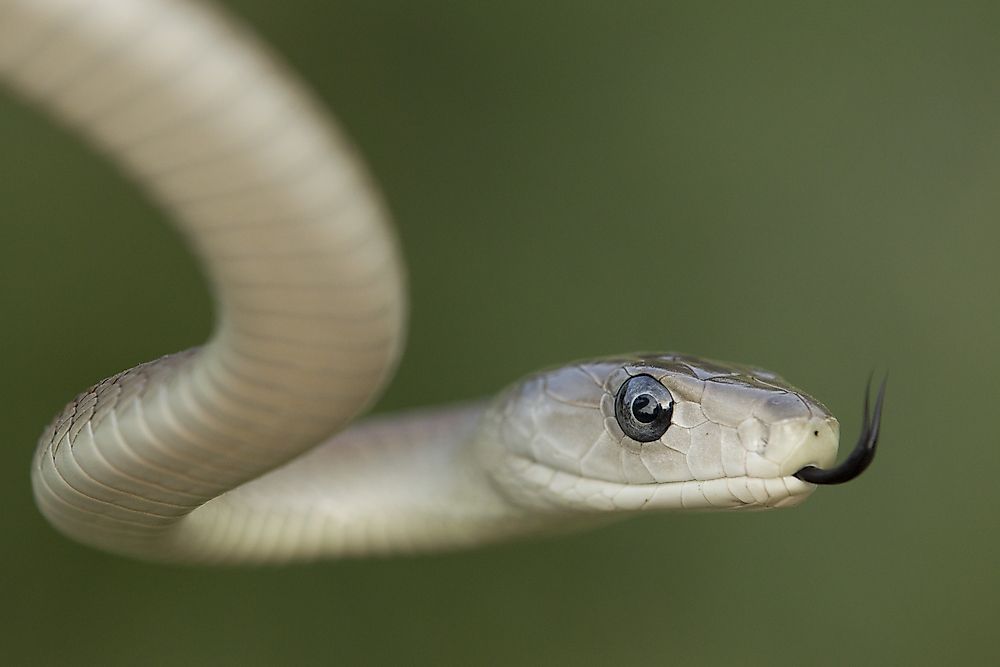
Serious cottonmouth bites do occur, but the actual risk is lower than many people think. The Centers for Disease Control and Prevention estimates there are about 7,000 to 8,000 venomous snakebites in the United States each year, with around 5 deaths. A 2020 review in the Southern Medical Journal found an average of about 9,200 emergency room visits for snakebites each year and about 6 deaths. Rattlesnakes were responsible for just over 70 percent of the venomous bites that could be identified. Rattlesnakes, copperheads, and cottonmouths together cause almost all venomous bites in the country. Copperheads bite the most people but rarely cause deaths. North Carolina has the highest rate of bites per person, several times the national average, which matches the trend in other states with the highest snakebite rates. Many snakes reported as cottonmouths are actually something else. Especially north of their range, harmless watersnakes in the genus Nerodia are often mistaken for cottonmouths. A cottonmouth bite can destroy tissue and may require antivenom, but with quick hospital care, it is rarely deadly. Seeing a dark snake in the water does not always mean it is a cottonmouth.
Staying Safe

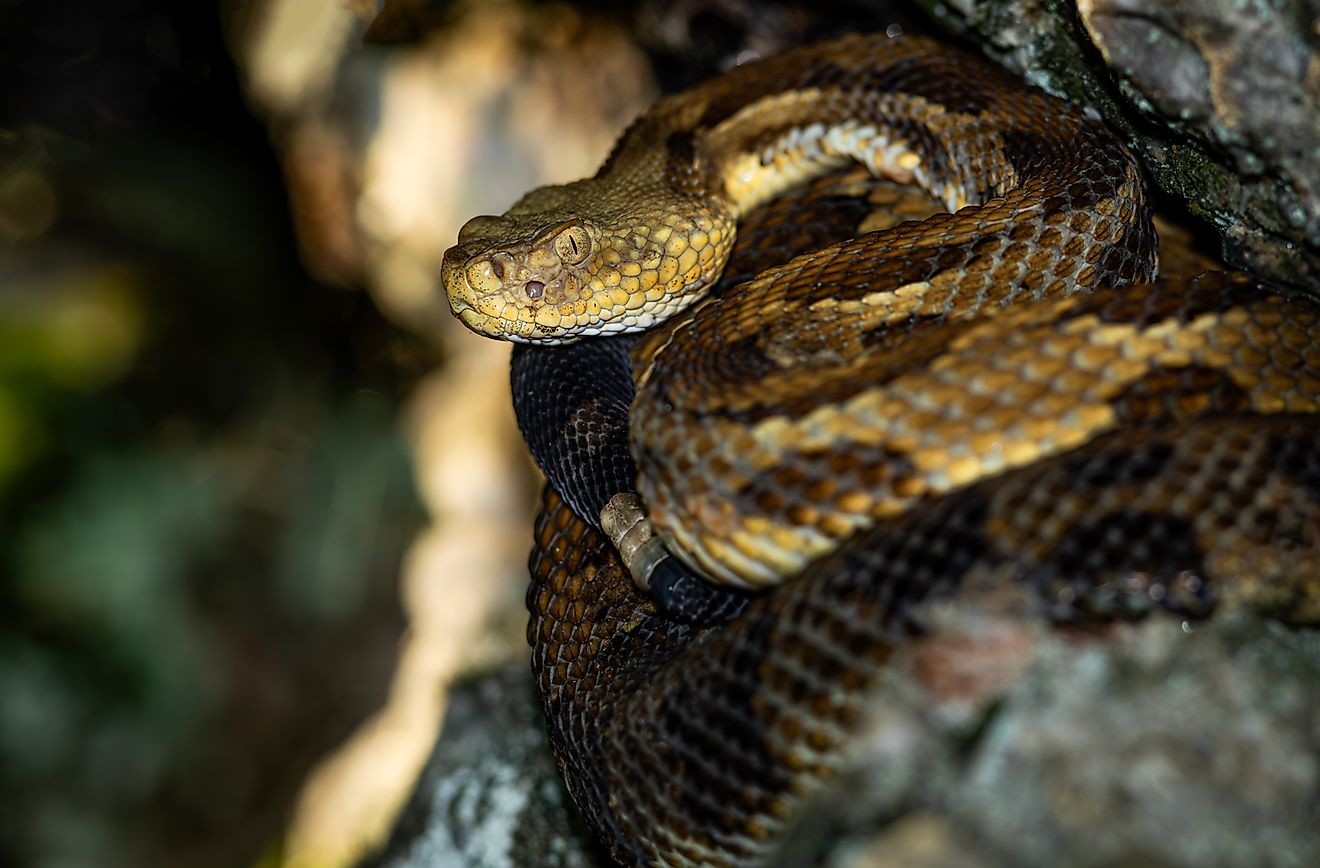
These practical rules come from how snakes behave. Be careful near slow-moving water and brushy banks, since you might get close to a resting cottonmouth without noticing. If you give any snake space, it will almost always move away. Do not attempt to handle or kill the snake. Many bites occur when people approach or try to capture it, unnecessarily exposing their hands and feet to a strike. In the fall, as water cools, cottonmouths like to bask in the open and may show up on docks and boat ramps, so it's smart to look twice before stepping onto a warm board. Across the South, cottonmouths share their habitat with rattlesnakes and other pit vipers like the timber rattlesnake, so the same precautions work for all of them. If you are bitten, it's a medical emergency and you should go to a hospital, not try a field remedy. Most people who leave cottonmouths alone are left alone, too. Usually, the snakes just go away.
Living With The Cottonmouth
For all its fearsome reputation, the cottonmouth is a predictable animal. It lives where there is slow, warm water and little else, across the lower Southeast, Virginia through Texas, and up the Mississippi valley into the lower Midwest. It would rather flee or flash its white mouth than bite, and the odds of a serious encounter are low for anyone who watches their footing and keeps their distance. Know the range, respect the water's edge, and leave the snake alone. Do that, and the cottonmouth stays exactly what it is, a part of the southern wetlands worth seeing and not worth fearing.