Why Snakes Come Back Out During A Warm Spell In November
By November, most people have mentally packed snakes away until spring, so it is a genuine surprise to round a corner on an unseasonably warm afternoon and find one stretched out across a sun-baked rock. Yet a warm spell in late fall reliably coaxes snakes back out, including the very ones that had already begun settling into their winter dens. The reason comes down to how cold-blooded animals actually handle winter, which turns out to be far less of a hard shutdown than most of us imagine. Rather than sleeping soundly through the cold months, a snake sits in a kind of weather-triggered standby mode, ready to stir the moment conditions allow. In other words, it is never truly "asleep for the season," and is only ever one sunny day away from making a reappearance. Here is why snakes come back out during a November warm spell, and what it means for you.
They Don't Truly Hibernate

The first thing to understand is that snakes do not actually hibernate the way a bear does. True hibernation is a deep, internally regulated process in which a warm-blooded animal deliberately drops its own body temperature and burns stored fat on a fixed schedule. What snakes do instead is called brumation, a lighter, reptile version of winter dormancy that is driven by the outside temperature rather than by any internal clock. During brumation a snake's metabolism slows almost to a standstill, its heart rate can fall to just a few beats per minute, and its digestion shuts down entirely. It turns extremely still and lethargic, which is exactly why you so rarely see one moving in the depths of winter. Crucially, though, a brumating snake is never knocked fully unconscious. It stays semi-aware the entire time, able to rouse itself, shift position, take a drink of water, and crawl to a better spot whenever the weather calls for it. As the saying among herpetologists goes, brumation is not a door that locks, and that single fact sits behind nearly every out-of-season sighting.
A Warm Day Resets Their Thermostat

Because snakes are cold-blooded, they cannot generate their own body heat and instead run entirely on warmth borrowed from their surroundings, a process biologists call thermoregulation. A snake tends to be at its best somewhere in the 70 to 90°F range, turns noticeably sluggish once temperatures slide below about 60°F, and can barely move at all near 50°F. During a genuine cold stretch there simply is not enough heat to go around, so the animal stays put underground and waits it out. But when a November warm spell nudges the afternoon back up above roughly 60°F, a snake's body warms enough to function again, and the obvious move is to slip out into the open and bask. A sun-warmed rock or a south-facing bank can run considerably hotter than the surrounding air, letting a chilly snake raise its body temperature quickly and recharge. That is precisely why these reappearances cluster around the warmest, sunniest part of the day, and why a snake will so often pick the most exposed, heat-soaked surface it can find. A few good hours of sun can be the difference between a barely-mobile animal and a fully functional one.
They React to Weather, Not the Calendar

This is the part that trips people up. Snakes do not retreat for the winter on a set date; they respond to sustained, consistent cold, not to the calendar simply flipping over to November. The real trigger is generally a run of days with temperatures holding below roughly 50 to 60°F, and until that settled cold actually arrives, snakes carry on much as before. That means an early cold snap can send them hurrying underground, only for a following warm spell to draw them right back out again a few days later. The timing also varies enormously by region: a snake in Minnesota may den up as early as September, while one in Texas might not fully settle in until December, if at all. The move to the winter den is therefore a gradual, weather-driven back-and-forth rather than one clean exit, and it carries real stakes, because a sudden hard freeze that catches a snake out in the open can kill it. For people, the upshot is simple. A bright, mild day right after a cold snap is precisely when you are most likely to be caught off guard by a snake you were sure had gone for the year.
What They're Doing Out There

A snake out on a warm November day is almost always there for a single reason: to warm up. It typically emerges from cover close to its den, often sliding just its head out of a burrow first before easing its whole body onto a sunny rock, a south-facing slope, a woodpile, or a warm concrete foundation. Once it has soaked up enough heat, it may also grab a quick drink of water to stay hydrated, and then it slides back into shelter the moment the afternoon starts to cool. What it is almost certainly not doing is hunting. A snake cannot properly digest a meal in cold conditions, and any food left sitting in its stomach through a cold snap would simply rot and could even kill it, so it stops eating well before winter and does not start again on a brief warm day. These are short, opportunistic outings, a quick top-up of heat and water before the long wait for spring picks back up. It also neatly explains the strangest sightings of all, like a snake stretched across a warm driveway on a sunny afternoon in the dead of winter.
Southern Snakes Barely Slow Down
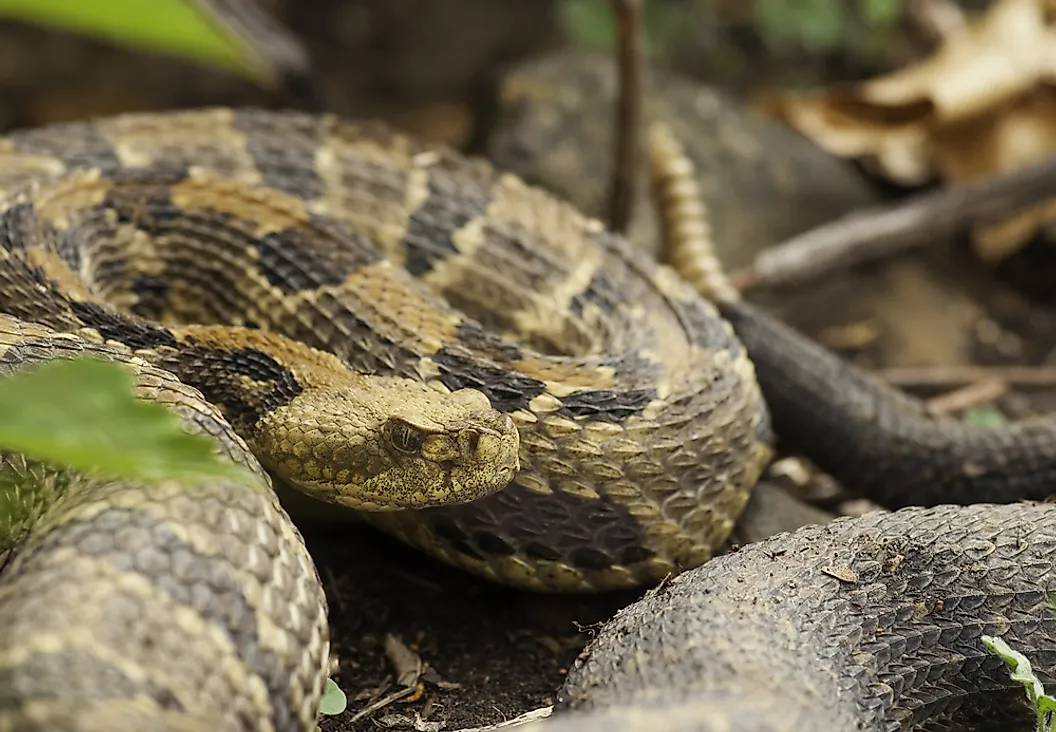
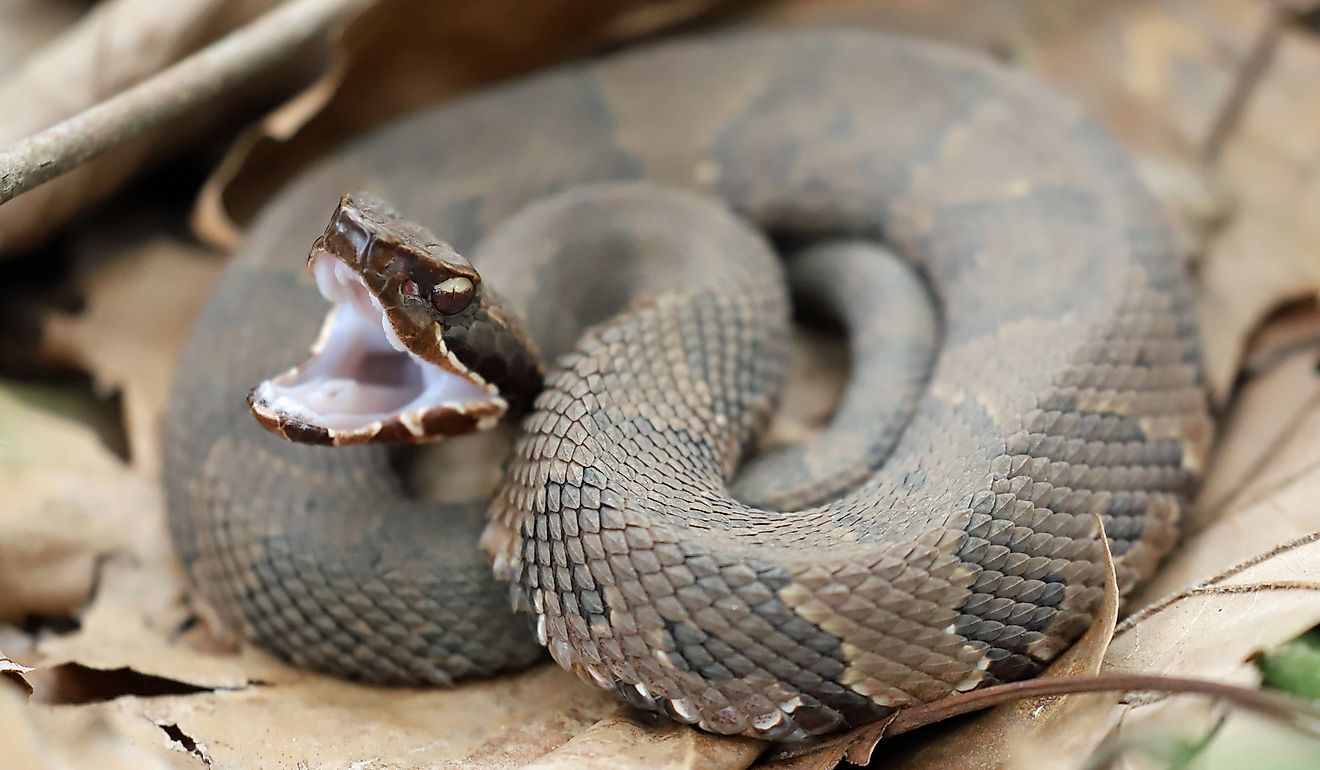
It is also worth remembering that most of the snakes people worry about live in the warm South, where this whole pattern runs on a very different setting. In the mild winters of Florida, the Gulf Coast, and the desert Southwest, it rarely stays cold for long, so snakes there often brumate only intermittently, surfacing during almost any warm stretch rather than vanishing for a fixed season. A copperhead in Georgia, a rattlesnake in Arizona, or a cottonmouth in Louisiana may well be seen basking deep into November and then back out within days all winter long whenever the sun returns. This is why "snake season" is really more of a Northern concept. Across much of the southern United States there is no clean off-switch at all, just a long spell of reduced activity broken up by warm-day appearances. If you live in snake country anywhere in the Sun Belt, a November warm spell is less an anomaly than a near-guarantee of seeing a few of them back in the open.
Don't Put Your Guard Down Yet

The practical takeaway from all of this is that a warm spell can bring surprise snake sightings well after you figured the season was safely over for the year. So on mild late-fall and winter days, it genuinely pays to stay alert around the places snakes actually den, including rock walls, woodpiles, brush piles, leaf litter, and the sunny spots right up against building foundations. Be especially careful about reaching into or shifting any of those without looking first. And do not make the mistake of assuming that sluggish means harmless, because a cool snake is not asleep and is certainly not safe to pick up, while venomous species such as copperheads, rattlesnakes, and cottonmouths can still deliver a full, dangerous bite if they feel cornered or get stepped on. The reassuring news is that the vast majority of snakes are completely harmless and genuinely useful, quietly keeping rodent numbers down, and none of them have the slightest interest in a confrontation. The rule stays the same as it always is: give any snake you spot plenty of room, and it will happily go right back to minding its own business until spring.