The Fastest Reptiles In The World
Reptiles will never out-sprint a cheetah, and most will never crack 25 mph (40 km/h), but the fastest of them are quicker than their reputations suggest, and the record book holds surprises. The fastest reptile ever reliably clocked is not a lizard on land but a turtle in the water, and the official fastest lizard earned its title on an actual racetrack. The six speedsters below hold the genre's best-documented numbers, from the bearded dragon's two-legged sprint to the black mamba's famous glide. One note on the figures: speeds marked with a tilde in the table are widely reported estimates, while the exact figures are measured records.
Bearded Dragon

Bearded dragons are a group of roughly half a dozen Australian lizard species in the genus Pogona, named for the spiny throat pouch that flushes black when a rival appears or stress sets in. They range across much of Australia, from eucalyptus woodlands and savannas to open desert, with males growing to about 24 inches and females to about 20.
The speed comes with a party trick: at full tilt, a bearded dragon rears up and sprints on its hind legs alone, and reported bursts reach around 25 mph (40 km/h). For an animal best known as a laid-back terrarium pet, the wild version is a surprisingly committed runner, using that pace to cross open ground between shelter and to chase down insects.
Leatherback Sea Turtle

The leatherback is the largest living turtle and, by measured record, the fastest reptile on Earth: it has been clocked at 21.92 mph (35.28 km/h) in the water, a figure no land reptile has matched under measurement. The sole member of the family Dermochelyidae, it swaps the bony shell of other sea turtles for a ridged carapace of oily flesh and leathery skin, a streamlined design that pairs with massive front flippers to produce the speed.
Leatherbacks cruise far more modestly, typically between 1.2 and 6.3 mph, but they cruise everywhere: the species ranges through every tropical and subtropical ocean and, thanks to an ability to keep its huge body warmer than the surrounding sea, follows jellyfish into cold waters as far as Alaska and Norway. The IUCN lists the species as Vulnerable, with several regional populations in steeper trouble.
Green Iguana

The green iguana is native to Central and South America and parts of the Caribbean, though its most famous modern address is one it invaded: south Florida, where escaped and released iguanas have multiplied into a full-blown invasive population, falling from trees during cold snaps and starring in local wildlife headlines. Despite the name, individuals range from green through blue, black, orange, and even pink, and big ones stretch to 6.6 feet, tail included.
On the ground, a startled green iguana is reported to hit around 21.7 mph (35 km/h) in short bursts, and it pairs the sprint with expert climbing and a readiness to dive straight from a branch into water below. Most active by day and rarely far from a river or canal, it is built for the quick escape rather than the long chase.
Black Spiny-Tailed Iguana

The official record for the fastest lizard belongs to the black spiny-tailed iguana (Ctenosaura similis) of Mexico and Central America, measured at 21.5 mph (34.6 km/h), a mark set when researchers timed the lizards along a purpose-built raceway in Belize and one that still stands in the record books. Unlike the soft estimates that follow most reptiles around, this number was earned under a stopwatch.
The record holder is a heavy-bodied, banded lizard with a ringed, spiny tail it swings in defense, equally at home on rocks, walls, and ruins. Like its green cousin, it has also colonized Florida as an invasive species. Young animals hunt insects before shifting to a largely plant-based diet as adults, and the sprint exists for one purpose: covering the open ground between a basking spot and a burrow faster than anything chasing it.
Black Mamba
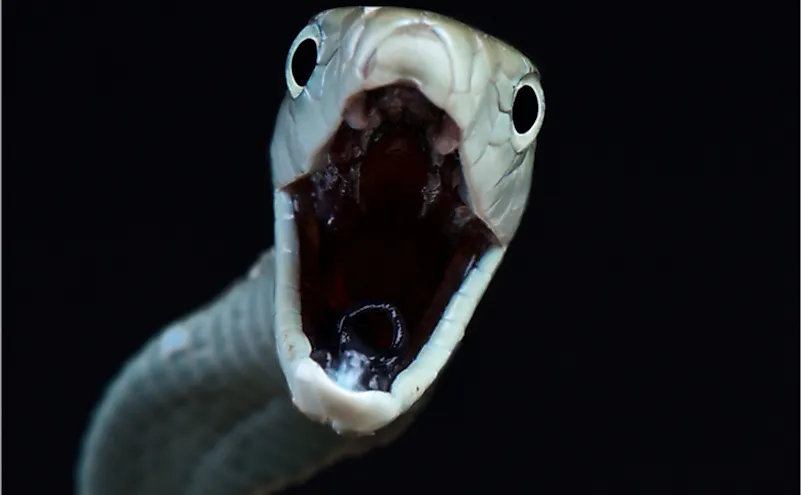
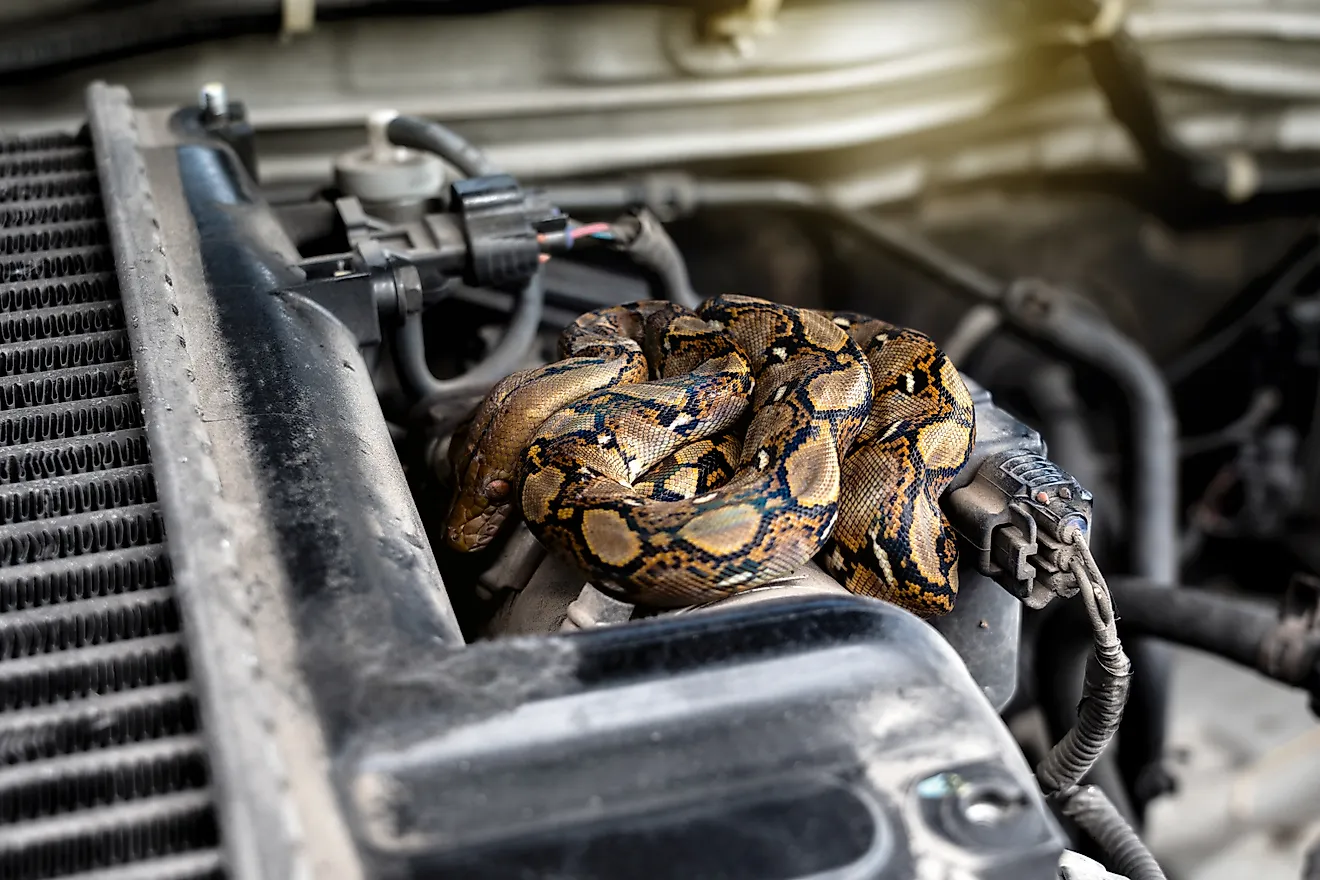
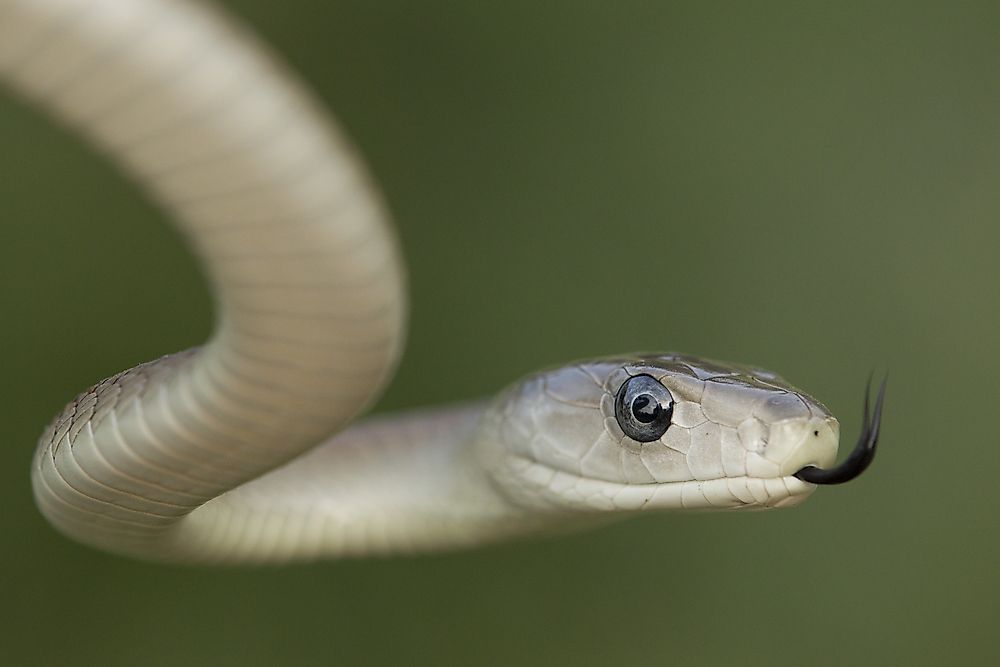
The black mamba of sub-Saharan Africa is the continent's longest venomous snake, typically 6.6 to 9.8 feet with exceptional individuals reported approaching 14 feet, and the fastest snake in the world, observed covering suitable open ground at around 14.3 mph (23 km/h). The name is a famous misdirection: the snake itself is gray to brown, and the "black" refers to the inky interior of the mouth it gapes wide as a threat display.
Mambas put the speed to practical use across woodlands, savanna, and rocky hills, hunting prey like bush babies and hyraxes and retreating fast when confronted. The strike matches the footwork, delivered at long range and often in rapid succession, which is why the species' fearsome reputation, for once, is largely deserved.
Komodo Dragon
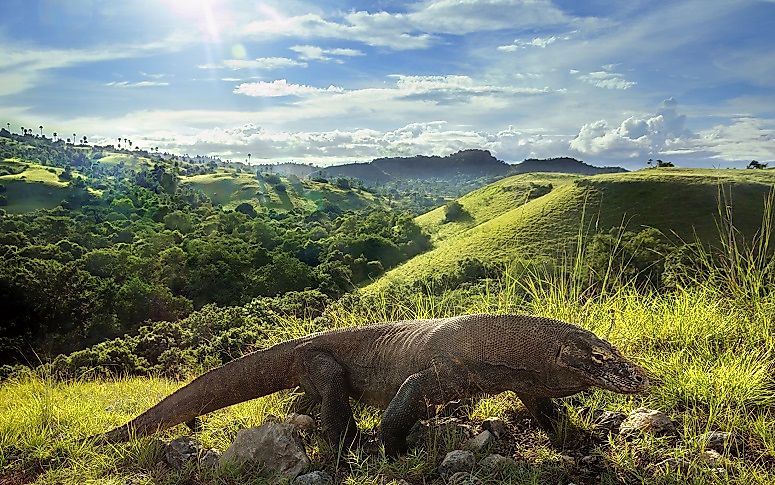
The Komodo dragon is the largest living lizard, a showcase of island gigantism native to the Indonesian islands of Komodo, Rinca, Flores, Padar, and Gili Motang. Big males reach 10 feet and average around 150 pounds, with heavyweights topping 200 in the wild, and researchers confirmed in 2009 that the dragon's bite is backed by true venom glands.
None of that bulk makes it slow. A charging Komodo dragon reaches about 13 mph (21 km/h), more than enough to ambush deer and pigs at close range, and it swims well enough to cross between islands and dive to around 15 feet. With only a few thousand left, the IUCN lists the species as Endangered, its island kingdom shrinking even as its legend grows.
The Fastest Reptiles In The World, Ranked
| Rank | Animal | Top speed, mph (km/h) |
|---|---|---|
| 1 | Bearded dragon | ~25 (~40) |
| 2 | Leatherback sea turtle | 21.92 (35.28), measured record |
| 3 | Green iguana | ~21.7 (~35) |
| 4 | Black spiny-tailed iguana | 21.5 (34.6), measured record |
| 5 | Black mamba | ~14.3 (~23) |
| 6 | Komodo dragon | ~13 (~21) |
Figures marked with a tilde are widely reported estimates; the leatherback and black spiny-tailed iguana figures are measured records, the latter holding the official title of fastest lizard.
Why Speed Matters To A Reptile
For a reptile, speed is rarely about the open chase; it is the margin between a basking rock and a burrow, between a strike that lands and a meal that escapes. The bearded dragon sprints to shelter, the mamba runs to avoid a fight it could easily win, and the leatherback outpaces everything in its ocean simply by being shaped correctly. Mammals keep the outright records, but within their scaly division, these six prove that cold-blooded does not mean slow.