Where Gray Whales Pass Closest To Shore In Winter
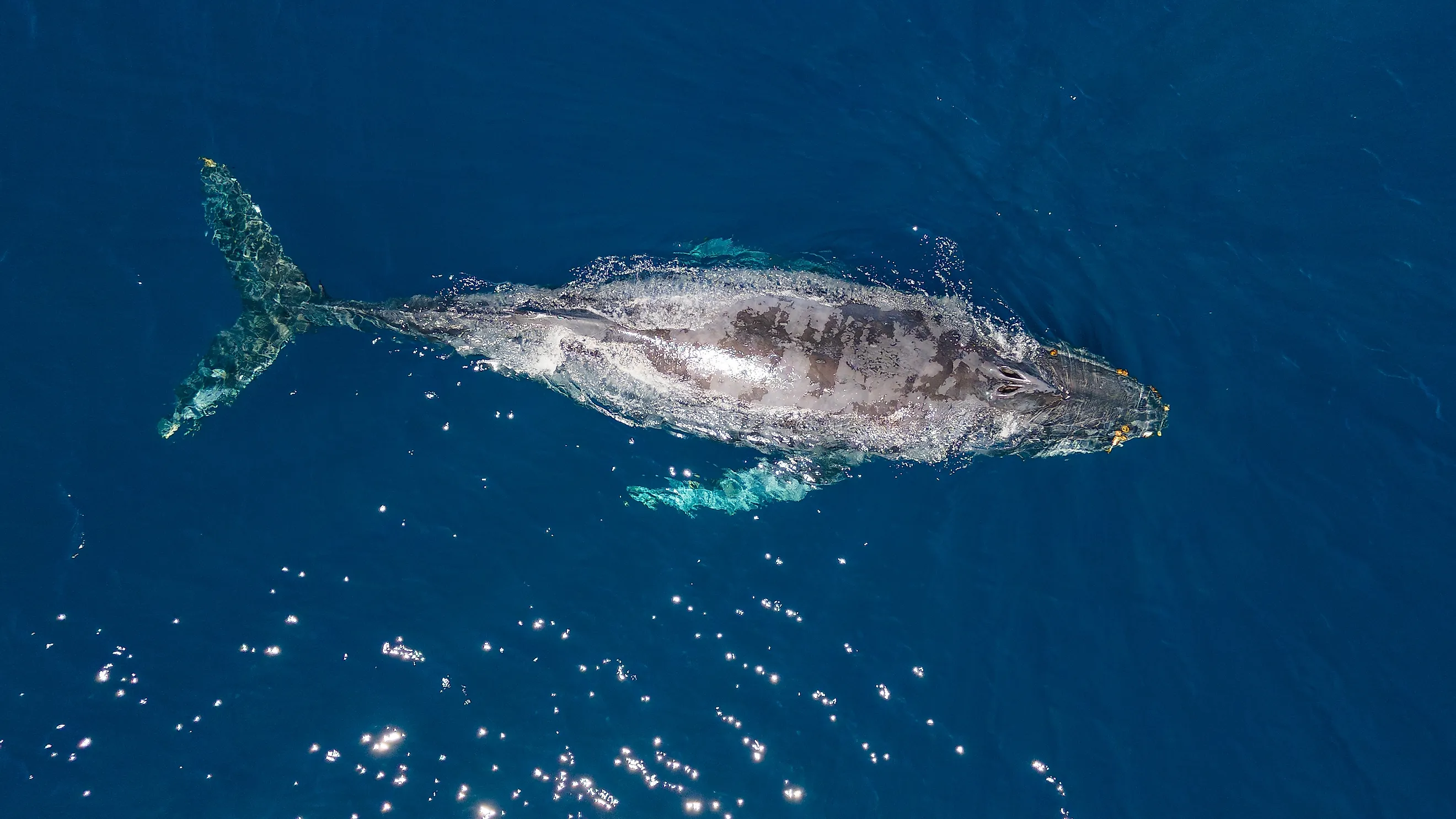
No great whale travels nearer to people than the gray whale (Eschrichtius robustus). Its eastern North Pacific population makes one of the longest migrations of any mammal, a round trip of roughly 10,000 to 12,000 miles between Arctic feeding grounds and the warm lagoons of Baja California. What makes this migration unusual is how close it comes to shore. Along parts of the North American coast, whales pass within 200 to 400 meters of the beach, making it the most visible whale migration in the world. In winter, that coast-hugging habit reaches its extreme in two very different settings. Along the open Pacific, the whales round projecting headlands within easy sight of land. In the Mexican lagoons at the end of the route, they come so close that people can touch them.
Why Gray Whales Travel So Close

Gray whales are the most coastal of the baleen whales. They are bottom feeders, rolling onto one side in shallow water and straining small invertebrates from the sediment, so their lives are tied to the continental shelf rather than the open ocean. In the fall, the eastern North Pacific whales leave their summer feeding grounds and head south along the coast of North America toward their wintering and calving areas off Baja California, Mexico. Scientists have tracked this journey from land for more than half a century. Shore-based observers have counted southbound gray whales along the central California coast in most years since 1967. That long record exists precisely because the animals stay close enough to count from a bluff.
When The Winter Passage Happens

The southbound migration is the winter event. NOAA's shore-based surveys run from December through February, and the bulk of the population moves past central and southern California across a few concentrated weeks around the New Year. By early February, most of the southbound whales have already passed the central California count stations. Where you watch from also matters. On their southbound journey, whales tend to stay farther offshore than they do in spring, when mothers and their newborn calves head north much closer to shore, sometimes just beyond the breaking waves. In winter the whales swim a bit farther from shore, which makes the best viewing spots those highest in elevation, where you can see farther out. Headlands and clifftops, not flat beaches, are the winter advantage.
Closest Of All: The Baja California Lagoons

The single place where gray whales come nearest to people in winter is the end of the migration, not the route. Three shallow, protected lagoons on the Pacific side of the Baja peninsula have long been recognized as the species' breeding and calving grounds: Laguna Ojo de Liebre (Scammon's Lagoon), Laguna San Ignacio, and Bahia Magdalena. Laguna Ojo de Liebre receives the greatest number of whales of any lagoon each year, and more than half of all gray whale births take place there. In mid-season it can hold well over a thousand animals at once.
Laguna San Ignacio is the one famous for close contact. Of the three lagoons, San Ignacio is regarded as the best for encounters, because the whales there are the friendliest. Each winter in lagoons like San Ignacio and Magdalena Bay, curious mother whales approach small boats, sometimes lifting their calves toward the surface. These waters are strictly managed. The lagoons sit inside the Vizcaino Biosphere Reserve and form the UNESCO-listed Whale Sanctuary of El Vizcaino, and whale watching is permitted only with licensed operators. The season there runs longer than the open-coast passage. Under Mexico's official 2025 to 2026 notice, viewing at Ojo de Liebre and San Ignacio is allowed between December 15 and April 30, with peak density in the stretch of mid-February to late March. Calving itself concentrates in the first weeks of the year, with newborns appearing in the lagoons between early January and mid-February.
California Headlands: Where The Open-coast Route Bends In

Along the United States coast, the winter whales pass closest where a point of land pushes out into their path. Three stand out. The Point Reyes peninsula in Northern California juts about ten miles into the Pacific, letting people on land get closer to migrating whales than almost anywhere else on the California coast, with the finest vantage points at the headlands near the lighthouse and Chimney Rock. Historically the densest close passage here ran through midwinter, roughly mid-December to mid-February. On the Palos Verdes Peninsula south of Los Angeles, the Point Vicente Interpretive Center is one of the top shore-viewing sites in the state, built on a high bluff that sits directly on the migration corridor as the whales round the peninsula. At the southern end of the California coast, Cabrillo National Monument on Point Loma places observers on an elevated promontory near the end of the whales' run to Mexico, a classic winter watch point.
Other reliable clifftop sites include Point Dume in Malibu and the undeveloped Dana Point Headlands in Orange County, both high bluffs at points that stick out into the ocean. The Big Sur coast adds dramatic range, where Highway 1 runs along high cliffs and gray whales pass close to shore through winter and into spring. The open headlands near Davenport, north of Santa Cruz, round out the central coast options.
The Pacific Northwest: Denser But Farther Out

Oregon offers one of the largest winter spectacles on the coast, though the whales usually stay a few miles out. The state's whale-watching season peaks twice a year, and during the winter peak between mid-December and mid-January as many as 20,000 gray whales pass on their way south. Because the winter migration is compressed into a short window, the animals move past in a dense stream. Depoe Bay, home to the Whale Watching Center and the world's smallest navigable harbor, is the recognized whale-watching capital of the Oregon coast, and the state's "Whale Watching Spoken Here" program stations trained volunteers at high headlands such as Cape Perpetua, Cape Meares, Cape Foulweather, and Yaquina Head during the peak. Gray whales are often found within a few miles of the Oregon shore as they migrate, so elevation and clear weather matter more here than almost anywhere.
Farther north, a small group of whales breaks the winter pattern entirely. A few hundred animals, including the Puget Sound "Sounders" and the coastal Pacific Coast Feeding Group, skip the full round trip and feed close to Pacific Northwest shores for much of the year, a reminder that not every gray whale follows the textbook schedule.
A Shifting Corridor

The whales do not follow the exact same path every year. Recent acoustic research suggests that their migration route has shifted in measurable ways. Analysis of whale calls recorded by a hydrophone near the Channel Islands between 2008 and 2015 found that the proportion of eastern North Pacific gray whales migrating nearshore has been increasing, bringing more whales closer to human activity. Observers at long-running sites like Point Reyes have likewise noted that the timing has drifted and that fewer whales hug the shore in some years than in decades past. Climate-driven changes in Arctic prey and in the timing of the migration appear to be reshaping the corridor, which means the closest spots of the next decade may not match those of the last.
Reading The Winter Coast
The honest answer to where gray whales pass closest in winter has two parts. For sheer proximity, nothing on the open coast rivals the Baja lagoons, where protected waters, calving, and the whales' own curiosity put them within arm's reach of a licensed panga. Along the migratory route itself, the nearest reliable passage is at the projecting headlands (Point Reyes, Palos Verdes, Point Loma, and the Oregon capes), where the geography of the coast forces the corridor in against the land and a high vantage closes the remaining distance. Both depend on the same underlying fact. Alone among the great whales, the gray whale spends its winter travelling the edge of the continent, close enough to watch from a cliff and, at journey's end, close enough to meet.